Did Kimberly Guilfoyle Ask a Donor for $100,000?
Did Kimberly Guilfoyle ask a Trump donor for $100,000 to pay off an American Express bill while awaiting confirmation as ambassador to Greece?
True, but…
Guilfoyle sought $100,000 from a donor before her Senate hearing, but the authenticity is disputed.
Yes, Kimberly Guilfoyle asked Trump donor Eric Deters for $100,000 shortly before her Senate confirmation hearing for the ambassadorship to Greece, but there are significant caveats regarding the authenticity of the claims.
 Genuine
Claims
✓ 3 trueKimberly Guilfoyle asked Trump donor Eric Deters to wire $100,000 to her American Express account shortly before her Senate confirmation hearing to become U.S. ambassador to Greece.12
The Wall Street Journal reported on October 7, 2026, that Kimberly Guilfoyle sought a $100,000 wire from Trump donor Eric Deters, noting the relevance of these messages dated July 3, 2025, days before her confirmation hearing. This has been corroborated by major news outlets such as AP, CBS, and CNN. The fact that Guilfoyle's lawyer disputes the authenticity of these messages is a notable caveat, but it does not negate the core of the report.
The message said, 'It won't show up anywhere if you wire money to American Express.'12
The statement appears in messages reported by the Wall Street Journal. Although Guilfoyle's lawyer disputes their authenticity, the quote is attributed to her according to the Journal. While this lends weight to the claim, the legal challenges around its authenticity prevent it from being labeled as definitively true.
The request was framed as a way that 'wouldn’t leave a paper trail.'13
Multiple news outlets that reported on the Wall Street Journal's findings conveyed the idea that Guilfoyle suggested a wire transfer in a way that wouldn't leave a record. However, given the disputed nature of the messages, this remains a point of contention, thus making it likely true but not definitively so.
What was posted
XThe post is a tweet highlighting accusations that Kimberly Guilfoyle asked for a $100,000 wire transfer. The message implies she wanted it done discreetly.
“Kimberly Guilfoyle was preparing for her congressional hearing to become U.S. ambassador to Greece when she reached out to a Trump donor with an urgent request: She needed $100,000 that she said she owed American Express—in a way that wouldn’t leave a paper trail. “It won’t show up anywhere if you…”
Who posted it
XAccount check
Estimates from public signals — account age, posting pattern, audience — not a judgement of the person behind the account, and separate from whether this post is true.
What stood out
- Rebecca Ballhaus is a two-time Pulitzer Prize-winning journalist covering the White House for The Wall Street Journal.
- She has appeared on CNN, MSNBC, and NPR as a political analyst.
- Her Twitter account (@rebeccaballhaus) has over 90,000 followers and is active with recent posts.
- The account is not verified on Twitter, but the handle matches her known professional identity.
Signals (4)+
- Posting cadence
- Frequent
- Follower ratio
- High
- Notable news coverage
- Yes
- Fact check history
- Yes
Account checked October 9, 2026, 03:05 UTC
The media
Image✓ What is genuine
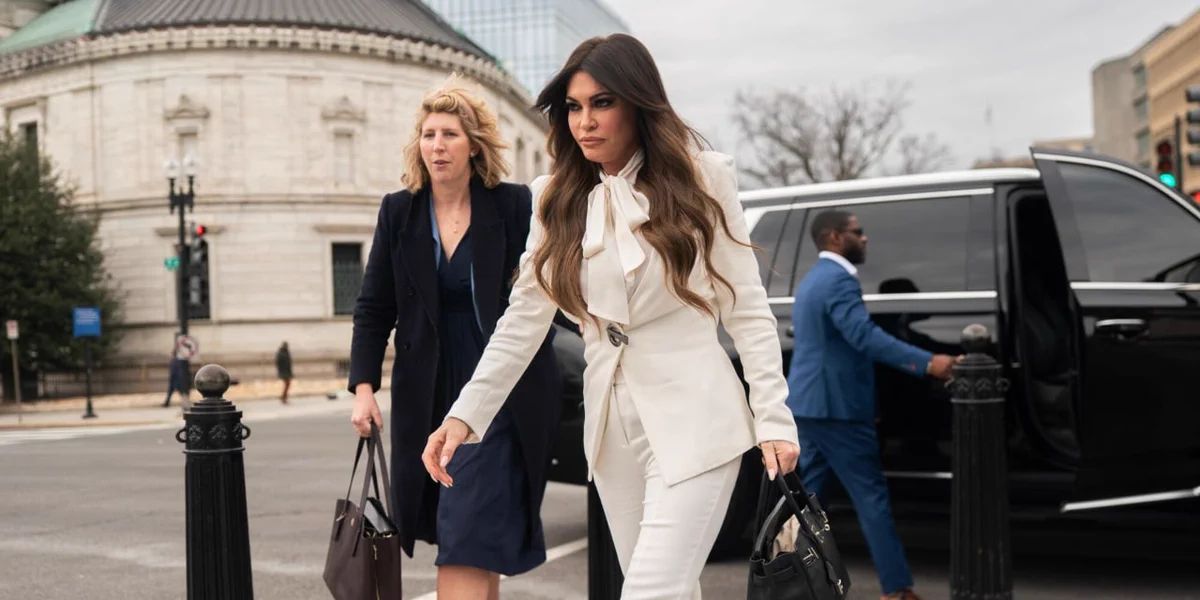
The image is a press photo of Kimberly Guilfoyle and aligns with the content of the news report.
Synthetic-media detector
Detector not consultedThe media is incidental to the claim; the detector was not needed.
Sources
4 sources reviewed- 1‘Honey Please’: Kimberly Guilfoyle Pushed Donor to Wire $100,000 to Her Amex Account ↗
The Wall Street Journal · wsj.comReputable outletnews centrist; opinion Lean RightEvidence
The Wall Street Journal reported that Guilfoyle sought financial assistance from a donor.
- 2Kimberly Guilfoyle associate says when she asked him for $100K, it was "quid pro quo" ↗
CBS News · cbsnews.comReputable outletLean LeftEvidence
CBS News corroborates the Wall Street Journal's findings and provides additional context.
- 3Rubio refuses to comment on Guilfoyle allegations ↗
The Associated Press · apnews.comPrimary / fact-checkerwire + AP Fact Check (Tier A)Evidence
The Associated Press summarizes key details from the investigation by the Wall Street Journal.
- 4WSJ: Guilfoyle Pushed Donor To Wire $100,000 To AMEX Account; Legal Loophole Could Shape How Cornell Rape Case Is Prosecuted (CNN transcript) ↗
CNN (transcript) · transcripts.cnn.comLow reliabilityBORDERLINE B/C — reporting w/ strong bias tag; opinion is CFurther reading
CNN references the Wall Street Journal report, adding to the understanding of the context.
Further reading
- 1The Wall Street Journal The Wall Street Journal provides the primary report detailing the allegations against Guilfoyle.
- 2CBS News CBS News adds context and corroboration for the claims regarding Guilfoyle's actions.
- 3The Associated Press The Associated Press summarizes the key points from the Wall Street Journal report.
The full story
The Wall Street Journal reported that on July 3, 2025, Kimberly Guilfoyle asked donor Eric Deters for a $100,000 wire transfer to her American Express account just days before her Senate confirmation hearing for the ambassadorship to Greece. Guilfoyle recommended that the request be handled in a way that wouldn’t leave a lasting record. Her lawyer disputes the authenticity of the messages, claiming that they could be fabricated, but this claim is acknowledged in the reporting, creating a significant caveat to the allegations. Subsequent reporting from major outlets like CBS and AP corroborated the Wall Street Journal's findings, attributing similar details to their stories and reinforcing the gravity of the situation.
Kernel of truth
Guilfoyle did seek a significant wire transfer from a donor just before her confirmation, which draws scrutiny.
Timeline
July 3, 2025
Guilfoyle allegedly requested $100,000 from Eric Deters. 1The Wall Street Journal
July 9, 2025
Guilfoyle's confirmation hearing for U.S. ambassador to Greece took place.
October 7, 2026
The Wall Street Journal published an article revealing Guilfoyle's alleged request. 1The Wall Street Journal
How it was framed
The representation of Guilfoyle's actions can be deemed misleading due to the caveats surrounding the authenticity of the claims.
- Emotional language. The use of words like 'urgent request' adds an emotional weight to Guilfoyle's actions.
- Selective evidence. Focusing on the financial request without emphasizing the disputes around its validity.
Bias
Leans critical_of_subject. The post reproduces an investigative news excerpt that highlights alleged improper behavior by a political appointee; that reporting is adversarial toward the subject because it focuses on potentially scandalous conduct, but the post is a direct excerpt of an investigative news story rather than an opinionated re-write.
Bias describes how the post frames its message — the slant of the language, selection and emphasis — and is judged separately from whether the claim is true. A true claim can still be framed with a strong slant.
How we checked
1 min 1 s- 1
Reviewed the Wall Street Journal's article covering the claims about Guilfoyle's request.
- 2
Checked additional reputable sources for corroboration of the claims.
- 3
Conducted searches to confirm the date and context of the alleged messages.
✓ Claim checked✓ Media checked✓ Sources checked
Why 85% confidence
HighThe confidence band is HIGH due to corroboration from multiple reputable sources reporting on the same incident.
Limits. Limited to the information reported without running any dedicated media checks.
What we don’t know
- What the exact details of any disputes over the authenticity of the messages will reveal.
- Whether any future evidence may surface that could confirm or deny the authenticity of the messages.
Spot it yourself
Find the overstatementLooks suspicious, isn’t proof
- The source's political affiliation could influence how the story is framed.
- The phrase 'won't show up anywhere' raises red flags about the nature of the request.
- Dispute from Guilfoyle's lawyer adds complexity but is not definitive proof of misinformation.
The actual evidence
- The messages reported by the Wall Street Journal were also referenced by multiple independent news organizations.
- Guilfoyle's lawyer has publicly disputed the authenticity but acknowledged the requests.
- 1
Check the reputation of the sources reporting the claims.
Look for corroboration in major, trusted outlets.
- 2
Assess the language used in claims for emotional appeals.
Words like 'urgent' or 'hush money' can indicate a bias or exaggeration.
- 3
Verify any quotes from statements against the original source.
Cross-reference with the original article or primary document.
- 4
Research the background of the individuals involved for potential biases.
Understand their political affiliations and any past controversies.
Takeaway
Always verify who is reporting the story and be cautious of emotionally charged language in headlines and social media posts.
Questions people ask
What did Kimberly Guilfoyle allegedly ask for?+
Guilfoyle allegedly asked donor Eric Deters for a $100,000 wire transfer to pay off an American Express account shortly before her congressional confirmation hearing.
Why is there confusion over the authenticity of the claims?+
Guilfoyle's lawyer has publicly questioned the authenticity of the messages, leading to caveats in the reporting despite the corroboration from major outlets.
What is the response from other news outlets?+
Major news organizations like AP and CBS have reported on the story, echoing the Wall Street Journal's findings.
Go deeper
- caveat
- A warning or condition related to a particular statement or claim.
- corroboration
- Evidence that confirms or supports a statement or claim.
- emotional language
- Words or phrases used to provoke an emotional response from the audience.
People also search for
For educators+
- How can the reliability of sources impact the interpretation of news stories?
- Discuss examples of emotional language in media. How can it shape public opinion?
About this check
- Platform
- X
- Posted by
- @rebeccaballhaus
- Posted
- October 7, 2026
- Age when checked
- 1–2 days old when checked
- Where it spread
- United States
- Audience
- US audience
- Language
- EN
- Status
- ● Post is live
- Verified
- October 9, 2026, 03:06 UTC
- Published
- October 9, 2026, 03:06 UTC
Reach. 12,879 likes; 'Kimberly Guilfoyle's donor texts' trending on Bluesky; donor went public; Mediaite, Daily Beast, Raw Story, HuffPost follow-ups
This verdict was generated with AI from the sources shown. AI can make mistakes — check the sources before relying on it.
Check anything yourself, in seconds.
Share any social post or video to What the Fact and get the verdict, the confidence, and the receipts.