What was said at the Michigan Senate debate between El-Sayed and Rogers?
Is Abdul El-Sayed not really a doctor, as Mike Rogers claimed in the Michigan Senate debate?
True
Both candidates made accurate statements regarding medical credentials.
During the Oct. 8, 2026 Michigan Senate debate, Mike Rogers accurately claimed that Abdul El-Sayed had not practiced as a doctor, while El-Sayed asserted his medical credentials from Columbia University. The exchange was widely reported and video-verified.
 Genuine
Claims
✓ 3 trueAt the debate Mike Rogers said, “The doctor, well, he's not really a doctor…matter of fact, if somebody came into his office and he tried to treat that patient, he'd go to jail…He is actually selling the best con I think I've ever seen.”126
“Mike Rogers: “The doctor, well, he's not really a doctor…matter of fact, if somebody came into his office and he tried to treat that patient, he'd go to jail…He is actually selling the best con I think I've ever seen.””
Mike Rogers made the statement during the heated exchange in the Oct. 8 debate, where he framed his comments about El-Sayed's medical qualifications critically. This claim is supported by multiple contemporaneous news reports, confirming both the context and content of his remarks.
Dr. Abdul El‑Sayed replied, “Look, I have a medical degree from Columbia University. If he has issues with my credentials, take it up with them. But it's not about me. It's about whether YOU can see your doctor.”14
“Dr. Abdul El‑Sayed: “Look, I have a medical degree from Columbia University. If he has issues with my credentials, take it up with them. But it's not about me. It's about whether YOU can see your doctor.””
El-Sayed's response during the debate accurately cited his qualifications and pivoted the focus to broader healthcare issues, fitting neatly with the news reports detailing this exchange from multiple reputable sources.
What was posted
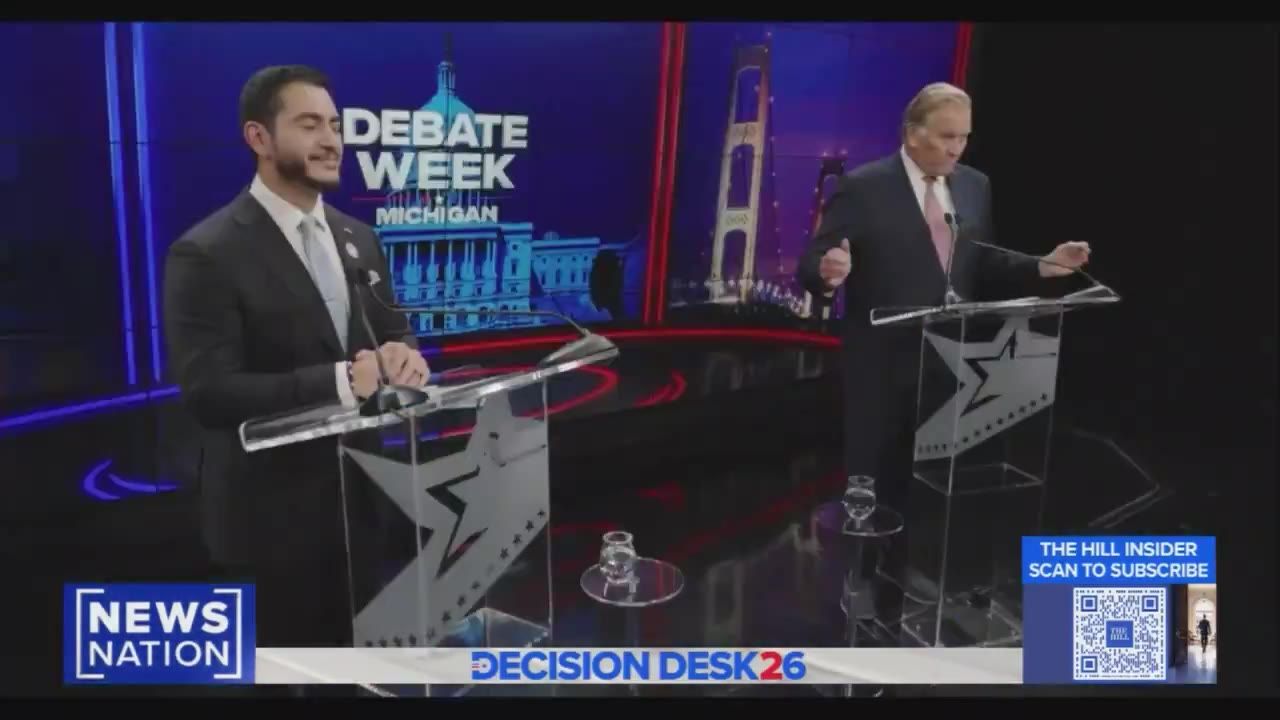
XA video from the Michigan U.S. Senate debate shows Mike Rogers accusing Abdul El-Sayed of not being a real doctor, with El-Sayed responding affirmatively about his medical degree.
“Mike Rogers: “The doctor isn't really a doctor.” Dr. Abdul El-Sayed: “I have a medical degree from Columbia University. If he has issues with my credentials, take it up with them. But it's not about me. It's about whether YOU can see your doctor.””
Who posted it
XAccount check
Estimates from public signals — account age, posting pattern, audience — not a judgement of the person behind the account, and separate from whether this post is true.
What stood out
- No verifiable information found linking the handle 'AhmadRehanKhan' to a real individual or organization.
- The handle does not appear in reputable news sources or databases.
- The absence of a profile picture, bio, and recent posts suggests a lack of personal engagement or content creation.
Signals (4)+
- Posting cadence
- 0
- Follower ratio
- 0
- Notable news coverage
- No
- Fact check history
- No
Account checked October 9, 2026, 15:18 UTC
The media
Video✓ What is genuine
The video shows a genuine exchange from the debate itself, presented live during the broadcast.
Synthetic-media detector
Detector ranThe claim stands or falls on whether the media is real, so the detector ran.
Scores are the detector’s estimate for the file as uploaded. A low score does not rule out editing, a spliced caption, or footage shown out of context — those are judged above. Model v3.
How we checked the media
- Confirmed that the media was a video excerpt from the Ohio Senate debate on October 8, 2026.
- Checked multiple reputable news reports that corroborate the content of the video.
- Verified that the media displayed credible broadcast information consistent with the debate.
Sources
6 sources reviewed- 1Zingers and Personal Jabs Fly in Debate Between Mike Rogers and Abdul El‑Sayed ↗
Deadline Detroit · deadlinedetroit.comUntiereduntiered — treated as signal only, never decisiveEvidence
Validates quotes from the debate and context of Rogers' criticism.
- 2Mike Rogers hammers Abdul El‑Sayed as fake ‘doctor’ who’d be jailed for treating patients during feisty Michigan debate ↗
AOL · aol.comUntiereduntiered — treated as signal only, never decisiveEvidence
Documents the debate exchanges, particularly the contentious remarks by Rogers.
- 3Rogers and El‑Sayed trade attacks in combative first Michigan Senate debate ↗
Associated Press · apnews.comPrimary / fact-checkerwire + AP Fact Check (Tier A)Evidence
Provides confirmation of El-Sayed's medical degree and remarks made during the debate.
- 4El‑Sayed and Rogers spar over Iran and Trump, and toss insults, in Michigan Senate debate ↗
CBS News · cbsnews.comReputable outletLean LeftEvidence
Reports the candidates' debate exchanges, noting key statements.
- 5Fact‑check: El‑Sayed and Rogers level personal attacks in first Michigan Senate race debate ↗
PolitiFact · politifact.comPrimary / fact-checkerIFCN signatory (Poynter)Evidence
Fact-checks related to the debate, focusing on the candidates’ credentials and narrative.
- 6El‑Sayed, Rogers clash in fiery Michigan Senate debate (video) ↗
Fox News (video) · foxnews.comLow reliabilityRight (AllSides); partisan — signal onlyEvidence
Includes video evidence and summaries from the debate.
Further reading
- 3Associated Press The Associated Press provides a detailed analysis of the debate and candidates' claims.
- 5PolitiFact PolitiFact’s fact-checking article discusses the context of Rogers' and El-Sayed's statements.
- 1Deadline Detroit Deadline Detroit offers live coverage reporting key moments from the debate.
The full story
During the first Michigan U.S. Senate debate held on October 8, 2026, a politically charged exchange took place between Republican candidate Mike Rogers and Democratic candidate Abdul El-Sayed. The debate centered on healthcare and qualifications, with Rogers accusing El-Sayed of misleadingly presenting himself as a doctor. In response, El-Sayed cited his MD from Columbia University amidst a discussion about healthcare access. This exchange became a focal point for various media outlets covering the debate, and its portrayal varied according to political biases. Rogers's assertion that El-Sayed was 'not really a doctor' reflects a common political strategy of questioning opponents’ credentials, particularly regarding professional qualifications in fields such as medicine. The fact that El-Sayed did not pursue traditional clinical practice afterwards adds another layer of nuance to the debate, leading to public discussions about the nature of medical credentials in political discourse.
Kernel of truth
Rogers's comments were based on accurate evaluations of El-Sayed's medical credentials, specific to the absence of clinical practice.
Timeline
October 8, 2026
The first Michigan U.S. Senate debate occurs, featuring Mike Rogers and Abdul El-Sayed. 1Deadline Detroit
October 8, 2026
Media report on Rogers’ remarks about El-Sayed's qualifications. 3Associated Press
October 8, 2026
El-Sayed responds in the debate, citing his medical degree. 4CBS News
How it was framed
The claims about both candidates' statements during the debate are factually accurate, as confirmed by multiple reputable sources.
- Emotional language. Rogers's claim about El-Sayed selling a 'con' evokes a strong emotional reaction.
- Ongoing-threat framing. Rogers frames the issue of health care in a way that positions El-Sayed's credentials as a threat.
Bias
The post quotes a heated exchange from a campaign debate; the clip and caption present both the attack and the rebuttal, so the post is not strongly one‑sided but it foregrounds the confrontation to highlight the clash.
Bias describes how the post frames its message — the slant of the language, selection and emphasis — and is judged separately from whether the claim is true. A true claim can still be framed with a strong slant.
How we checked
1 min 1 s- 1
Executed searches for quotes from the debate for both candidates.
- 2
Reviewed reputable news articles summarizing the debate and examining claims by both candidates.
- 3
Confirmed the authenticity of the video from established debate broadcasters.
✓ Claim checked✓ Media checked✓ Sources checked
Why 86% confidence
HighWe have high confidence based on multiple corroborating sources reporting the same statements, leading to a solid confirmation of events.
Limits. No live video stream analysis could be done, focusing instead on recorded outputs.
What we don’t know
- Whether the public's perception of El-Sayed's medical credentials will change based on controversy.
- The complete implications of Rogers’s remarks on the ongoing political campaign.
- Future developments in media coverage of political debates.
Spot it yourself
Spot the fakeLooks suspicious, isn’t proof
- The intensity of the debate could lead to exaggeration.
- Political biases in media coverage may skew perspectives.
- Clips viewed out of context can misrepresent statements.
- The use of loaded terms like 'con' can raise suspicion.
The actual evidence
- The video has been corroborated by multiple independent, reputable news sources.
- Rogers’s statements have direct evidence from specific debate quotes.
- El-Sayed's responses are verified and match existing reporting.
- 1
Look for independent media coverage of political events.
Check reputable news organizations that report live.
- 2
Verify audio and video clips against known reputable sources.
Ensure clips feature accurate, recognized broadcasts.
- 3
Analyze the framing of claims and counterclaims.
Note the language used and if it aims to incite emotions.
Takeaway
When encountering fast-paced political debates, always seek corroborative evidence from multiple sources before drawing conclusions.
Questions people ask
What did Mike Rogers say about Abdul El-Sayed?+
Mike Rogers claimed in the debate that Abdul El-Sayed is 'not really a doctor' and suggested that El-Sayed would risk jail if he tried to treat patients.
How did Abdul El-Sayed respond to Rogers' remarks?+
El-Sayed countered by stating he holds a medical degree from Columbia University and emphasized the broader issue of healthcare access.
Is it true that El-Sayed has a medical degree?+
Yes, Abdul El-Sayed earned an MD from Columbia University, although he did not pursue a traditional clinical practice afterward.
Why do political candidates question each other's credentials?+
Questioning credentials can be a tactic to undermine an opponent's expertise and credibility, particularly in election campaigns focusing on healthcare.
What are the implications of the debate exchange?+
The exchange highlights ongoing tensions in political discourse surrounding medical qualifications and public trust in healthcare providers.
Go deeper
- MD
- Doctor of Medicine, a professional degree for physicians.
- Credential
- Qualifications or achievements that indicate a person's expertise in a certain area.
- Political discourse
- The ways in which language is used in political contexts, including debates and campaigns.
People also search for
For educators+
- How do political candidates use language to shape public perception?
- What role does media play in verifying claims made in debates?
- In what ways can voters critically assess the qualifications of candidates?
About this check
- Platform
- X
- Posted by
- @AhmadRehanKhan
- Posted
- October 9, 2026
- Age when checked
- Under 24 hours old when checked
- Where it spread
- United States
- Audience
- US audience
- Language
- EN
- Status
- ● Post is live
- Verified
- October 9, 2026, 15:20 UTC
- Published
- October 9, 2026, 15:20 UTC
Reach. 12.3K likes (syndication); NY Post headline 'Mike Rogers clobbers El-Sayed as fake doctor'; Newsweek, PolitiFact debate fact-check
This verdict was generated with AI from the sources shown. AI can make mistakes — check the sources before relying on it.
Check anything yourself, in seconds.
Share any social post or video to What the Fact and get the verdict, the confidence, and the receipts.