Did the Princess of Spain face backlash for wearing a yellow mini dress?
Does a viral video show Spain's Princess Leonor wearing a yellow mini dress in public?
False
The assertion about the Princess of Spain wearing the dress is false.
The claim that the Princess of Spain faced backlash for wearing a yellow mini dress is FALSE. The video circulating is an AI-generated deepfake.
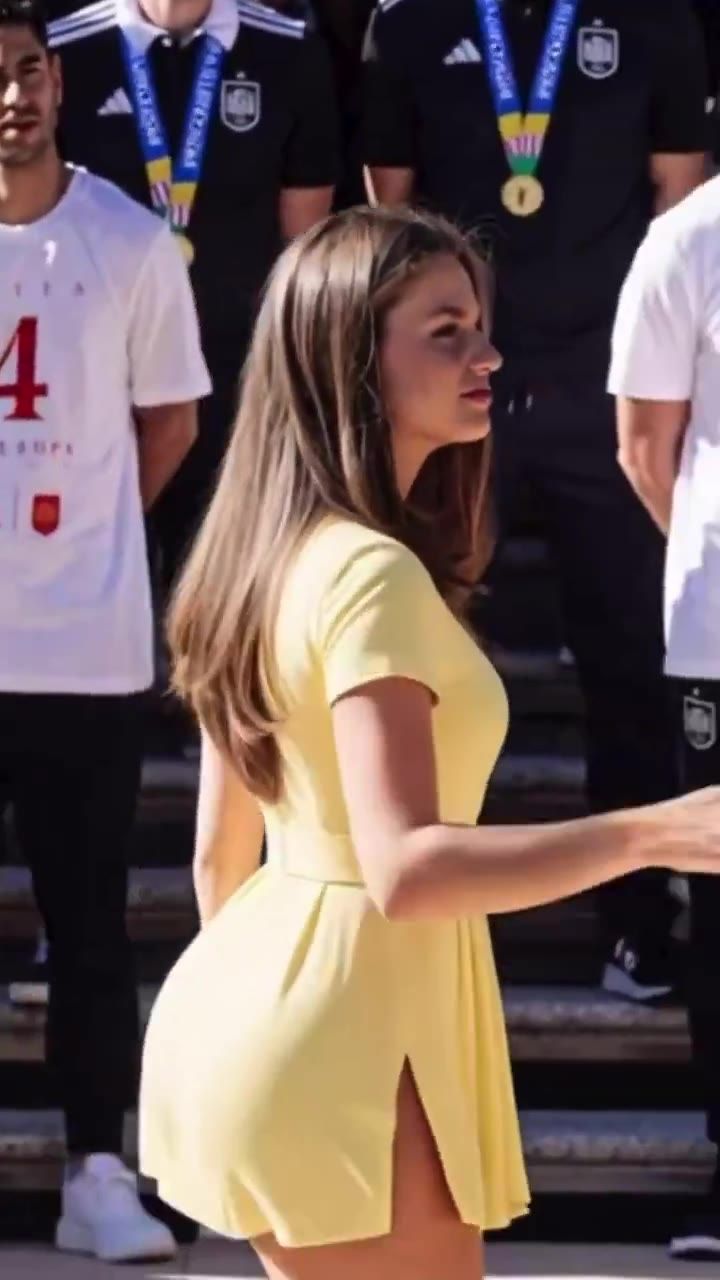 AI-generated
Claims
✕ 1 falseThe Princess of Spain is facing backlash for dressing like this in public.1234
The video is AI-generated and does not depict a real event. It repurposes footage from a past royal engagement, with no corroborating reports of the princess wearing the alleged dress. Multiple fact-checkers verified the video's manipulation, affirming its falsehood.
What was posted
XA viral video on Twitter claims to show the Princess of Spain facing backlash for wearing a revealing yellow mini dress. The video is presented as evidence of her alleged appearance and the public's reaction.
“The Princess of Spain is facing backlash for dressing like this in public”
Who posted it
XAccount check
Estimates from public signals — account age, posting pattern, audience — not a judgement of the person behind the account, and separate from whether this post is true.
What stood out
- Account lacks a display name and bio, which is uncommon for genuine users.
- No follower count available, making it difficult to assess social proof.
- Account creation date is missing, hindering assessment of account age.
- No recent posts, indicating inactivity or potential automation.
- No verifiable information or notable affiliations found through web search.
Signals (3)+
- Posting cadence
- Inactive
- Notable news coverage
- No
- Fact check history
- No
Account checked October 10, 2026, 15:18 UTC
The media
Video✓ What is genuine
The video is sourced from real past footage, although manipulated.
The tells
- ●●● Strong signal The video appears artificial and manipulative in nature.our visual review
- ●●○ Supporting signal The depiction of a wearing a shocking outfit is consistent with harmful misinformation traits.our visual review
Synthetic-media detector
Detector ranThe claim stands or falls on whether the media is real, so the detector ran.
Scores are the detector’s estimate for the file as uploaded. A low score does not rule out editing, a spliced caption, or footage shown out of context — those are judged above. Model v3.
How we checked the media
- AI detection tools flagged the video as likely AI-generated.
- The content was analyzed and traced back to earlier footage from a July 2024 royal event.
- Visual review compared the setting and appearance of the content.
Sources
4 sources reviewed- 1Fact Check: FAKE Video Shows Princess Leonor Of Spain Wearing Yellow Mini Dress -- It's AI-Generated ↗
Lead Stories · leadstories.comPrimary / fact-checkerIFCN; strong on viral/AI mediaEvidence
The video is identified as AI-generated and manipulated.
- 2La Fundación Princesa de Asturias denuncia perfiles falsos en redes sociales que “usurpan la identidad” de Leonor para estafar ↗
El País · elpais.comReputable outletLean LeftContext
Illustrates prior misuse of Princess Leonor's likeness on social media.
- 3Cómo cuentas de TikTok usan inteligencia artificial y la imagen de la princesa Leonor para ofrecer supuestas ayudas e intentar timarte ↗
Maldita · maldita.esPrimary / fact-checkerIFCN + EFCSN; SpainEvidence
Documents instances of fraudulent content that mislead users.
- 4La princesa Leonor en Tiktok, retocada con IA para una estafa (video) ↗
RTVE · rtve.esReputable outletCenter/Lean Left — public serviceContext
Reports on manipulated videos and their implications.
Further reading
- 1Lead Stories Lead Stories provides an in-depth analysis of the AI-generated nature of the video and its origins.
- 2El País El País documents previous instances of identity misrepresentation involving the Princess, emphasizing the relevance of this case.
- 3Maldita Maldita highlights the impact of manipulated media, particularly its effects on public figures like the Princess.
- 4RTVE RTVE's report illustrates how AI is used in misinformation campaigns, showcasing a broader context.
The full story
The post alleges that Princess Leonor of Spain wore a revealing yellow mini dress in public, generating significant backlash. However, this claim is false. The circulating video is identified as a deepfake, created using AI technology that alters existing footage. Specifically, it appears to repurpose clips from a legitimate July 2024 meeting involving the Spanish national football team, during which the princess did not wear the outfit depicted. Despite the dramatic assertion of public outrage, there are no credible reports to support such an incident took place. Previous instances of fraudulent use of Princess Leonor's likeness have been documented, contributing to the context in which this misinformation circulates. Fact-checkers and analysts have consistently flagged this type of content as misleading, highlighting the need for vigilance against deepfakes.
How it was framed
The video is altered and does not accurately represent a genuine event.
- Emotional language. The claim implies public backlash, generating emotional reactions.
- Missing context. The video fails to provide context regarding its manipulation.
Bias
The post frames a sensational claim about a public figure's clothing and alleged 'backlash' while showing manipulated footage to provoke outrage and engagement; that constitutes a moderately slanted, scandal-driven framing.
Bias describes how the post frames its message — the slant of the language, selection and emphasis — and is judged separately from whether the claim is true. A true claim can still be framed with a strong slant.
How we checked
47 s- 1
Executed searches using specific queries related to the princess and the yellow dress claim.
- 2
Reviewed the content of the viral video for signs of manipulation.
- 3
Consulted established fact-checking sources for independent corroboration.
✓ Claim checked✓ Media checked✓ Sources checked
Why 90% confidence
HighOur confidence is HIGH due to the strong corroboration from multiple fact-checkers and AI detections confirming the video is manipulated.
What we don’t know
- The full extent of public perceptions surrounding AI-generated content.
- Potential future incidents involving altered media and their reception.
Spot it yourself
Spot the fakeLooks suspicious, isn’t proof
- The video's emotional pitch and shocking nature serve as a hook.
- It lacks credible supporting documentation.
- The presentation of a public figure in a scandalous light is common in deceptive narratives.
The actual evidence
- Fact-checkers confirmed that the video is AI-generated.
- The footage is traced to a real past event, ensuring discrepancies with the claim.
- No independent outlets corroborate the claim of backlash.
- 1
Check for credible news coverage of the event.
Search established news outlets for reports.
- 2
Examine the source of the media.
Look up the origin of the video to verify its authenticity.
- 3
Use AI detection tools.
Run the media through credible AI detection platforms.
- 4
Compare visual elements.
Consider if settings, clothing, and other details match perceived reality.
- 5
Look for alternative versions of the story.
Identify other narratives that might clarify the truth.
Takeaway
Misinformation often presents emotional appeals or shocking claims that require further verification. Always seek multiple trustworthy sources.
Questions people ask
What does it mean for a video to be AI-generated?+
An AI-generated video is created using algorithms to manipulate existing footage or create completely new imagery. This technology can lead to realistic but false representations.
Why is the Princess of Spain's image used in scams?+
Criminals exploit the images of public figures like the Princess to create fake accounts and spread misinformation, often with the intent to deceive or defraud users.
How can I spot a deepfake?+
Look for inconsistencies in the video, such as unnatural movements, glitches, or anomalies in the background. Conduct reverse image searches or utilize deepfake detection tools.
Go deeper
- Deepfake
- A synthetic media in which a person in an existing image or video is replaced with someone else's likeness, typically using AI.
- AI-generated content
- Content created by artificial intelligence technologies, which can include videos, images, and sound, often making it difficult to distinguish from authentic content.
- Fact-checking
- The process of verifying the accuracy of claims made in media or public discourse, often conducted by independent organizations.
People also search for
For educators+
- How can we differentiate between real and manipulated media?
- What responsibilities do social media platforms have in combating misinformation?
- How does emotional language influence our perception of news?
About this check
- Platform
- X
- Posted by
- @TheWyteRabbit1
- Posted
- October 8, 2026
- Age when checked
- 1–2 days old when checked
- Where it spread
- Spain
- Audience
- International audience
- Language
- EN
- Status
- ● Post is live
- Verified
- October 10, 2026, 15:19 UTC
- Published
- October 10, 2026, 15:19 UTC
Reach. 8,907 likes and 700 replies on the X post
This verdict was generated with AI from the sources shown. AI can make mistakes — check the sources before relying on it.
Check anything yourself, in seconds.
Share any social post or video to What the Fact and get the verdict, the confidence, and the receipts.