Did Bill Gates say one billion people will die by 2027?
Does a video show Bill Gates on CNBC warning that water shortages will kill a billion people by 2027 in the 'biggest mortality event' the world has seen?
False
The claim is based on a deepfake video; Gates made no such prediction.
The claim that Bill Gates predicted one billion deaths by 2027 due to water shortages is FALSE. The video is a deepfake, with altered audio and edited visuals.
 Deepfake
Claims
✕ 3 falseBill Gates said 'water shortages could be the biggest mass mortality event the world has ever seen — I'm talking billions of people dying.'12
Fact-checkers identified this statement as a fabricated quote, produced using voice and video manipulation technology. The original source material does not include any reference to water shortages or mass mortality. Full Fact's examination confirmed that the audio was artificially generated, lending significant weight to the determination that the claim is false.
Bill Gates said '1 billion people will die by 2027.'12
This specific prediction attributed to Bill Gates is baseless. Fact-checkers found that there is no original footage or credible evidence where Gates made such a statement. The manipulated clip misquotes him and incorrectly positions his actual statements regarding AI risks.
Bill Gates said 'the only way we ensure people remain safe is by being invested in the United States Water Reserve' (urging investment in a crypto project).12
The mention of the 'United States Water Reserve' as mentioned in the viral clip does not originate from Gates. Investigations confirmed that the video was edited to fabricate this attribution, which is not present in the original context.
What was posted
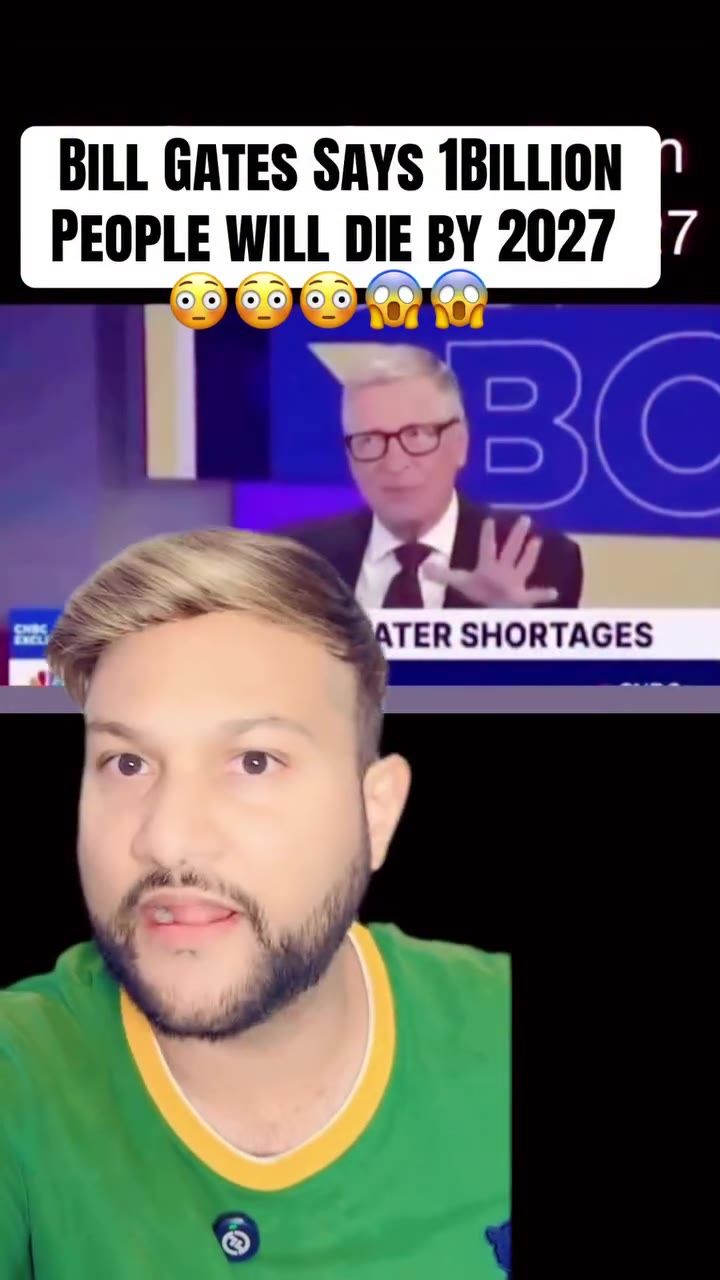
FacebookThe post features a video with a sensational caption claiming Bill Gates warned that a billion people will die by 2027 due to water shortages.
“Bill Gates Says 1Billion People will die by 2027 😱😱😳😳 #billgates #water #shortage #die #foryoupage”
The media
Video✓ What is genuine
The original footage of Bill Gates is genuine; however, the statements attributed to him in the viral video have been manipulated.
The tells
- ●●● Strong signal The video has alarming content that seems sensationalist.our visual review
- ●●● Strong signal The footage appears edited and out of context.our visual review
Synthetic-media detector
Detector ranThe claim stands or falls on whether the media is real, so the detector ran.
Scores are the detector’s estimate for the file as uploaded. A low score does not rule out editing, a spliced caption, or footage shown out of context — those are judged above. Model v3.
How we checked the media
- Analyzed the video for authenticity using detection models.
- Reviewed the context and original material Bill Gates purportedly discussed.
- Cross-checked with multiple fact-checking sources to confirm manipulation.
Sources
3 sources reviewed- 1Clip of Bill Gates discussing water shortages and ‘mass mortality event’ is a deepfake ↗
Full Fact · fullfact.orgPrimary / fact-checkerIFCN + EFCSN; UK charityEvidence
The video was modified and does not reflect Gates's true statements.
- 2Bill Gates Warns Billions Could Die by 2027 While Touting US Water Reserve as the Only Way To Stay Safe ↗
International Business Times · ibtimes.co.ukUntiereduntiered — treated as signal only, never decisiveEvidence
The material did not substantiate Gates's alleged predictions and mischaracterized his remarks.
- 3Bill Gates warns of ‘a billion’ deaths if AI goes wrong ↗
The Washington Post · washingtonpost.comReputable outletLean Left (AllSides)
“Washington Post (28 Sep 2026): Context — Gates warned AI could be powerful enough to drive events that cause a billion deaths in a discussion about AI risk; this is a separate, speculative comment about AI risk and not the water-shortage/2027 prediction shown in the manipulated clip.”
Further reading
- 1Full Fact Full Fact details how the viral clip was manipulated and clarifies the original context of Gates's words.
- 2International Business Times International Business Times outlines the misrepresentations in the viral material and discusses its origin.
The full story
The viral claim regarding Bill Gates predicting one billion deaths by 2027 is rooted in a highly manipulated video that misrepresents his actual statements. In the original CNBC interview from October 2025, Gates discussed the potential implications of artificial intelligence, not water shortages. The edited clip came to light in October 2026, with fact-checking organizations confirming it as a deepfake, utilizing advanced technology to synthesize audio that mimics Gates's voice. Instead of a warning about mass mortality due to water scarcity, Gates's insights were about the risks associated with AI misuse, thereby altering the context significantly. The clip garnered attention on social platforms but lacked credible news sources backing its extraordinary claims. Consequently, the assertions were flagged as false, and the video as a deepfake designed for misinformation.
How it was framed
The video was edited and the audio generated to present a misleading narrative.
- Emotional language. Use of alarming visuals and exaggerated claims.
- Urgency. The prediction of billions dying evokes panic.
Bias
The post uses alarmist language and sensational framing to push a doomsday narrative about water scarcity and to promote a crypto-sounding project; the manipulation amplifies fear and distrust of Gates.
Bias describes how the post frames its message — the slant of the language, selection and emphasis — and is judged separately from whether the claim is true. A true claim can still be framed with a strong slant.
How we checked
55 s- 1
Executed searches for key phrases surrounding Bill Gates and water shortages.
- 2
Examined the original interview footage and compared it with the viral video.
- 3
Consulted fact-checking articles which confirmed the information was manipulated.
✓ Claim checked✓ Media checked✓ Sources checked
Why 90% confidence
HighOur confidence is HIGH due to consistent corroboration among established fact-checkers confirming the misinformation.
Limits. No original live interviews were reviewed nor statements attributed directly to Gates that contradicted our findings.
Spot it yourself
Spot the fakeLooks suspicious, isn’t proof
- The video features an emotionally charged and sensational tone.
- There are poor production techniques visible in the video.
- The claims are extraordinary without credible sources backing them.
The actual evidence
- The analysis of the video's audio revealed it was generated and manipulated.
- No credible news or sources corroborated the claims made in the video.
- Fact-checkers confirmed the footage did not contain Gates's actual statements from the original outtake.
- 1
Check the voice and video characteristics.
Use tools that analyze audio for synthetic characteristics.
- 2
Research the context of sensational claims.
Look for reputable articles discussing the original subject.
- 3
Verify claims with established fact-checkers.
Use fact-checking websites that are reliable and recognized.
Takeaway
Always scrutinize sensational content online through credible verification sources. Technology can easily create convincing replicas that mislead.
Questions people ask
What does deepfake mean?+
Deepfake refers to media that has been manipulated using artificial intelligence to create realistic but fake audio and/or video.
Why are sensational claims often false?+
Sensational claims can exploit emotional responses and are often based on misinformation or manipulated media without evidence.
How can I identify deepfake videos?+
Look for inconsistencies in video quality, odd audio, impossibly sensational claims, and check with reliable fact-checking sources.
Go deeper
- Deepfake
- A deepfake is a synthetic media created using artificial intelligence, typically to manipulate or fabricate real audio or video.
- Misinformation
- Misinformation refers to false or misleading information spread regardless of intent.
- Fact-checking
- Fact-checking is the process of verifying the accuracy of information, often conducted by independent organizations.
People also search for
For educators+
- How can we discern between genuine and manipulated media?
- What are the implications of misinformation in our decision-making?
- Why is it crucial to fact-check sensational claims before sharing?
About this check
- Platform
- Age when checked
- Older post, still live
- Where it spread
- United Kingdom, Global
- Audience
- International audience
- Language
- EN
- Status
- ● Post is live
- Verified
- October 13, 2026, 03:03 UTC
- Published
- October 13, 2026, 03:03 UTC
Reach. Full Fact (12 Oct): video 'shared thousands of times on Facebook'; reel og:title shows '5K reactions | Bill Gates Says 1Billion...' (fetched 2026-10-13)
This verdict was generated with AI from the sources shown. AI can make mistakes — check the sources before relying on it.
Check anything yourself, in seconds.
Share any social post or video to What the Fact and get the verdict, the confidence, and the receipts.