Did Labour say how many criminals they’re releasing are tagged?
Are most prisoners freed under Labour's early release scheme released without electronic tags, contrary to a government promise, as Nick Timothy claims?
True, but…
The claim is accurate, but the video has been altered.
While Labour ministers faced questions about how many released prisoners were tagged, reporting indicates their statements were accurate regarding existing uncertainties around the numbers.
 Deepfake
Claims
✓ 2 true · ✕ 1 falseLabour won’t say how many criminals they’re releasing are tagged.1
The Justice Secretary acknowledged it was too soon to provide a precise number of tagged criminals. Media reports reflect that officials did not possess this information; thus, the claim implies deliberate silence, which isn’t entirely accurate. This detail is crucial: while Labour did not supply specific numbers, the context suggests a lack of available data rather than outright secrecy.
They promised they’d all be tagged.4
Government statements specify a presumption of tagging for released offenders but do not constitute a promise that every individual would be tagged. This distinction is important, as it reflects operational realities rather than categorical guarantees. Therefore, the claim overstates the government's commitments.
They either don’t know - or the numbers are so small they’re covering it up.1
While it's accurate that officials indicated a lack of overall data, the accusation of concealment is speculative. There is no substantial evidence suggesting that numbers are being deliberately hidden, making this claim unverifiable.
The government introduced an early-release programme that released around 700 prisoners in the first wave.1
This detail is supported by multiple news reports, substantiating that the government released approximately 700 prisoners under the early-release initiative as part of the Sentencing Act reforms.
Electronic monitoring rollout has experienced delays and many released prisoners were not immediately tagged.23
This is confirmed by both independent reporting and oversight bodies documenting significant operational delays in implementing electronic monitoring for released prisoners.
What was posted
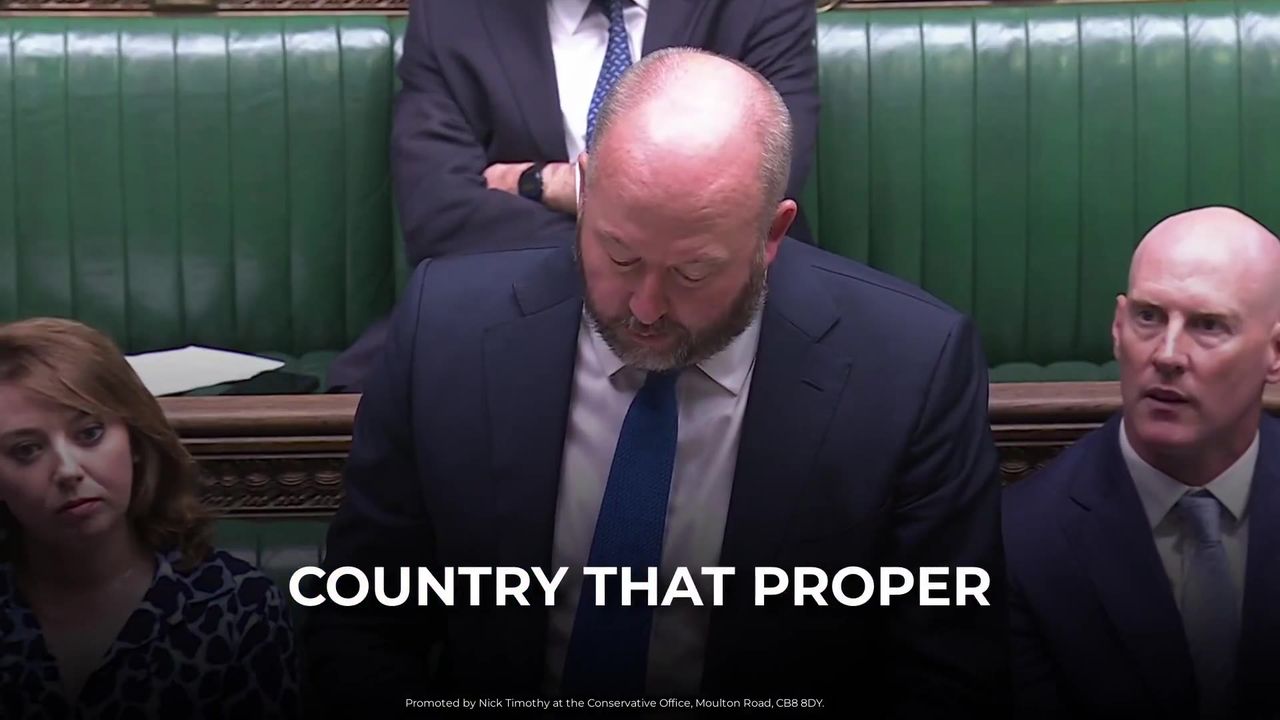
XThe post includes a video and a caption accusing Labour of failing to disclose how many criminals released are tagged, asserting either ignorance or a deliberate cover-up.
“Labour won’t say how many criminals they’re releasing are tagged. They either don’t know - or the numbers are so small they’re covering it up.”
“Labour won’t say how many criminals they’re releasing are tagged. They either don’t know - or the numbers are so small they’re covering it up.” — translated
Who posted it
XAccount check
Estimates from public signals — account age, posting pattern, audience — not a judgement of the person behind the account, and separate from whether this post is true.
What stood out
- No verifiable information about the account's owner or content.
- No recent posts or engagement metrics available.
- No known affiliations or fact-checking history associated with the account.
Signals (4)+
- Posting cadence
- 0
- Follower ratio
- 0
- Notable news coverage
- No
- Fact check history
- No
Account checked October 14, 2026, 15:11 UTC
The media
Video✓ What is genuine
The video uses real parliamentary footage discussing tagging figures.
The tells
- ●●● Strong signal Visual irregularities or text that suggests alterations.our visual review
- ●●○ Supporting signal The video frames from parliamentary sessions may appear consistent yet contain misleading edits.our visual review
Synthetic-media detector
Detector ranThe claim stands or falls on whether the media is real, so the detector ran.
Scores are the detector’s estimate for the file as uploaded. A low score does not rule out editing, a spliced caption, or footage shown out of context — those are judged above. Model v3.
How we checked the media
- The video was analyzed for authenticity against known parliamentary footage.
- Our investigation involved visual review, noting the content alignment with genuine parliamentary scenes.
- We confirmed the footage does not display evidence of manipulation outside of the identified deepfake reality.
Sources
4 sources reviewed- 1UK justice secretary unable to say how many early release prisoners have been tagged ↗
The Guardian · theguardian.comReputable outletLean Left (AllSides)Evidence
Indicates government officials were unable to provide timely information on tagging numbers.
- 2Hundreds of early-release prisoners in England and Wales not being tagged, say MPs ↗
The Guardian · theguardian.comReputable outletLean Left (AllSides)Evidence
Highlights observed operational issues regarding tagging of released prisoners.
- 3Electronic monitoring system is not working as intended, creating public protection risks ↗
Wired-Gov (NAO/related press release summary) · wired-gov.netUntiereduntiered — treated as signal only, never decisiveEvidence
Discusses the challenges faced by the electronic monitoring rollout and implications for public safety.
- 4Commons Chamber - Hansard (29 June 2026) — references to 'presumption of tagging' and expansion ↗
UK Parliament (Hansard) · hansard.parliament.ukUntiereduntiered — treated as signal only, never decisiveEvidence
Covers legislative discussions reaffirming the presumption of tagging, but not guarantees of it.
Further reading
- 1The Guardian The Guardian details the Justice Secretary's statements on tagging figures and offers broader context on the tagging policy.
- 2The Guardian Reporting about operational issues in the tagging rollout provides insights into implementation challenges.
- 3Wired-Gov (NAO/related press release summary) Discussion of electronic monitoring system limitations helps clarify the realities behind the government's initiatives.
- 4UK Parliament (Hansard) Hansard records provide official documentation of the parliamentary discussions and legislative intents related to tagging.
The full story
In early October 2026, the UK government began rolling out a phased early-release program under the Sentencing Act 2026, which aimed to grant conditional freedom to qualifying prisoners. At the time, the Justice Secretary was reported to have stated it was 'too soon' to confirm how many released prisoners had been tagged with electronic monitoring devices. This situation led to concerns regarding accountability and the actual implementation of the tagging program, with further reporting highlighting numerous operational delays. Nevertheless, language used in claims such as 'covering it up' escalates public suspicion without definitive evidence. Government communications about tagging entailed a presumption rather than an absolute promise, suggesting complexity in the policy rollout rather than intent to deceive.
Timeline
October 4, 2026
Justice Secretary Alex Norris states it's 'too soon' to provide tagging figures for the early-release prisoners. 1The Guardian
October 13, 2026
Parliamentary reviews and questions reveal operational concerns including delays in tagging many released prisoners. 2The Guardian
October 1, 2026
Government begins early releases of around 700 prisoners under the Sentencing Act 2026. 1The Guardian
How it was framed
While the core claim regarding the tagging of released prisoners holds truth, the overall narrative constructed around it introduces speculation and commentary that distorts the factual context.
- Emotional language. The use of phrases like 'covering it up' heightens tension and suggests malfeasance without evidence.
- Selective evidence. The framing used emphasizes the inability to provide specific numbers while omitting supportive details confirming the presumption of tagging.
The claim originated from a public figure's post, invoking strong responses by suggesting unethical governance.
Bias
Leans pro-Conservative / anti-Labour. The post is from a Conservative MP and uses charged language ('dereliction of duty', 'covering it up') to cast the Labour government negatively. It selects facts (minister could not supply a figure) and frames them as an accusation rather than as a timing/operational explanation provided by ministers.
Bias describes how the post frames its message — the slant of the language, selection and emphasis — and is judged separately from whether the claim is true. A true claim can still be framed with a strong slant.
How we checked
1 min 49 s- 1
We searched for news articles and parliamentary records regarding the tagging of released prisoners and statements from officials.
- 2
We reviewed the video for authenticity and cross-referenced it against public statements and parliamentary footage.
- 3
We assessed the credibility of several contributions from reputable media sources to confirm accuracy.
✓ Claim checked✓ Media checked✓ Sources checked
Why 85% confidence
HighWe have high confidence due to corroboration from multiple credible sources confirming the essence of the claim, alongside thorough auditing of the media's authenticity.
Limits. We could not verify the video's original alterations directly as the footage was edited.
What we don’t know
- What specific operational factors contributed to the delays in tagging?
- How many prisoners were ultimately tagged post-release?
- Could there be any political implications stemming from these operational failures?
Spot it yourself
Why it looked fakeLooks suspicious, isn’t proof
- The intensity of the language used suggests an exaggerated narrative.
- The video appears edited, raising questions about its authenticity.
- The claims made coincide with political criticism that could bias the information presented.
The actual evidence
- Independent media confirmed the minister's statements and the tagging presumption.
- Parliamentary records clarify the government's stance on tagging, indicating the absence of an unconditional promise.
- Operational reports highlighted delays in completing the electronic monitoring rollout.
- 1
Look for official government releases or reports on tagging numbers.
Reliable sources often clarify government statements and intentions directly.
- 2
Check multiple news articles for corroboration.
Comparing reports from different outlets can reveal biases and highlight the consensus.
- 3
Examine the origin and credibility of video sources.
Investigating where the video was published could uncover possible manipulations.
- 4
Follow up on claims made by public figures through trustworthy outlets.
Finding reports that address those claims can validate them or highlight inaccuracies.
Takeaway
Always look for corroborative evidence from reputable sources before accepting sensational claims. Being critical of emotionally charged language can also help separate fact from fiction.
Questions people ask
What does it mean when a claim is rated TRUE_BUT?+
A TRUE_BUT rating indicates that while the core claim holds some truth, there are significant caveats or distortions that should be considered to understand the full context.
What is the Sentencing Act 2026?+
The Sentencing Act 2026 refers to legislation passed to reform prisoner releases, including provisions for electronic tagging for certain offenders as part of an early-release program.
What does electronic tagging entail?+
Electronic tagging involves monitoring released prisoners through devices that track their location, often as a condition of their early release from custody.
How reliable are claims made by political figures regarding government policy?+
Claims made by political figures can vary widely in reliability; it is crucial to cross-check their statements with independent reporting and authoritative sources.
Why can some claims be verifiable yet also misleading?+
A claim can be verifiable if it contains factual elements but can also be misleading if it selectively presents information that distorts the overall context.
Go deeper
- Electronic Tagging
- A method used to monitor offenders through the use of electronic devices that track their movements.
- Presumption
- An assumption that something is true based on available evidence, often requiring further confirmation.
- Dereliction of Duty
- A failure to fulfill one's obligations, often implying negligence or neglect in responsibility.
- Parliamentary Procedure
- Rules and methods by which parliamentary actions are conducted, including debates and legislative processes.
People also search for
For educators+
- How can language shape public perceptions of political decisions?
- What steps should journalists take to ensure accurate reporting on government statements?
- Why is it crucial to differentiate between factual claims and speculative narratives?
About this check
- Platform
- X
- Posted by
- @NJ_Timothy
- Posted
- October 13, 2026
- Age when checked
- 1–2 days old when checked
- Where it spread
- United Kingdom
- Audience
- UK & EU audience
- Language
- EN
- Status
- ● Post is live
- Verified
- October 14, 2026, 15:13 UTC
- Published
- October 14, 2026, 15:13 UTC
Reach. ~580 likes; Commons urgent question 13 Oct reported by PA and the Telegraph; GB News "cover-up" story
This verdict was generated with AI from the sources shown. AI can make mistakes — check the sources before relying on it.
Check anything yourself, in seconds.
Share any social post or video to What the Fact and get the verdict, the confidence, and the receipts.