Did Britain outgrow France and Germany since Brexit?
Has Britain's economy grown faster than France's and Germany's since Brexit, as Liz Truss claims?
True, but…
The claim is partly true but needs important context.
The UK's economy has indeed shown faster growth than those of France and Germany since Brexit. However, this relies on specific growth metrics that lack context.
 Likely genuine
Claims
1 checkedBritain has outgrown France and Germany since Brexit.12
The claim regarding the UK's economy outgrowing France and Germany since Brexit is backed by parliamentary data. It cites cumulative growth figures of 7.9% for the UK compared to 6.8% for France and 1.1% for Germany from 2021 onwards. However, the statement lacks key context, such as other growth metrics (per capita versus total growth) and differing interpretations, which are necessary to fully assess its accuracy. Therefore, while the numbers support the assertion, it remains incomplete without further analysis.
What was posted
XThe video features commentary by Liz Truss concerning the UK's economic growth compared to France and Germany since Brexit, along with political rhetoric about Labour's policies.
“Britain has outgrown France and Germany since Brexit. Yet Labour is determined to drag us backwards. We should be using our Brexit freedoms to slash regulations, take back control of our borders, leave the ECHR and rebuild Britain.”
Who posted it
XAccount check
Estimates from public signals — account age, posting pattern, audience — not a judgement of the person behind the account, and separate from whether this post is true.
What stood out
- Account handle '@trussliz' matches that of Liz Truss, former UK Prime Minister.
- Account description includes 'Sunday Times bestselling writer', 'Host of The Liz Truss Show', and 'Former Prime Minister of the United Kingdom'.
- Account joined in August 2009, aligning with Liz Truss's known public presence since that time.
- Account has 734.2K followers and follows 2,546 accounts, indicating a significant public following.
- Account is not verified, which is unusual for a public figure of Liz Truss's stature but not uncommon for former politicians.
Signals (3)+
- Posting cadence
- Not available
- Follower ratio
- 0.29
- Notable news coverage
- Former UK Prime Minister Liz Truss's Twitter account '@trussliz' is active and engaging with followers.
Account checked October 14, 2026, 14:59 UTC
The media
Video✓ What is genuine
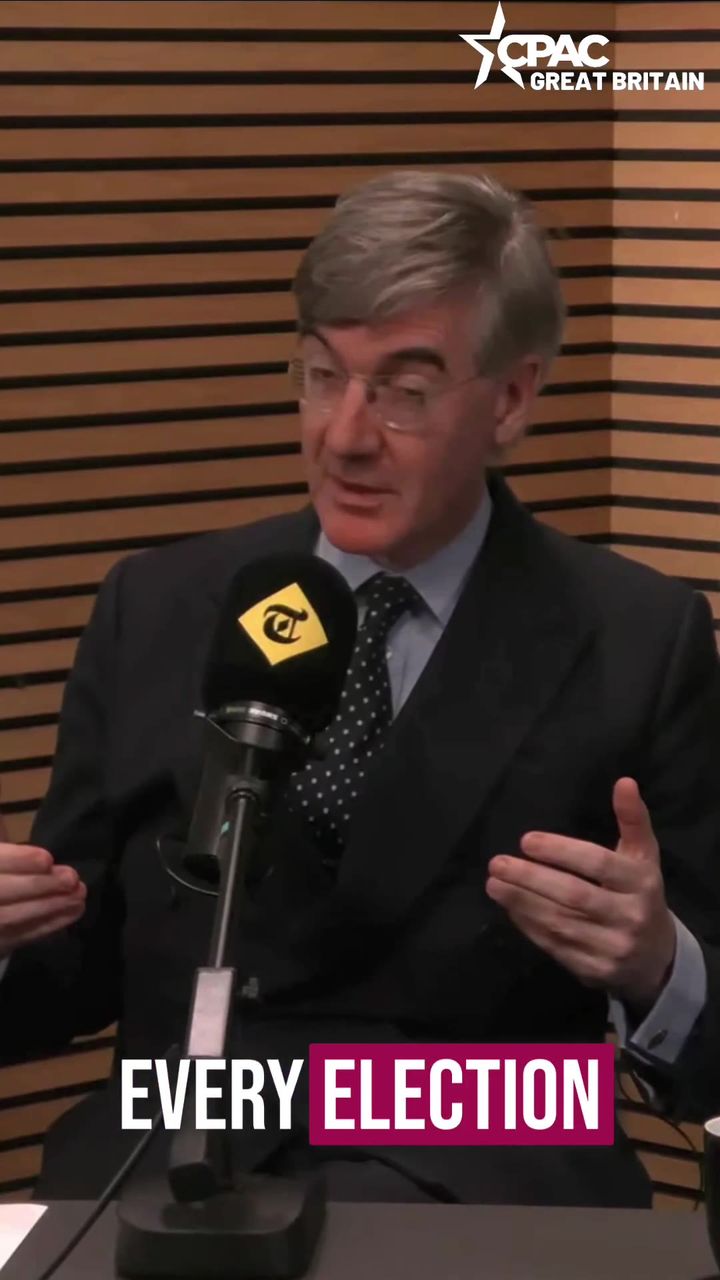
The video shows a genuine interview excerpt, as indicated by physical cues such as the microphone and watermark.
The tells
- ●●● Strong signal The video shows clear recording artefacts, such as a branded microphone and event watermark.our visual review
- ●●○ Supporting signal The content was presented as an authentic public statement.our visual review
Synthetic-media detector
Detector not consultedThe media is incidental to the claim; the detector was not needed.
How we checked the media
- Examined the visual elements of the video for signs of manipulation.
- Identified the presence of a CPAC Great Britain watermark and a microphone branded by The Telegraph.
- Noted that the footage appears consistent with real-world settings and events.
Sources
3 sources reviewed- 1Rejoining the EU - Commons debate (12 Oct 2026) — Hansard ↗
UK Parliament (Hansard) · hansard.parliament.ukUntiereduntiered — treated as signal only, never decisiveEvidence
Provides records of parliamentary statements discussing the UK's economic growth comparatively.
- 2Economic and fiscal outlook – November 2025 ↗
Office for Budget Responsibility · obr.ukUntiereduntiered — treated as signal only, never decisiveEvidence
Offers authoritative economic insights relevant to discussed growth rates.
- 3Trade and investment core statistics book ↗
GOV.UK · gov.ukUntiereduntiered — treated as signal only, never decisive
“Official UK trade and investment statistics and context for post-Brexit trade trends.”
Further reading
- 1UK Parliament (Hansard) This source provides a parliamentary perspective, detailing economic comparisons related to growth since Brexit.
- 2Office for Budget Responsibility Contains economic forecasts and analyses relevant to the UK's economic performance post-Brexit.
The full story
The claim that Britain has outgrown France and Germany since Brexit hinges on specific growth metrics recorded since 2021. According to parliamentary records, the UK economy grew by 7.9% during this period, slightly outperforming France at 6.8% and Germany at just 1.1%. However, the context in which these figures are presented was notably omitted. Different methods of calculating growth, such as real versus per capita measures, can yield vastly different interpretations of economic performance. Additionally, studies suggest that Brexit has negatively impacted GDP growth in the UK over the longer term, thus complicating the narrative around this claim. The statement encapsulates a complex economic issue that cannot be fully understood through selective numeric comparisons alone.
Kernel of truth
The assertion that the UK economy has experienced growth since Brexit is corroborated by parliamentary reports.
How it was framed
The video presents a selective interpretation of economic growth figures while omitting critical contextual factors.
- Missing context. The claim omits crucial details regarding the methodology and time frame of the growth figures.
- Selective evidence. Focuses only on cumulative growth without discussing alternative growth metrics.
The content was posted on Twitter by a political figure, highlighting specific economic growth metrics as part of a broader political narrative.
Bias
Leans pro-Brexit / anti-Labour. The post’s caption frames the UK’s post-Brexit performance positively and criticises Labour; the video excerpt and added captions emphasise arguments that support using 'Brexit freedoms' and abandoning European conventions. That combination advances a clear political viewpoint.
Bias describes how the post frames its message — the slant of the language, selection and emphasis — and is judged separately from whether the claim is true. A true claim can still be framed with a strong slant.
How we checked
1 min 6 s- 1
Reviewed the video content to establish authenticity and visual characteristics.
- 2
Conducted searches for corresponding statistics and claims made in the video.
- 3
Checked parliamentary records for referenced growth figures and their context.
✓ Claim checked✓ Media checked✓ Sources checked
Why 65% confidence
ModerateThe confidence band is moderate due to the mix of corroboration and lack of comprehensive context across all metrics.
Limits. The evaluation could not retrieve all relevant economic data from external sources.
Spot it yourself
Find the overstatementLooks suspicious, isn’t proof
- The posting was by a political figure, which may bias the information presented.
- The tone is alarmist, framing the issue as a critical political struggle rather than a neutral economic report.
- The video uses selective growth data to support a political agenda.
The actual evidence
- The UK recorded a cumulative economic growth of 7.9% since Brexit compared to 6.8% and 1.1% for France and Germany, cited in parliamentary records.
- The claim lacks context regarding how growth is measured, which can significantly impact its interpretation.
- 1
Check the source of claims regarding economic statistics.
Independent verification from reputable economic organizations like the ONS or IMF can provide clarity.
- 2
Examine if only selective metrics are being cited.
Assess whether the claim includes other relevant data, such as per capita growth or broader economic impacts.
- 3
Consider the timing and relevance of presented data.
Make sure that the growth figures apply to the correct time frame and conditions suitable for comparison.
Takeaway
Always look for missing context and alternative perspectives when evaluating economic claims. Critical thinking is key in distinguishing between fact and political rhetoric.
Questions people ask
What does the claim about the UK economy since Brexit reflect?+
The claim suggests the UK's economy has performed better than France's and Germany's since Brexit, supported by specific growth statistics mentioned in parliamentary records.
Why is context important when assessing economic claims?+
Context helps clarify the relevance of statistics and exposes limitations in the data being presented, ensuring a more accurate understanding of economic performance.
What are the possible implications of the claim being partly true?+
If the claim is partly true, it indicates that while there may be growth, other factors or metrics might lead to different conclusions about overall economic health.
Go deeper
- Cumulative growth
- The total increase in value over a set time period, often expressed as a percentage.
- Economic metrics
- Quantitative measures used to assess the economic performance of a region or country.
- Per capita growth
- Economic growth measured per individual, which can provide a different perspective compared to total growth.
People also search for
For educators+
- How can selective presentation of data lead to misinformation?
- In what ways can economic claims influence public policy?
- What methods can be used to verify the authenticity of economic data?
About this check
- Platform
- X
- Posted by
- @trussliz
- Posted
- October 13, 2026
- Age when checked
- 1–2 days old when checked
- Where it spread
- United Kingdom
- Audience
- UK & EU audience
- Language
- EN
- Status
- ● Post is live
- Verified
- October 14, 2026, 15:00 UTC
- Published
- October 14, 2026, 15:00 UTC
Reach. ~2.9K likes, 253 replies; part of the live row over the Burnham government Brexit reset
This verdict was generated with AI from the sources shown. AI can make mistakes — check the sources before relying on it.
Check anything yourself, in seconds.
Share any social post or video to What the Fact and get the verdict, the confidence, and the receipts.