Did Trump call Google Maps to rename the Atlantic Ocean?
Did Donald Trump ask Google to rename the Atlantic Ocean the 'Trump Ocean' on Google Maps, and did Google CEO Sundar Pichai refuse, as Trump said?
True, but…
Trump's claim is true, but lacks independent verification from Google.
Donald Trump stated at a rally that he asked Google Maps to change the Atlantic Ocean's name to 'Trump Ocean'; while Trump made these remarks, Google has not confirmed this conversation.
 Genuine
Claims
✓ 1 trueDonald Trump said he called Google Maps and asked to change the name of the Atlantic Ocean to 'Trump Ocean' and that Sundar (Sundar Pichai) told him no, saying 'Oceans are different, sir. They cover a lot of countries. Please don't ask us to do that.'123
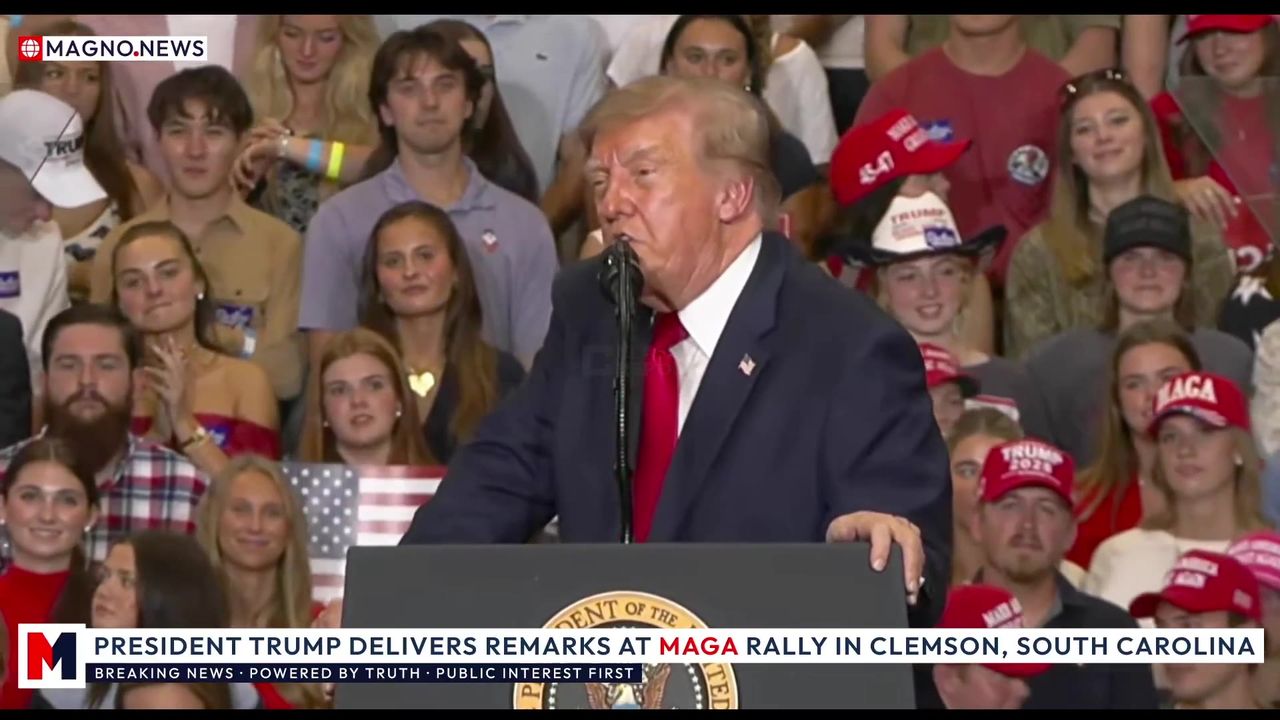
Multiple reputable outlets confirm that Trump made this remark during an October 21 rally near Clemson, South Carolina. The video corroborates Trump's account, accurately quoting him as asking Sundar Pichai to rename the Atlantic Ocean. However, there is no independent verification from Google or Sundar Pichai regarding the claimed conversation, leaving this part unconfirmed.
Google CEO Sundar Pichai actually refused Trump's request and said the quoted words to Trump.12
The quotation attributed to Sundar Pichai comes solely from Trump's account, with no independent confirmation. Reporting confirms Trump made the statement but doesn't validate Pichai's exact words.
Trump has previously asked or used executive actions that changed the names shown on U.S. government or U.S.-targeted map views (e.g., 'Gulf of America', 'Lake America').13
Trump's prior requests have indeed led to changes in how U.S.-targeted maps display names, but the context is complex regarding the technical and policy implications of such changes. His speech oversimplifies this practice.
What was posted
XA video from a rally shows Donald Trump discussing a conversation with Google Maps about renaming the Atlantic Ocean.
“Trump: I called Google Maps to change the name of the Atlantic Ocean to Trump Ocean. Sundar said, “No, no, no. This time I'm not doing it.” He said, “Oceans are different, sir. They cover a lot of countries. Please don't ask us to do that.” So we'll probably pass.”
“Trump: I called Google Maps to change the name of the Atlantic Ocean to Trump Ocean. Sundar said, “No, no, no. This time I'm not doing it.” He said, “Oceans are different, sir. They cover a lot of countries. Please don't ask us to do that.” So we'll probably pass.” — translated
Who posted it
XAccount check
Estimates from public signals — account age, posting pattern, audience — not a judgement of the person behind the account, and separate from whether this post is true.
What stood out
- Clash Report is an English-language news and analysis website focused on global conflicts, defense, and geopolitics, with a contact address in Bahçelievler, Istanbul, Turkey. (mediabiasfactcheck.com)
- The Twitter account @clashreport joined in May 2015, has 887.2K followers, and 94.6K posts, indicating significant activity and a substantial following. (sotwe.com)
- The account has a low following-to-follower ratio (1 following, 887.2K followers), which is uncommon for personal accounts but typical for news organizations. (sotwe.com)
- The account's bio and recent posts align with the content on the Clash Report website, suggesting consistency in branding and messaging. (sotwe.com)
- The account is not verified on Twitter, which is common for news organizations and does not necessarily indicate inauthenticity. (en.wikipedia.org)
Signals (4)+
- Posting cadence
- High
- Follower ratio
- High
- Notable news coverage
- None found
- Fact check history
- None found
Account checked October 19, 2026, 14:56 UTC
The media
Video✓ What is genuine
The video features authentic rally footage where Trump makes the claim in question.
The tells
- ●●● Strong signal The video is consistent with other footage from the rally.our visual review
- ●●● Strong signal Mainstream news outlets corroborated Trump's remarks.multiple reputable sources
- ●●● Strong signal There are no signs of video generation or manipulation.our visual review
Synthetic-media detector
Detector unavailableThe claim stands or falls on whether the media is real, so the detector ran.
How we checked the media
- We examined the video keyframes from the rally footage.
- We compared the video content against reports from multiple news outlets for authenticity.
- No signs of manipulation or alteration were detected in the video.
Sources
3 sources reviewed- 1The Latest: Trump rallies for Darline Graham in South Carolina’s US Senate race ↗
Associated Press · apnews.comPrimary / fact-checkerwire + AP Fact Check (Tier A)Evidence
Confirms Trump's remarks about contacting Google regarding the ocean name.
- 2Trump asked Sundar Pichai to rename the Atlantic. Google CEO said no ↗
Eastern Eye · easterneye.bizUntiereduntiered — treated as signal only, never decisiveContext
Provides coverage of Trump's claims and notes the lack of confirmation from Google.
- 3Oceans are different: Trump says Sundar Pichai rejected proposal to rename Atlantic Ocean 'Trump Ocean' ↗
Moneycontrol · moneycontrol.comUntiereduntiered — treated as signal only, never decisiveFurther reading
Reports details of Trump's comments and their implications.
Further reading
- 1Associated Press AP's coverage provides extensive context on Trump's rally and the remarks.
- 2Eastern Eye Eastern Eye provides additional details about Trump's claims and responses.
- 3Moneycontrol Moneycontrol summarizes the event and situates Trump's remarks in a broader context.
The full story
During a rally on October 21, 2026, in Clemson, South Carolina, Trump claimed he considered renaming the Atlantic Ocean to 'Trump Ocean'. He reported attempting to ask Google CEO Sundar Pichai about this change, stating that Pichai responded that 'oceans are different' and span many countries. The video taken from the rally serves as direct evidence, matching various reputable news reports. However, Google has not confirmed this interaction or Trump's account. The lack of verification from Google leaves some aspects of the claim in doubt. Nevertheless, Trump's assertion about reaching out to Google Maps remains true, making this story a blend of fact and unverified details.
Kernel of truth
Trump indeed made a statement during the rally about renaming the Atlantic Ocean.
Timeline
October 21, 2026
Trump makes remarks at a rally near Clemson, South Carolina. 1Associated Press
October 21, 2026
Reports begin surfacing detailing Trump's comments about renaming the Atlantic Ocean.
How it was framed
While Trump’s remarks during the rally are accurately reported, the lack of independent corroboration for the alleged conversation with Pichai creates ambiguity regarding the entirety of the claim.
- Emotional language. Trump's use of phrases like 'Trump Ocean' creates a strong emotional appeal.
Bias
Leans pro-Trump. The media is a campaign rally clip featuring the speaker (Trump) making self-promotional and humorous claims; a rally video is inherently political and presented to supporters, which produces a mild pro-Trump slant in tone and selection.
Bias describes how the post frames its message — the slant of the language, selection and emphasis — and is judged separately from whether the claim is true. A true claim can still be framed with a strong slant.
How we checked
1 min 27 s- 1
We reviewed the video from the rally to confirm Trump's statements.
- 2
We searched for corroborating reports from multiple news agencies.
- 3
We assessed the authenticity of the media and cross-referenced sources.
- 4
We verified that the keyframes from the video aligned with reporting about the event.
✓ Claim checked✓ Media checked✓ Sources checked
Why 82% confidence
HighThe evidence is robust, leading us to a high confidence band because multiple reliable outlets corroborate Trump's statements.
Limits. We could not obtain an independent confirmation from Google regarding the assertions made by Trump.
What we don’t know
- Whether Google or Sundar Pichai will release any statement verifying the conversation.
- If there are any internal communications from Google that could clarify the interaction Trump described.
Spot it yourself
Find the overstatementLooks suspicious, isn’t proof
- The tone of the claim suggests a humorous context, making it seem exaggerated.
- No direct evidence from Google to back Trump's depiction of the conversation.
- The simplicity of the statement may overlook complex dynamics of government and corporate relationships.
The actual evidence
- Trump was indeed quoted directly during his rally, and the video evidences this.
- Major news outlets, including the Associated Press, confirmed Trump's remarks on the event.
- No confirmation exists from Google to validate the claimed interaction.
- 1
Check for direct quotes from reliable sources.
Look for reputable coverage in mainstream media that verifies the statement.
- 2
Consider the context of the claim.
Analyze if the statement reflects a broader pattern or if it is an isolated remark.
- 3
Verify the authenticity of the media.
Use independent sources to check for the truth of any footage or images.
- 4
Consult fact-checking organizations.
Look for any existing fact-checks that address the claims made.
Takeaway
When evaluating claims, it's essential to distinguish between what is said and what can be independently verified. Always question the context and source of the information.
Questions people ask
Why is there no confirmation from Google about Trump's claim?+
Google's lack of comment may indicate they choose not to engage with the context of public statements made by political figures.
What does it mean when a claim is labeled 'TRUE_BUT'?+
This label indicates that while the core of the claim is accurate, there are important points or nuances that consumers should consider.
What should I do if I encounter similar claims in the future?+
Always check for independent verification from reliable sources and not just accept what is stated at face value.
Go deeper
- verifiable
- Capable of being confirmed through independent evidence or reliable sources.
- caveats
- Warnings or considerations that should be taken into account when interpreting information.
- claim verification
- The process of determining the truthfulness and accuracy of a statement or assertion.
People also search for
For educators+
- How can emotional language impact our understanding of statements made by public figures?
- What responsibilities do media outlets have when covering politically charged events?
- How can we critically evaluate the accuracy of claims made by politicians?
About this check
- Platform
- X
- Posted by
- @clashreport
- Posted
- October 21, 2026
- Age when checked
- Under 24 hours old when checked
- Where it spread
- United States, India
- Audience
- International audience
- Language
- EN
- Status
- ● Post is live
- Verified
- October 22, 2026, 15:16 UTC
- Published
- October 22, 2026, 15:16 UTC
Reach. 14,590 likes on X (syndication, 2026-10-22); picked up by Hindustan Times trending and Terra Brasil Notícias 22 Oct
This verdict was generated with AI from the sources shown. AI can make mistakes — check the sources before relying on it.
Check anything yourself, in seconds.
Share any social post or video to What the Fact and get the verdict, the confidence, and the receipts.