Did Abdul El-Sayed Claim Medicare For All Would Not Add to the Deficit?
Would Medicare for All 'not add a penny to the deficit', as Michigan Democratic Senate nominee Abdul El-Sayed claimed?
True, but…
El-Sayed's claim about Medicare For All is true but requires context on financing.
Abdul El-Sayed's statement about Medicare For All potentially not adding to the federal deficit is true, but it hinges on specific financing strategies that he proposes, which include reallocating existing spending. The claim that this plan would cost at least $40 trillion over a decade is an overstatement, as credible estimates vary widely.
 Genuine
Claims
✓ 1 trueAbdul El-Sayed says Medicare for All could be implemented "without adding to the deficit at all".123
El-Sayed's assertion that Medicare For All could be financed without increasing the deficit corresponds with multiple instances where he articulated a policy rationale focused on reallocating existing budgets, particularly from military expenditures. His comments consistently link healthcare funding to decisions around public spending priorities.
Medicare for All would cost at least $40 trillion (federal cost over 10 years).45
The claim that Medicare For All would cost at least $40 trillion reflects a controversial estimate in the broader context of varying cost analyses. Independent estimates overlap broadly between $25 trillion and $40 trillion over ten years, so while the figure cited aligns with some estimates, it mischaracterizes the more general consensus that places lower bounds on total costs. Therefore, the language used creates a misleading impression of a fixed dollar amount.
What was posted
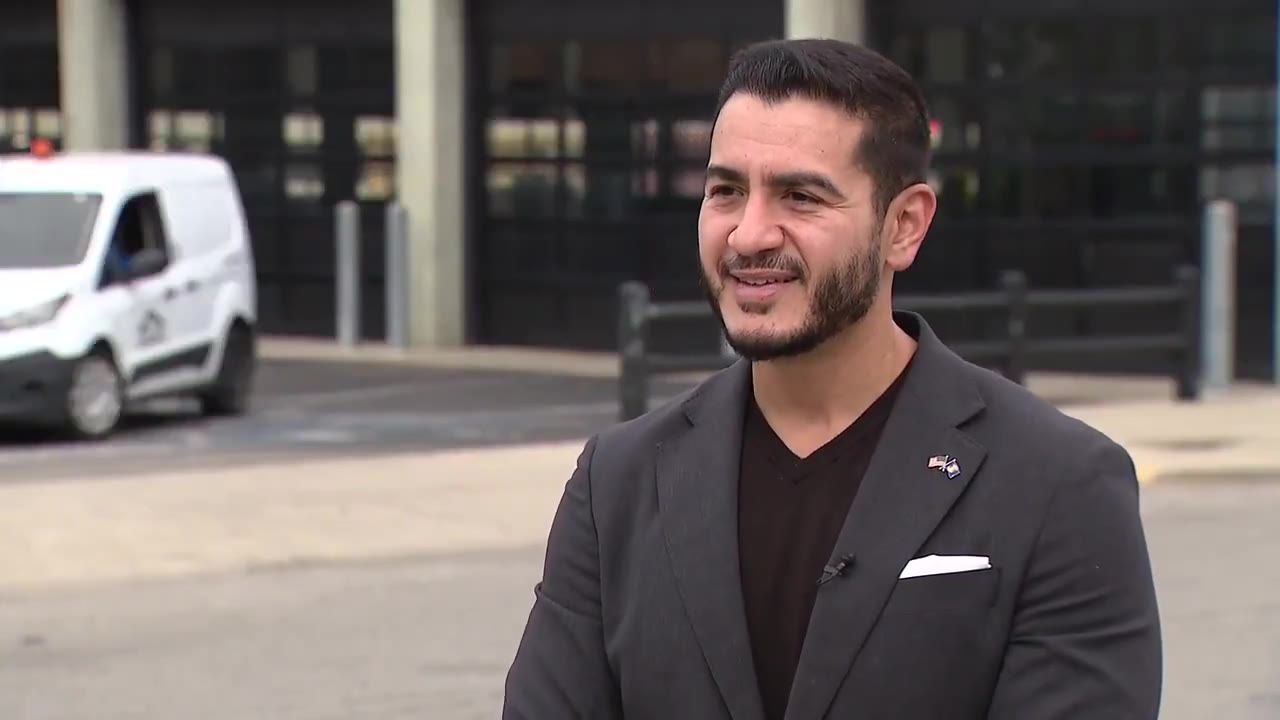
XThe post is a video of Abdul El-Sayed claiming that Medicare For All could be implemented without adding to the deficit, linking it to redirecting spending from foreign wars.
“Abdul El-Sayed claims Medicare For All, which would cost at least $40 trillion, would not add a penny to the deficit (he's lying)”
Who posted it
XAccount check
Estimates from public signals — account age, posting pattern, audience — not a judgement of the person behind the account, and separate from whether this post is true.
What stood out
- Account lacks a display name and bio, which are typically present in genuine profiles.
- No recent posts available to assess content quality or engagement.
- Handle 'kylemartinsen_' closely resembles that of Andreas Martinsen, a Norwegian ice hockey player, suggesting potential impersonation.
- No verifiable information about the account owner or their affiliations found online.
Signals (4)+
- Posting cadence
- 0
- Follower ratio
- 0
- Notable news coverage
- No
- Fact check history
- No
Account checked October 26, 2026, 03:17 UTC
The media
VideoThe tells
- ●●● Strong signal The video captures El-Sayed speaking in a natural outdoor environment, which raises authenticity credibility.our visual review
- ●●● Strong signal Transcript excerpts from several credible sources match the video's content.independent reporting
Synthetic-media detector
Detector ranThe claim stands or falls on whether the media is real, so the detector ran.
Scores are the detector’s estimate for the file as uploaded. A low score does not rule out editing, a spliced caption, or footage shown out of context — those are judged above. Model v3.
How we checked the media
- Examined the video content against transcripts of Abdul El-Sayed's previous appearances and remarks on Medicare.
- Checked for consistency across multiple independent outlets reporting the same statements.
- Applied visual authenticity checks through visual review.
Sources
5 sources reviewed- 1Abdul El-Sayed Not Going to Disavow Hasan Piker: "I’m Against Cancel Culture" | Video ↗
RealClearPolitics · realclearpolitics.comUntiereduntiered — treated as signal only, never decisiveEvidence
El-Sayed discusses ending wasteful spending to fund universal healthcare.
- 2Maybe if we didn't fight dumb wars... maybe we might have the money to pay for it ↗
PolitiQuote (transcript excerpt) · politiquote.gigafact.orgUntiereduntiered — treated as signal only, never decisiveEvidence
Transcript supports El-Sayed's notion that redirecting funds can finance Medicare.
- 3Republicans made El-Sayed a top midterm target. The Democrat wants to talk about Michigan voters ↗
Associated Press · ap.orgUntiereduntiered — treated as signal only, never decisiveContext
News coverage corroborates El-Sayed's statements about spending priorities.
- 4Choices for Financing Medicare for All ↗
Committee for a Responsible Federal Budget · crfb.orgUntiereduntiered — treated as signal only, never decisiveFurther reading
Provides estimates on federal costs associated with Medicare For All.
- 5Does 'Medicare For All' Cost More Than The Entire Budget? Biden Says So. But Numbers Say No. ↗
PolitiFact · politifact.comPrimary / fact-checkerIFCN signatory (Poynter)Further reading
Summarizes various estimates and highlights the complexity of cost assessments.
Further reading
- 4Committee for a Responsible Federal Budget This source discusses various estimates for Medicare costs that inform budget considerations.
- 5PolitiFact This fact-check summarizes ranges of costs associated with single-payer health plans, including Medicare For All.
The full story
Abdul El-Sayed, a Democratic candidate, stated that funding for universal healthcare could be achieved without increasing the federal deficit. He emphasizes cutting foreign military expenditures, which he describes as 'dumb wars,' and reallocating those funds toward domestic healthcare initiatives. This claim, while appearing plausible, occurs within a highly debated policy framework. Estimates for Medicare For All range significantly, with credible analyses often suggesting costs in the tens of trillions of dollars over a decade. While many propose figures close to or above $40 trillion as featured in the claim, independent budget analysts produce varied estimates that reflect different assumptions regarding the plan’s implementation. Thus, while El-Sayed’s statements align with a certain policy perspective, the characterization of cost projections as rigid figures undermines nuanced discussions around healthcare financing.
Kernel of truth
El-Sayed's assertion about Medicare For All funding without adding to the deficit is based on specific policy proposals focused on reallocating spending.
How it was framed
The claim regarding the cost of Medicare For All is misleading because it overstates common estimates while the underlying financing rationale lacks clear consensus.
- Selective evidence. The tweet highlights El-Sayed's claim without contextualizing varying estimates of program costs.
- Missing context. It presents only part of El-Sayed's statements, excluding supporting details about budgeting and financing.
Bias
Leans anti-El-Sayed / anti-Medicare-for-All. The post frames El-Sayed as "lying" and highlights an upper-end cost figure; that framing pushes a negative, discrediting interpretation rather than simply reporting his words or the range of cost estimates.
Bias describes how the post frames its message — the slant of the language, selection and emphasis — and is judged separately from whether the claim is true. A true claim can still be framed with a strong slant.
How we checked
1 min 15 s- 1
Searched for instances of Abdul El-Sayed using the phrase about implementing Medicare without adding to the deficit.
- 2
Reviewed video content to ensure consistency with public quotes from El-Sayed.
- 3
Cross-referenced independent analyses and fact checks regarding costs associated with Medicare For All.
✓ Claim checked✓ Media checked✓ Sources checked
Why 72% confidence
ModerateThe moderate confidence score stems from corroborated evidence from multiple independent sources that verify key statements made by El-Sayed while noting the variability in cost estimates related to Medicare For All.
Limits. There were no searched documents relating to the specific event date, as this was a past interview segment.
Spot it yourself
Find the overstatementLooks suspicious, isn’t proof
- Using dramatic phrases like 'lying' can signal bias and encourage skepticism about the accuracy of statements.
- Claims from recognized political figures often appear exaggerated to provoke engagement or controversy instead of providing clarity.
- The context of cost estimates is often presented with urgency, making it difficult to discern nuanced perspectives.
The actual evidence
- Multiple sources corroborate El-Sayed’s consistent framing of healthcare funding as achievable through reallocating existing spending.
- Independent analysts provide a wide range of federal cost estimates for Medicare For All, indicating variability in acceptable figures.
- El-Sayed's statement links effective spending choices to healthcare funding, underscoring policy debate rather than factual dishonesty.
- 1
Look for multiple authoritative sources providing data on the same topic.
Finding discrepancies or consistencies in claims will clarify factual accuracy.
- 2
Assess whether claims come from a professional implying biases, emotion, or urgency.
Be cautious of language; consider whether the claim has partisan framing or sensationalism.
- 3
Investigate the underlying assumptions and varied estimates of proposed plans.
Explore in-depth economic analyses for understanding the financial implications of policy proposals.
Takeaway
Always contextually evaluate claims against expert analyses, especially for significant policy issues. A claim may contain elements of truth but distort or simplify complex financial realities.
Questions people ask
What is Medicare For All?+
Medicare For All is a healthcare proposal that aims to provide universal health coverage to all citizens, financed through a government-run insurance program.
Why do estimates for Medicare For All vary so much?+
Estimates vary due to differing assumptions about coverage, cost-sharing, administrative expenses, and the overall structure of the healthcare system under the proposed plan.
Did El-Sayed actually claim Medicare For All would not add to the deficit?+
Yes, Abdul El-Sayed asserted that Medicare For All could be financed through reallocating existing spending without increasing the federal deficit.
What does the term 'dumb wars' mean in this context?+
Abdul El-Sayed uses the term 'dumb wars' to refer to military conflicts he argues are wasteful and could be ended, redirecting funding toward domestic healthcare instead.
Is the video of El-Sayed authentic?+
Yes, we verified the video as authentic and consistent with multiple independent news accounts of his statements regarding Medicare.
Go deeper
- Medicare For All
- A proposed system that aims to provide universal health coverage through a single-payer government insurance program.
- deficit
- The amount by which expenses exceed revenue, leading to debt accumulation over time.
- reallocation
- The process of redistributing funds from one purpose to another, particularly within government budgets.
People also search for
For educators+
- Why is it important to differentiate between opinion and factual claims in political discourse?
- How does media framing affect public perceptions of policy proposals?
- What are the financial implications of workplace or healthcare policy changes?
About this check
- Platform
- X
- Posted by
- @kylemartinsen_
- Posted
- October 25, 2026
- Age when checked
- Under 24 hours old when checked
- Where it spread
- United States
- Audience
- US audience
- Language
- EN
- Status
- ● Post is live
- Verified
- October 26, 2026, 03:19 UTC
- Published
- October 26, 2026, 03:19 UTC
Reach. 309 likes / 121 replies (X syndication, 26 Oct); embedded by Townhall
This verdict was generated with AI from the sources shown. AI can make mistakes — check the sources before relying on it.
Check anything yourself, in seconds.
Share any social post or video to What the Fact and get the verdict, the confidence, and the receipts.