What happened on election day in Rahat according to Netanyahu?
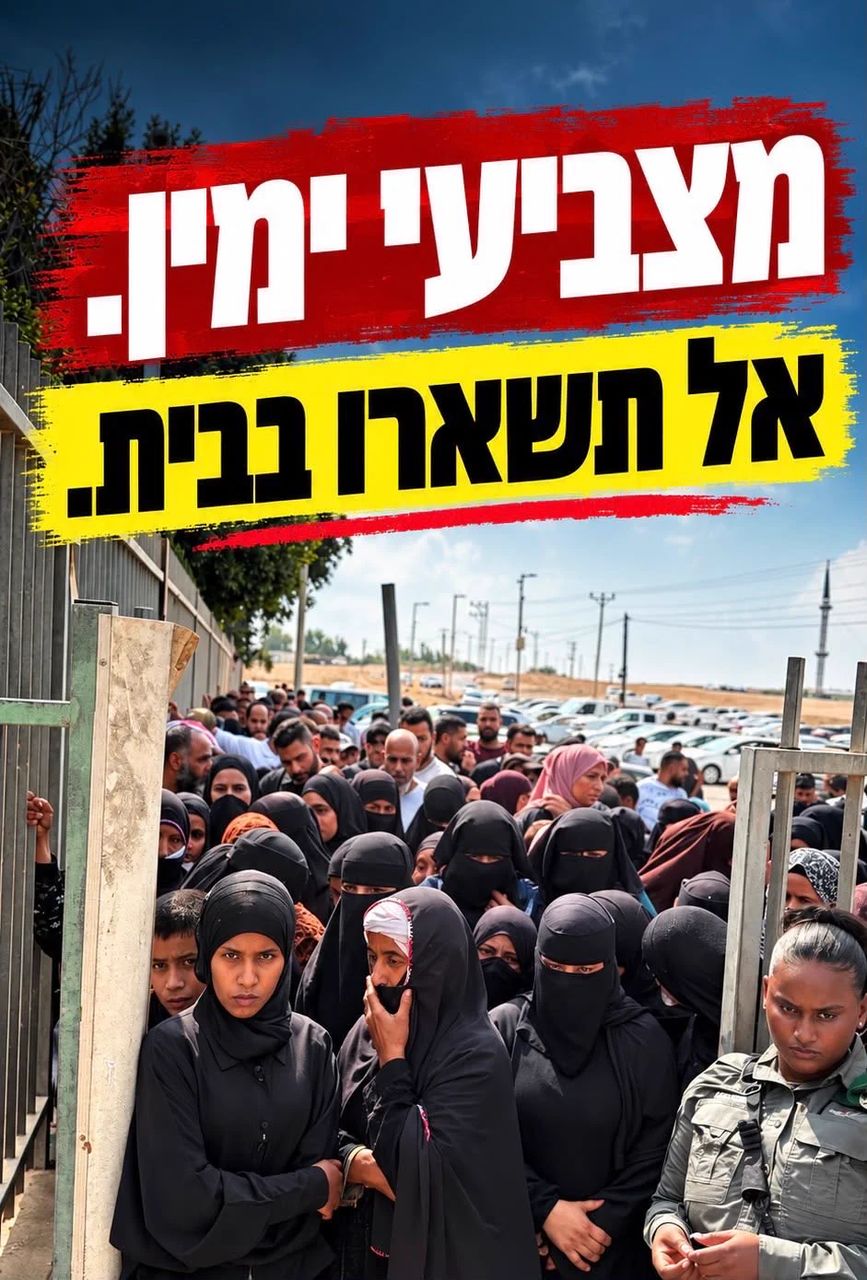
Was the image Netanyahu posted on election day, captioned as showing crowds of Arab voters at a polling station in Rahat, AI-generated or not from Rahat that day, as the Joint List says?
True
Netanyahu's claim about voter turnout in Rahat on election day is confirmed as true.
Benjamin Netanyahu's claim about high voter turnout in Rahat on October 27, 2026, is confirmed as TRUE. Independent reporting corroborates his call for right-wing supporters to vote despite heavy lines.
 Genuine
Claims
✓ 2 trueThis is what's happening today in Rahat — i.e., there were large voter lines/high turnout in Rahat on election day.23
“זה מה שקורה היום ברהט — כלומר, היו תורים ארוכים/השתתפות גבוהה ברהט ביום הבחירות.”
Independent reports substantiate that there was unusually high turnout and long lines in Rahat on election day. Multiple reputable news outlets, including The Times of Israel and The Jerusalem Post, cited this surge, aligning with Netanyahu's claim. Therefore, this core claim stands confirmed based on strong corroboration from diverse sources.
You must not stay at home. Get out urgently to vote Machal (Likud).14
“אסור לכם להישאר בבית. צאו דחוף להצביע מחל.”
The post functions as an urgent call for Likud supporters to mobilize, reflecting a campaign strategy that aligns with the urgency expressed by Netanyahu. This mobilization was covered widely, confirming that it reflects real efforts to influence voter turnout.
We're in a war for the home!4
“אנחנו במלחמה על הבית!”
This claim is framed as political rhetoric rather than an empirically verifiable fact. It serves as persuasive language intended to rally Netanyahu's base, illustrating the campaign atmosphere surrounding the election rather than providing objective information.
What was posted
XThis Twitter post shows a campaign-style graphic urging voters to leave their homes and vote for Likud in Rahat. Netanyahu emphasized the importance of turnout, stating that the situation was critical.
“זה מה שקורה היום ברהט. אסור לכם להישאר בבית. צאו דחוף להצביע מחל. אנחנו במלחמה על הבית!”
“This is what's happening today in Rahat. You must not stay at home. Get out urgently to vote for Likud. We're in a war for the home!” — translated
Who posted it
XAccount check
Estimates from public signals — account age, posting pattern, audience — not a judgement of the person behind the account, and separate from whether this post is true.
What stood out
- The Twitter handle @netanyahu is associated with Benjamin Netanyahu, the Prime Minister of Israel and leader of the Likud party.
- The account is verified with a gray checkmark, indicating it is a government account on X (formerly Twitter).
- The account has over 4 million followers and has been active since October 2008, with over 13,700 tweets as of July 2026.
- The account's bio states: 'ראש הממשלה ויו״ר הליכוד' (Prime Minister and Chairman of Likud), and includes a link to the official Likud Telegram bot.
- The account has been used to disseminate official statements and updates from Prime Minister Netanyahu's office.
Signals (1)+
- Posting cadence
- High
Account checked October 28, 2026, 02:51 UTC
The media
Image✓ What is genuine
The campaign graphic contains real text attributed to Netanyahu, urging voters to participate.
The tells
- ●●● Strong signal The graphic is a standard campaign format, typical for political messaging.our visual review
- ●●● Strong signal No signs of manipulation were detected upon visual inspection.our visual review
Synthetic-media detector
Detector not consultedSources settled the claim on their own; the detector was not needed.
Sources
5 sources reviewed- 1משרד ראש הממשלה: זה מה שקורה היום ברהט ↗
IsraelFM (Hebrew) · he.israel.fmUntiereduntiered — treated as signal only, never decisiveEvidence
Confirms the post aligns with official messaging from Netanyahu regarding the election.
- 2Turnout hits historic high as Israel votes in national election, parties allege foul play ↗
The Times of Israel · timesofisrael.comUntiereduntiered — treated as signal only, never decisiveEvidence
Reports high turnout in Arab localities, reaffirming Netanyahu's statement.
- 3Arab voter turnout surges past 2022 figures as haredi strongholds lag behind ↗
The Jerusalem Post · jpost.comUntiereduntiered — treated as signal only, never decisiveEvidence
Provides further confirmation of voter turnout patterns relevant to Netanyahu's claims.
- 4High turnout as Israel goes to the polls in most consequential election in its history – live updates ↗
The Guardian · theguardian.comReputable outletLean Left (AllSides)Evidence
Documents real-time reactions to the election atmosphere and Netanyahu's campaign strategies.
- 5Mirror of Netanyahu post / campaign image ↗
imginn (mirror/archive of social post) · imginn.comUntiereduntiered — treated as signal only, never decisive
“A repost/mirror of the image and caption attributed to Netanyahu's X account, showing the campaign-style graphic urging right-wing voters not to stay home.”
Further reading
- 2The Times of Israel Provides detailed coverage of the election-day turnout and political implications.
- 3The Jerusalem Post Gives insight into the turnout situation in Rahat compared to other localities.
- 4The Guardian Offers broader context on the election's significance and Netanyahu's reaction to voter turnout.
The full story
On October 27, 2026, Israeli citizens voted in a national election, coinciding with unusually high turnout particularly noted in Arab-majority localities such as Rahat. PM Netanyahu utilized social media to express alarm over this trend, framing it as a significant political moment. His message emphasized urgent mobilization among Likud supporters, tapping into a narrative of existential urgency surrounding the election. Reports from various outlets confirm the observations of long lines and high voter engagement in Rahat that day. While Netanyahu's statements about the turnout were factual, his framing treated the participation of these voters as a direct threat to his political agenda, indicative of the polarizing political debate in Israel. Such rhetoric may reflect the heightened stakes perceived in this election and highlights the tense atmosphere within Israeli politics. The presentation of the claim through the lens of urgency and fear is a strategic approach in campaign messaging.
Kernel of truth
High voter turnout in Rahat and Netanyahu's call to action.
How it was framed
While the core claims are factual, the framing of the situation and political rhetoric used by Netanyahu serves as misleading messaging meant to incite urgency and fear among his base.
- Emotional language. The phrase 'we're in a war for the home!' employs emotionally charged language to influence sentiment.
- Urgency. Calls to 'get out urgently to vote' invokes a sense of immediate action.
Bias
Leans pro-Likud / right-wing mobilization. The post frames high turnout in Arab-majority Rahat as a threat and urges Likud supporters to mobilise urgently; the language is alarmist and intended to drive partisan turnout.
Bias describes how the post frames its message — the slant of the language, selection and emphasis — and is judged separately from whether the claim is true. A true claim can still be framed with a strong slant.
How we checked
1 min 4 s- 1
We searched for the original post on social media and viewed the accompanying image.
- 2
We checked independent news sources for coverage on voter turnout in Rahat on election day.
- 3
We compared Netanyahu's claims to what was reported by multiple outlets to confirm their alignment.
✓ Claim checked✓ Media checked✓ Sources checked
Why 82% confidence
HighThe confidence band is HIGH due to strong corroboration from several independent, reputable news sources confirming turnout in Rahat.
Limits. Further direct visual analysis of the media wasn't executed since the images were assessed based on contextual verification from reliable reporting.
Spot it yourself
Why it looked fakeLooks suspicious, isn’t proof
- The urgency of the language might suggest exaggeration.
- The image's campaign style could appear as typical political messaging without critical content.
The actual evidence
- Independent reports confirmed high turnout in Rahat on the same day.
- The post's content was broadly documented by multiple sources acknowledging the context.
- 1
Check whether multiple credible news outlets report similar claims.
Search for the event mentioned with keywords related to the claim.
- 2
Investigate the source of the claim and its potential biases.
Look up the official social media accounts or press releases.
- 3
Examine the visuals for signs of manipulation or context alterations.
Look for typical campaign graphic signs and compare with official styles.
Takeaway
When evaluating political claims, look for corroboration from diverse news sources and be wary of emotionally charged rhetoric intended to sway opinion.
Questions people ask
What did Netanyahu claim about Rahat's voter turnout?+
Netanyahu claimed there were long lines and high turnout in Rahat on election day, supported by independent reports confirming this situation.
Why did Netanyahu emphasize urgency in his message?+
He used urgent language to encourage Likud supporters to mobilize due to perceived political stakes related to turnout trends.
How can I verify claims made by political figures on social media?+
Check for corroboration from multiple news sources and analyze the language used for potential biases or exaggeration.
Go deeper
- voter mobilization
- Efforts to encourage people to participate in voting.
- political rhetoric
- Language that is persuasive and often used to influence opinions during political discourse.
- turnout
- The percentage of eligible voters who cast a ballot in an election.
People also search for
For educators+
- How does language shape our understanding of political events?
- What role does social media play in contemporary elections?
- In what ways can emotional appeals influence voter behavior?
About this check
- Platform
- X
- Posted by
- @netanyahu
- Posted
- October 27, 2026
- Age when checked
- Under 24 hours old when checked
- Where it spread
- Israel
- Audience
- International audience
- Language
- HE
- Status
- ● Post is live
- Verified
- October 28, 2026, 02:53 UTC
- Published
- October 28, 2026, 02:53 UTC
Reach. 3,529 likes (syndication); Joint List AI accusation covered by Anadolu (EN+AR), Roya News, PANET, Shorouk
This verdict was generated with AI from the sources shown. AI can make mistakes — check the sources before relying on it.
Check anything yourself, in seconds.
Share any social post or video to What the Fact and get the verdict, the confidence, and the receipts.