Did Trump say of Abdul El-Sayed, "send him back to where he came from"?
Was Michigan Senate candidate Abdul El-Sayed born in Michigan, despite Trump telling voters to 'send him back to where he came from'?
True
He said it — but El-Sayed is Michigan-born, and the charges against him are baseless.
TRUE. Fox News live footage shows Donald Trump telling a 30 October 2026 rally in Daytona Beach, Florida to vote against Abdul El-Sayed and "send him back to where he came from." CNN, HuffPost, Mediaite, Newsweek and the Telegraph reported the same quote. But El-Sayed was born in Rochester Hills, Michigan, and Trump's claim that he dislikes Jewish and Black people is unsupported.
 Genuine
Claims
✓ 2 true · ✕ 2 falseTrump said of Abdul El-Sayed at a Daytona Beach, Florida rally: "I hope you're gonna vote against him and send him back to where he came from."12345
“I hope you're gonna vote against him and send him back to where he came from.”
This is the claim the whole post rests on, and it holds up on two independent fronts. First, the footage: the video is ordinary Fox News live broadcast coverage, with a consistent chyron naming a Florida rally and a countdown reading "4 Days" to the midterms, which matches the 3 November 2026 election date. Second, the reporting: five outlets — CNN, HuffPost, Mediaite, Newsweek and the Telegraph via Yahoo News — carry the same sentence from a rally in Daytona Beach on the evening of 30 October 2026. These are separate newsrooms, not one wire copy repeated, and their wording of the key phrase is identical, which is what you would expect when several reporters hear the same words in the same room. Where they differ is in framing and what they add around the quote, not in the quote itself. The caption on the post is a fair, near-verbatim rendering of what the video's audio contains; the transcript excerpt of the clip shows the same sentence. Nothing here requires trusting the account that posted it: the primary evidence is the broadcast, and the reporting corroborates it.
Abdul El-Sayed "doesn't like Jewish people and he doesn't like Black people" / "is not a big fan of Jewish people, and he's not a big fan of Black people."34
“Abdul is not a big fan of Jewish people, and he's not a big fan of black people.”
This is a claim made inside the genuine clip, by Trump, and it is the part that does not hold. Reporters who covered the rally described the characterisation as baseless: Mediaite says Trump made the charge "baselessly", and the Telegraph notes that while El-Sayed has criticised Israel, he has not disparaged Jewish or Black voters. That is an argument from absence — no evidence was offered and none surfaced — rather than a positive finding that the opposite is proven. We therefore rate the verdict FALSE but the confidence MODERATE: the specific charges of hostility to Jewish and Black people are unsupported by anything in the record, but a negative claim of this kind is harder to nail down than a verifiable quote. Readers should weigh the difference between "reporters found no basis" and "we proved it false". Two outlets independently reaching the same description is meaningful, though both are covering the same rally, so they are not fully separate.
Still open: No statement from El-Sayed responding to the specific characterisation appears in our sources.
Trump urged "Blacks for Trump" attendees to vote for Mike Rogers over El-Sayed.3
“Blacks for Trump, you ought to vote for Mike Rogers, not that other guy.”
This is the lesser-noticed part of the clip and the easiest to verify, because it is audible in the footage itself. Trump names Mike Rogers, tells the attendees in "Blacks for Trump" shirts to vote for him rather than "that other guy", and the transcript of the clip shows the same words. Mediaite, HuffPost and MEAWW all quote the endorsement from the same Daytona Beach rally, which places it in the same speech rather than in some other event spliced in. The agreement between what the broadcast audio carries and what reporters wrote down from the room is the decisive point: two channels of evidence, one recorded and one reported, line up. Because the clip is unedited broadcast footage and the endorsement is not the contested part of the story, there is no obvious way it could be a fabrication — and no source suggests it is. We rate this TRUE with HIGH confidence.
Implied claim that El-Sayed is foreign or should be removed from the country, although he was born in the United States.23
“send him back to where he came from”
The phrase "send him back to where he came from" carries an implication — that the person belongs somewhere else — and that is the false premise at the heart of the story. Abdul El-Sayed was born in Rochester Hills, Michigan, in 1984 to Egyptian immigrant parents, as Mediaite and HuffPost both report. He is a native-born American, and under the US Constitution's natural-born requirement that is also what makes him eligible for the Senate seat he is running for. So the implied claim fails on a documented biographical fact, not on interpretation. Two newsrooms independently state his birthplace and parentage, and birth facts of this kind are checkable public record rather than matters of opinion. This is why the overall content verdict is MISLEADING while the quote itself is TRUE: the post accurately reproduces what Trump said, but what he said rests on a false picture of who El-Sayed is. The video is real; the premise inside it is not.
What was posted
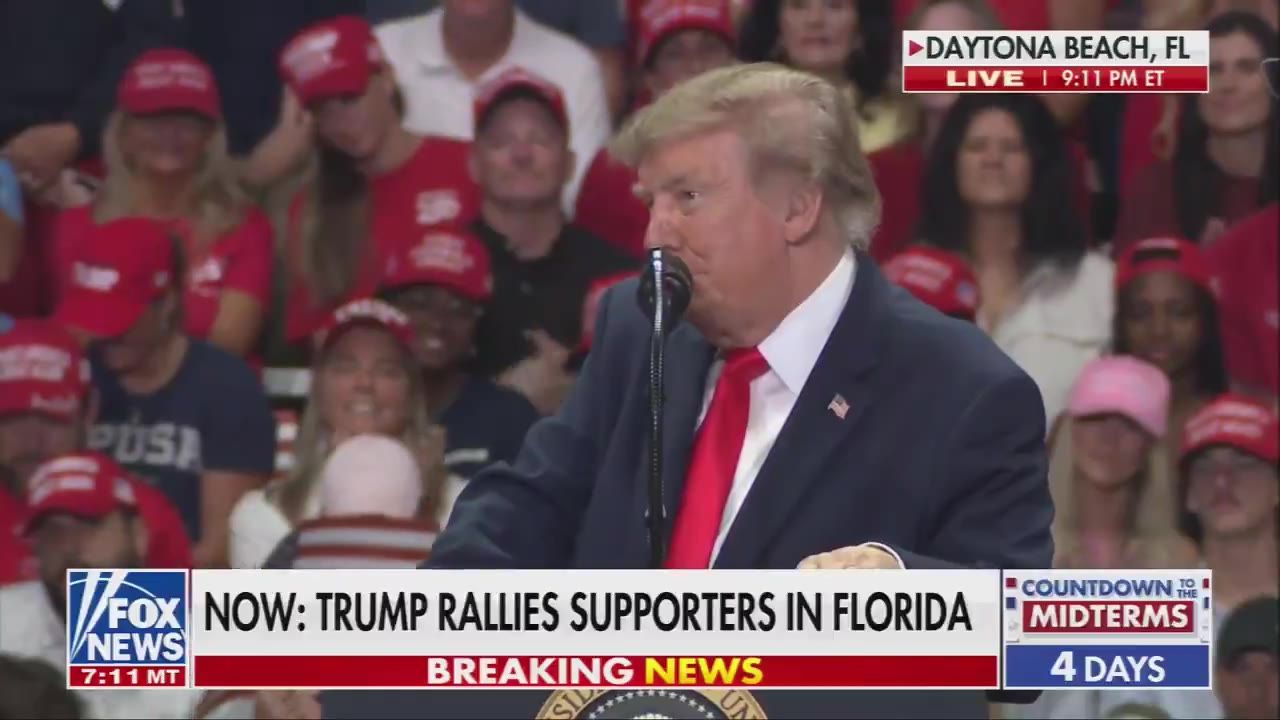
XA clip of Fox News live coverage from a Trump rally, posted to X with a one-line caption summarising what Trump says about Abdul El-Sayed. The video shows Trump at the podium in front of a crowd, with Fox News on-screen graphics including "NOW: TRUMP RALLIES SUPPORTERS IN FLORIDA" and "Countdown to the Midterms: 4 Days". The post asks readers to take the clip as proof of what Trump said at the rally, which it is.
“Trump on El-Sayed: I hope you send him back to where he came from.”
Posted on X by the account Acyn, which regularly posts short clips of broadcast political coverage. The clip itself is Fox News live footage, not something the account filmed.
Who posted it
XAccount check
Estimates from public signals — account age, posting pattern, audience — not a judgement of the person behind the account, and separate from whether this post is true.
What stood out
- The account '@Acyn' is operated by a young American individual, with a follower count exceeding 2.5 million as of July 2025. (clrn.org)
- The account functions as a content aggregator, primarily focusing on short-form video clips sourced from news broadcasts and political events. (clrn.org)
- The operator's real identity remains undisclosed, and the account lacks a profile picture and bio, which are common signs of authenticity. (asapguide.com)
- The account has attracted criticism for potential selective editing, miscontextualization, and the spread of misinformation. (clrn.org)
Signals (4)+
- Posting cadence
- High
- Follower ratio
- High
- Notable news coverage
- Yes
- Fact check history
- Yes
Account checked October 25, 2026, 15:13 UTC
The media
Video✓ What is genuine
The footage is genuine Fox News live broadcast video of a real campaign rally in Daytona Beach, Florida. The words in the clip are really Trump's; the problem is what he says, not whether he said it.
The tells
- ●●● Strong signal On-screen Fox News graphics are internally consistent: "NOW: TRUMP RALLIES SUPPORTERS IN FLORIDA", "DAYTONA BEACH, FL", a live timestamp and "Countdown to the Midterms: 4 Days", matching the 3 November 2026 election.our visual review
- ●●● Strong signal Our detector scored the footage at roughly 0.2% likelihood of being AI-generated, with the deepfake class low and no generator family standing out.our detector
- ●●○ Supporting signal Skin, lighting, crowd movement and text stay stable across frames, with no morphing, garbled lettering or compositing edges.our visual review
- ●●● Strong signal The venue and date in the graphics match what five news outlets reported about the same rally.our visual review
Synthetic-media detector
Detector ranThe claim stands or falls on whether the media is real, so the detector ran.
Scores are the detector’s estimate for the file as uploaded. A low score does not rule out editing, a spliced caption, or footage shown out of context — those are judged above. Model v3.
How we checked the media
- Reviewed the video frames visually for broadcast graphics, setting, crowd and continuity.
- Ran our AI-generation detector on the footage.
- Compared the rally setting and on-screen date cues with independently dated coverage of the event.
Sources
5 sources reviewed- 1Trump continues attacks on Abdul El-Sayed ↗
CNN · us.cnn.comLow reliabilityBORDERLINE B/C — reporting w/ strong bias tag; opinion is CEvidence
Confirms the "send him back" quote and notes El-Sayed was born and raised in Michigan.
- 2Trump's Comment About El-Sayed Has Critics Pointing Out 1 Important Detail ↗
HuffPost · huffpost.comLow reliabilityLeft — partisan digitalEvidence
Quotes the rally line verbatim and reports El-Sayed's Michigan birth and Egyptian parentage.
- 3‘Send Him Back to Where He Came From’: Trump Demands El-Sayed Be Sent Back To the United States ↗
Mediaite · mediaite.comUntiereduntiered — treated as signal only, never decisiveEvidence
Places the remark at a Friday-night Daytona Beach rally and describes the characterisation as baseless.
- 4Trump tells Muslim Senate candidate to 'go back where he came from' ↗
The Telegraph via Yahoo News · malaysia.news.yahoo.comUntiereduntiered — treated as signal only, never decisiveEvidence
Reports the remark and notes El-Sayed has criticised Israel but not disparaged Jewish or Black voters.
- 5Haley Stevens could be paving way for Rogers endorsement: Ex-Obama adviser ↗
Newsweek · newsweek.comUntiereduntiered — treated as signal only, never decisiveEvidence
Independently records that Trump made the Jewish and Black people claim at the Daytona Beach rally.
Further reading
- 2HuffPost Sets the quote alongside the citizenship detail that changes how it reads.
- 4The Telegraph via Yahoo News Explains what El-Sayed has and has not said about Jewish voters.
- 3Mediaite Fixes the rally's venue and date and calls the characterisation baseless.
The full story
The kernel of truth here is simple and fully documented: Donald Trump did say it. At a campaign rally in Daytona Beach, Florida on the evening of 30 October 2026, four days before the midterms, he told supporters in "Blacks for Trump" shirts to vote for Republican Mike Rogers and to "send him back to where he came from" when it came to the Democratic Senate nominee, Abdul El-Sayed.
That is why the post spread the way it did. A viewer watching the clip sees a broadcast graphic, a crowd, a timestamp and a podium — all the signals people use to decide something is real — and those signals are accurate. The clip was not edited, the audio was not swapped and the caption did not invent a sentence. Anyone who doubted the post on the grounds that it looked like a set-up was doubting the wrong thing.
The falsehood sits one layer down, in the words themselves. El-Sayed was born in Rochester Hills, Michigan, in 1984 to Egyptian immigrant parents, so "send him back to where he came from" invites the audience to picture a foreigner who could be deported. Trump also told the crowd, without evidence, that El-Sayed "is not a big fan of Jewish people" and "not a big fan of black people." Reporters covering the rally described those characterisations as baseless, noting El-Sayed has criticised Israel but has not disparaged Jewish or Black voters.
This is the pattern that makes a story like this travel: a verifiable act, quoted accurately, used to carry an unverifiable accusation. The quote is the proof; the accusation hitches a ride on it.
Kernel of truth
Trump really made the remark at a Fox-broadcast rally in Daytona Beach on 30 October 2026; what is false is the implication that El-Sayed is foreign and the unsupported charge that he is hostile to Jewish and Black people.
Timeline
October 30, 2026
Trump speaks at a rally in Daytona Beach, Florida, telling "Blacks for Trump" attendees to back Mike Rogers and saying of Abdul El-Sayed, "send him back to where he came from." 3Mediaite
October 30, 2026
The clip circulates on X, including from the Acyn account, as Fox News live coverage of the rally.
November 3, 2026
US midterm elections, four days after the rally; the Fox News chyron counts down to this date.
How it was framed
The video and caption are accurate: Trump really said this, at this rally, on this date. But the statement being quoted frames a Michigan-born American as someone who should be sent back to another country, and pairs that with unsupported claims about his views on Jewish and Black people. The accurate quote is used to carry a misleading picture of the person it describes.
- “Visual proof”. The post is broadcast footage with a live chyron and timestamp, offered as direct proof of the words — proof that is real but only covers the quote, not the claims about El-Sayed.
- Us vs. them. "send him back to where he came from" and "you ought to vote for Mike Rogers, not that other guy" split the crowd into belonging and not belonging.
- Emotional language. "I hope you're gonna vote against him and send him back to where he came from" pairs a hope with removal from the country.
- Missing context. The clip does not mention that El-Sayed was born in Michigan, so the audience is left with the impression of a foreign figure.
- Borrowed authority. Fox News live graphics and the presidential podium lend the segment the weight of official broadcast coverage.
Posted on X by the account Acyn, which regularly shares short clips of broadcast political coverage. The video itself is Fox News live footage of a rally in Daytona Beach, Florida; no outlet rating for the posting account is recorded in our sources.
Bias
Leans anti-Trump. The account selects an inflammatory clip of Trump attacking a Democratic Senate candidate, and the caption isolates the most provocative line, but the quotation is verbatim and the rally context is preserved, so the slant is one of emphasis rather than distortion.
Bias describes how the post frames its message — the slant of the language, selection and emphasis — and is judged separately from whether the claim is true. A true claim can still be framed with a strong slant.
How we checked
56 s- 1
Searched for the exact rally quote and Abdul El-Sayed's name across news coverage.
- 2
Searched for Trump's characterisation of El-Sayed alongside Mike Rogers to find the same event.
- 3
Searched specifically for existing fact-checks of the clip from major fact-checking outlets.
- 4
Reviewed the video frames visually for broadcast graphics, setting and continuity.
- 5
Ran our AI-generation and deepfake detector on the footage.
- 6
Compared the event details in the clip with independently dated reporting.
✓ Claim checked✓ Media checked✓ Sources checked
Why 90% confidence
ModerateWe rate the quote TRUE with HIGH confidence and the headline as a whole MODERATE. The quote is about as well evidenced as a speech can be: five newsrooms plus genuine broadcast footage agreeing word for word. The overall band is held at MODERATE because the posted caption is accurate while the statement it reproduces is not — the post is true about what happened and misleading about the person it describes, and holding both at once is a judgement call.
Limits. We could not open the original pages behind our search results, so our reading of the coverage rests on publisher snippets and titles. We found no dedicated fact-check of the clip, and we have no on-record response from El-Sayed or the White House to the specific characterisation.
What we don’t know
- Whether the full rally speech contained anything that changes how the quoted sentence reads in context.
- Whether El-Sayed or his campaign responded to the "send him back" remark.
- Whether the original poster intended the caption as a direct quote or a paraphrase; it is close but not word-for-word.
- Why no major fact-checker had published on the clip at the time of our search.
Spot it yourself
Find the overstatementLooks suspicious, isn’t proof
- It comes from a partisan-leaning account that posts clipped broadcast footage. That tells you to check the clip, not that the clip is fake.
- The claim is inflammatory. An uncomfortable quote is not evidence of fabrication; the question is whether the person said it.
- A short clip can hide context. Here the missing context is a fact about the subject's birthplace, not a spliced sentence.
- The caption paraphrases rather than quoting word for word. Paraphrase is a reason to check the audio, not proof of distortion.
The actual evidence
- Five independent newsrooms reported the identical sentence from the same Daytona Beach rally on 30 October 2026.
- The video frames carry Fox News broadcast graphics, a Daytona Beach label and a midterm countdown consistent with the date.
- Our AI-generation detector put the footage at around 0.2% likelihood of being synthetic, and frames show no compositing or text errors.
- Mediaite and HuffPost both report El-Sayed was born in Rochester Hills, Michigan, in 1984, which undercuts the "send him back" premise.
- Reporters described Trump's claim that El-Sayed dislikes Jewish and Black people as baseless.
- 1
Check the quote against more than one newsroom
Search the distinctive phrase in quotation marks. If only one outlet has it, treat it as unconfirmed; if several independent ones carry the identical wording from the same event, the quote is solid.
- 2
Match the on-screen details to a date
Read the chyron, venue name and any countdown or timestamp, then see whether reporting on that rally lines up with them.
- 3
Separate the quote from the claim inside it
Ask two questions: did the speaker say this, and is what the speaker said true? Here the answer is yes, then no. A verified quote can still carry a false accusation.
- 4
Check the biographical premise
When a statement implies someone is foreign or doesn't belong, look for their birthplace and citizenship in reporting before accepting the implication.
- 5
Run a reverse search on the clip
Search key phrases or upload a frame to a reverse image tool to find the original broadcast and whether any version differs from it.
Takeaway
Verifying that someone said something is not the same as verifying that what they said is true. The strongest misinformation often travels on a perfectly real quote.
Questions people ask
Did Trump really say "send him back to where he came from" about Abdul El-Sayed?+
Yes. Fox News live footage from his 30 October 2026 rally in Daytona Beach, Florida captures the sentence, and CNN, HuffPost, Mediaite, Newsweek and the Telegraph all reported the same quote. The video is authentic and the caption is accurate.
Where was Abdul El-Sayed born?+
He was born in Rochester Hills, Michigan, in 1984 to Egyptian immigrant parents, as Mediaite and HuffPost report. That makes him a native-born American, so the suggestion that he should be sent back to another country rests on a false premise.
Is the video AI-generated or edited?+
No. Our detector put the footage at roughly 0.2% likelihood of being AI-generated, and the frames show consistent Fox News graphics, a Daytona Beach label, stable skin and lighting, and no compositing artefacts. It is ordinary live broadcast video.
Did Trump say El-Sayed doesn't like Jewish or Black people?+
Yes, he said it at the rally — but the claim is unsupported. Reporters covering the event described it as baseless, and the Telegraph noted El-Sayed has criticised Israel but has not disparaged Jewish or Black voters. A real quote can still contain a false claim.
Why does a true quote get a misleading rating?+
Because two separate things are being judged. The post accurately reports what Trump said. But the statement itself frames a Michigan-born American as foreign and pairs that with unsupported accusations. Accurate quotation of a misleading statement is still misleading content.
Go deeper
- Chyron
- The text banner on a TV news screen showing the programme, location or topic.
- Deepfake
- Video or audio that has been digitally altered or generated to make someone appear to say or do something they did not.
- False premise
- An assumption built into a statement that is itself untrue, so the statement cannot be right even if the words were spoken.
- Native-born citizen
- A person born within a country, which in the US is one route to meeting the Constitution's eligibility rule for president and, in practice, frames the citizenship debate for federal office.
- Baseless
- A claim made without supporting evidence, as opposed to one that has been directly disproven.
People also search for
For educators+
- If a video accurately captures a politician saying something false, should sharing it be considered true or misleading? Who decides?
- What would you need to see to be convinced that El-Sayed holds the views Trump attributed to him, and why is that different from being convinced Trump said the words?
- How do on-screen broadcast graphics affect how credible a clip feels, and what could someone do to fake those signals?
About this check
- Platform
- X
- Posted by
- @acyn
- Posted
- October 31, 2026
- Age when checked
- Under 24 hours old when checked
- Where it spread
- United States
- Audience
- US audience
- Language
- EN
- Status
- ● Post is live
- Verified
- November 1, 2026, 03:00 UTC
- Published
- November 1, 2026, 03:00 UTC
Reach. McMorrow quote-post 28.3K likes; DarrigoMelanie 7.3K likes; HuffPost, MEAWW coverage 31 Oct
This verdict was generated with AI from the sources shown. AI can make mistakes — check the sources before relying on it.
Check anything yourself, in seconds.
Share any social post or video to What the Fact and get the verdict, the confidence, and the receipts.