Did Nick Shirley retract his EBT fraud claims against Lam's Seafood?
Did influencer Nick Shirley retract and delete his viral videos accusing Seattle's Lam's Seafood Asian Market of SNAP fraud?
True
Shirley did retract the claim on camera — but the correction itself still gets the products slightly wrong.
Yes. On 11 November 2026, Nick Shirley posted a video retracting his October 2026 claim that Lam's Seafood in Seattle committed EBT fraud. He acknowledged the $120 charge was for a case of luncheon meat, not one can, said he found no evidence the store engaged in or colluded in fraud, and removed the original videos. Multiple outlets reported the retraction.
 Genuine
Claims
✓ 5 trueNick Shirley published videos on October 9 and October 12 documenting EBT fraud in Seattle.35
Two independent outlets date the original Seattle EBT investigation videos to 9 and 12 October 2026. The Daily Beast refers to videos 'published on Oct. 9 and Oct. 12', and the Lynnwood Times describes an 'October report' that inaccurately portrayed the Lam's transaction as evidence of fraud. These are separate newsrooms working from the same public posts, so they are independent in the sense that matters: neither is simply repeating Shirley's own account of when he published. The dates also fit the wider timeline, since local coverage of the store confrontation appeared in early October and Lam's disputed the claim more than a month before the correction. A reader should note that the exact publication times are not the point — what matters is that the videos existed and predated the retraction, which the reporting establishes.
In the original video he stated a woman bought one can of Spam and one order of sushi for $120 at Lam's Seafood.16
This is a claim about what Shirley said, not about what happened at the register, and on that question the record is clear. The New Republic quotes the original on-camera line — 'one can of Spam and one thing of sushi was $120' — and the Seattle Times reports the same framing in its coverage of the dispute. Shirley himself repeats the substance in the correction video when he says he 'stated that she purchased one can of Spam and one order of sushi for $120.' The evidence here is strong because the original clip is public and multiple outlets transcribed it. What the reporting also shows is that the products were actually Fortune luncheon meat and spring rolls, not brand-name Spam and sushi. That does not make the claim that he said those words false; it makes the words themselves inaccurate, which is exactly what the correction addresses.
That statement was incorrect: Lam's clarified the woman was attempting to purchase a case of Spam, which is why the transaction was $120.34
This is the heart of the correction, and it holds. The Seattle Times reports that the register had rung up a case of luncheon meat — 24 cans — rather than a single can, which explains the $120 total. The Daily Beast independently reports the same detail from the footage. KIRO 7 reports that Lam's clarified the employee was attempting to charge for an entire case of Spam. The sources are not all identical in wording: some say Spam, some say Fortune luncheon meat, and the Seattle Times notes that some accounts describe the woman asking in Vietnamese for a case of tuna. The precise product label is therefore slightly unsettled, but the substance of Shirley's correction — a case, not a single can — is confirmed by multiple independent outlets and by the store's own explanation. A reader should weigh the core finding as solid and treat the brand name as a minor unresolved detail, which the correction video itself also blurs.
Still open: The exact product — brand-name Spam, Fortune luncheon meat, or tuna — is described differently across reports and is not fully resolved.
He has not uncovered any evidence that Lam's Seafood itself engaged in EBT fraud or colluded with the woman using the EBT card.25
The correction video states this directly, and the surrounding reporting supports it. KIRO 7 reports the filmed transaction was never completed and that Lam's has not been accused or charged with wrongdoing. The Seattle Times reports that Lam's says it has long reported suspected trafficking near its property to investigators, which is the opposite of a store facilitating fraud. The key point for a reader is that the absence of evidence is not just Shirley's concession — it matches what the public record shows. No credible reporting in our sources describes store-level fraud in this episode. That does not prove no fraud exists anywhere in Seattle's EBT system, but it does mean the specific allegation against Lam's was unsupported, and Shirley now says so on camera.
He has taken the videos featuring Lam's Seafood down.12
Both the Seattle Times and KIRO 7 report that Shirley removed the prior posts and videos featuring Lam's Seafood. The Daily Beast and the Lynnwood Times describe the same retraction. This is a checkable action rather than a statement of belief, and the reporting is consistent across outlets. One caveat the sources note: copies of the original clip reportedly remain on TikTok, so 'taken down' means removed from the accounts Shirley controls, not erased from the internet. That distinction matters for anyone trying to find the original footage, and it is a useful reminder that a deletion is rarely complete once a video has been shared.
As a journalist I make sure everything is 100% and I hold myself to a very high standard, unlike many journalists.16
This is self-description, not a fact that can be checked. Whether Shirley holds himself to a high standard, and whether that sets him apart from other journalists, is a judgment about character and professional norms. What the reporting does establish is context a reader can weigh: the correction came about a month after Lam's publicly disputed the claim and after the store's lawyers sent a cease-and-desist letter, as the Seattle Times and New Republic report. The video does not mention that sequence. That does not make the self-description false, but it means the correction arrived under pressure rather than spontaneously. We rate the claim OPINION rather than TRUE or FALSE because it is not the kind of statement evidence can settle, and we note the surrounding facts without pronouncing on Shirley's motives.
What was posted
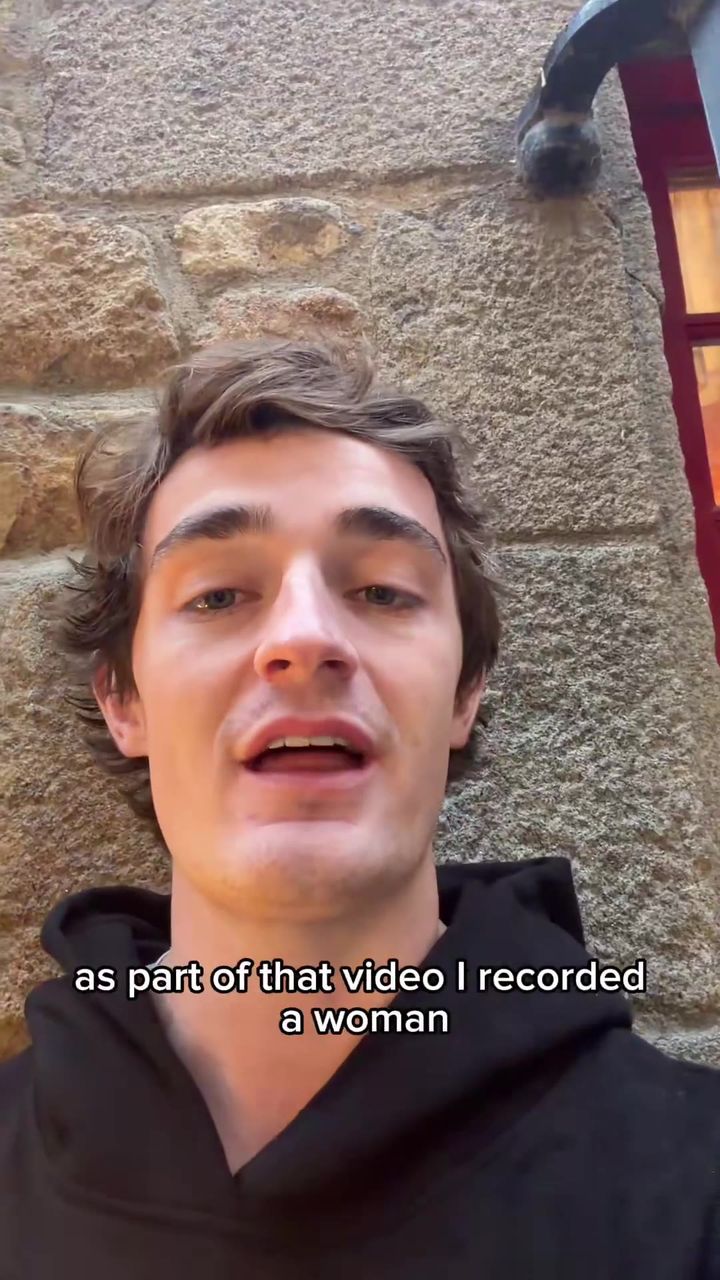
XA selfie-style video posted to X in which Nick Shirley speaks directly to camera and issues a correction to his earlier reporting on EBT fraud at Lam's Seafood in Seattle. He says the $120 transaction was for a case of luncheon meat, not a single can, that he found no evidence the store engaged in or colluded in fraud, and that he has taken the videos down. The post's caption is only a shortened link.
Posted to X by the account @nickshirleyy on 11 November 2026. Copies of the original October clip reportedly remained on TikTok after Shirley removed the posts featuring Lam's Seafood.
Who posted it
XAccount check
Estimates from public signals — account age, posting pattern, audience — not a judgement of the person behind the account, and separate from whether this post is true.
What stood out
- @nickshirleyy is the established X account of Nick Shirley, a real US independent journalist/YouTuber; identity is corroborated by embedded X posts cited in Seattle Times, KIRO, AFP, Snopes, NPR and other outlets.
- Not a bot or impersonation: he has a large real following (~1.7M on X by mid-2026), mainstream interviews, in-person reporting and consistent cross-platform identity.
- Reliability as an information source is weak: his December 2025 Minnesota daycare-fraud video was disputed by state investigators and fact-checkers, with claims described as misleading or unsubstantiated.
- AFP fact-checked his February 2026 California UPS-store voter-fraud claim and found no evidence of fraudulent registrations at the cited suite.
- In November 2026 he retracted October 2026 Seattle Lam's Seafood EBT-fraud allegations after a cease-and-desist, admitting he found no evidence the store engaged in or facilitated fraud.
- Reported history of paid/staged content and no formal journalism training, alongside repeated corrections only after legal or public pressure.
- Profile metadata is almost entirely null and no recent posts were supplied, so this assessment relies heavily on external coverage.
Signals (7)+
- Posting cadence
- Not supplied; documented high-volume viral posting
- Follower ratio
- Not computable; ~1.7M X followers reported July 2026
- Notable news coverage
- Yes
- Fact check history
- Multiple AFP/Snopes/The 19th fact checks; Minnesota daycare claims disputed/debunked; Feb 2026 voter-fraud claim baseless; Nov 2026 retraction
- Affiliations
- Conservative influencer with White House access; received Citizen Journalist of the Year award
- Legal issues
- Cease-and-desist from Lam's Seafood; retraction issued after legal threat
- Profile metadata
- Mostly null; no bio, follower count, creation date or recent posts supplied
Account checked November 13, 2026, 03:06 UTC
The media
Video✓ What is genuine
The footage is genuine: it is Nick Shirley speaking to camera, and the words match the correction video that news outlets reported he posted on 11 November 2026.
The tells
- ●●● Strong signal The detector scored the video as not AI-generated with 0.99999 confidence and a deepfake score of 0.006.our detector
- ●●○ Supporting signal Keyframes show a continuous selfie-style clip with consistent lighting, natural skin texture and coherent hand movement across the frames.our visual review
- ●●● Strong signal Independent outlets quote the same wording that appears in the video transcript, confirming it is the correction Shirley posted.the Seattle Times, KIRO 7, the Daily Beast and the Lynnwood Times
Synthetic-media detector
Detector ranThe claim stands or falls on whether the media is real, so the detector ran.
Scores are the detector’s estimate for the file as uploaded. A low score does not rule out editing, a spliced caption, or footage shown out of context — those are judged above. Model v3.
How we checked the media
- Reviewed keyframes from the video for consistency of lighting, skin texture and movement.
- Ran the video through our AI-generation detector (Hive v3).
- Compared the transcript with independent reporting from the Seattle Times, KIRO 7, the Daily Beast and the Lynnwood Times.
Sources
6 sources reviewed- 1Right-wing influencer retracts fraud allegations against Seattle grocery ↗
The Seattle Times · seattletimes.comUntiereduntiered — treated as signal only, never decisiveEvidence
Reports the retraction, the cease-and-desist letter and the store's denial.
- 2Nick Shirley retracts claims linking Seattle's Lam's Seafood to alleged food stamp fraud ↗
KIRO 7 News Seattle · kiro7.newsUntiereduntiered — treated as signal only, never decisiveEvidence
Reports the correction and that the transaction was never completed and the store was not accused or charged.
- 3MAGA's Favorite 'Journalist,' 24, Issues Humiliating Retraction ↗
The Daily Beast · thedailybeast.comUntiereduntiered — treated as signal only, never decisiveEvidence
Dates the original videos to 9 and 12 October and confirms the case of 24 cans.
- 4Seattle grocery fights back against right-wing influencer ↗
The Seattle Times · seattletimes.comUntiereduntiered — treated as signal only, never decisiveEvidence
Identifies the items as Fortune luncheon meat and spring rolls, and confirms a case was rung up.
- 5Nick Shirley retracts EBT fraud claims against Seattle's Lam's Seafood ↗
Lynnwood Times · lynnwoodtimes.comUntiereduntiered — treated as signal only, never decisiveEvidence
Reports the public correction and that the October report inaccurately portrayed the transaction as fraud.
- 6MAGA Streamer Nick Shirley Just Issued an Embarrassing Correction ↗
The New Republic · newrepublic.comUntiereduntiered — treated as signal only, never decisiveEvidence
Quotes the original on-camera claim and notes the month-long gap before the retraction.
Further reading
- 1The Seattle Times The Seattle Times report gives the fullest account of the retraction and the store's earlier dispute.
- 4The Seattle Times Explains exactly what was rung up at the register and corrects the Spam-and-sushi detail.
- 6The New Republic Places the correction a month after Lam's first denied the claim, which the video leaves out.
The full story
The claim was built on a real transaction at Lam's Seafood Asian Market in Seattle's Chinatown-International District. In October 2026, Nick Shirley filmed a woman attempting to use an EBT card, and the register showed a total of about $120. In his videos, published on 9 and 12 October, he described that as one can of Spam and an order of sushi — a combination that sounds absurd at that price and, to his audience, suggested fraud.
The store's explanation was more ordinary. According to the Seattle Times, the register had rung up a case of 24 cans of luncheon meat, which is why the total was $120. KIRO 7 reports that Lam's said the employee was attempting to charge for an entire case. Some accounts describe the woman asking in Vietnamese for a case of luncheon meat; the Seattle Times notes some reports say tuna. The Seattle Times also reports the items were Fortune luncheon meat and a container of spring rolls, not sushi.
Lam's denied the fraud allegation, and its lawyers sent a cease-and-desist letter. On 11 November, Shirley posted the video correction, conceded the case-of-luncheon-meat explanation, said he found no evidence the store engaged in or colluded in EBT fraud, and removed the videos. The store was never accused or charged with wrongdoing, and the filmed transaction was never completed.
Kernel of truth
A real EBT transaction at Lam's Seafood rang up around $120. The dispute was over what that total bought — a single can and sushi, or a case of luncheon meat.
Timeline
October 9, 2026
Nick Shirley publishes the first video documenting alleged EBT fraud in Seattle. 3The Daily Beast
October 12, 2026
Shirley publishes a second video in the series. 3The Daily Beast
October 2026
Lam's Seafood publicly disputes the fraud claim and its lawyers send a cease-and-desist letter. 1The Seattle Times
November 11, 2026
Shirley posts a video retracting the claim, saying the $120 was for a case of luncheon meat and that he found no evidence of store fraud; he removes the original videos. 1The Seattle Times
How it was framed
The post is a genuine on-camera retraction that matches independent reporting, so it is not misinformation. The only inaccuracy is inside the correction itself: the products were Fortune luncheon meat and spring rolls, not brand-name Spam and sushi.
- Borrowed authority. Shirley frames the retraction around his own journalistic standards: 'As a journalist, I make sure and try my best to make sure that everything is 100%' and 'I hold myself to a very high standard.'
- Us vs. them. He contrasts himself with other journalists: 'So many journalists don't do it, but I'm doing it.'
- Missing context. The video does not mention that Lam's publicly disputed the claim about a month earlier or that its lawyers sent a cease-and-desist letter.
Posted to X by @nickshirleyy on 11 November 2026. The post's caption is only a shortened link. Reporting describes Shirley as a conservative social-media journalist; this is a description of his public profile, not a judgment on the correction's accuracy.
Bias
Leans self-promotional / reputation management. The clip is framed as an act of journalistic integrity and implicitly distances Shirley from blame ('we don't always get it right'), without mentioning that Lam's had denied the allegation a month earlier or that a cease-and-desist preceded the retraction. The factual substance of the correction is nonetheless accurate.
Bias describes how the post frames its message — the slant of the language, selection and emphasis — and is judged separately from whether the claim is true. A true claim can still be framed with a strong slant.
How we checked
50 s- 1
Searched for coverage of the retraction using the queries 'Nick Shirley Lamb's Seafood EBT fraud correction' and 'Nick Shirley Seattle EBT fraud video Lamb's Seafood spam'.
- 2
Reviewed the post's transcript against reporting from the Seattle Times, KIRO 7, the Daily Beast, the New Republic and the Lynnwood Times.
- 3
Ran the video through our AI-generation detector (Hive v3).
- 4
Reviewed keyframes from the video for visual consistency.
✓ Claim checked✓ Media checked✓ Sources checked
Why 90% confidence
ModerateWe set confidence HIGH (0.9) because five independent outlets reported the retraction and quoted the same wording, and the detector found no sign of AI generation. The band is not higher only because the exact product inside the correction — Spam, Fortune luncheon meat or tuna — is described differently across reports.
Limits. We did not open the original October videos or the store's cease-and-desist letter directly. We relied on reporting for those details.
What we don’t know
- The exact brand and product the woman asked for — Spam, Fortune luncheon meat or tuna — is described differently across reports.
- Whether Shirley's correction was prompted mainly by the cease-and-desist letter or by his own review; the video does not say.
- Whether any copies of the original October videos remain online beyond the TikTok copies noted in reporting.
Spot it yourself
Spot the fakeLooks suspicious, isn’t proof
- The post comes from a partisan influencer with a large following. That is a reason to check, not proof the video is wrong.
- The video is a selfie-style monologue with no graphics or citations. Format alone tells you nothing about truth.
- The caption is just a shortened link, which can look evasive. It does not make the content false.
- The correction itself still says 'Spam' when the product was Fortune luncheon meat. A small error inside a correction is a reason to read carefully, not to dismiss the whole retraction.
The actual evidence
- Multiple independent outlets — the Seattle Times, KIRO 7, the Daily Beast, the New Republic and the Lynnwood Times — reported the retraction and quoted the same wording.
- The store's explanation, reported by the Seattle Times, matches the footage: the register rang up a case of 24 cans, which explains the $120.
- Our detector scored the video as not AI-generated with very high confidence, and the keyframes show no compositing or morphing.
- The original transaction was never completed, and no source reports store-level fraud or charges against Lam's.
- 1
Check whether mainstream outlets report the same event.
Search the person's name plus the store or subject. If a retraction is real, several newsrooms will have covered it within a day or two.
- 2
Compare the video's words with quoted coverage.
Read the transcript excerpt next to the outlets' quotes. Matching wording is strong evidence the clip is the one being reported.
- 3
Look for the context the post leaves out.
Search for the store's earlier statement and any legal letter. A correction that omits a cease-and-desist is still a correction, but the omission tells you why it may have come when it did.
- 4
Check the small details inside the correction.
If a correction says 'Spam' but reporting says 'luncheon meat', note it. Corrections can carry minor errors even when the main point is right.
Takeaway
A retraction can be genuine and still slightly wrong. Judge the main claim against independent reporting, and treat small errors as reasons to read closely, not as proof the whole thing is fake.
Questions people ask
Did Nick Shirley really retract his Lam's Seafood EBT fraud claim?+
Yes. On 11 November 2026, Shirley posted a video saying the $120 transaction at Lam's Seafood was for a case of luncheon meat, not a single can, and that he found no evidence the store engaged in or colluded in EBT fraud. He removed the original videos, and multiple outlets reported the retraction.
Why was the transaction $120 if it was just Spam and sushi?+
It wasn't just a can and sushi. According to the Seattle Times, the register had rung up a case of 24 cans of luncheon meat, which explains the $120 total. Shirley's original video described a single can, which made the price look absurd and suggested fraud.
Was the correction video AI-generated?+
No. Our detector scored it as not AI-generated with 0.99999 confidence, and the keyframes show consistent lighting and natural movement. Independent outlets also quote the same wording, confirming it is the video Shirley posted on 11 November 2026.
Did Lam's Seafood commit EBT fraud?+
No evidence supports that. The filmed transaction was never completed, Lam's has not been accused or charged with wrongdoing, and Shirley says he found no evidence of store-level fraud or collusion. Lam's says it has reported suspected trafficking near its property to investigators.
Why do some reports say Spam and others say luncheon meat?+
The sources describe the product differently. The Seattle Times says Fortune luncheon meat and spring rolls, while KIRO 7 and the Daily Beast say Spam, and the Seattle Times notes some accounts say tuna. The core point — a case, not a single can — is the same across reports.
Go deeper
- EBT
- Electronic Benefit Transfer, the system used to pay out food-assistance benefits through a card that works like a debit card.
- Cease-and-desist letter
- A formal written demand that a person stop an activity, often used before a lawsuit, warning of legal consequences if they don't.
- Deepfake
- A video or audio clip made or altered with AI to show someone saying or doing something they did not.
- Retraction
- A public withdrawal of a previously published claim, usually because it turned out to be inaccurate.
People also search for
For educators+
- Shirley's video corrects the main claim but still says 'Spam' when the product was luncheon meat. Does a small error inside a correction weaken the correction? Why or why not?
- The video does not mention the cease-and-desist letter. How does knowing that context change the way you read the apology, if at all?
- If you saw the original October video, what three questions would you ask before sharing it?
About this check
- Platform
- X
- Posted by
- @nickshirleyy
- Posted
- November 12, 2026
- Age when checked
- Under 24 hours old when checked
- Where it spread
- United States
- Audience
- US audience
- Language
- EN
- Status
- ● Post is live
- Verified
- November 13, 2026, 03:07 UTC
- Published
- November 13, 2026, 03:07 UTC
Reach. Shirley retraction post 27,984 likes (X syndication); Daily Beast coverage 12 Nov
This verdict was generated with AI from the sources shown. AI can make mistakes — check the sources before relying on it.
Check anything yourself, in seconds.
Share any social post or video to What the Fact and get the verdict, the confidence, and the receipts.