Did post-Brexit supermarket costs rise, and will an EU deal cut paperwork?
Have UK supermarket prices of dairy, meat, eggs and greens gone up since Brexit partly because of import paperwork, as a Cabinet Office video claims?
True, but…
The diagnosis holds up; the supermarket illustration and the promised savings are weaker.
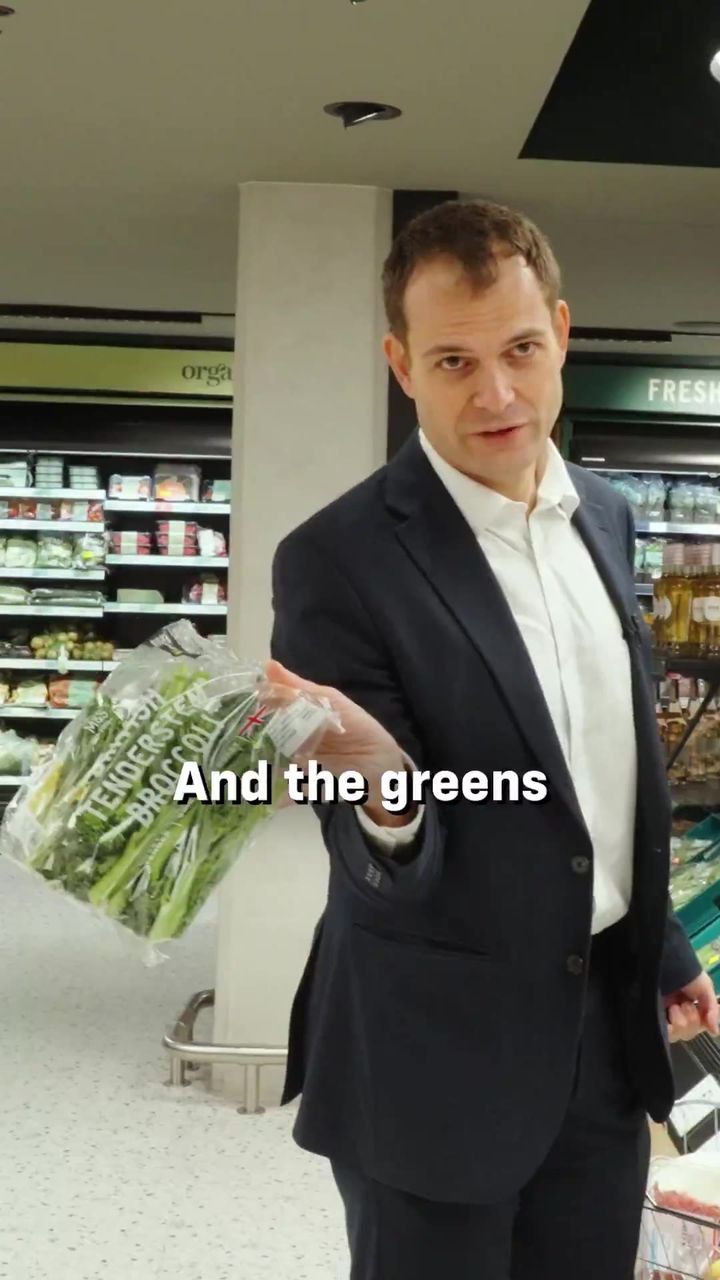
This is authentic Cabinet Office footage of Europe minister Hamish Falconer in a supermarket, posted three days before the confirmed 20 November 2026 EU-UK summit in Brussels. The claim that post-Brexit paperwork helped raise food bills is broadly supported by LSE research. But the British-made items he holds are softer ground, and the promised cheaper prices are a disputed projection.
 Genuine
Claims
✓ 3 trueCosts in supermarkets have gone up since Brexit.45
“Costs in supermarkets have gone up since Brexit”
The direction of this claim is not in dispute. LSE Centre for Economic Performance research records UK food prices rising by almost 25 percentage points between December 2019 and March 2023, and says the figure would have been about 8 percentage points (roughly 30%) lower without Brexit. BBC reporting of that work describes the same trajectory. The evidence is a single academic study, but it is a well-documented primary analysis rather than a reposted claim, and it matches what the headline inflation data show. A reader should weigh that the study measures a period ending in March 2023, not today's supermarket bills, and that the phrase 'costs in supermarkets' covers many goods and ingredients. The claim that prices went up is solid. The word 'since Brexit' is a shorthand for a period that also included global supply shocks, which the study accounts for but which readers should keep in mind.
Part of that price rise is due to the extra forms and paperwork required to bring goods in.45
“partly thanks to unnecessary paperwork”
The minister's 'partly' framing matches the evidence better than a stronger claim would. LSE research attributes roughly 6% of food inflation to post-Brexit non-tariff barriers: customs checks, paperwork and sanitary certificates. It also found that between 50% and 88% of those costs were passed on to shoppers. So paperwork is a contributing factor, not the main driver, and the study is the decisive evidence here. It is one research group's estimate, and the size of the effect is contested by some economists, which is why this sits at likely-true rather than true. Readers should note that the mechanism affects imported food and ingredients, and can lift the general price level, rather than every individual item on a shelf. The claim does not say paperwork is the whole story, and the evidence does not support that stronger version either.
Still open: How much of the effect persists after March 2023 is not established in the material we reviewed.
The items he displays (British milk, beef mince, eggs, broccoli) are more expensive because of import paperwork.67
This is where the video is weakest. Critics, including shadow environment secretary Victoria Atkins and broadcaster Andrew Neil, pointed out that the milk, beef mince, eggs and broccoli in the basket are UK-produced and not themselves subject to EU import checks. That observation is reported by the Express. The general mechanism the minister describes is real, because imported food and ingredients carry the paperwork costs and feed into the wider price level, but using British items as the illustration over-reaches. The evidence here is mostly critical commentary from outlets with a right-of-centre orientation, so we treat it as a valid observation rather than a neutral adjudication. A reader should weigh that the clip is a rhetorical illustration, not a worked example, and that its critics had an interest in mocking it. The specific visual claim is not fully supported.
Still open: We did not establish the origin of every item shown beyond what critics stated.
A UK-EU summit is due to take place on 20 November at which the government intends to agree an agri-food deal to cut this paperwork and open export opportunities.1238
“on the 20th of November, I want to do a deal with the EU”
This part is confirmed by multiple official sources. The European Council's media advisory sets out the second EU-UK summit on 20 November 2026 in Brussels, with Presidents Costa and von der Leyen meeting Prime Minister Andy Burnham. The EEAS publishes the same schedule, and GOV.UK announces the Prime Minister's attendance and the aim of cutting red tape for farmers and businesses. So the date, the venue and the government's stated intention are all accurate. The one qualification, which the post does not mention, is that the deal had not been signed when the video went up. BBC reporting also notes that under the plan the UK would have a voice but no vote on EU food rules. The claim describes an intention accurately; it does not describe a completed agreement, and the post's wording ('will agree') is forward-looking.
Still open: Whether the summit produces a signed agri-food deal is not yet known.
The deal will reduce costs for shoppers and create more export opportunities for farmers and exporters.37
“reducing costs and creating more export opportunities”
This is a forward-looking government projection, not a testable fact. Ministers say the food element is worth about £5bn in additional trade and 0.4% of GDP, according to the government's own framing as reported. Economists cited in critical coverage, such as Julian Jessop, argue the savings are overstated and that exporting more food would not lower domestic prices; GB News puts that argument in an opinion piece. Because the deal was not signed when the post went up, there is no outcome to measure. The claim is a statement of intent and expected benefit, and readers should treat it as such. It is not false, but it is not verified either, and the post presents it with more certainty than the evidence allows. The distinction between a promised outcome and a demonstrated one is the key here.
Still open: The actual price effect cannot be assessed until any deal is signed and implemented.
What was posted
XThe verified Cabinet Office account on X posted a short video three days before a scheduled EU-UK summit. It shows a government minister walking a supermarket aisle with a basket, picking up items and linking their cost to the forms and checks required since Brexit. He says the government will use the summit to agree a deal cutting that paperwork, lowering costs and opening export opportunities.
“3 days til the UK-EU Summit. Costs in supermarkets have gone up since Brexit - partly thanks to unnecessary paperwork. At the Summit, the government will agree to slash that paperwork, reducing costs and creating more export opportunities.”
Posted by the Cabinet Office's verified X account. National outlets covered the clip itself as government footage, and critics responded to what the minister holds in the basket.
Who posted it
XAccount check
Estimates from public signals — account age, posting pattern, audience — not a judgement of the person behind the account, and separate from whether this post is true.
What stood out
- @cabinetofficeuk is the long-established official X account of the UK Cabinet Office, listed as such by GOV.UK's own Twitter policy, the Oxford/Bodleian government guides, Govdirectory and UK Parliament written answers — the handle itself is genuine.
- Account provenance is strong: created December 2010 ('Joined May 2010' per mirror data), ~12,400 posts, ~338 following vs ~421,600 followers — a normal institutional ratio, not a follow-farm pattern.
- GOV.UK states Cabinet Office Twitter accounts are run by the department's digital communications team and explicitly 'do not use any automation' such as RSS-driven bots — a formal no-automation policy.
- The submitted snapshot is empty (no bio, no follower count, isplatformverified=false, no posts), so the profile as supplied cannot be verified on its own metadata; verification here rests on the handle's off-platform documentation, and government accounts carry X's grey/gold official labels rather than standard blue checks.
- No credible reporting of the Cabinet Office account itself being hijacked or spreading misinformation; the well-known 2020 'truth twisters' incident was an unauthorised post on the separate @UKCivilService account, which the Cabinet Office publicly condemned and investigated.
- One search excerpt of a 2026 post about the Queen Elizabeth Digital Memorial shows insulting emojis inserted mid-text, but the clean original wording appears in the same thread and in later posts — consistent with a quote-tweet/commentary artefact rather than a compromise.
- Content is verifiable official communications (press releases, minister announcements, queenelizabeth.com memorial, UK-EU reset), all cross-checkable against gov.uk publications dated through Oct 2026.
- Contextual caveat: the UK government suspended paid advertising on X after a 2023 safety assessment and several departments now use X only for organic messaging, so expect lower cadence — absence of frequent posting is not an inauthenticity signal here.
- Main residual risk is impersonation of the handle elsewhere (Full Fact has previously debunked confusion over @ukgov vs @GovUK), so citations should be traced back to gov.uk or queenelizabeth.com.
Signals (12)+
- Account created
- 2010-12 (approx.)
- Followers
- 421644
- Following
- 338
- Post count
- 12434
- Follower ratio
- 1247.5
- Profile metadata completeness
- Empty snapshot — no bio, followers, posts or creation date supplied
- Posting cadence
- Unknown from snapshot; documented as business-hours, manual, non-automated institutional comms
- Automation policy
- GOV.UK Twitter policy explicitly rules out automated posting
- Notable news coverage
- Frequently quoted by UK and international media; RT, LBC, Daily Mail, Yorkshire Post coverage of 2020 unauthorised-tweet incident (separate @UKCivilService account)
- Fact check history
- Full Fact (2024) clarified real UK government account is @GovUK, directing readers to Cabinet Office; no fact-checks finding Cabinet Office account inauthentic
- Documented incidents
- 2020 'truth twisters' unauthorised tweet on @UKCivilService — condemned/investigated by Cabinet Office; no such incident attributed to @cabinetofficeuk itself
- Platform relations
- UK govt suspended paid advertising on X after 2023 Safe Framework assessment; Cabinet Office spent £0 with X since July 2024
Account checked November 19, 2026, 03:10 UTC
The media
Video✓ What is genuine
The footage itself is real, unaltered official content from the Cabinet Office, showing Europe minister Hamish Falconer in a supermarket.
The tells
- ●●○ Supporting signal Continuous background shoppers and consistent shelf stock across the clip.our visual review
- ●●○ Supporting signal Natural reflections on chiller cabinets and ordinary smartphone-style framing.our visual review
- ●●○ Supporting signal Legible real product packaging with no warping or unstable geometry.our visual review
- ●●● Strong signal Published on the verified Cabinet Office account and described as government footage by national outlets.the Express and GB News
Synthetic-media detector
Detector not consultedThe media is incidental to the claim; the detector was not needed.
How we checked the media
- We reviewed the footage visually for consistency of lighting, reflections, background shoppers and product packaging.
- We confirmed the video was published on the verified Cabinet Office X account.
- We checked national coverage that described the clip as genuine government footage fronted by Europe minister Hamish Falconer.
Sources
8 sources reviewed- 1Media advisory - EU-United Kingdom summit of 20 November 2026 ↗
European Council · consilium.europa.euPrimary / fact-checkerprimary/official source (by domain)Evidence
Confirms the EU-UK summit on 20 November 2026 in Brussels.
- 2Prime Minister to attend UK-EU summit in Brussels on 20 November ↗
GOV.UK · gov.ukUntiereduntiered — treated as signal only, never decisiveEvidence
Confirms the Prime Minister's attendance and the government's stated aim of cutting red tape.
- 3UK will have 'voice' but no vote on EU food rules in Brexit reset ↗
BBC News · bbc.comReputable outletCenter; light bias tagEvidence
Reports the minister's comments and the caveat that the UK would have no vote on EU food rules.
- 4Brexit update: Cost of Brexit food trade barriers to UK households is now £6.95bn ↗
LSE Centre for Economic Performance · cep-serviceaddress.lse.ac.ukPrimary / fact-checkerprimary/official source (by domain)Evidence
Provides the food-price data and the estimate that paperwork accounts for about 6% of food inflation.
- 5Brexit added £210 to household food bills, LSE says ↗
BBC News · stage.bbc.co.ukReputable outletCenter; light bias tag (BBC Verify is Tier A)Context
Summarises the LSE findings on red tape and food prices.
- 6Labour minister brutally mocked on social media over Brexit food prices clip ↗
Daily Express · express.co.ukLow reliabilityRight — tabloidEvidence
Reports criticism that the basket items were British-produced.
- 7Labour's EU reset won't make your food shop cheaper, it could make it more expensive ↗
GB News (opinion) · gbnews.comLow reliabilityRight — reliability concernsContext
Presents the critical view that the promised savings are overstated.
- 8EU-UK summit to take place in Brussels on 20 November ↗
EEAS · eeas.europa.euPrimary / fact-checkerprimary/official source (by domain)Evidence
Confirms the summit and the leaders involved.
Further reading
- 4LSE Centre for Economic Performance The academic study underpinning the food-price claim, with the figures and the paperwork estimate.
- 3BBC News BBC reporting on the minister's comments and the 'voice but no vote' point the post leaves out.
- 1European Council The official summit schedule, useful for checking the event's date and participants.
The full story
The kernel of truth is solid. UK food prices did climb sharply after Brexit, and independent research from the LSE Centre for Economic Performance attributes part of that rise — around 6% of food inflation — to the paperwork, customs checks and certificates that came with leaving the EU. Most of those costs were passed on to shoppers. The government's diagnosis in the video is not invented.
The problem is the illustration. The minister picks up milk, beef mince, eggs and broccoli, all of which are produced in Britain and are not themselves subject to EU import checks. Critics, including shadow environment secretary Victoria Atkins and broadcaster Andrew Neil, seized on that gap, and the clip was widely mocked. The video is also advocacy: it promotes the government's own EU reset days before a summit, and it does not mention that under the plan the UK would have a voice but no vote on EU food rules.
The summit itself is real. The European Council, the EEAS and GOV.UK all confirm the second EU-UK summit on 20 November 2026 in Brussels, with Prime Minister Andy Burnham meeting Presidents Costa and von der Leyen. An agri-food deal is expected to be the centrepiece. Whether it lowers shop prices is a projection that economists dispute, and the deal had not been signed when the post went up. So the video is genuine, its underlying point is broadly supported, and its framing and specific example are where the caveats lie.
Kernel of truth
Post-Brexit paperwork is a real contributor to higher food prices, and a real EU-UK summit was scheduled for 20 November 2026.
Timeline
November 17, 2026
The Cabinet Office posts the supermarket video on X, three days before the summit.
November 20, 2026
Second EU-UK summit scheduled in Brussels, confirmed by the European Council, EEAS and GOV.UK. 1European Council
March 2023
End of the period covered by LSE research showing food prices almost 25 percentage points higher than December 2019. 4LSE Centre for Economic Performance
How it was framed
The video is genuine government content and its underlying diagnosis is supported, but it uses British-made groceries to illustrate a paperwork cost that applies to imports, and it presents an unsigned deal's benefits with more certainty than the evidence allows. That is misleading framing rather than fabrication.
- “Visual proof”. The minister holds up milk, beef mince, eggs and broccoli as he explains why prices rose.
- Missing context. The post does not mention that the UK would have a voice but no vote on EU food rules, as BBC reporting notes.
- Borrowed authority. Posted on the verified Cabinet Office account by a government minister, giving the message official weight.
- Urgency. The caption opens '3 days til the UK-EU Summit', setting a countdown.
Posted by the Cabinet Office's verified X account. The Express and GB News covered the clip and reported criticism of the items shown.
Bias
Leans pro-government / pro-EU alignment. This is official government communications from the Cabinet Office, fronted by a minister, making the case for the government's own EU 'reset' ahead of a summit. It selectively frames post-Brexit red tape as the cause of higher food bills and presents promised savings as a coming benefit, without acknowledging disputed projections or that the goods shown are British. It is advocacy rather than neutral information.
Bias describes how the post frames its message — the slant of the language, selection and emphasis — and is judged separately from whether the claim is true. A true claim can still be framed with a strong slant.
How we checked
1 min 2 s- 1
We ran searches on the summit date and on the Cabinet Office video.
- 2
We searched for LSE research on Brexit and food prices.
- 3
We reviewed the video visually for signs of editing or synthesis.
- 4
We checked national coverage describing the clip and the criticism of the items shown.
- 5
We compared the post's claims with official statements from the European Council, EEAS and GOV.UK.
✓ Claim checked✓ Media checked✓ Sources checked
Why 76% confidence
HighWe set confidence at high for the headline because the summit is confirmed by multiple official sources and the food-price diagnosis is supported by independent academic research. The caveats are clear enough to state plainly, which is why this is true-with-caveats rather than a simple true or false.
Limits. We did not run an automated media detector on the video; our assessment of its authenticity rests on visual review and on national outlets describing it as government footage. We also could not test the promised price effects, because no deal had been signed.
What we don’t know
- Whether the summit will produce a signed agri-food deal, and on what terms.
- The precise effect any deal would have on supermarket prices.
- The origin of every item shown in the basket beyond what critics stated.
Spot it yourself
Find the overstatementLooks suspicious, isn’t proof
- It is government advocacy, which is a reason to check the claims, not evidence they are false.
- The countdown phrasing '3 days til the UK-EU Summit' sounds like a campaign, but campaigns can still state accurate facts.
- Critics mocked the clip, but mockery is not a finding; the specific observation about British items had to be checked separately.
The actual evidence
- LSE research showing food prices rose almost 25 percentage points between December 2019 and March 2023, and that paperwork contributed about 6% of food inflation.
- Official confirmation from the European Council, EEAS and GOV.UK that the summit is scheduled for 20 November 2026.
- Reporting that the basket items were British-produced and not subject to EU import checks.
- The absence of a signed deal when the post went up, which makes the promised savings a projection.
- 1
Separate the diagnosis from the illustration.
Ask whether the specific items shown actually carry the cost being described. Here the general point about paperwork is supported, but the British groceries do not illustrate it directly.
- 2
Check whether the event is real and when it happens.
Look for the official schedule from the body hosting the event, such as the European Council or the government's own site, rather than relying on the post's countdown.
- 3
Distinguish a promise from a result.
If a deal has not been signed, treat claims that it will lower prices as a projection. Look for independent economists' estimates alongside the government's figures.
- 4
Look for what the post leaves out.
Search for independent reporting on the same plan. Here BBC coverage noted the UK would have no vote on the EU food rules it adopts.
Takeaway
A genuine video from an official account can still overstate its case. Check the specific example and the promised outcome separately from the general claim.
Questions people ask
Is the Cabinet Office supermarket video real?+
Yes. The video is genuine, unaltered government footage published on the verified Cabinet Office X account and fronted by Europe minister Hamish Falconer. National outlets described it as government content, and our visual review found consistent lighting, background shoppers and product packaging with no signs of editing or synthesis.
Did Brexit really make supermarket food more expensive?+
Food prices did rise sharply after Brexit. LSE research records a rise of almost 25 percentage points between December 2019 and March 2023, and attributes about 6% of food inflation to post-Brexit paperwork and checks, with most of those costs passed to shoppers. Paperwork is a contributing factor, not the only one.
Why was the minister criticised for the items in his basket?+
The milk, beef mince, eggs and broccoli he picked up are produced in Britain and are not themselves subject to EU import checks. Critics including Victoria Atkins and Andrew Neil pointed this out. The general point about paperwork affecting imported food and the wider price level is supported, but the specific illustration over-reaches.
Is the EU-UK summit on 20 November 2026 real?+
Yes. The European Council's media advisory, the EEAS and GOV.UK all confirm the second EU-UK summit in Brussels on 20 November 2026, with Prime Minister Andy Burnham meeting Presidents Costa and von der Leyen. An agri-food deal is expected to be the centrepiece, though it had not been signed when the video was posted.
Will the deal actually make food cheaper?+
That is a projection, not a verified fact. The government says the food element is worth about £5bn in additional trade and 0.4% of GDP, but economists dispute the savings and argue that exporting more food would not lower domestic prices. The outcome cannot be measured until any deal is signed and implemented.
Go deeper
- Non-tariff barrier
- A cost or delay from rules, checks or paperwork rather than a tax on the goods themselves.
- Agri-food deal
- An agreement covering farm and food trade, often involving alignment with another country's food rules in exchange for fewer border checks.
- Projection
- An estimate of a future outcome that cannot yet be tested against real results.
People also search for
For educators+
- The video's general point about paperwork is supported, but the items shown are British. Does that make the video misleading, or is it fair rhetorical shorthand?
- How should readers weigh a government's own estimate of a deal's benefits against independent economists' doubts?
- If the UK would have no vote on the EU food rules it adopts, should that be mentioned in a video promoting the deal? Why or why not?
About this check
- Platform
- X
- Posted by
- @cabinetofficeuk
- Posted
- November 17, 2026
- Age when checked
- 1–2 days old when checked
- Where it spread
- United Kingdom
- Audience
- UK & EU audience
- Language
- EN
- Status
- ● Post is live
- Verified
- November 19, 2026, 03:12 UTC
- Published
- November 19, 2026, 03:12 UTC
Reach. 483 likes (X syndication); criticised by Victoria Atkins, Andrew Neil; Express, Daily Mail, Guido coverage
This verdict was generated with AI from the sources shown. AI can make mistakes — check the sources before relying on it.
Check anything yourself, in seconds.
Share any social post or video to What the Fact and get the verdict, the confidence, and the receipts.