Did gas prices have their biggest drop in years right after the midterms?
Did gas prices fall 60 cents a gallon in a month, with one of the largest drops in years coming right after the midterms, as Trump suggested 'they' timed it?
Misleading
The price falls are real; the record, the Iowa figure and the timing conspiracy are not.
The video of Trump's 20 November 2026 White House news conference is genuine, but the claim it promotes is misleading. Oil and gasoline did fall sharply, yet the drop began before the 3 November midterms. The 'biggest drop on record', the $1.85 Iowa price and the hint that prices were held high until after the vote are all false.
 Genuine
Claims
✓ 1 true · ✕ 3 falseThe post-2008/2020-style implication that 'they' deliberately timed the price drop to come after the midterms ('I wonder how that happened').12
“"I wonder how that happened."”
This is the claim the post is built to promote, and it fails. FactCheck.org found no evidence of political timing. Analysts at GasBuddy and Gulf Oil attribute the decline to seasonal demand, refinery outages clearing up, more crude flowing through the Strait of Hormuz and softening Middle East risk. Crucially, pump prices had been falling steadily for more than a month before the 3 November midterms, and every recent election cycle brings autumn declines. The EIA figures cited by FactCheck.org show crude fell from $110 a barrel on 19 October to $100 the day before the vote, and Trump himself posted 'Oil Prices are DROPPING LIKE A ROCK' the day before the election. A drop that began before the vote cannot have been held back until after it. The evidence is strong because it comes from market data and independent analysts, not from a single partisan source.
Crude oil prices have plummeted right since the end of the election; crude is down 20% since the start of November and now close to $80 a barrel.12
“"Crude oil prices have plummeted right since the end of the election... Crude oil is down 20 percent since the start of November."”
The size of the move is roughly right, but the timing is not. The main US benchmark was about $83.50 a barrel on the day of the press conference, and oil was around $87 on 19 November versus $100 the day before the 3 November midterms. That is a large fall. But the decline did not start with the election: Energy Information Administration figures cited by FactCheck.org show crude fell from $110 on 19 October to $100 before election day, and Trump himself posted 'Oil Prices are DROPPING LIKE A ROCK' the day before the vote. The 'close to $80' line is also loose. The sources are independent of each other in the sense that the AP and FactCheck.org both worked from market and EIA data, so the figures can be checked directly. The number is broadly right; the story attached to it is not.
It is the biggest drop on record / one of the largest drops in the history of oil.13
“"It's the biggest drop on record."”
The November 2026 decline was sharp but not a record. The Associated Press fact check found that oil fell about 79% between July and December 2008, far larger than the roughly 20% move in November 2026. Fact-checkers rated the superlative imprecise. Superlatives are easy to check against long-run price data, and here the gap is not close: 79% versus about 20% is a different order of magnitude. Both the AP and FactCheck.org examined the same remarks and reached the same conclusion, so the finding does not rest on a single outlet. A reader should treat 'biggest on record' as a claim to verify, not a fact to repeat.
Gasoline is down 60 cents a gallon from just one month ago.13
“"Gasoline is down 60 cents a gallon from just one month ago."”
This one is close to right. AAA data cited by the AP put the national average at $3.69 a gallon on 20 November 2026 versus $4.27 a month earlier, a drop of about 58 cents. Trump rounds 58 to 60, which is within normal conversational slack. The omission matters more than the rounding: prices were still about 56 cents a gallon higher nationally than when Trump took office, and far above the pre-war level. So the number is accurate as far as it goes, but it is a selective snapshot. A reader hearing 'down 60 cents' should ask 'from what, and compared with when?' The answer here is a steep recent fall from a high base.
When I was in Iowa, it was $1.85 a gallon just prior to the military move on Iran.14
“"When I was in Iowa, as I told the story, it was $1.85 a gallon just prior to going in and doing our... military move on the Islamic Republic of Iran."”
This figure does not match the record. AAA data show Iowa's statewide average was $2.63 a gallon for regular gasoline on 27 February 2026, the day before the US strikes on Iran began, and the national average that day was $2.98. The gap between $1.85 and $2.63 is 78 cents a gallon, far too large to be rounding or a station-level quirk. The Independent reported the AAA figures directly, and they can be checked against the same public price data. A specific local price at a specific date is one of the easiest claims to test, which is why it is worth testing. The anecdote may reflect a single station sign or a memory, but as a statement about what Iowa drivers paid, it is wrong.
The day after the election, they announced the vaccine.
“"The day after the election, they announced the vaccine."”
This is approximately but not literally right. In 2020 Pfizer announced positive vaccine trial results on 9 November, days after election day on 3 November and shortly after the race was called for Joe Biden on 7 November. That is close in timing but not 'the day after the election'. We rate confidence lower here because the input does not include a source that fixes the exact dates, so the finding rests on the sequence described in the verification record rather than a primary document. The point of the aside is rhetorical: it invites the audience to see a pattern with the oil price story. The dates show the pattern is looser than the phrasing suggests.
Still open: The input does not include a primary source for the exact date of the 2020 Pfizer announcement.
Gas prices just had their largest drop in YEARS right after the midterms.2
“"gas prices just had their largest drop in YEARS right after the midterms"”
There was a large retail gasoline decline in November 2026, and the post's own phrasing, 'largest drop in YEARS', is doing the misleading work. Price tracker GasBuddy disputed the 'largest drop in 18 years' framing that circulated on social media, and the drop began more than a month before the 3 November midterms rather than 'right after' them. FactCheck.org documents the steady fall through October and the crude decline from $110 on 19 October to $100 before the vote. The post is not inventing a price move; it is stretching a real move into a record and a timing that the data do not support. That combination, a true number plus a false superlative and a false timeline, is what makes it misleading rather than simply wrong.
What was posted
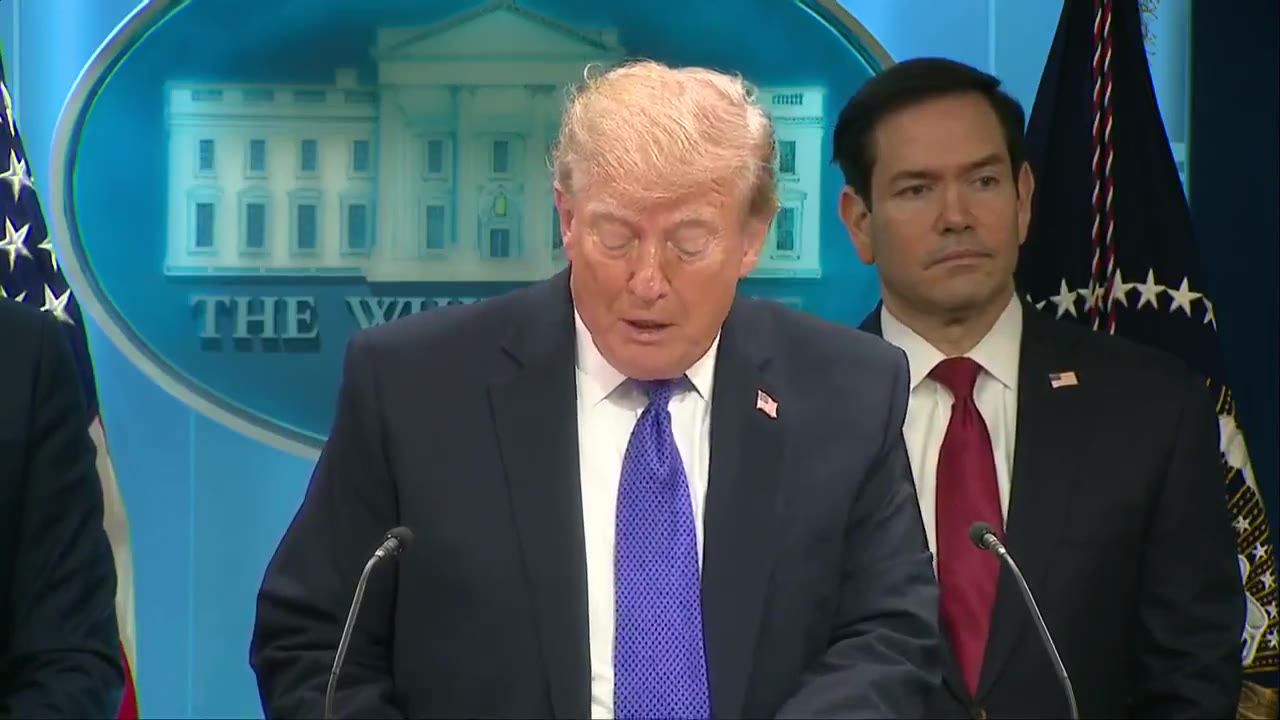
XEric Daugherty posted a clip on X of President Donald Trump speaking at a White House news conference. The video shows Trump at a lectern in the Brady Press Briefing Room, with Marco Rubio visible behind him, saying crude oil had 'plummeted right since the end of the election' and that gasoline was down 60 cents a gallon. The caption frames the timing as a suspicious 'coincidence' right after the midterms.
“🚨 JUST NOW: President Trump just exposed the "coincidence" that gas prices just had their largest drop in YEARS right after the midterms "Too bad we didn't have that in front of the election!" 🎯 "Gasoline is down 60 cents a gallon from just one month ago and it's going to be..."”
Posted on X by Eric Daugherty, an account that regularly shares clips of Trump remarks. The clip itself is from the 20 November 2026 news conference; the caption adds the 'largest drop in YEARS' framing and the word 'coincidence' in quote marks.
Who posted it
XAccount check
Estimates from public signals — account age, posting pattern, audience — not a judgement of the person behind the account, and separate from whether this post is true.
What stood out
- Handle @EricLDaugh maps to a real, identifiable person: Eric Daugherty, Chief Content Officer of RightLine News and Florida's Voice (Southwest Florida), ex-intern 2021 → CCO; real biography corroborated by outlet staff pages and trade coverage.
- Account is old and long-established: joined August 2016 (~10.3 years old), ~105K posts, ~1.23M followers vs ~2.7K following (follower ratio ~450:1) — consistent with an organic, human-run media account, not a bot.
- Posting cadence is very high (~89-93 posts/month, roughly 3/day) but steady and voice-consistent; behaviour fits a professional content aggregator, not automation.
- Style is high-engagement outrage aggregation ('🚨 BREAKING', 'SICK', 'NEW YORK CITY IS COOKED') — Baron Public Affairs lists him among 'content amplifiers rather than creators', i.e., he reshapes others' reporting rather than originating it.
- Documented integrity incident: March 2025 undisclosed paid advocacy posts opposing RFK Jr.'s SNAP soda rules (Big Soda-linked 'Influenceable' campaign); he deleted them and publicly apologised ('massive egg on my face'), indicating paid-post vulnerability.
- Mixed accuracy record: independent analysis of one viral fiscal post rated ~80% credible but flagged heavy cherry-picking/omitted context (monthly surplus vs. $1.775T annual deficit); frequently amplifies Trump claims (e.g., 'rigged 2020' rhetoric) without correction.
- Mainstream outlets (Raw Story, AlterNet, Townhall, RedState, BizPac Review, Instapundit) routinely quote/embed his posts, so he is a genuinely influential node in right-wing X media, not a fake persona.
- No evidence of platform verification in the supplied metadata and no fact-checker case file naming him as a fabrication source; accusations of 'bribes'/foreign payments found in replies are unsubstantiated.
- Allegations that other accounts copy his posts verbatim suggest coordinated amplification around his content, but the coordination appears to be downstream of him, not driven by this account.
Signals (12)+
- Account created
- 2016-08
- Posting cadence per month
- 92
- Follower ratio
- 452
- Followers
- 1230000
- Following
- 2720
- Total posts
- 105000
- Real identity confirmed
- Yes
- Employer
- RightLine News / Florida's Voice (Chief Content Officer)
- Notable news coverage
- Frequently quoted by Raw Story, AlterNet, Townhall, RedState, BizPac Review, Instapundit
- Fact check history
- TruthSignal analysis ~80% credible with omission/cherry-picking flags; no PolitiFact/Snopes entry; undisclosed Big Soda paid posts (Mar 2025), retracted/apologised
- Paid content incident
- 2025 Influenceable/Big Soda campaign, undisclosed
- Amplification role
- Listed as 'content amplifier' in Baron Public Affairs analysis
Account checked November 21, 2026, 03:01 UTC
The media
Video✓ What is genuine
The footage is genuine coverage of the 20 November 2026 White House news conference. Trump did say the lines heard in the clip, and the quotes match what fact-checkers reported from that event.
The tells
- ●●● Strong signal Continuous single shot of Trump at a two-microphone lectern with the White House seal backdrop, with Marco Rubio standing behind him, matching the documented Brady Press Briefing Room event.our visual review
- ●●● Strong signal The transcript lines in the clip match the quotes fact-checkers attribute to the 20 November 2026 news conference.FactCheck.org and the AP Fact Focus
- ●●○ Supporting signal No compositing, morphing, facial artefacts or inconsistent backgrounds visible in the frames reviewed.our visual review
Synthetic-media detector
Detector not consultedThe media is incidental to the claim; the detector was not needed.
How we checked the media
- Reviewed keyframes from the clip and compared the setting, lectern, backdrop and the presence of Marco Rubio with the documented 20 November 2026 White House news conference.
- Compared the spoken lines in the clip with the quotes attributed to the same event by the AP Fact Focus and FactCheck.org.
Sources
5 sources reviewed- 1FACT FOCUS: A look at false and misleading claims Trump made at news conference after his Asia trip ↗
U.S. News & World Report (Associated Press) · usnews.comUntiereduntiered — treated as signal only, never decisiveEvidence
The AP Fact Focus assessment of the remarks, including the 2008 comparison and the gasoline price comparison.
- 2Trump's Misguided Claim That 'They' Waited to Lower Gas Prices Until After the Midterms ↗
FactCheck.org · factcheck.orgPrimary / fact-checkerIFCN signatory (Annenberg)Evidence
FactCheck.org's finding of no evidence of politically timed manipulation and the EIA figures showing the decline began before the midterms.
- 3FACT FOCUS: A look at false and misleading claims Trump made at news conference after his Asia trip ↗
Las Vegas Sun (Associated Press) · lasvegassun.comUntiereduntiered — treated as signal only, never decisiveEvidence
A republished AP Fact Focus giving the AAA comparison of $3.69 versus $4.27 a month earlier.
- 4All the false and misleading claims Trump made after his Asia trip ↗
The Independent · independent.co.ukReputable outletLean LeftEvidence
AAA's Iowa figure of $2.63 a gallon on 27 February 2026, contradicting the $1.85 anecdote.
- 5Trump questions post-election oil crash, compares timing to COVID vaccine ↗
BizPac Review · bizpacreview.comUntiereduntiered — treated as signal only, never decisiveContext
A friendly account of the same remarks, confirming the setting and the 'down 20% since the start of November' line.
Further reading
- 2FactCheck.org FactCheck.org's full assessment of the claim that 'they' waited to lower prices until after the midterms, with the EIA and AAA figures.
- 1U.S. News & World Report (Associated Press) The AP Fact Focus assessment of the same remarks, including the 2008 comparison and the gasoline price comparison.
The full story
The kernel of truth here is a genuine and steep fall in energy prices. US crude was about $83.50 a barrel on 20 November 2026, down from around $100 the day before the 3 November midterms. AAA put the national average for regular gasoline at $3.69 a gallon, against $4.27 a month earlier, a drop of about 58 cents. Those are real numbers, and they help explain why the claim spread.
What makes the post misleading is the story built around the numbers. The decline did not begin with the election. Energy Information Administration figures cited by FactCheck.org show crude fell from $110 on 19 October to $100 before election day, and Trump himself posted 'Oil Prices are DROPPING LIKE A ROCK' the day before the vote. Pump prices had been sliding since late September. Every recent election cycle has brought autumn declines.
Analysts at GasBuddy and Gulf Oil point to seasonal demand, refinery outages clearing up, more crude moving through the Strait of Hormuz and softer Middle East risk. One of them put it plainly: there is no 'they', it is just the market. The 'biggest drop on record' line is also wrong on the numbers: oil fell about 79% between July and December 2008. And the $1.85 Iowa figure does not match AAA's $2.63 state average on 27 February 2026, the day before the US strikes on Iran.
The clip itself is authentic. The misleading part is the frame: a real fall presented as a record and as a suspiciously timed coincidence.
Kernel of truth
Crude oil and retail gasoline did fall sharply in the weeks around November 2026. The size of the move is broadly right; its timing, its record status and the suggestion of political manipulation are not.
Timeline
February 27, 2026
Iowa's statewide average gasoline price is $2.63 a gallon, per AAA, the day before US strikes on Iran begin. 4The Independent
October 19, 2026
Crude oil is $110 a barrel, per EIA figures cited by FactCheck.org, before beginning a decline that continues through election day. 2FactCheck.org
November 3, 2026
US midterm elections are held; crude is about $100 a barrel the day before, already down from $110. 2FactCheck.org
November 19, 2026
Crude oil is around $87 a barrel. 1U.S. News & World Report (Associated Press)
November 20, 2026
Trump holds a news conference in the Brady Press Briefing Room and makes the gas and oil price remarks; the AP Fact Focus and FactCheck.org publish assessments the same day. 1U.S. News & World Report (Associated Press)
How it was framed
The post uses genuine footage of real remarks and real price movements, but frames a decline that began before the midterms as a record drop that came 'right after' them and hints at deliberate timing. The individual numbers are partly right; the conclusion they are arranged to support is false.
- “Visual proof”. The post leads with a clip of the president speaking, lending the authority of direct footage to the caption's framing.
- Missing context. The caption omits that crude had already fallen from $110 on 19 October to $100 before election day and that pump prices had been sliding since late September.
- Emotional language. The caption uses 'exposed', 'coincidence' in quote marks and a siren emoji to signal a scandal.
- Selective evidence. The post highlights a roughly 58-cent monthly fall without noting prices remained about 56 cents higher nationally than when Trump took office.
- Borrowed authority. The caption attributes the claim to the president ('President Trump just exposed...'), borrowing his authority for the framing.
Posted on X by Eric Daugherty, an account that regularly shares clips of Trump remarks. The footage is from the 20 November 2026 White House news conference; the caption adds the 'largest drop in YEARS' framing.
Bias
Leans pro-Trump / anti-Democrat conspiracy framing. The caption presents an ordinary market and seasonal price decline as a scandal Trump 'exposed', using alarm emoji and a bullseye to imply that gas prices were deliberately held high until after the midterms, which Democrats won. The clip itself is a straightforward recording of the president's remarks, but the surrounding framing amplifies an unfounded conspiracy angle.
Bias describes how the post frames its message — the slant of the language, selection and emphasis — and is judged separately from whether the claim is true. A true claim can still be framed with a strong slant.
How we checked
1 min 22 s- 1
Searched for coverage of Trump's gas and oil price remarks at the 20 November 2026 news conference.
- 2
Opened FactCheck.org's assessment of the claim that 'they' waited to lower gas prices until after the midterms.
- 3
Compared the clip's transcript and setting with quotes and details attributed to the same event by the AP Fact Focus and FactCheck.org.
- 4
Reviewed keyframes of the video and compared the setting, lectern, backdrop and the presence of Marco Rubio with the documented event.
- 5
Checked the specific price figures against AAA and EIA data as reported by the AP, FactCheck.org and The Independent.
✓ Claim checked✓ Media checked✓ Sources checked
Why 86% confidence
HighWe rate confidence HIGH because two independent fact-checking organisations, the AP and FactCheck.org, examined the same remarks and reached consistent conclusions, and because the price data they cite can be checked directly. The one exception is the 2020 vaccine aside, which we rate MODERATE because the input does not include a primary source fixing the exact date.
Limits. We did not run a media-forensics detector on the video because the clip is not pivotal to the claim; the assessment of the footage rests on visual review and comparison with fact-checker transcripts. We also did not independently pull the raw EIA or AAA datasets; we relied on the figures as reported by the sources.
What we don’t know
- Whether the poster intended to mislead or simply repeated a framing he found persuasive. The input contains no evidence of intent either way.
- The exact engagement figures for the post, which could show how far the framing travelled.
- Whether the $1.85 figure came from a specific station sign or from memory.
Spot it yourself
Spot the fakeLooks suspicious, isn’t proof
- The account is partisan and shares clips favourable to Trump. That is a reason to check, not evidence the clip is fake.
- The alarmist tone, 'exposed' and a siren emoji, is a style choice, not a factual error.
- The video is a short clip of a longer news conference. Clipping is normal and does not by itself distort what was said.
The actual evidence
- Price data: crude fell from $110 on 19 October to $100 before election day, so the fall began before the midterms, not after them.
- The EIA and AAA figures show the size of the move is roughly right, which is why the claim feels plausible.
- FactCheck.org and the AP Fact Focus both examined the same remarks and found no evidence of politically timed manipulation.
- Long-run price data: oil fell about 79% between July and December 2008, far more than in November 2026.
- AAA's Iowa figure of $2.63 a gallon on 27 February 2026 contradicts the $1.85 anecdote.
- 1
Check when the fall actually started.
Look at a price chart or EIA data for the weeks before and after the election. If prices were already falling before the vote, a 'held back until after' story cannot be true.
- 2
Test the superlative against long-run data.
When someone says 'biggest on record', search the historical series. Here, 2008 shows a 79% fall, far larger than 20%.
- 3
Check specific local prices against the tracker.
AAA publishes state averages. A specific claim like '$1.85 in Iowa' can be checked against the state average for that date.
- 4
Look for the omitted comparison.
Ask 'down from what, and compared with when?' A 58-cent monthly fall can coexist with prices still higher than a year or a term earlier.
- 5
Separate the clip from the caption.
The footage can be genuine while the frame around it is misleading. Verify the quote, then verify the interpretation.
Takeaway
A true number can carry a false story. When a post pairs a real price move with a record claim or a suspicious timeline, check the timeline and the record separately.
Questions people ask
Did gas prices really drop after the midterms?+
Yes, prices fell, but the fall started before the election. AAA put the national average at $3.69 a gallon on 20 November 2026, against $4.27 a month earlier, a drop of about 58 cents. Pump prices had been sliding since late September, and crude had already fallen from $110 on 19 October to $100 before the 3 November vote.
Was it the biggest drop in oil prices on record?+
No. The November 2026 decline was sharp, about 20%, but not a record. Oil fell about 79% between July and December 2008, far more. The AP fact check rated the 'biggest drop on record' line imprecise, and FactCheck.org reached a similar conclusion about the remarks.
Why did gas prices fall in November 2026?+
Analysts at GasBuddy and Gulf Oil attribute the decline to seasonal demand patterns, refinery outages clearing up, more crude flowing through the Strait of Hormuz and softening Middle East risk. They reject the idea of politically timed manipulation, noting that every recent election cycle has brought autumn declines.
Was the video of Trump real?+
Yes. The footage is genuine coverage of Trump's 20 November 2026 news conference in the Brady Press Briefing Room, with Marco Rubio visible behind him. The words in the clip match the quotes fact-checkers attribute to that event. The problem is the caption's framing, not the footage.
What does 'misleading' mean in a fact check?+
It means the post uses real elements arranged to imply a false conclusion. Here, the price falls are real, but the record claim, the Iowa figure and the suggestion of deliberate timing are not supported by the evidence. A misleading post can contain accurate numbers and still give a false picture.
Go deeper
- Crude oil
- Unrefined petroleum as it comes out of the ground, which is bought and sold on global markets and later turned into gasoline and other fuels.
- AAA average
- A widely cited national or state average price for a gallon of regular gasoline, compiled from station prices by the motoring organisation AAA.
- EIA
- The US Energy Information Administration, the government agency that publishes official data on oil and energy prices.
- Misleading content
- A post that uses real information in a way that frames an issue or person falsely, as opposed to content that is entirely made up.
- Superlative claim
- A claim that something is the biggest, largest, worst or first of its kind, which can usually be tested against historical records.
People also search for
For educators+
- The post says gas prices had their 'largest drop in YEARS right after the midterms'. Which part of that sentence is accurate and which part is not, and how would you check each?
- If a price fall began before an election, what does that do to the argument that it was deliberately delayed until after the vote?
- Why might a real price drop make a misleading claim more convincing than a completely invented one?
About this check
- Platform
- X
- Posted by
- @ericldaugh
- Posted
- November 20, 2026
- Age when checked
- 1–2 days old when checked
- Where it spread
- United States
- Audience
- US audience
- Language
- EN
- Status
- ● Post is live
- Verified
- November 22, 2026, 03:02 UTC
- Published
- November 22, 2026, 03:02 UTC
Reach. 4,217 likes (syndication, 22 Nov); FactCheck.org 20 Nov and AP Fact Focus 20 Nov checked the claim; MEAWW 21 Nov
This verdict was generated with AI from the sources shown. AI can make mistakes — check the sources before relying on it.
Check anything yourself, in seconds.
Share any social post or video to What the Fact and get the verdict, the confidence, and the receipts.