Did Scott Bessent say Americans should think of bank tech outages as a vaccine?
Did Treasury Secretary Bessent say Americans should think of the tech outages as a vaccine, and blame them on security patches?
True
The quote is exact and the CBS footage is real; only his patching explanation is oversimplified.
True. On CBS's Face the Nation on 22 November 2026, Treasury Secretary Scott Bessent said Americans should think of recent bank tech outages "as a vaccine" that may cause short-term discomfort but improves long-term immunity. CBS's own transcript and several independent outlets quote him word for word.
 Genuine
Claims
✓ 2 trueTreasury Secretary Scott Bessent said Americans should think of the recent bank technology outages as a vaccine: your arm may hurt and you may feel bad the next day, but it increases long-term immunity and resiliency.1345
“I think the American people should think of it as a vaccine. Your arm may hurt, you may feel a little bad the next day, but it increases your long-term immunity and resiliency.”
This is the claim the post rests on, and the evidence for it is as direct as it gets. CBS published its own Face the Nation transcript for 22 November 2026, and the sentence appears there word for word. Three unrelated outlets — The Hill, CNBC and the Washington Examiner, which sit in different places politically — independently quote the same words. That matters: when sources with different audiences and incentives agree on a quotation, the chance that all of them copied the same error or invented the same line is very low. The clip itself is normal CBS studio footage with Bessent identified on the chyron as U.S. Treasury Secretary and Brennan as host. None of this depends on a single repost of the same video. A reader should weigh the fact that the quote is verifiable at the primary source, the broadcaster, and not merely 'reported by media'. Whether the analogy is wise or fair is a separate question, and one of opinion.
Thousands of customers at some of the biggest U.S. banks had trouble accessing services during tech outages the previous week, prompting some people to withdraw cash.34
This is the premise Brennan put to Bessent, and it checks out. Reporting cited in the record describes technical problems at JPMorgan Chase, Wells Fargo and Bank of America that left thousands of customers unable to use banking services, and says the disruption led some customers to withdraw cash. That reporting comes from outlets independent of each other and of CBS, so it does not simply echo the interviewer's framing. Because this is background to the quote rather than the quote itself, it does not decide the main verdict, but it matters for fairness: the question Bessent was answering was grounded in a real, reported disruption, not a hypothetical. A reader weighing the exchange should know that the interviewer's setup was accurate before judging the answer.
Banks are at the forefront of cybersecurity and are the most resilient companies in the U.S. economy, so Americans should not worry about their financial institutions.34
This is a characterisation and a reassurance, not a measurable fact. Saying an industry is 'by far the most resilient' is a judgement, and nothing in the record independently ranks banks against every other sector of the economy. What the record does support is narrower: officials said the outages showed no sign of a coordinated or AI-driven cyberattack, which is consistent with Bessent's reassurance. But consistency is not proof of the sweeping version he offered. Readers should treat the reassurance as a claim to be weighed, not a finding to be checked off. The confidence here is low by design: opinion statements are not the kind of thing a fact-check can confirm or refute with evidence, and the band reflects that rather than any doubt about what he said.
The outages were caused by glitches as banks patched their security systems in response to AI, not by cyberattacks — citing JPMorgan.34
Split this in two. The 'not a cyberattack' part holds up: JPMorgan said its outage came from a software bug in its hardware systems with no evidence of an attack, Microsoft blamed an earlier network capacity upgrade, and officials said there was no coordinated attack. The causal story about security patching does not hold up as neatly. JPMorgan attributed its incident to a software bug, not to a security patch, so Bessent's general explanation is an oversimplification of what the companies actually said. That is why the band is moderate rather than high: part of the statement is well supported, part is a simplification that blurs distinct incidents into one cause. A reader should take away that the reassurance about attacks is grounded, while the tidy 'patching' explanation is not a precise account.
Still open: The record does not establish whether any of the incidents involved a security patch at all; it only shows that the companies gave other causes.
What was posted
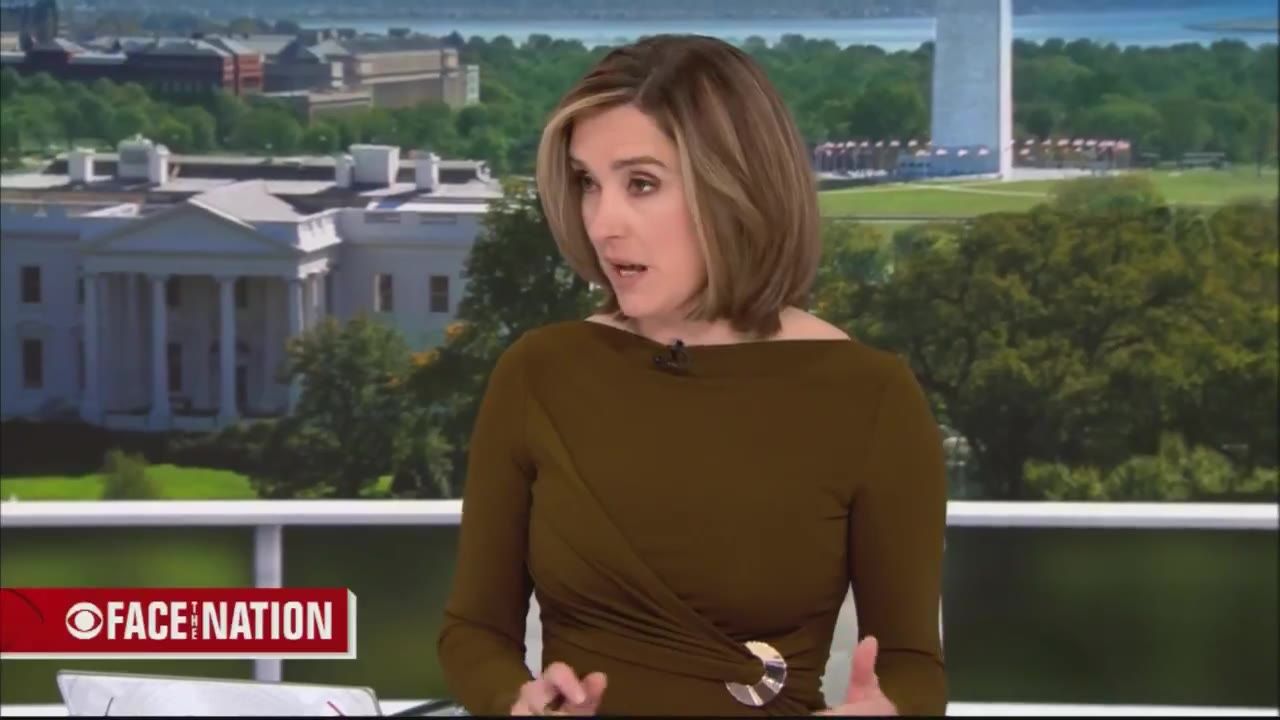
XA roughly 68-second clip posted on X of a CBS Face the Nation interview, showing host Margaret Brennan asking Treasury Secretary Scott Bessent whether Americans should worry about their banks after a week of technology outages at major institutions. Bessent reassures her and delivers the vaccine comparison. The post presents the footage as genuine broadcast material and asks readers to judge his remark.
“Bessent on cyber outages: "I think the American people should think of it as a vaccine. Your arm may hurt, you may feel a little bad the next day, but it increases your long-term immunity and resiliency."”
Posted on X by an account that regularly clips broadcast interviews. The excerpt was circulated the same day CBS aired the episode.
Who posted it
XAccount check
Estimates from public signals — account age, posting pattern, audience — not a judgement of the person behind the account, and separate from whether this post is true.
What stood out
- Handle maps to Aaron Rupar, a real, named US political journalist (ex-Vox/ThinkProgress, publisher of the Public Notice Substack) widely covered by mainstream outlets (NYT profile, Mediaite, Fox News, Daily Beast).
- Profile metadata in the request is incomplete; the live profile shows ~1.13M followers, ~5,600 following (~200:1 ratio), ~206k posts, bio 'journalist. sign up for my newsletter, Public Notice', joined April 2011 (~15.6 years old).
- Low bot/inauthentic indicators: long account history, consistent identity across X, Bluesky and Substack, real bylines, podcast and TV interviews, and a documented manual workflow (he reportedly spends ~80 hrs/week clipping).
- Reliability as a source is mixed: he is a self-described 'lifelong liberal Democrat' and partisan commentator rather than a neutral wire service.
- Documented pattern of decontextualised or selectively trimmed clips: CNN's Daniel Dale publicly called one 2026 clip misleading; a 2020 tweet was deleted after fact-checking; Community Notes and critics (Mediaite, Fox, Twitchy) flagged truncated quotes (e.g. the Liz Cheney 'war hawk' clip, the 2021 Mike Lee 'mulligan' clip).
- Was briefly suspended then reinstated in the December 2022 Twitter journalist suspensions, an event with substantial news coverage; the suspension was about platform policy, not fabrication.
- No evidence of fabricated video or invented quotes; errors appear to be framing/omission rather than invention, and he has occasionally posted follow-up context or deleted problematic posts.
Signals (11)+
- Account created
- 2011-04
- Following count
- 5592
- Follower ratio
- 202
- Post count
- 206000
- Posting cadence
- Very high volume (~206k posts lifetime; reportedly near-continuous political monitoring)
- Identity corroboration
- Bylines, Substack, podcast/TV appearances, NYT/Mediaite/Fox coverage
- Known affiliation
- Public Notice (owner), formerly Vox and ThinkProgress/Center for American Progress
- Partisan lean
- Explicit left/anti-Trump commentary
- Fact check history
- Multiple out-of-context-clip disputes; CNN fact-checker criticism (2020, 2026); Community Notes; corrections/deletions
- Notable news coverage
- 2022 Twitter suspension/reinstatement; 2026 White House Rapid Response 47 feud
- Coordinated inauthentic signals
- None found
Account checked November 20, 2026, 02:53 UTC
The media
Video✓ What is genuine
The footage is genuine CBS News Face the Nation broadcast material from 22 November 2026, with Margaret Brennan hosting and Bessent appearing as Treasury Secretary.
The tells
- ●●● Strong signal The on-screen chyron reads 'SCOTT BESSENT, U.S. TREASURY SECRETARY' with Face the Nation branding, matching a documented broadcast.our visual review
- ●●○ Supporting signal The set, lighting and two-shot geometry stay consistent across the frames, as in a normal studio broadcast.our visual review
- ●●● Strong signal The spoken words match CBS's transcript and three unrelated outlets word for word.CBS News and independent reporting
Synthetic-media detector
Detector not consultedSources settled the claim on their own; the detector was not needed.
How we checked the media
- Reviewed the video frames for the studio set, chyrons and continuity.
- Compared the spoken words with CBS's published Face the Nation transcript for 22 November 2026.
- Compared the wording with independent write-ups from The Hill, CNBC and the Washington Examiner.
Sources
5 sources reviewed- 1Transcript: Treasury Secretary Scott Bessent on "Face the Nation with Margaret Brennan," Nov. 22, 2026 ↗
CBS News (via Flipboard) · share.flipboard.comUntiereduntiered — treated as signal only, never decisiveEvidence
Establishes the exact wording of the vaccine remark in CBS's own transcript.
- 2Open: This is "Face the Nation with Margaret Brennan," Nov. 22, 2026 ↗
CBS News · cbsnews.comReputable outletLean LeftContext
Confirms Bessent was the listed lead guest on the 22 November 2026 Face the Nation.
- 3Bessent compares tech outages to vaccines ↗
The Hill · thehill.comReputable outletCenterEvidence
Independently quotes the remark and reports the bank outages and their effects.
- 4Director of National Intelligence Jay Clayton warns Americans of 'bumps in the road' after tech outages ↗
CNBC · cnbc.comReputable outletCenter/Lean Left — marketsEvidence
Independently quotes the remark and adds context on the outage causes.
- 5Bessent downplays outage fears: 'Banks are the most resilient companies' ↗
Washington Examiner · washingtonexaminer.comLow reliabilityRight — partisanEvidence
A politically different outlet reporting the same vaccine comparison.
Further reading
- 1CBS News (via Flipboard) The broadcaster's own transcript, where the quotation can be read in full context.
- 3The Hill A centrist outlet's report that quotes the remark word for word.
- 4CNBC Business-focused coverage that corroborates the wording and the outage context.
The full story
The kernel of truth here is the outage itself. In the days before the broadcast, technical problems hit some of the largest U.S. banks, and thousands of customers found they could not use banking services. Some withdrew cash, and the disruption became a live public question about whether the financial system was under attack. That is the backdrop Brennan was asking about.
What the companies and officials actually said was less dramatic than a cyberattack. JPMorgan attributed its outage to a software bug in its hardware systems, with no sign of an attack. Microsoft blamed a network capacity upgrade for a related disruption. Officials said there was no coordinated attack. So the reassuring half of Bessent's answer was grounded in what had been reported.
The vaccine comparison is where the interview became memorable. It is a rhetorical device, not a finding: it asks the audience to accept short-term discomfort in exchange for long-term resilience. Nothing in the record shows that outages produce lasting 'immunity' for banks or customers. His explanation that patching caused the glitches also smooths over distinct incidents into one tidy cause, which the companies' own statements do not fully support.
The clip spread because the analogy is striking and because it came from a senior official during a moment of public anxiety about money. The quotation is real, the footage is real, and the argument about whether the comparison was apt is a matter of judgement rather than fact.
Kernel of truth
Major U.S. banks did suffer technology outages that disrupted thousands of customers, and officials said the incidents showed no sign of a coordinated cyberattack.
Timeline
November 19, 2026
CBS publishes the guest list for the 22 November Face the Nation, listing Treasury Secretary Scott Bessent. 2CBS News
November 22, 2026
Bessent appears on Face the Nation, is asked about the bank outages and makes the vaccine comparison; CBS publishes the episode and transcript. 1CBS News (via Flipboard)
November 22, 2026
The Hill, CNBC and the Washington Examiner report the vaccine remark, quoting it word for word. 3The Hill
How it was framed
The post accurately relays a verifiable on-the-record statement from a named official on a specific broadcast, and the video is genuine CBS footage. There is no fabrication, manipulation or missing context in the post itself; the contestable material is Bessent's analogy and simplified causal explanation, not the quotation.
- “Visual proof”. The post offers the broadcast clip itself, with the chyron naming Bessent as Treasury Secretary, as the evidence for the quote.
- Emotional language. The quoted line uses bodily imagery — 'your arm may hurt', 'you may feel a little bad' — to frame an infrastructure failure in personal terms.
Posted on X by an account that regularly clips broadcast interviews; the excerpt was circulated the same day CBS aired the episode.
Bias
Leans critical of the Trump administration. The caption is a verbatim quote with no added commentary, but the account selects and isolates the single most mockable line from a longer Sunday-show interview, framing the administration's outage response as absurd. The clip itself is standard broadcast material, so the slant comes only from selection and presentation.
Bias describes how the post frames its message — the slant of the language, selection and emphasis — and is judged separately from whether the claim is true. A true claim can still be framed with a strong slant.
How we checked
49 s- 1
Searched for the vaccine quotation together with Face the Nation and the bank outages.
- 2
Searched for CBS's own Face the Nation transcript and episode page for 22 November 2026.
- 3
Searched fact-check archives for any existing check of the clip.
- 4
Reviewed the video frames for studio set-up, chyrons and continuity.
- 5
Compared the spoken words with CBS's transcript and with write-ups in The Hill, CNBC and the Washington Examiner.
✓ Claim checked✓ Media checked✓ Sources checked
Why 90% confidence
HighThe band is high because the primary source — the broadcaster's own transcript — contains the quotation verbatim, and three unrelated outlets with different political leanings quote it identically. The video's visual features are consistent with a normal broadcast. The only nuance is that Bessent's explanation of the outages is simplified, which affects the partly-true claim rather than the main verdict.
Limits. We did not run an automated media-forensics detector; our assessment of the video rests on visual review and the documentary record. We also could not verify every detail of the underlying outages beyond what the cited reporting states.
What we don’t know
- The record does not establish whether any of the outages involved a security patch at all; the companies cited other causes.
- We do not know how the full interview continued after the excerpt, beyond the partial transcript available.
- We cannot say how many customers were affected in total across the banks.
Spot it yourself
Why it looked fakeLooks suspicious, isn’t proof
- The comparison is striking and easy to mock, which makes some readers assume it must be invented.
- The clip is short and excerpted from a longer interview, which can raise doubts about missing context.
- The account that posted it regularly clips political interviews, which some readers treat as a reason to distrust the clip.
- The topic — bank failures and cash withdrawals — is emotionally charged, which makes dramatic quotes feel either more or less believable depending on the reader.
The actual evidence
- CBS published its own transcript for the 22 November 2026 broadcast, and the vaccine sentence appears there word for word.
- Three politically different outlets independently quoted the same wording.
- The video shows normal CBS studio branding and a chyron identifying Bessent as Treasury Secretary.
- The interviewer's premise about the outages is supported by independent reporting, so the exchange was grounded in a real event.
- 1
Go to the broadcaster's own transcript
For a TV interview, the network usually publishes a transcript or episode page. Search the guest's name plus the show and the date, and read the passage in full rather than relying on the clip.
- 2
Check whether outlets with different audiences agree on the wording
If a left-leaning, a centrist and a right-leaning outlet all quote the same sentence identically, the quotation is very likely accurate. If only one side reports it, look harder.
- 3
Look at the chyron and set
Genuine broadcast clips carry the programme's on-screen identifiers and a consistent studio layout. Compare the name and title on screen with the programme's published guest list.
- 4
Separate the quote from the argument
Ask whether the post is claiming 'he said this' or 'what he said is true'. The first can be checked against the transcript; the second is a separate question that may be opinion.
Takeaway
A quote that sounds absurd or offensive is not automatically fake, and a clip that looks professional is not automatically real. The reliable test is whether the broadcaster's own record and unrelated outlets agree on the exact words.
Questions people ask
Did Scott Bessent really compare bank outages to a vaccine?+
Yes. On CBS's Face the Nation on 22 November 2026, Bessent said Americans should think of the outages as a vaccine: your arm may hurt and you may feel bad the next day, but it increases long-term immunity and resiliency. CBS's transcript and several independent outlets quote him word for word.
Is the video of Bessent on Face the Nation authentic?+
Yes. The footage shows a normal CBS studio set-up with Margaret Brennan hosting and a chyron identifying Bessent as U.S. Treasury Secretary. The spoken words match CBS's published transcript and independent write-ups, which rules out fabricated or altered audio and video.
Were the bank outages caused by a cyberattack?+
Officials said the incidents showed no sign of a coordinated attack. JPMorgan said its outage came from a software bug in its hardware systems, and Microsoft blamed a network capacity upgrade. Bessent's broader explanation that security patching caused the glitches simplifies what the companies actually said.
Why does a vaccine comparison appear in a story about banks?+
Bessent was answering a question about whether Americans should worry after outages disrupted services at major banks. He used the vaccine image to argue that short-term disruption can build long-term resilience. It is a rhetorical analogy, not an established fact about how outages affect banks.
Has anyone fact-checked this clip?+
No fact-check of the clip exists, and none is needed. The post accurately relays a verifiable on-the-record statement. The contested parts are Bessent's analogy and his simplified explanation of the outages, which are matters of judgement and accuracy rather than a fabricated quotation.
Go deeper
- Transcript
- A written record of spoken words, often published by the broadcaster, used to confirm exactly what was said.
- Chyron
- The on-screen text graphic in a broadcast that identifies a speaker and their title.
- Corroboration
- Independent confirmation of a claim by separate sources that did not simply copy one another.
- Rhetorical analogy
- A comparison used to persuade or explain rather than to state a testable fact.
People also search for
For educators+
- If a quotation sounds shocking, what steps would you take before deciding it is fake?
- How does knowing that outlets across the political spectrum quoted the same words change your confidence in the quotation?
- Where should a fact-checker draw the line between checking what someone said and judging whether their comparison was fair?
About this check
- Platform
- X
- Posted by
- @atrupar
- Posted
- November 22, 2026
- Age when checked
- Under 24 hours old when checked
- Where it spread
- United States
- Audience
- US audience
- Language
- EN
- Status
- ● Post is live
- Verified
- November 23, 2026, 03:07 UTC
- Published
- November 23, 2026, 03:07 UTC
Reach. 1,286 likes; Daily Beast write-up; the Face the Nation clip is widely mocked
This verdict was generated with AI from the sources shown. AI can make mistakes — check the sources before relying on it.
Check anything yourself, in seconds.
Share any social post or video to What the Fact and get the verdict, the confidence, and the receipts.