Were thousands evacuated from Don Toliver's Co-op Live concert after an unknown substance release?
Was tear gas released into the crowd at Don Toliver's concert at Manchester's Co-op Live, forcing 12,000 people to evacuate?
True
Police, ambulance service and major outlets confirm the evacuation, the numbers and the tear-gas-then-unknown sequence.
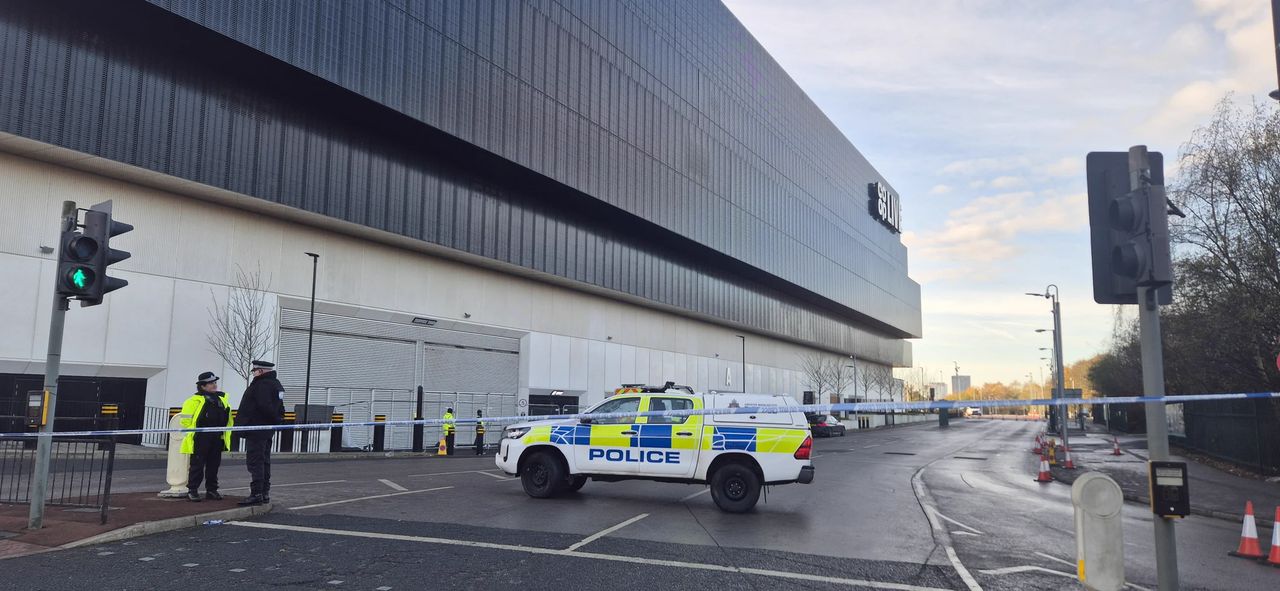
True. On Sunday 22 November 2026, more than 12,000 people were evacuated from Don Toliver's show at Manchester's Co-op Live arena after an unknown substance was released into the crowd. Greater Manchester Police declared a major incident; ambulance crews assessed more than 50 people for eye and respiratory symptoms and took one to hospital.
Claims
✓ 4 trueThousands of people were evacuated from Don Toliver's concert at Manchester's Co-op Live arena after an unknown substance was released into the crowd on Sunday night.135
“Thousands of people were evacuated from a Don Toliver concert in Manchester on Sunday night after an "unknown substance" was released into the crowd.”
This is the backbone of the post, and it holds on official statements rather than on the video. Greater Manchester Police said more than 12,000 people were safely evacuated from the Sunday-night Don Toliver show. The New York Times, the Guardian, the Irish Times and CNN carry the same figure, and CNN says it verified footage of the moment smoke filled the arena around 10pm. The sources are not echoes of one press release: police and ambulance statements are official primary accounts, while the outlets are separate newsrooms that would each have to stand behind the number. The clip adds atmosphere but is not what settles the question — the evacuation is documented whether or not the reel exists. That is why the confidence is high rather than moderate: multiple independent organisations, two of them official, describe the same event in the same terms.
A major incident was declared after reports of people suffering the effects of the substance, which police initially believed to be tear gas.12
This is the detail most likely to be garbled in retelling, so it is worth stating precisely. The North West Ambulance Service declared a major incident at 22:25 on 22 November. Greater Manchester Police said officers initially believed tear gas had been released, and later described the substance as unknown. The BBC reel follows that order exactly: it reports the tear-gas belief as initial and attributes it to police. The Guardian independently describes the substance as initially thought to be tear gas. Two official bodies and one separate newsroom line up on both the declaration and the shift in police language. The word "initially" is doing real work here — dropping it is how a careful report turns into a false one, and readers should check that any version they see keeps it.
Around 50 people were treated for eye and respiratory problems and one person was taken to hospital.15
The ambulance service is the authority here, and its figure was "more than 50 people assessed" with some reporting eye and respiratory symptoms, with one patient taken to Manchester Royal Infirmary. The reel says "50" rather than "more than 50" and "treated" rather than "assessed" — small slippages that do not change the meaning at the level the claim is made, but worth noting. A later BBC update put the number assessed at more than 80, so the reel carries an earlier snapshot of a moving figure. That is normal in a fast-moving incident and is why we still rate the claim true: the number grew, it did not shrink or reverse. One hospitalisation is confirmed consistently. If you see a post citing a much larger casualty figure, that would be the version to doubt.
Still open: The assessed figure rose from more than 50 to more than 80 in later BBC reporting; we did not track the final total.
The arena is being decontaminated as a precaution and Co-op Live said it is working with police to establish the cause.12
Both halves come from the parties involved, not from speculation. The ambulance service said decontamination was being carried out as a precaution. Co-op Live issued a statement saying it was working with Greater Manchester Police to identify the cause — a line the venue itself would have to own. The phrasing in the reel matches that statement closely. Because the claim is about what an organisation said and did, the organisation's own words are the best available evidence, and nothing in the independent coverage contradicts them. Note what the claim does not say: it does not claim anyone knew what the substance was. At the time of the reel, nobody publicly did.
Eyewitness Leon saw "gas coming out of a can" and felt "burning" during the evacuation.6
This is one person's account of what he experienced, and we could not locate it independently. That does not make it false. Other coverage describes the same sensory experience in general terms: Wales Online reports footage of attendees covering their faces and coughing, with fans describing the substance as tear gas, and CNN reports smoke filling the arena. So the broad picture Leon describes matches what many people reported. What we cannot confirm is this specific named witness and this specific phrasing. A single eyewitness account is evidence of what one person perceived, not of what was released. We rate it unverifiable rather than true because the person and quote were not independently located, and we would not want a reader to treat a quoted individual as confirmation of the cause.
Still open: Whether Leon's account was published in full elsewhere, and what he was told about the substance afterwards.
What was posted
XA BBC News Instagram reel about the previous night's evacuation of the Co-op Live arena in Manchester during a Don Toliver concert. It mixes a BBC correspondent speaking to camera with eyewitness night footage of emergency vehicles outside the venue, credited on screen to users on X, and summarises what police and the ambulance service had said. It asks viewers to treat it as a news update and points to the BBC's link in bio for more.
“Thousands of people were evacuated from a Don Toliver concert in Manchester on Sunday night after an "unknown substance" was released into the crowd. Greater Manchester Police said a major incident was declared after reports of people suffering from the effects of the substance, which police initially believed to be tear gas.”
Posted by the verified @bbcnews Instagram account on 23 November 2026, the morning after the incident. The reel quotes an eyewitness named Leon and uses night footage credited on screen to two X users.
Who posted it
XAccount check
Estimates from public signals — account age, posting pattern, audience — not a judgement of the person behind the account, and separate from whether this post is true.
What stood out
- Handle @Iram_Ramzan is repeatedly cited in podcasts and press from at least 2017 onward as belonging to journalist Iram Ramzan, providing a long consistent identity trail.
- The account is currently active and posts match her real-world role, including a pinned post announcing her move to the Manchester Evening News as politics reporter and reporting on Oldham Council.
- Ramzan is an established UK journalist with bylines at the Sunday Times, Daily Mail, The Spectator, UnHerd and the Evening Standard, and was appointed MEN politics reporter in April 2026.
- No fact-check, correction or plagiarism scandals surfaced; coverage is opinionated and partisan on Islam, Iran and UK culture-war topics but generally attributed and interview-based.
- Platform metadata is entirely absent (no bio, follower count, creation date, or sample posts) and the account is not platform-verified, so the profile-level confidence is lower than the identity evidence would otherwise allow.
Signals (8)+
- Posting cadence
- Active through 2026; regular commentary and news sharing
- Follower ratio
- Unknown
- Notable news coverage
- BBC Radio 4 profile (2014), Press Gazette/HoldTheFrontPage appointment coverage (2026), mainstream bylines
- Employment
- Manchester Evening News politics reporter (from April 2026); previously Daily Mail, Sunday Times, freelance
- Identity corroboration
- Handle linked to her by multiple independent podcasts, articles and embeds from 2017-2026
- Fact check history
- None found
- Content style
- Opinionated political and cultural commentary with interviews and links to her published work
- Metadata completeness
- Very low - no bio, followers, creation date or recent posts supplied
Account checked November 23, 2026, 14:56 UTC
The media
Video✓ What is genuine
The reel is genuine BBC News output. The eyewitness night footage is credited to named X users, and the events it shows are independently documented by police, the ambulance service and multiple newsrooms.
The tells
- ●●○ Supporting signal The clip is built in the standard BBC vertical social format, with a correspondent piece to camera and on-screen credit for the eyewitness footage rather than anonymous clips passed off as the outlet's own.our visual review
- ●●○ Supporting signal Lighting, emergency-service insignia and the arena exterior match the documented location and time of night described in official statements and reporting.our visual review
- ●●○ Supporting signal No compositing or synthetic artefacts were evident in the footage during visual review.our visual review
Synthetic-media detector
Detector not consultedSources settled the claim on their own; the detector was not needed.
How we checked the media
- Watched the reel in full, noting the structure: a BBC correspondent to camera intercut with night footage from outside the arena.
- Read the on-screen credits naming the X users whose eyewitness footage was used.
- Compared the scenes with what official statements and news reporting describe: emergency vehicles, cordons and the Co-op Live exterior at night.
- Checked that the claims in the reel stand on official statements regardless of the footage, which is why the media is not pivotal.
Sources
6 sources reviewed- 1Police investigate unknown substance that caused Manchester's Co-op Live evacuation ↗
BBC News · bbc.comReputable outletCenter; light bias tagEvidence
GMP's evacuation figure and the ambulance service's major incident, assessed and hospitalised numbers, plus decontamination and Co-op Live's statement.
- 2Manchester's Co-op Live arena evacuated after 'unknown substance' released in crowd ↗
The Guardian · theguardian.comReputable outletLean Left (AllSides)Evidence
Independent confirmation of the major incident and the initial tear-gas belief.
- 3Don Toliver Concert in Britain Is Evacuated Over 'Unknown Substance' ↗
The New York Times · nytimes.comReputable outletLean Left (AllSides) — distinguish news/opinionEvidence
Independent international reporting of the evacuation.
- 4Thousands evacuated as 'unknown substance' fills UK arena during US rapper's show ↗
CNN · us.cnn.comLow reliabilityBORDERLINE B/C — reporting w/ strong bias tag; opinion is CContext
Detail on smoke filling the arena and verification of footage of the moment.
- 5Thousands evacuated after 'unknown substance' released during concert at UK's biggest arena ↗
The Irish Times · irishtimes.comReputable outletCenterEvidence
Independent confirmation of the more-than-12,000 evacuation figure attributed to GMP.
- 6Don Toliver fan recounts frightening moment 'everyone was running' in Co-op Live incident ↗
Wales Online · walesonline.co.ukUntiereduntiered — treated as signal only, never decisiveContext
General witness descriptions of coughing and a tear-gas-like substance, used as signal only.
Further reading
- 1BBC News The fullest account of the official police and ambulance statements, including the hospitalisation and the decontamination.
- 4CNN Adds detail on the moment smoke filled the arena and notes that CNN verified the footage.
- 3The New York Times Shows how an international newsroom summarised the same event and the same official language.
The full story
The kernel of truth here is straightforward: an arena full of people really was evacuated because something in the air made them cough and their eyes burn.
On the night of Sunday 22 November 2026, Don Toliver was performing at Co-op Live in Manchester. Towards the end of his set, around 10pm, an unknown substance was released into the crowd. Witness footage shows people coming out coughing, and CNN reports smoke filling the arena. Greater Manchester Police declared a major incident and more than 12,000 people were safely evacuated. The North West Ambulance Service declared a major incident at 22:25; more than 50 people were assessed for eye and respiratory symptoms and one was taken to hospital. The arena was decontaminated as a precaution.
Why the story spread so fast is not mysterious. An arena evacuation at a major gig is dramatic, and the first thing everyone reaches for is a cause. Police gave one early, saying they believed tear gas had been released, then later said the substance was unknown. Co-op Live said it was working with police to identify the cause. The word "initially" in the BBC's script is the hinge on which the whole story turns — it is what separates a careful report from a false one.
The gap between what people experienced and what was confirmed is where misinformation usually grows. In this case the reel stayed on the safe side of that gap, and no connection between this incident and other reported episodes on the tour has been established.
Kernel of truth
An unknown substance really did force the evacuation of more than 12,000 people from a Don Toliver concert at Co-op Live, with more than 50 assessed and one hospitalised.
Timeline
November 22, 2026
Around 10pm, during Don Toliver's set at Co-op Live in Manchester, an unknown substance is released into the crowd; more than 12,000 people are evacuated. 1BBC News
November 22, 2026
North West Ambulance Service declares a major incident at 22:25; more than 50 people are assessed for eye and respiratory symptoms and one is taken to hospital. 1BBC News
November 23, 2026
BBC News posts its Instagram reel summarising the incident, and a later BBC version raises the number assessed to more than 80. 1BBC News
How it was framed
The reel is a factual news summary whose every checkable claim is confirmed by official statements and independent reporting. It correctly marks the tear-gas belief as the police's initial view and does not assert a cause that was not established. Its only unverified element is one named eyewitness quote.
- Borrowed authority. Attributes the major incident and the tear-gas detail to Greater Manchester Police, and the treated/hospitalised figures to the ambulance service rather than stating them flatly.
- Ongoing-threat framing. Opens on the evacuation and the "unknown substance", leaving the cause unresolved — which was the state of the facts at the time.
- “Visual proof”. Intercuts the correspondent with night footage of emergency vehicles and people leaving the arena coughing.
Posted by the verified @bbcnews Instagram account on 23 November 2026. The reel credits the eyewitness footage on screen to two named X users, and BBC News is independently assessed by AllSides as Centre with a light bias tag.
Bias
Straightforward BBC news reporting of an emergency-services response, attributing figures to police, ambulance service and the venue, with no editorial slant.
Bias describes how the post frames its message — the slant of the language, selection and emphasis — and is judged separately from whether the claim is true. A true claim can still be framed with a strong slant.
How we checked
11 s- 1
Ran two targeted searches on the Co-op Live evacuation and the police major incident, looking for post-event coverage.
- 2
Read the BBC reel's script against the police and ambulance statements quoted in coverage.
- 3
Compared the evacuation figure, the assessed figure and the tear-gas-then-unknown sequence across the BBC, Guardian, New York Times, Irish Times and CNN.
- 4
Reviewed the reel visually, including its on-screen credits for the eyewitness footage, to confirm it is standard BBC output.
- 5
Weighed the one witness quote against general witness reporting elsewhere and rated it unverifiable.
✓ Claim checked– Media not checked✓ Sources checked
Why 93% confidence
HighHigh confidence rests on corroboration: two official bodies and several independent newsrooms describe the same event with the same figures, and nothing in the record conflicts. We did not need the video to be genuine to settle the claims, which is why the rating does not depend on any single source.
Limits. We did not open the individual news pages directly; the assessment draws on the search results and their published summaries. We did not identify the substance or track the final number of people assessed beyond the later BBC figure of more than 80.
What we don’t know
- What the substance actually was. Police called it unknown, and no public identification appears in the material we reviewed.
- Whether the final number assessed matched the later BBC figure of more than 80.
- Whether the named witness, Leon, gave his account to the BBC directly or was quoted from another outlet.
Spot it yourself
Why it looked fakeLooks suspicious, isn’t proof
- It looks like a plain screenshot-and-text job. A vertical video with captions over footage is the normal format for social news now, not a sign of fakery.
- The eyewitness footage is dark, shaky and filmed on a phone at night. Bad image quality is what a real panic looks like, and proves nothing either way.
- The story is dramatic and the caption is urgent. Drama is a reason to check, not evidence of a lie.
The actual evidence
- Greater Manchester Police and the North West Ambulance Service both put out statements with the same numbers: 12,000-plus evacuated, a major incident, 50-plus assessed, one hospitalised.
- Independent newsrooms — the Guardian, the New York Times, the Irish Times and CNN — report the same event with the same figures, and CNN says it verified footage of the moment.
- The reel keeps the word "initially" when describing the tear-gas belief, which matches the police's own shift from tear gas to unknown substance.
- The footage is credited on screen to named X users rather than presented as the outlet's own.
- No comparable signal pointed the other way: nothing in the official record contradicted the reel.
- 1
Ask who would be reporting this if it were true.
An arena evacuation would be covered by the police, the ambulance service and every national newsroom. Search the police force's name plus the venue — if it happened, their statement is easy to find.
- 2
Check the wording that carries the risk.
Look for words like "initially", "believed" and "suspected". A version that drops them and states tear gas as fact has changed the story, even if everything else is the same.
- 3
Look at what the footage credits say.
Genuine news output usually names where eyewitness video came from. Anonymous footage passed off as the outlet's own is a different risk level.
- 4
Run a reverse image search on a still.
Screenshot a clear frame with emergency vehicles in it and search it. If the same frame appears from other outlets on the same date, that supports the location and timing.
- 5
Separate the casualty figure from the cause.
Numbers assessed and people hospitalised can be confirmed while the substance is still unknown. Don't let an unresolved cause make you doubt a confirmed evacuation.
Takeaway
A real event can look exactly like a fake one: shaky phone footage, urgent captions, big numbers. The way to tell them apart is to go to the official statement, not to judge the video's quality.
Questions people ask
Was Don Toliver's Co-op Live concert really evacuated?+
Yes. On Sunday 22 November 2026, more than 12,000 people were evacuated from Don Toliver's show at Co-op Live in Manchester after an unknown substance was released into the crowd. Greater Manchester Police declared a major incident, and the arena was decontaminated as a precaution.
Was it tear gas at the Manchester arena?+
Police initially believed tear gas had been released, then later described the substance as unknown. The BBC reel reports it in that order. Treat any version that says tear gas was confirmed as a step beyond what officials said.
How many people were hurt at the Co-op Live evacuation?+
The ambulance service said more than 50 people were assessed for eye and respiratory symptoms, and one was taken to Manchester Royal Infirmary. A later BBC update put the number assessed at more than 80 as the picture developed.
Why do dramatic events like this spread so fast online?+
Big venues, big crowds and an unexplained cause give people something urgent to share before facts are settled. The first explanation offered — here, tear gas — often travels further than the later correction, which is why official statements are worth waiting for.
Go deeper
- Major incident
- A formal declaration by UK emergency services that an event needs a coordinated multi-agency response beyond normal procedures.
- Decontamination
- The process of cleaning a place or people to remove a hazardous substance, often done as a precaution before the substance is identified.
- Eyewitness media
- Photos or video captured by members of the public at an event, which newsrooms usually credit to the person who filmed it.
- Corroboration
- Confirmation of a claim by separate, independent sources rather than by repeats of the same original report.
People also search for
For educators+
- The police first said tear gas and later said the substance was unknown. How should a news report handle an official account that changes?
- The reel says 50 people were treated; a later version said more than 80 were assessed. Does that make the earlier report wrong, and why or why not?
- If you saw the same dark, shaky footage with no BBC branding and no credits, what would you do before sharing it?
About this check
- Platform
- X
- Posted by
- @iram_ramzan
- Posted
- November 23, 2026
- Age when checked
- Under 24 hours old when checked
- Where it spread
- United Kingdom
- Audience
- UK & EU audience
- Language
- EN
- Status
- ● Post is live
- Verified
- November 23, 2026, 14:56 UTC
- Published
- November 23, 2026, 14:56 UTC
Reach. Major incident declared, 12,000 evacuated; police say 'unknown substance'; covered by MEN, Guardian, Independent, Sky, Metro, Mirror, Stereogum
This verdict was generated with AI from the sources shown. AI can make mistakes — check the sources before relying on it.
Check anything yourself, in seconds.
Share any social post or video to What the Fact and get the verdict, the confidence, and the receipts.