Are youth unemployment, NHS waiting lists and the cost of living all going up?
Are youth unemployment, NHS waiting lists and the cost of living all rising under Andy Burnham's government, as Tory MP Neil O'Brien claimed?
True, but…
Inflation and NHS waits are rising; youth unemployment is up on the year but easing in the latest data.
Partly true. UK inflation rose to 3.6% in October 2026 and NHS waiting lists grew through 2026, so two claims hold. Youth unemployment is up on the year (16.4%) but fell to 15.1% in the latest ONS release. The Downing Street dance video itself is genuine, widely reported footage.
 Genuine
Claims
✓ 1 trueYouth unemployment is going up8910
The annual trend supports the claim, but the newest data undercuts it. According to the House of Commons Library, 743,000 people aged 16 to 24 were unemployed in March to May 2026, a rate of 16.4% against 14.2% a year earlier — a clear rise on the year. That is the figure the caption leans on. But the ONS labour market release published on 17 November 2026, reported by LBC and the Press Association, showed youth unemployment easing to 15.1% in July to September 2026, down from 15.6% the previous quarter, with the headline rate at 4.6%. PolicyMogul's summary of the same release records a fall over the quarter. So "going up" is accurate as an annual comparison and misleading as a description of the latest direction. Two of the three sources here describe the same ONS release and so count as one line of evidence, not two; the Commons Library figures are a separate, earlier dataset. A reader should weigh which time frame the post chose and why.
Still open: The post does not say which time frame it means, so it is not possible to rule out that it refers only to the annual comparison.
NHS waiting lists are going up67
The recent direction is up, but the list is not at a record. The Royal College of Surgeons, commenting on the September 2026 referral-to-treatment data, put the waiting list at 7.4 million and noted that the number of patients waiting more than a year had risen for six consecutive months. The British Medical Association's analysis of the August data recorded 7.37 million cases with about 113,000 long waits. Taken together, the list climbed from roughly 7.1 million in March to 7.4 million in September. That supports "going up" as a description of 2026. Two caveats matter. First, the list remains below its 2023-25 peak and is roughly flat on a year earlier, when it stood at about 7.40 million. Second, the two organisations are both commenting on the same NHS England dataset, so they corroborate each other's reading of one source rather than providing independent measurements. The claim is directionally right for this year and wrong if read as a record high.
The cost of living is going up45
This is the strongest of the three assertions. The ONS consumer price inflation release for October 2026 shows CPI rising 3.6% over the 12 months, up from 3.5% in September and the highest rate of the year, with CPIH at 3.7% and RPI at 4.2%. Financial Planning Today's coverage of the release reports the same 3.6% figure and the same upward move from the previous month, and the Bank of England has warned of a peak near 5%, with energy bills forecast to jump in January 2027. The decisive evidence is the ONS release itself: it is the primary statistical source, published by the body that compiles the index, not a commentary on it. Trade and specialist press reporting adds little independent weight because it works from the same release, but it confirms we have read the numbers correctly. Inflation rising does not by itself settle every question about household living costs, but as a statement about prices heading upward it is accurate.
What was posted
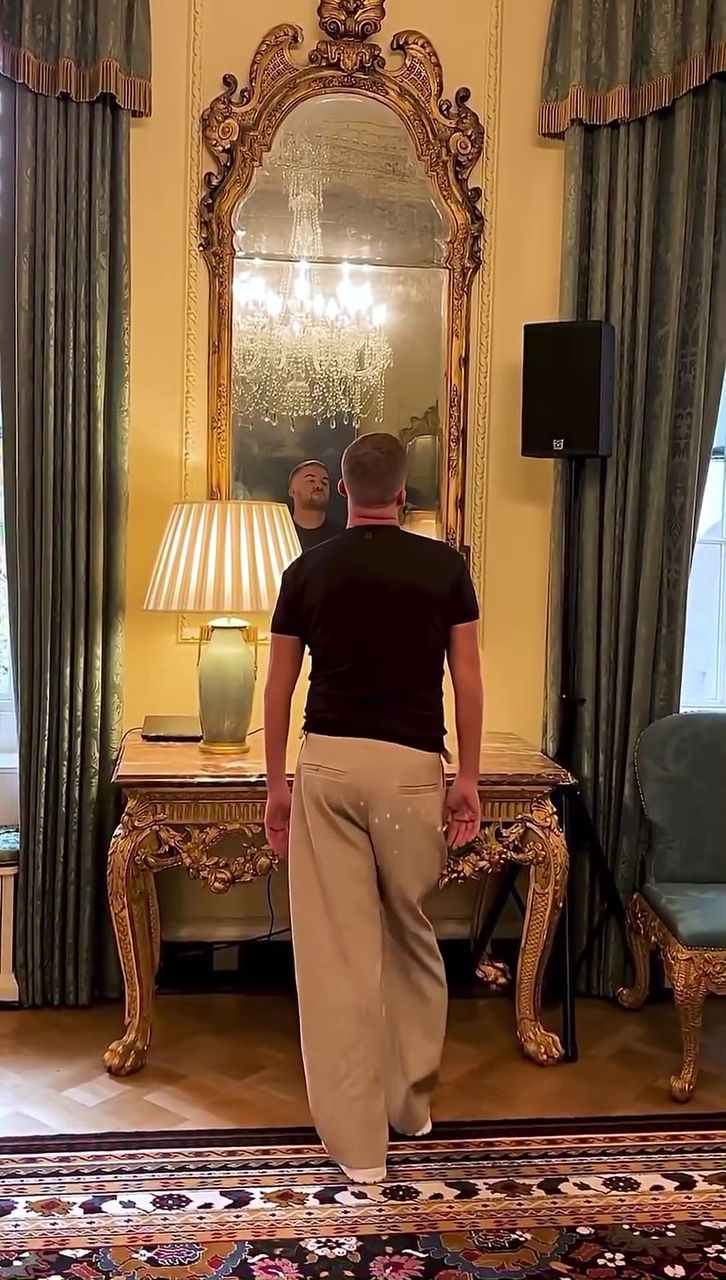
XA post on X from Conservative MP Neil O'Brien sharing a short video of a young man dancing through the state rooms of 10 Downing Street, styled after the famous scene from the film Love Actually. The clip carries a greeting between two people as its audio and makes no factual claims itself. The caption asks readers to weigh the stunt against rising youth unemployment, NHS waiting lists and living costs.
“Youth unemployment, waiting lists, cost of living all going up - but hey, they make funny clips”
Posted on X by Neil O'Brien, a Conservative MP. The clip is footage of TikToker Luke Hamnett, filmed during his visit to interview PM Andy Burnham at Number 10.
Who posted it
XAccount check
Estimates from public signals — account age, posting pattern, audience — not a judgement of the person behind the account, and separate from whether this post is true.
What stood out
- Handle @NeilDotObrien is the established X account of Neil O'Brien, Conservative MP for Harborough, Oadby & Wigston.
- Identity is corroborated by his official website, UK Parliament/Hansard records, and frequent quoting of the account by BBC, The Guardian and local press.
- Account has existed since August 2009 with roughly 18,000 posts, consistent with a long-term real-person/official account rather than a sock puppet.
- No evidence found of hacking, impersonation or coordinated inauthentic behaviour.
- As a partisan politician, he regularly promotes Conservative messaging and has made contested or cherry-picked statistical claims.
- In 2026 a Scottish civil-service data claim he promoted was reported to contain a discrepancy; he has also faced criticism over migration-related claims.
- In November 2026 the Conservative Party opened an investigation into a potential data leak after he disclosed a constituent's party membership during an online dispute.
Signals (7)+
- Posting cadence
- Active, regular political commentary
- Follower ratio
- Unknown
- Notable news coverage
- High: BBC, Guardian, Hansard, local Leicester media
- Fact check history
- Contested claims on migration and civil-service sickness data; partisan statistical framing
- Affiliations
- Conservative Party; Shadow Minister for Policy Renewal and Development; UK Parliament
- Official links
- Neilobrien.org.uk and parliamentary contact materials list @NeilDotObrien
- Platform metadata completeness
- Very sparse: bio, follower count and creation date absent from supplied metadata
Account checked November 23, 2026, 14:57 UTC
The media
Video✓ What is genuine
The whole clip. It is unaltered footage of TikToker Luke Hamnett recording a Love Actually-style dance at 10 Downing Street during a visit to interview PM Andy Burnham, an event covered across the UK press.
The tells
- ●●○ Supporting signal The footage shows the gilded state rooms, staircase and portrait-lined halls of 10 Downing Street, and a mirror reflection behaves consistently with a real room.our visual review
- ●●● Strong signal BBC News reports the influencer's visit to interview the prime minister and his imitation of the Love Actually dance, matching the clip.BBC News
- ●●● Strong signal HuffPost UK, the Daily Mail, the Daily Express and The Sun all describe the same TikTok dance inside Number 10.HuffPost UK, Daily Mail and The Sun
- ●●○ Supporting signal The clip's audio is a simple greeting between two people, with no claims embedded in it.our visual review
Synthetic-media detector
Detector not consultedThe media is incidental to the claim; the detector was not needed.
How we checked the media
- Searched for reporting on the Downing Street video and the influencer behind it.
- Compared what the footage shows — rooms, furnishings, reflections, the speaker on a stand — against what those reports describe.
- Reviewed the footage visually; our media detector was not run because the clip is not the basis of the claim.
Sources
11 sources reviewed- 1TikTok star's 'surreal' trip to Downing Street ↗
BBC News · bbc.comReputable outletCenter; light bias tagEvidence
Confirms the Downing Street visit and Love Actually-style dance were real and reported.
- 2'Extremely Unserious': Andy Burnham Slammed For Role In 'Love Actually' TikTok Video ↗
HuffPost UK · huffingtonpost.co.ukUntiereduntiered — treated as signal only, never decisiveContext
Shows the stunt drew criticism and was widely covered.
- 3Burnham under fire after he uses No10 for toe-curling TikTok stunt ↗
Daily Mail · dailymail.comUntiereduntiered — treated as signal only, never decisiveEvidence
Corroborates that the influencer replicated Hugh Grant's dance at Number 10.
- 4Consumer price inflation, UK: October 2026 ↗
Office for National Statistics · ons.gov.ukPrimary / fact-checkerprimary/official source (by domain)Evidence
Primary ONS data showing CPI at 3.6% in October 2026, up from 3.5%.
- 5CPI hits 3.6% as upward trend continues ↗
Financial Planning Today · financialplanningtoday.co.ukUntiereduntiered — treated as signal only, never decisiveEvidence
Trade press confirming the 3.6% October figure and the rise.
- 6NHS backlog data analysis ↗
British Medical Association · bma.org.ukUntiereduntiered — treated as signal only, never decisiveEvidence
BMA analysis of August data showing 7.37 million on the waiting list.
- 7Waiting list progress stalls as winter approaches, warn surgeons ↗
Royal College of Surgeons · cutover.rcseng.ac.ukPrimary / fact-checkerprimary/official source (by domain)Evidence
Royal College of Surgeons statement that the list stood at 7.4 million with long waits rising for six months.
- 8Youth unemployment statistics ↗
House of Commons Library · commonslibrary.parliament.ukUntiereduntiered — treated as signal only, never decisiveEvidence
Commons Library figures on youth unemployment at 16.4%, up from 14.2% a year earlier.
- 9Jobless rate eases back unexpectedly as vacancies tumble further ↗
LBC / Press Association · lbc.co.ukUntiereduntiered — treated as signal only, never decisiveEvidence
Reporting of the 17 November 2026 ONS release showing youth unemployment easing to 15.1%.
- 10ONS Labour Market Statistics November 2026 and reactions ↗
PolicyMogul · policymogul.comUntiereduntiered — treated as signal only, never decisiveEvidence
Summary of the same ONS release, including headline unemployment at 4.6%.
- 11Should PM focus on running the country instead of TikTok videos? VOTE NOW ↗
The Sun · thesun.co.ukLow reliabilityRight — tabloid, low reliabilityContext
Confirms the Number 10 dance stunt and the criticism it drew.
Further reading
- 4Office for National Statistics The primary inflation release behind the cost-of-living claim.
- 8House of Commons Library The Commons Library briefing with the annual youth unemployment figures the caption draws on.
- 9LBC / Press Association Reporting on the 17 November 2026 release that shows youth unemployment easing.
- 7Royal College of Surgeons The surgeons' body reading the latest NHS waiting list data.
- 1BBC News The BBC's account of the Downing Street visit behind the video.
The full story
The video is not the problem. Luke Hamnett, who posts as Live, Laugh, Luke, visited 10 Downing Street to interview Prime Minister Andy Burnham and, while there, recreated Hugh Grant's dance from Love Actually through the building's state rooms. The BBC reported his description of the trip as "surreal"; HuffPost UK, the Daily Mail, the Daily Express and The Sun all covered the stunt, and much of the coverage focused on criticism of the prime minister for allowing it.
That gave a Conservative MP a ready-made contrast. If the government has time for funny clips, the caption implies, it should have time for the problems the country faces. The numbers behind that contrast are real enough to make the point land. Inflation has been climbing, reaching 3.6% in October 2026 and expected to rise further as energy bills increase in January 2027. The NHS waiting list grew from about 7.1 million in March to 7.4 million in September, with long waits rising for six months. And youth unemployment is genuinely higher than a year ago.
What the caption does is compress three series into a single phrase, "all going up", and drop the part that complicates it. The most recent labour market release, published two days before the ONS inflation figures, showed youth unemployment easing to 15.1% and headline unemployment at 4.6%. The waiting list is above where it was in spring but below its earlier peak. The claim is built on a real trend, read at the moment that suits the argument.
Kernel of truth
Inflation, NHS waiting lists and youth unemployment have all risen over the past year by official measures — but the freshest data shows youth unemployment falling.
Timeline
March 2026
NHS elective waiting list stands at about 7.1 million; youth unemployment rate for 16-24s is 16.4% in the March-May period, against 14.2% a year earlier. 8House of Commons Library
September 2026
CPI inflation is 3.5%; the NHS waiting list reaches about 7.4 million with long waits rising for six months. 7Royal College of Surgeons
October 2026
CPI inflation rises to 3.6%, the highest rate of 2026, with CPIH at 3.7% and RPI at 4.2%. 4Office for National Statistics
November 17, 2026
ONS labour market release shows youth unemployment easing to 15.1% in July-September and headline unemployment at 4.6%. 9LBC / Press Association
November 19, 2026
BBC reports the influencer's Downing Street visit and Love Actually-style dance, which had about 150,000 views. 1BBC News
How it was framed
The underlying statistics are genuine and the footage is genuine, but the caption bundles three series into "all going up" and omits the latest release showing youth unemployment falling. The video of a dance is also used as a frame for an economic argument it does not itself support.
- Missing context. "all going up" — the caption omits the 17 November 2026 ONS release showing youth unemployment easing to 15.1% and a waiting list below its earlier peak.
- Us vs. them. "but hey, they make funny clips" sets a government doing stunts against ordinary people's problems.
- Emotional language. "Youth unemployment, waiting lists, cost of living" listed together to invoke hardship, with "funny clips" as the dismissive closer.
- “Visual proof”. The dance footage is used as evidence of misplaced priorities, though it shows nothing about the economy.
Posted on X by Neil O'Brien, a Conservative MP. The video is footage of TikToker Luke Hamnett at 10 Downing Street; the visit and dance were reported by the BBC (source 1), HuffPost UK (source 2), the Daily Mail (source 3) and The Sun (source 11).
Bias
Leans anti-government / Conservative partisan. The post is by a Conservative MP and uses an unflattering clip of the Labour prime minister's influencer stunt to argue the government is prioritising viral content over struggling public services. The statistics cited are real, but the framing is a deliberately one-sided attack, omitting that the latest labour market release showed unemployment and youth unemployment falling.
Bias describes how the post frames its message — the slant of the language, selection and emphasis — and is judged separately from whether the claim is true. A true claim can still be framed with a strong slant.
How we checked
46 s- 1
Searched for the official UK statistics on youth unemployment, NHS waiting lists and inflation, and for reporting on the Downing Street video.
- 2
Compared each of the caption's three assertions with the relevant official release and with reporting on it.
- 3
Checked whether the dance footage was a genuine, reported event by looking at coverage from BBC News, HuffPost UK, the Daily Mail, the Daily Express and The Sun.
- 4
Reviewed the footage visually for consistency with the reported visit; our media detector was not run because the clip is not what the claim rests on.
✓ Claim checked✓ Media checked✓ Sources checked
Why 80% confidence
HighWe set HIGH confidence on the headline because the statistics come from primary official releases (ONS, NHS England via the Royal College of Surgeons and BMA) and the video is corroborated across several independent newsrooms. Individual claims sit at MODERATE because two of the three depend on which time frame you choose, and the health sources both comment on the same NHS dataset rather than measuring independently.
Limits. We did not open the underlying ONS and NHS England datasets ourselves; we relied on the releases as quoted in the sources listed. We cannot know which time frame the author intended.
What we don’t know
- Which period the author had in mind when writing "all going up" — the annual comparison or the latest quarter.
- Whether the post was written before or after the 17 November 2026 labour market release was published.
- How the January 2027 energy price change will affect the inflation picture the caption describes.
Spot it yourself
Find the overstatementLooks suspicious, isn’t proof
- The post comes from a politician who opposes the government it criticises. That is a reason to check the numbers, not evidence the numbers are wrong.
- The dismissive tone — "but hey, they make funny clips" — is argument, not data. Annoying framing can carry accurate facts.
- The video looks slick and staged. Real official visits often are staged; production values say nothing about whether the statistics in the caption hold.
The actual evidence
- The ONS inflation release for October 2026 shows CPI at 3.6%, up from 3.5% — the cost-of-living claim holds.
- NHS England referral-to-treatment data, read by the Royal College of Surgeons and the BMA, show the waiting list rising from about 7.1 million in March to 7.4 million in September.
- The ONS labour market release of 17 November 2026 shows youth unemployment falling to 15.1% in July-September — the "all going up" phrase does not survive this.
- Reporting from BBC, HuffPost UK, the Daily Mail and The Sun confirms the dance footage is genuine, so the clip is not the weak point.
- 1
Read the claim as a time-frame question
Ask "up compared with when?" A figure can be up on the year and down on the quarter. Check the latest release before accepting a trend word like "all".
- 2
Go to the body that produces the number
For UK jobs and prices that is the ONS; for NHS waits it is NHS England's referral-to-treatment data. Commentary from think tanks, Royal Colleges or trade press is useful but traces back to these releases.
- 3
Spot bundled claims
The caption lists three separate series. Check each one separately — here two hold and one is out of date. A list makes a claim feel stronger than any single item supports.
- 4
Separate the footage from the argument
The video shows a dance. It cannot tell you whether waiting lists rose. Judge the clip on authenticity and the caption on data — two different questions.
Takeaway
A claim can be built entirely from accurate numbers and still mislead, if it picks the time frame that points one way and leaves out the release that points the other. Always ask which period a trend word covers.
Questions people ask
Is the Love Actually dance video inside 10 Downing Street real?+
Yes. It is genuine, unaltered footage of TikToker Luke Hamnett, who posts as Live, Laugh, Luke, recreating the Hugh Grant dance during a visit to interview PM Andy Burnham. BBC News, HuffPost UK, the Daily Mail, the Daily Express and The Sun all reported the visit and the stunt.
Are NHS waiting lists actually going up?+
In 2026, yes. The elective waiting list rose from about 7.1 million in March to 7.37 million in August and 7.4 million in September, and long waits rose for six months. It is still below its 2023-25 peak and roughly flat on a year earlier, so it is a recent rise, not a record.
Is youth unemployment rising or falling?+
Both, depending on the period. It was 16.4% in March to May 2026, up from 14.2% a year earlier. But the ONS release of 17 November 2026 showed it easing to 15.1% in July to September, so the latest direction is down while the annual comparison is up.
What is the UK inflation rate in October 2026?+
CPI inflation was 3.6% over the 12 months to October 2026, up from 3.5% in September and the highest rate of the year, according to the ONS. CPIH stood at 3.7% and RPI at 4.2%, and the Bank of England has warned of a peak near 5%.
Why do politicians post clips like this?+
A viral moment gives a simple image to argue from. Here the dance lets the poster contrast a government's media appearances with economic problems. The image is genuine; the argument built on it still has to be checked against the data, which is what we did.
Go deeper
- CPI
- The Consumer Prices Index, the main measure of how much a basket of everyday goods and services costs compared with a year earlier.
- Referral-to-treatment waiting list
- The count of NHS patients in England who have been referred for planned hospital care and are waiting for it, often called the elective backlog.
- ONS
- The Office for National Statistics, the UK's independent body for producing official statistics on jobs, prices and the population.
- False context
- When genuine content — a real photo, video or statistic — is shared with a caption or framing that changes what it appears to mean.
People also search for
For educators+
- The caption says "all going up". If two of three measures rose over the year and one fell in the latest quarter, is the statement true, misleading, or both? How would you rewrite it fairly?
- The video is completely genuine. Does that make the post more or less persuasive, and should it?
- How would you check a politician's economic claim in ten minutes using only official sources?
About this check
- Platform
- X
- Posted by
- @neildotobrien
- Posted
- November 22, 2026
- Age when checked
- Under 24 hours old when checked
- Where it spread
- United Kingdom
- Audience
- UK & EU audience
- Language
- EN
- Status
- ● Post is live
- Verified
- November 23, 2026, 14:58 UTC
- Published
- November 23, 2026, 14:58 UTC
Reach. Part of the Tory backlash to Burnham's Love Actually TikTok covered by HuffPost UK, Express and Daily Mail
This verdict was generated with AI from the sources shown. AI can make mistakes — check the sources before relying on it.
Check anything yourself, in seconds.
Share any social post or video to What the Fact and get the verdict, the confidence, and the receipts.