Did Spanish consulates set up cardboard boxes for 'ley de nietos' voters who can't vote?
Are Spanish consulates letting 'Ley de nietos' voters whose vote the Supreme Court suspended cast ballots in separate cardboard boxes for the 29 November election?
True
Consulates did run a separate cardboard-box table for suspended 'nietos' voters, confirmed by El País and EFE.
TRUE. On the first day of in-person voting at Spanish consulates for the 29 November 2026 election, consulates including Buenos Aires ran a separate table where people naturalised under the 'ley de nietos', whose vote the Supreme Court suspended, placed envelopes in cardboard boxes. El País, EFE, Antena 3 and Vozpópuli confirm the practice.
 Genuine
Claims
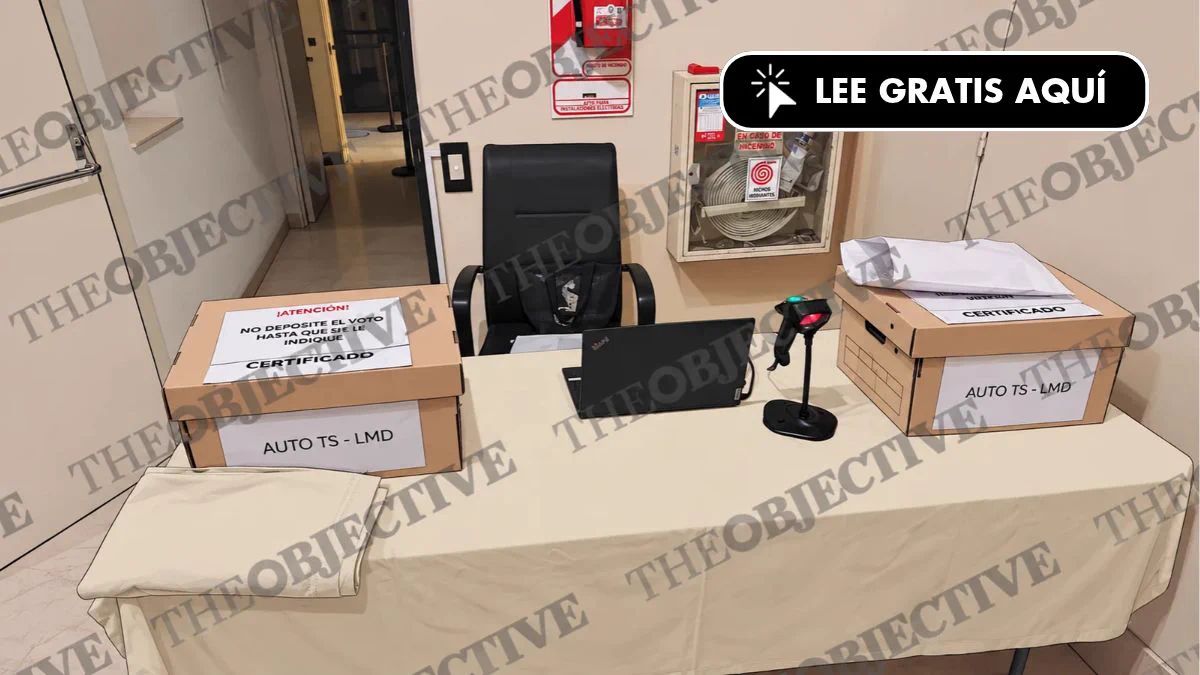
✓ 3 trueOn the first day of in-person voting at Spanish consulates for the 29 November 2026 general election, consulates including Buenos Aires ran a separate table with differentiated cardboard boxes where people naturalised under the Democratic Memory Law ('ley de nietos'), whose vote the Supreme Court suspended, could deposit their ballot envelopes.12356
“El Consulado General de España en Buenos Aires ha habilitado una mesa con dos cajas de cartón que simulan urnas electorales para recoger los sobres de estos nacionalizados.”
This rests on more than one outlet describing the same arrangement independently. El País quotes a naturalised voter in Buenos Aires whose envelope went into a cardboard box while her father and grandfather used the normal urn. EFE's reporting, republished by Telecinco and Infobae, describes consulates in Mexico and elsewhere running two circuits, one being a box identified as 'LMD'. Antena 3 and Vozpópuli describe the separate urn for suspended voters. These are different newsrooms with their own reporters, so the agreement between them is meaningful, not a single account copied around. The decisive point is the combination: eyewitness detail from a voter, wire-service reporting from several countries, and a watermarked press photograph that matches the description. The photograph alone would not settle it, because a picture of a box does not prove what the box is for. The reporting explains the box; the photo shows it.
Still open: Exactly how many consulates used the cardboard-box arrangement is not established in the sources we have.
The Supreme Court suspended the vote of 163,355 people naturalised under the 'ley de nietos', with only 901 able to prove political exile of an ancestor.34
“El Supremo mantiene suspendido el voto de 163.355 nacionalizados por la Ley de Nietos.”
The numbers come from coverage of the Supreme Court's order of 23 October 2026. Antena 3 reports that the court kept the vote suspended for 163,355 people naturalised under the law, and that only 901 had supplied consular certification of an exiled ancestor. EFE's reporting carries the same figures. These are the figures that make the story matter: a large group of newly naturalised citizens found themselves unable to cast a normal ballot days before the election. The count is not an estimate by a partisan source; it appears in broadcast and wire reporting of a judicial decision, which is the kind of fact that is checkable against the order itself. A reader should weigh that the figure describes people affected by the suspension, not a claim about how they would have voted.
The cardboard boxes are unsealed and function like a ballot box, raising custody concerns among consular staff.357
“Las cajas de Buenos Aires no estaban precintadas.”
This part is partly confirmed and partly contested, which is why it sits below the main claim. The unsealed part is supported: EFE's reporting states the Buenos Aires boxes were not sealed, and the photograph is consistent with open cardboard boxes. Custody concerns are also reported by more than one outlet and by consular staff. But the characterisation that the boxes 'function as a ballot box' is disputed. The Foreign Ministry says the box is a differentiated container that keeps the documentation separate, not a second ballot box holding valid votes, and Vox has announced legal complaints over the arrangement. When a government and an opposition party describe the same object differently, we report both and do not adopt either as settled fact. The observation is real; what it legally means is not resolved.
Still open: Whether the boxes hold valid votes or only separate documentation is contested by the government and by Vox; no court ruling on the practice is in our sources.
What was posted
XA post on X sharing a news article from The Objective. The caption summarises the article's headline and links to it. The post reads as a straight news share: it asserts that Spanish consulates have set up tables with cardboard boxes for 'nietos' who cannot vote. The image is The Objective's watermarked photograph of such a table. The post does not add commentary of its own.
“Los consulados montan mesas con urnas de cartón para los 'nietos' que no pueden votar vía @TheObjective_es”
“Consulates set up tables with cardboard boxes for the 'nietos' who cannot vote via @TheObjective_es” — translated
The post shares and credits The Objective (@TheObjective_es), the outlet that first published the watermarked photograph. It is a link-share of that article rather than original reporting by the account.
Who posted it
XAccount check
Estimates from public signals — account age, posting pattern, audience — not a judgement of the person behind the account, and separate from whether this post is true.
What stood out
- Account belongs to a real, identifiable Spanish journalist: Teresa Gómez, born Badajoz 1990, journalism graduate (UCM), currently head of investigations at The Objective.
- Long-established account (created May 2015, ~11.5 years old) with ~36,000 followers, ~10,300 posts and a healthy follower/following ratio (~43:1) — consistent with a working journalist, not a sock puppet.
- Career history is verifiable across El Confidencial Digital, Okdiario and The Objective, plus TV/radio punditry (Cuatro, Telemadrid, esRadio); she has received industry recognition ('Los 40 por la Libertad').
- Account is not platform-verified, but this is common among Spanish journalists and is not itself evidence of inauthenticity.
- Reliability is qualified: her outlet, The Objective, has been judicially forced to rectify false stories (notably the 2024 Begoña Gómez subsidy story) and has a strongly partisan, anti-government editorial line.
- She is a combative partisan commentator who has publicly threatened legal action against critics calling a story a 'bulo', which should temper trust in her unsourced or exclusive claims.
- No recent posts were supplied, so no post-level coordination or automation analysis was possible; bot estimate rests on profile metadata and public footprint.
Signals (12)+
- Account created
- 2015-05
- Following count
- 830
- Post count
- 10332
- Follower ratio
- 43.4
- Display name
- Teresa Gómez
- Bio present
- Yes
- Employer
- The Objective (Jefa de Investigación since Sept 2026)
- Prior employers
- Okdiario; El Confidencial Digital
- Notable news coverage
- Yes
- Media appearances
- Cuatro; Telemadrid; esRadio; Onda Madrid; Canal Extremadura; Canal Sur
- Fact check history
- Outlet-level: The Objective ordered by Madrid court (Jul 2024) to prominently rectify false Begoña Gómez subsidy/foundation story; also rectified a 2026 Sindicato de Inquilinas story. No direct confirmation that Gómez authored both pieces.
- Partisan alignment
- Right-leaning Spanish media ecosystem; strongly critical of PSOE/Sánchez government
Account checked November 23, 2026, 02:58 UTC
The media
Image✓ What is genuine
The photograph is genuine press photography published by The Objective. The table, the boxes and the labels described in the reporting are real objects in a real consular room.
The tells
- ●●○ Supporting signal The image carries The Objective's watermark, matching the outlet that first published it.our visual review
- ●●○ Supporting signal The setting is an ordinary consular room: table with cloth, office chair, laptop, barcode reader, fire-hose cabinet.our visual review
- ●●○ Supporting signal Two cardboard boxes bear printed labels ('ATENCIÓN: NO DEPOSITE EL VOTO HASTA QUE LA MESA LO INDIQUE', 'CERTIFICADO', 'AUTO TS - LMD') consistent with the procedure described in reporting.our visual review
- ●●○ Supporting signal Nothing in the scene breaks physics, scale or known consular practice.our visual review
Synthetic-media detector
Detector not consultedSources settled the claim on their own; the detector was not needed.
How we checked the media
- Compared the photo's visible elements with the arrangement described in The Objective's article and in EFE and El País reporting.
- Checked that the image carries The Objective's watermark, matching the publisher that first ran the story.
- Reviewed the scene for visual implausibility: scale, lighting, objects and setting.
Sources
7 sources reviewed- 1Los consulados montan mesas con urnas de cartón para los 'nietos' que no pueden votar ↗
The Objective · theobjective.comUntiereduntiered — treated as signal only, never decisiveEvidence
First publication of the story and the watermarked photograph of the Buenos Aires table with two cardboard boxes.
- 2Tres generaciones de españoles en el extranjero, divididas por el voto: 'Mi abuelo y mi padre votaron en urna, yo en una caja de cartón' ↗
El País · elpais.comReputable outletLean LeftEvidence
Independent eyewitness detail: a naturalised voter placed her envelope in a box rather than the official urn.
- 3Oficinas consulares instalan urnas de cartón para los nacionalizados españoles que no estén registrados en el censo CERA ↗
Telecinco (EFE) · telecinco.esUntiereduntiered — treated as signal only, never decisiveEvidence
EFE wire reporting that consulates installed cardboard boxes and that the Buenos Aires boxes were not sealed.
- 4El Supremo mantiene suspendido el voto de 163.355 nacionalizados por la Ley de Nietos ↗
Antena 3 · antena3.comUntiereduntiered — treated as signal only, never decisiveEvidence
Reports the Supreme Court maintained the suspension for 163,355 voters, with only 901 certified.
- 5Urnas de cartón: Exteriores monta un circuito paralelo para recoger los votos suspendidos por el Supremo ↗
Vozpópuli · vozpopuli.comUntiereduntiered — treated as signal only, never decisiveEvidence
Describes consulates running two voting circuits, one a box identified as LMD.
- 6México habilita la 'urna no urna' para los votos de los nacionalizados por la Ley de Nietos ↗
Infobae (EFE) · infobae.comUntiereduntiered — treated as signal only, never decisiveEvidence
EFE reporting that Mexico operated a separate 'urna no urna' for 'ley de nietos' voters.
- 7Buxadé anuncia nuevas querellas contra el Gobierno por urnas en consulados para nacionalizados por la ley de nietos ↗
Europa Press · europapress.esUntiereduntiered — treated as signal only, never decisiveEvidence
Vox's announcement of further legal complaints over the consular boxes, showing the practice is contested.
Further reading
- 2El País El País's account of one family in Buenos Aires puts the abstract procedure into concrete human terms.
- 3Telecinco (EFE) EFE's wire reporting, carried by Telecinco, describes the arrangement across consulates and the unsealed boxes.
- 4Antena 3 Antena 3 explains the Supreme Court order and the numbers behind the suspension.
- 6Infobae (EFE) Shows how consulates outside Spain, in Mexico, handled the same problem.
The full story
The claim is built on something real: a Supreme Court order of 23 October 2026 that kept the vote suspended for 163,355 people naturalised under the Democratic Memory Law, known as the 'ley de nietos'. Only 901 of them, according to reporting of the order, had supplied consular certification that an ancestor went into political exile.
That left consulates facing a practical problem on the first day of in-person voting for the 29 November 2026 election. People arrived entitled to vote in their own understanding, but the court had suspended their suffrage. The solution reported by The Objective and confirmed by other outlets was a separate table. In Buenos Aires, two cardboard boxes received envelopes. In Mexico, consular staff reportedly called their version 'la urna no urna'.
What turns a mundane administrative workaround into a story is what the box represents. For the voters, it is the visible sign that they were set apart on election day. El País's account of three generations of one family, two voting in the official urn and one in a box, captures that. For the government, the box is simply a different container that keeps the suspended envelopes from mixing with valid ballots. For Vox, it is grounds for legal complaints. Both descriptions can be true at once: the box is real and its legal status is disputed.
Kernel of truth
A real Supreme Court order suspended the votes of 163,355 naturalised citizens, and consulates did set up a separate cardboard-box table to receive their envelopes.
Timeline
October 23, 2026
The Supreme Court keeps the vote suspended for 163,355 people naturalised under the 'ley de nietos', with only 901 certified as descendants of exiles. 4Antena 3
November 21, 2026
First day of in-person voting at Spanish consulates for the 29 November election; consulates including Buenos Aires run a separate table with cardboard boxes for suspended voters. 1The Objective
November 22, 2026
El País, EFE, Antena 3 and Vozpópuli report the practice; Vox announces further legal complaints over the consular boxes. 7Europa Press
How it was framed
The post's core assertion — that consulates set up cardboard-box tables for 'ley de nietos' voters who could not vote — is confirmed by multiple independent outlets and by a genuine press photograph. It is a news share, not a distortion.
- “Visual proof”. The post is built around a watermarked photograph of the boxes on the consular table.
- Emotional language. The scare quotes around 'nietos' and the phrase 'que no pueden votar' foreground exclusion.
Posted on X by an account sharing and crediting The Objective (@TheObjective_es), the outlet that first published the image and the article. The Objective is a Spanish news outlet; we do not assign it a bias rating here.
Bias
Leans right-leaning, critical of Spain's Socialist-led government. The Objective is a right-leaning Spanish outlet, and the presentation frames the consular arrangement as a government manoeuvre that circumvents a Supreme Court ruling, highlighting institutional suspicion. The underlying facts are nonetheless corroborated by mainstream and wire outlets; the slant is in the framing and emphasis on scandal.
Bias describes how the post frames its message — the slant of the language, selection and emphasis — and is judged separately from whether the claim is true. A true claim can still be framed with a strong slant.
How we checked
43 s- 1
Searched for coverage of the cardboard-box tables at consulates in Spanish, using the post's own phrasing and the The Objective headline.
- 2
Compared the photograph with the arrangement described in The Objective's article and in El País, EFE, Antena 3 and Vozpópuli reporting.
- 3
Reviewed the image visually for scale, setting and any sign of alteration.
- 4
Checked whether the figures on suspended voters appear in independent reporting of the Supreme Court order.
- 5
Looked for the government's and Vox's competing descriptions of what the boxes are.
✓ Claim checked✓ Media checked✓ Sources checked
Why 88% confidence
HighWe rate the main claim HIGH because four newsrooms with their own reporters — El País, EFE, Antena 3 and Vozpópuli — independently describe the same practice across different countries, and a watermarked press photograph matches their description. We rate the custody claim MODERATE because the government disputes the characterisation of the boxes as ballot boxes, so that part is contested rather than settled.
Limits. No election authority or court ruling on the boxes is in our sources. The photograph could not be traced beyond its first publication by The Objective. We did not count how many consulates used the arrangement.
What we don’t know
- How many Spanish consulates used the cardboard-box arrangement, and whether any sealed the boxes.
- Whether any court will rule on Vox's complaints, and what that ruling would mean for the envelopes already received.
- What happens to the envelopes deposited in the boxes after election day.
Spot it yourself
Why it looked fakeLooks suspicious, isn’t proof
- The story comes from an outlet with a clear editorial line, which makes some readers doubt it on sight. A source's lean is a reason to check, not evidence the story is wrong.
- The image looks odd: cardboard boxes on a table in a consular room, where you expect a transparent urn. Unusual is not the same as staged.
- The caption's quotation marks around 'nietos' and the phrase 'no pueden votar' sound alarmist. Tone is a signal to look closer, not a verdict.
- The photograph is a single still. A still can be genuine and still show only one moment; it neither proves nor disproves the wider practice.
The actual evidence
- El País independently quotes a naturalised voter who placed her envelope in a box while her father and grandfather used the official urn.
- EFE reporting, carried by Telecinco and Infobae, describes the two-circuit arrangement in consulates in Mexico and elsewhere.
- Antena 3 and Vozpópuli describe the separate arrangement for suspended voters and report the numbers behind it.
- The photograph carries The Objective's watermark and matches the procedure the reporting describes, down to the printed labels.
- 1
Ask who else would be reporting this
If consulates in several countries really set up separate boxes on election day, wire services and other national outlets would have it. Search the Spanish phrase 'urnas de cartón consulados' and see whether outlets beyond one are carrying it.
- 2
Look for the official version, not just the critics'
Find what the Foreign Ministry says about the boxes. Compare it with what opposition parties say. If the two descriptions conflict, the dispute is the story.
- 3
Read the numbers back to their source
The figure 163,355 comes from reporting of a Supreme Court order. Look for coverage that names the order and the date, rather than a post that repeats the number alone.
- 4
Separate the photo from the claim
Ask what the picture actually proves. Here it shows a table and boxes; the reporting is what explains what they are for.
Takeaway
A story can look strange and come from a partisan source and still be accurate. Check whether independent newsrooms with their own reporters describe the same event, and whether the official side disputes the facts or only their meaning.
Questions people ask
Did Spanish consulates really use cardboard boxes for 'ley de nietos' voters?+
Yes. On the first day of in-person voting for the 29 November 2026 election, consulates including Buenos Aires ran a separate table where people naturalised under the law, whose vote the Supreme Court had suspended, placed envelopes in cardboard boxes. El País, EFE, Antena 3 and Vozpópuli all report the arrangement.
How many people had their vote suspended under the 'ley de nietos'?+
Reporting of the Supreme Court's order says 163,355 people naturalised under the law had their vote suspended, and that only 901 had supplied consular certification that an ancestor went into political exile. The figures appear in Antena 3 and EFE coverage of the decision.
Were the cardboard boxes sealed?+
EFE's reporting states that the boxes in Buenos Aires were not sealed. The Foreign Ministry says the box is only a differentiated container to keep the suspended envelopes apart, not a second ballot box holding valid votes. Vox disputes that and has announced legal complaints.
Is this a real photograph or an edited image?+
It is genuine press photography published by The Objective, carrying the outlet's watermark. The image matches the arrangement the reporting describes, including printed labels on the boxes. We reviewed it visually; no alteration was apparent.
Why is this story being shared so widely?+
Because it combines a concrete, visible object — a cardboard box where voters expected an urn — with a large number: 163,355 people suspended days before an election. The image is easy to share and the dispute over what the box means keeps it circulating.
Go deeper
- ley de nietos
- Spain's Democratic Memory Law, which lets descendants of Spanish exiles apply for nationality; it is commonly called the 'grandchildren's law'.
- CERA
- The electoral census for Spaniards living abroad, which determines who is registered to vote from outside Spain.
- consular certification
- An official document from a consulate confirming a fact, here that a voter's ancestor went into political exile.
- cautelares
- Provisional or precautionary court measures taken while a case is still being decided.
- urn
- The container into which voters place completed ballot papers; in Spain's foreign voting the official urn is transparent.
People also search for
For educators+
- A photograph shows a cardboard box on a table. What does that image prove on its own, and what does it need reporting to explain?
- The government calls the box a separate container; critics call it a ballot box. Can both be describing the same object honestly? What would you need to decide?
- If a story comes from an outlet with a clear editorial line but is confirmed by several other newsrooms, how should that affect whether you trust it?
About this check
- Platform
- X
- Posted by
- @teresagomezgp
- Posted
- November 22, 2026
- Age when checked
- Under 24 hours old when checked
- Where it spread
- Spain
- Audience
- UK & EU audience
- Language
- ES
- Status
- ● Post is live
- Verified
- November 23, 2026, 03:00 UTC
- Published
- November 23, 2026, 03:00 UTC
Reach. 895 likes (teresagomezgp); sharoncalderong 824 likes; GuillermoRocaf1 153; La Gaceta and The Objective articles 22 Nov; open Maldita Buloteca case
This verdict was generated with AI from the sources shown. AI can make mistakes — check the sources before relying on it.
Check anything yourself, in seconds.
Share any social post or video to What the Fact and get the verdict, the confidence, and the receipts.