Does Gabriel Rufián really earn 140,000 euros a year as an MP?
Does Spanish ERC politician Gabriel Rufián earn €140,000 a year, as Luis Figo claimed on X?
True, but…
The 140,000-euro figure is close to right; the motive and the election jab are opinion.
Mostly true. Gabriel Rufián's gross parliamentary income is about 139,710 euros a year, so Luís Figo's "140 mil pavos" is an accurate rounding. The video is genuine footage of Rufián at RTVE's 23 November 2026 debate. But calling it all his "salary", the claim about his motives, and the election prediction are not verifiable facts.
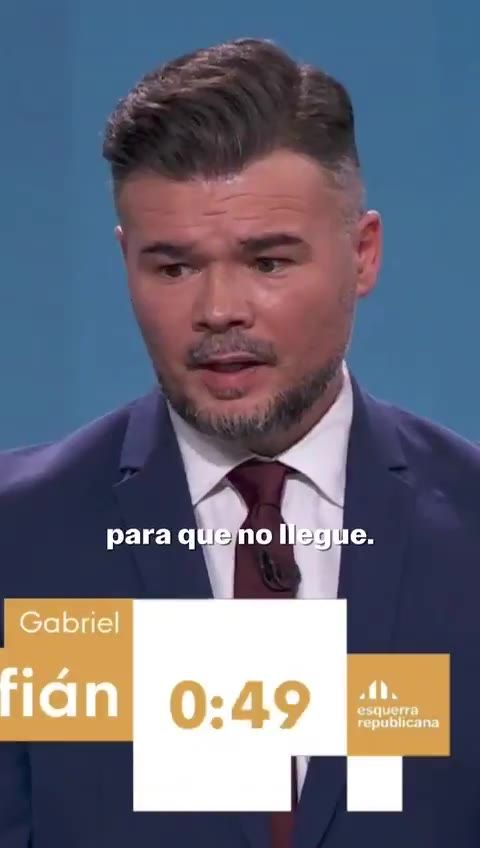 Genuine
Claims
✓ 1 trueGabriel Rufián receives around 140,000 euros a year from his parliamentary activity.245
“está con miedo de perder sus 140 mil pavos”
The money figure holds up. Pay data compiled by Newtral and reported by ABC and Infobae put Rufián's gross annual parliamentary income at about 139,710 euros, made up of his MP's salary, the complements attached to his roles and a monthly expense indemnity, paid across 14 instalments. Rounding that to "140 mil pavos" is accurate to within about 0.2%. Two things are worth weighing. First, the total is gross: tax and social security come off before anyone receives it, and net pay is not the same number. Second, part of the sum is an indemnity intended to cover costs of the job rather than take-home pay, so calling the whole amount his "salary" slightly flattens a structure that is a bit more complicated. Imperfect wording, though, does not make the number wrong. The decisive evidence here is the published breakdown, not the political argument around it. None of the sources disagrees on the ballpark figure.
Still open: We do not have a primary Congress payroll document in our source set; the figure rests on published breakdowns of official pay data rather than the document itself.
Rufián is afraid of losing that money, meaning the salary is his motive.
“está con miedo de perder sus 140 mil pavos!!!”
This is a motive claim, and motives of this kind cannot be checked against public records. Nothing in the clip, and nothing in the reporting we found, states what Rufián's reasons are for standing again; the caption supplies them as an interpretation. It is a familiar rhetorical move in election campaigns: attach a self-interested reason to an opponent's position so that what they say can be dismissed without engaging with it. That does not make the poster wrong, and it does not make him malicious either. It simply means the sentence belongs to the category of comment rather than the category of checkable fact. Our reading is that it should be treated as opinion, not scored as true or false. A reader can reasonably hold a view about it, but no evidence we found settles the question, and we would not present it as settled in either direction.
Still open: No public statement from Rufián addresses his motives for standing, and it would be a stretch to infer them from a one-minute broadcast turn.
"Nobody is going to vote for you, not even your cousins."
“No te va a votar ni tus primos”
This is a prediction about an election that, at the time of writing, has not been held. Spain's general election is scheduled for 29 November 2026, five days after the post. Nothing can confirm or refute a forecast before the vote, and the personal jab about his relatives is a rhetorical flourish rather than a verifiable statement of fact. It is worth noting that this line and the money line are doing different jobs: the salary claim is a number anyone can look up, while this is a take on how the country will vote. Mixing the two in one caption is a common pattern, because the checkable half lends an air of solidity to the uncheckable half. When the results come in, the prediction will be either borne out or not, but whatever happens on polling day will not retroactively make the reasoning behind it sound or unsound. It is simply not a factual claim today.
Still open: The election result will eventually speak to whether the prediction was accurate, but not to whether it was ever evidence.
"The Catalan right has spent the whole night reproaching me for representing Podemos" and "there is no correct way of being Catalan".13
“La derecha catalana lleva toda la noche recriminándome representar a Podemos... no hay una manera correcta de ser catalán”
These lines are spoken in the clip, and the context behind them checks out independently. Europa Press reports that during RTVE's eight-party debate on Monday 23 November 2026, Míriam Nogueras of Junts repeatedly addressed Rufián as the "candidate of Podemos", and that Rufián pushed back by saying he was proud to represent the diversity of Catalonia and that there is no single correct way to be Catalan. That makes the substance of the speech genuine rather than invented for the clip. It also explains why the segment was shared widely: it captures a real exchange in a live broadcast, with two candidates clashing over identity and party labels. For anyone testing whether the video was staged or edited, this is the decisive point. The words on screen match what impartial wire reporting says was said, in the place and on the night it was said.
What was posted
XFormer footballer Luís Figo quote-posted a video clip on X of ERC candidate Gabriel Rufián speaking in a TV debate studio, with burned-in subtitles and a closing-speech countdown. His own added text tells readers Rufián is afraid of losing a large public salary and that almost nobody will vote for him. The post does not show a source for the money figure.
“Pobrecito esta con miedo de perder sus 140 mil pavos!!! No te va a votar ni tus primos, vete ya predicador.”
“Poor thing, he's scared of losing his 140 thousand bucks!!! Not even your cousins are going to vote for you, go on, preacher.” — translated
Posted on X on 24 November 2026, during the campaign for Spain's 29 November general election, as a quote-post of a clip Rufián himself had shared from RTVE's eight-party debate the previous night.
Who posted it
XAccount check
Estimates from public signals — account age, posting pattern, audience — not a judgement of the person behind the account, and separate from whether this post is true.
What stood out
- @LuisFigo is the long-documented official X account of Portuguese football legend Luís Figo, quoted as his 'cuenta oficial' by Marca, ABC, Mundo Deportivo and others going back to at least 2014-2015.
- Account is demonstrably active right now: Spanish outlets (Las Provincias, El Correo, El Periódico de España, Estrella Digital) quoted @LuisFigo tweets from 15-24 Nov 2026 in his ongoing spat with ERC's Gabriel Rufián.
- He uses the account to correct misinformation about himself — e.g. Oct 2024 threatening legal action over a fabricated Ballon d'Or quote, and a July 2026 post denying invented statements about the national team; consistent with a genuine person controlling the handle.
- No biography, follower count or creation date were supplied, and the profile is flagged unverified — this is a data-collection gap, not evidence of fakeness; X's blue check is now pay-to-play and unreliable either way.
- One 2018 incident: the account was briefly hacked by Turkish hackers and posted Afrin-related content — a compromise, not a sign of inauthenticity.
- Caveat for sourcing: the content is largely football opinion, political commentary and personal quarrels (including a posted AI-altered image of a politician), so it is a genuine identity but not a reliable factual source; claims made in his posts are unsourced personal assertions.
- No evidence of coordinated or automated behaviour: posts are idiosyncratic, manually typed, sometimes deleted after backlash, and covered by mainstream press as his own.
Signals (9)+
- Activity status
- Active as of 2026-11-24
- Posting cadence
- Frequent but bursty, reactive to political/football events
- Follower ratio
- Unknown (follower count not supplied)
- Notable news coverage
- Extensive - Marca, ABC, Mundo Deportivo, El País group titles, El Correo, Estrella Digital
- Fact check history
- Self-debunks fake quotes attributed to him (2024 Ballon d'Or, July 2026 national-team statements)
- Known affiliations
- Former Barcelona/Real Madrid/Inter and Portugal player; UEFA ambassador/advisor
- Compromise history
- Account hacked in March 2018 (pro-Turkish military posts, later removed)
- Impersonation risk
- Low - handle is the canonical one cited by media
- Data completeness
- Very low (no bio, followers, creation date, or sample posts provided)
Account checked November 25, 2026, 14:55 UTC
The media
Video✓ What is genuine
The footage itself is genuine broadcast material from RTVE's eight-party debate, shared by Rufián on his own account before Figo quote-posted it. The words spoken are his real closing speech, reported independently by a wire service.
The tells
- ●●● Strong signal The spoken text matches, almost word for word, the closing speech quoted by Europa Press from the 23 November debate.Europa Press
- ●●○ Supporting signal The studio setting, name caption and party branding are consistent with RTVE's election debate format.our visual review
- ●●○ Supporting signal A countdown running from about 0:55 to 0:00 fits a timed one-minute closing turn rather than a scripted ad.our visual review
Synthetic-media detector
Detector not consultedThe media is incidental to the claim; the detector was not needed.
How we checked the media
- Reviewed the clip visually, including the on-screen name caption, party branding, burned-in subtitles and the countdown timer running from about 0:55 to 0:00 typical of a one-minute closing turn.
- Compared the spoken words in the clip with wire reporting of the 23 November 2026 RTVE eight-party debate.
- Searched for reporting on the debate and on the exchange between the two candidates on X.
Sources
7 sources reviewed- 1Nogueras se dirige a Rufián como candidato de Podemos y él proclama su orgullo por representar la diversidad de Cataluña ↗
Europa Press · europapress.esUntiereduntiered — treated as signal only, never decisiveEvidence
Confirms the debate exchange involving Míriam Nogueras and quotes Rufián's "no hay una manera correcta de ser catalán" line.
- 2Luis Figo y Gabriel Rufián elevan el tono de su enfrentamiento en X en plena campaña del 29-N ↗
La Vanguardia · lavanguardia.comReputable outletCenterEvidence
Confirms Figo's caption and that it was posted in reply to Rufián's debate clip.
- 3El 'clásico' enganchón de Rufián y Figo en las redes a cinco días de las elecciones ↗
El Periódico de España · epe.esUntiereduntiered — treated as signal only, never decisiveEvidence
Dates the debate to Monday and the clip posting to the following day.
- 4Preguntan a Gabriel Rufián cuánto dinero destina al alquiler de su vivienda en Madrid y es claro en su respuesta ↗
ABC · abc.esUntiereduntiered — treated as signal only, never decisiveEvidence
States the roughly 139,710 euro gross annual figure and its components.
- 5Cuánto gana Rufián como diputado y portavoz de ERC: su sueldo supera los 139.000 euros brutos al año ↗
Infobae · infobae.comUntiereduntiered — treated as signal only, never decisiveEvidence
Breaks the figure down into monthly gross payments over 14 instalments.
- 6Gabriel Rufián y Luís Figo se enfrentan en X por el sueldo del diputado y las elecciones del 29N ↗
Estrella Digital · estrelladigital.esUntiereduntiered — treated as signal only, never decisiveContext
Confirms the date of the exchange and quotes the caption.
- 7Luis Figo y Rufián se enganchan de nuevo en redes: de los '140.000 pavos' al 'suéltame el brazo ya, pesetas' ↗
El Mundo · elmundo.esReputable outletLean RightContext
Quotes Figo's caption and the reply from Rufián.
Further reading
- 1Europa Press Wire reporting that places the clip in its real setting and quotes the debate exchange it comes from.
- 5Infobae Gives the clearest breakdown of the salary figure, including monthly gross and the number of payments.
- 2La Vanguardia Documents Figo's exact caption and the timeline of the exchange, from a major Spanish daily.
The full story
The kernel of truth here is double. Rufián did give that speech, on Monday 23 November 2026, at the end of RTVE's eight-party election debate, and he did earn roughly the sum Figo names. Both halves of the post are built on things that actually happened.
The clip is Rufián's own "minuto de oro", the timed closing turn each candidate gets. According to Europa Press, the segment's most quoted moment came after Míriam Nogueras of Junts repeatedly called him the "candidate of Podemos" during the debate. Rufián answered that he was proud to represent Catalonia's diversity and that there is no correct way of being Catalan. He shared the clip on X with a one-word prompt, "Pásalo" ("pass it on"), which is how it reached a far bigger audience than his own followers.
The money figure comes from published breakdowns of parliamentary pay. His gross annual income is around 139,710 euros, which rounds neatly to "140 mil pavos". Where the post stops being a fact and starts being a jab is the next clause: that he is scared of losing it, and that nobody will vote for him.
Figo's intervention also plugs into an old feud. Rufián replied with "Suéltame el brazo ya, pesetas", a reference to the 2000 transfer that took Figo from Barcelona to Real Madrid. The result is a post that feels like a fact-check because its first half can be checked, carrying a second half that cannot.
Kernel of truth
Rufián's gross parliamentary income is close to 140,000 euros a year, and the clip is his genuine closing speech from RTVE's 23 November 2026 debate.
Timeline
November 23, 2026
RTVE holds its eight-party election debate; Gabriel Rufián delivers his one-minute closing turn, including his reply to being called the "candidate of Podemos". 1Europa Press
November 24, 2026
Rufián shares the clip on X with the word "Pásalo"; Luís Figo quote-posts it with the "140 mil pavos" caption, and Rufián replies "Suéltame el brazo ya, pesetas". 2La Vanguardia
November 29, 2026
Spain's general election is scheduled to take place. 2La Vanguardia
How it was framed
The video and the salary figure are real, but the caption frames both through a motive and a prediction that the evidence cannot support, using a checkable number to give weight to an uncheckable attack. The post is not fabricated; it is a genuine clip and a broadly correct figure wrapped in a political interpretation.
- Emotional language. "Pobrecito" ("poor thing") and "vete ya predicador" ("go on, preacher") set a mocking tone before any figure is mentioned.
- Unsourced statistic. The "140 mil pavos" figure appears with no source, link or breakdown attached, even though the figure itself turns out to be roughly right.
- “Visual proof”. The post leans on genuine broadcast footage with subtitles, so the clip appears to demonstrate the claim directly.
- Us vs. them. "No te va a votar ni tus primos" frames the speaker as rejected by ordinary people, including his own family.
Posted on X on 24 November 2026 by Luís Figo, a former footballer, as a quote-post of a clip that Gabriel Rufián had shared the same day from RTVE's 23 November debate. Spanish outlets including La Vanguardia, El Mundo, El Periódico de España and Estrella Digital reported the exchange.
Bias
Leans anti-Rufián / Spanish right-leaning. The framing is a personal attack rather than a policy critique: it asserts, without evidence, that a politician's motive is fear of losing his salary, calls him a 'preacher' and predicts electoral humiliation. The attached clip is a routine campaign closing speech, and the caption is designed to recast it as self-serving hypocrisy.
Bias describes how the post frames its message — the slant of the language, selection and emphasis — and is judged separately from whether the claim is true. A true claim can still be framed with a strong slant.
How we checked
59 s- 1
Ran four searches covering the salary figure, the quoted debate line, fact-checking of the pay data and the exchange on X.
- 2
Compared the words spoken in the clip with wire reporting of the 23 November 2026 RTVE eight-party debate.
- 3
Checked published breakdowns of Rufián's parliamentary income against the figure in the caption.
- 4
Looked for Spanish outlets reporting the post itself, to confirm the caption is genuine.
- 5
Reviewed the video visually for studio setting, on-screen captions and the closing-turn countdown.
✓ Claim checked✓ Media checked✓ Sources checked
Why 82% confidence
HighHigh confidence on the money figure and on the clip's authenticity, because a wire service and several outlets independently describe the same speech and the same pay breakdown. The verdict is TRUE_BUT rather than simply TRUE because part of the caption is opinion and a forecast, which we score separately.
Limits. We did not open the original pages behind our search results, so the salary breakdown rests on published summaries rather than the underlying payroll document. We did not run an automated media detector; our read of the video rests on visual review and reporting. We cannot assess why the post was made.
What we don’t know
- Whether the poster checked the salary figure before using it or estimated it.
- What Rufián's actual take-home pay is after tax, which the gross figure does not show.
- How the 29 November election will turn out, which is the only thing that could speak to the prediction.
Spot it yourself
Find the overstatementLooks suspicious, isn’t proof
- The post is a personal attack by a famous former footballer with no obvious expertise in parliamentary pay — a reason to check the number, not a reason to disbelieve it.
- The mocking tone and the "pavos" slang make it read as a jab rather than a report; tone alone tells you nothing about whether the figure is right.
- The clip is a share of someone else's video with subtitles added, which often signals selective editing — here the words match independent reporting, but that had to be verified.
- The lack of any source for the salary figure looks sloppy, but it turned out the number was close to correct anyway.
The actual evidence
- Published breakdowns of parliamentary pay put Rufián's gross annual income at about 139,710 euros, which rounds to the figure in the post.
- Europa Press reporting on the 23 November RTVE debate matches the words spoken in the clip, confirming the footage is genuine.
- Several independent Spanish outlets reported the exchange between the two men and quoted the caption, confirming the post itself is real.
- The parts of the caption that could not be checked — motive and the election prediction — were clearly separated from the money figure.
- 1
Check the number against the official pay structure
Congress publishes MPs' salary bands and role complements. If a post names a figure, compare it with those bands and see whether the poster is quoting gross or net.
- 2
Ask whether a gross figure is being described as pay
Look for words like "brutos" or "netos". A total that includes expense indemnities is not the same as take-home salary, and rounding up or down is normal.
- 3
Separate facts from motives in the same sentence
Highlight the checkable clause, then the uncheckable one. A caption that mixes a real number with a claim about what someone fears is doing two different things at once.
- 4
Confirm the clip matches a real broadcast
Search the speaker's distinctive phrase and the debate date. If a wire service or broadcaster reports the same words from the same event, the footage is genuine.
Takeaway
A post can get its facts right and still mislead when a true number is used to support a motive or a prediction nobody can verify. Check each clause on its own before accepting the package.
Questions people ask
How much does Gabriel Rufián earn as an MP?+
Published breakdowns put his gross annual parliamentary income at about 139,710 euros. That combines his salary as a deputy and ERC spokesperson with the complements attached to those roles and a monthly expense indemnity, paid over 14 instalments. The figure is gross, before tax and social security.
Is "140 mil pavos" an accurate description of his salary?+
Close. It rounds 139,710 euros to 140,000, which is accurate to within a fraction of a percent. The caveat is that the total is gross and includes an indemnity meant to cover job expenses, so calling the whole amount his "salary" oversimplifies the structure a little.
Did Luís Figo really post that about Rufián?+
Yes. The quote-post on X, captioned with the "140 mil pavos" line, is genuine and was reported by several Spanish outlets, including La Vanguardia, El Mundo, El Periódico de España and Estrella Digital. It was posted on 24 November 2026, during the campaign for the 29 November election.
Is the video of Rufián real?+
Yes. It is his closing turn, or "minuto de oro", from RTVE's eight-party election debate on Monday 23 November 2026. Wire reporting quotes the same lines, including his reply to being called the "candidate of Podemos" by Junts's Míriam Nogueras.
Can you fact-check a claim about someone's motives?+
Not in the way you can check a number. A statement about what a politician fears is an interpretation, not a checkable fact, so it is classified as opinion. That does not make it false; it means the evidence needed to settle it does not exist in the public record.
Go deeper
- Gross income
- Pay before tax and social security contributions are deducted, so it is always higher than what a person actually receives.
- Expense indemnity
- A fixed payment intended to cover costs incurred doing a job, such as travel or office costs, rather than ordinary salary.
- Quote-post
- A social media post that embeds someone else's post and adds a comment above it, so the new comment travels with the original content.
- Minuto de oro
- A timed closing turn, usually one minute long, that Spanish broadcasters give each candidate at the end of an election debate.
- Opinion statement
- A claim about values, motives or what should happen, which cannot be confirmed or refuted by evidence in the way a factual claim can.
People also search for
For educators+
- The caption contains one number and two statements about motive and voting. Which parts could you prove or disprove today, and which would need to wait for an election result?
- Why might a post that gets its figure roughly right still leave a misleading impression? What would a fairer version of the caption look like?
- If you wanted to check the salary figure yourself, what official source would you go to, and how would you tell gross from net pay?
About this check
- Platform
- X
- Posted by
- @luisfigo
- Posted
- November 24, 2026
- Age when checked
- 1–2 days old when checked
- Where it spread
- Spain
- Audience
- UK & EU audience
- Language
- ES
- Status
- ● Post is live
- Verified
- November 25, 2026, 14:57 UTC
- Published
- November 25, 2026, 14:57 UTC
Reach. Figo post 15,155 likes; Rufián reply 21K+ likes (X syndication); La Vanguardia, OkDiario, El Periódico, El Correo coverage
This verdict was generated with AI from the sources shown. AI can make mistakes — check the sources before relying on it.
Check anything yourself, in seconds.
Share any social post or video to What the Fact and get the verdict, the confidence, and the receipts.