Did the data center backlash happen organically, or was it fuelled by China-linked activists?
Are fears that AI data centers use too much water false, and is China paying to fuel the anti-data-center backlash, as Ted Cruz claims?
Misleading
Real polling, real video — but the foreign-influence cause is contradicted by the investigators cited.
The polling swing is real: surveys from Heatmap/Embold, Gallup, Annenberg/SSRS and YouGov all show US opposition to nearby data centers rising sharply through 2025-2026. The China claim is not supported. OpenAI's June 2026 report described a low-reach China-linked operation, and researchers called the backlash homegrown. The video itself is genuine Cruz podcast footage.
 Genuine
Claims
✓ 2 trueThe shift in public opinion on data centers did not happen organically and is being fuelled by China-linked activists.5678910
Every source that documents a China-linked element also says it came after, and on top of, an existing American backlash — not in place of one. OpenAI's June 2026 threat report identified a cluster of China-linked ChatGPT accounts producing anti-data center posts, but its lead investigator said plainly that 'this was not a case of an influence operation creating a debate. The debate existed already,' and the campaigns scored at the lowest level for engagement. X later reported a small network of similar accounts. Threat-intelligence firm Alethea found Chinese, Russian and Iranian state media amplifying the controversy while explicitly calling data center opposition 'homegrown'. Graphika found no evidence of organised, scaled foreign influence, and Clemson's Darren Linvill said his team 'haven't found much'. Even analysts sympathetic to the AI industry, such as AEI's Ryan Fedasiuk, have warned that telling Americans their electricity-bill concerns were paid for by the CCP is neither accurate nor persuasive. The claim takes a real but marginal phenomenon and presents it as the explanation for a mass shift — that reordering is what makes it misleading.
Still open: We cannot see the full intelligence picture available to US officials, and much of the reporting on foreign influence relies on platform and company disclosures that researchers cannot independently audit.
Six months ago, polling on a new data center in your neighborhood showed roughly 55-45 in favor; today it is roughly 80-20 against.12341112
The direction and size of the swing are well documented, even if the exact numbers are a composite. Heatmap Pro/Embold Research found Americans essentially split in September 2025 — 43% in support, 42% opposed to a nearby data center — and by August 2026, 75% opposed against 15% in favour. Gallup put local opposition at 71% in March 2026. Annenberg/SSRS found 61% opposed and 14% in support in summer 2026, and Change Research recorded national support falling from 65% in March 2025 to 36% by April 2026. So opposition of roughly four-to-one or five-to-one is real. What is less exact is the '55-45' starting point and the tidy '80-20' ending point: no single published poll we found matches both figures, and questions about a nearby facility produce sharper opposition than questions about data centers nationally, as YouGov's 24% good-for-the-country versus 47% bad result shows. The claim is broadly accurate as a description of a dramatic shift, imprecise as a citation.
Still open: No single published survey uses the exact '55-45 then 80-20' wording, so the figures should be read as an approximation rather than a citation.
No catastrophic event, such as a Three Mile Island-style accident, caused people to turn against data centers.312
There is no record of a fatal or catastrophic data center incident driving this shift, and the people who study the backlash say the same. The analysts and outlets that document the collapse in support attribute it to electricity bills, water use, noise and strain on the grid, together with a broader drop in public trust in the tech industry — not to a single safety disaster. The comparison Cruz draws, to a nuclear accident that turned public opinion in a single stroke, is therefore apt as a contrast: the data center shift happened without one. This is the part of the clip that holds up best, and it is also the part that makes the China explanation seem necessary to some viewers. If no accident explains the swing, an invisible influence campaign can appear to fill the gap — which is why the next question, whether such a campaign actually caused it, matters so much.
Verdict listeners are more educated and harder to manipulate than the general public.
This is a statement about his own audience, offered without data, and it cannot be checked as a factual claim. Podcast audiences do tend to differ from the general public, but no audience research is presented here, and the assertion is framed as praise rather than as a finding. We mark it OPINION and treat it as context for how the segment is pitched, not as evidence about the data center debate. It is worth noticing because it does rhetorical work: by telling listeners they are the sort of people who resist manipulation, the segment invites them to accept the influence-campaign framing as the sophisticated view, and to treat scepticism about it as naivety. That is a framing move, not a fact, and readers should weigh it as such.
What was posted
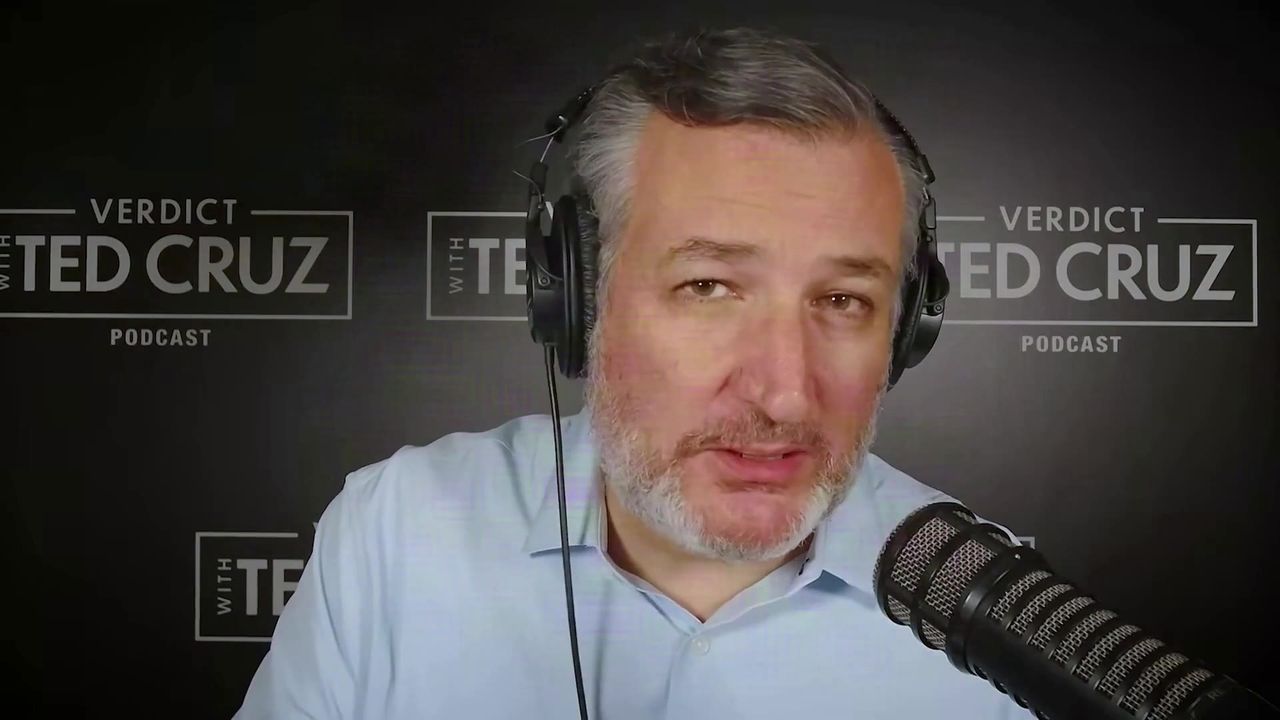
XA video clip posted on X by US Senator Ted Cruz, taken from his podcast 'Verdict with Ted Cruz'. In it he argues that public opinion on data centers moved from roughly 55-45 in favour to about 80-20 against in only a few months, and that this 'just didn't happen' organically. The post caption directs readers to the full episode and links a topic described as 'China-Linked Activists Fuel Anti-Data Center Revolt'.
“How’d the shift in public opinion on data centers move so fast? Spoiler: It didn’t happen organically. More on the latest episode of Verdict: China-Linked Activists Fuel Anti-Data Center Revolt plus The Rising Democrat Testing His Party’s Limits”
Posted from Ted Cruz's own verified X account as promotion for his podcast episode; on-screen lower-third in the clip reads "China's Influence on America's AI Future".
Who posted it
XAccount check
Estimates from public signals — account age, posting pattern, audience — not a judgement of the person behind the account, and separate from whether this post is true.
What stood out
- @tedcruz is the long-established personal X account of U.S. Senator Ted Cruz (R-TX); AFP and Check Your Fact both treat it as the authentic handle (distinct from official @SenTedCruz).
- Identity is genuine and self-operated/office-run, not an impersonator or sock puppet — very high confidence in who is behind it.
- Reliability as an information source is weak: PolitiFact lists numerous 'False'/'Pants on Fire' ratings spanning 2016–2025, plus documented deletes after error.
- Aug 2026: posted a claim of an '82% miscarriage rate' from COVID-19 vaccines in early pregnancy, earned a Community Note citing the 12.6% actual figure, then deleted the post after bipartisan criticism — a clear misinformation event.
- Jan 2026: boosted (then deleted) a misleading post about Kentucky Gov. Beshear during a winter storm; previously amplified a fake shark-on-flooded-road image (2023) and a mislabeled Afghan helicopter video.
- Also has some correctives on record: publicly rejected 'weather modification' conspiracy theories around the July 2025 Texas floods.
- Account scale/persistence (7.1M followers, ~62,700 posts, roughly 25 posts per 90 days per third-party trackers) is consistent with an organic, long-tenured public-figure account; no coordinated inauthentic behaviour found.
- Platform 'verified' flag is reported false/null in the supplied metadata, but independent reporting and directories confirm the account's authenticity — likely a metadata gap rather than a spoof.
Signals (7)+
- Identity type
- Real public figure (sitting U.S. Senator), staff-assisted personal account
- Posting cadence
- ~25 posts per 90 days (low-moderate, human-scale)
- Follower ratio
- High; followed by many prominent verified accounts (Musk, Andreessen, Saylor)
- Notable news coverage
- Extensive mainstream coverage citing posts by @tedcruz (Daily Beast, CNN, Independent, Salon)
- Fact check history
- Multiple PolitiFact 'False' ratings; Community Note and deletion over 82% miscarriage claim (Aug 2026); deleted fake-storm repost (Jan 2026); deleted Afghan helicopter video; 2023 fake shark photo
- Impersonation risk
- Low — the handle itself has been targeted by fabricated-tweet images (e.g. hoax 'Texas freezes over' climate tweet)
- Coordinated inauthentic behaviour
- None detected
Account checked November 28, 2026, 02:51 UTC
The media
Video✓ What is genuine
The footage is real. It is unedited podcast video of Ted Cruz speaking on his own programme, and the problem with the post is the framing of what he says, not the recording.
The tells
- ●●● Strong signal Consistent studio setting with 'Verdict with Ted Cruz' branding across frames, plus a two-shot with a co-host.our visual review
- ●●● Strong signal Stable skin texture, facial features, lip movement and background graphics across keyframes, with no morphing or garbled signage.our visual review
- ●●○ Supporting signal Lighting and camera quality consistent with ordinary webcam and podcast studio recording rather than generated footage.our visual review
Synthetic-media detector
Detector not consultedThe media is incidental to the claim; the detector was not needed.
How we checked the media
- Reviewed keyframes from the clip, checking lighting, skin texture, facial features, lip movement and background graphics for consistency.
- Compared the on-screen branding and lower-third text against the described podcast episode.
Sources
12 sources reviewed- 1Americans Hate AI Data Centers Even More Fiercely Than They Did Just a Few Months Ago, New Poll Shows ↗
PCMag · pcmag.comUntiereduntiered — treated as signal only, never decisiveEvidence
Heatmap/Embold August 2026 figures: 75% opposed, 15% in favour, against an earlier split.
- 2Americans Have Grown Dramatically Anti-Data Center in Just Months, Survey Finds ↗
Gizmodo · gizmodo.comUntiereduntiered — treated as signal only, never decisiveEvidence
Reporting on 71% local opposition, including 55% strongly opposed.
- 3Americans do not want AI data centers in their backyards ↗
The Verge · theverge.comUntiereduntiered — treated as signal only, never decisiveEvidence
Gallup finding over 70% of Americans oppose AI data centers in their area.
- 4Many Americans think data centers are bad for the U.S.; more oppose them locally ↗
YouGov · yougov.comUntiereduntiered — treated as signal only, never decisiveEvidence
YouGov showing a less lopsided national picture than the local siting questions.
- 5The theory taking the rich by storm: China funds data center haters ↗
NPR · npr.orgReputable outletLean Left (AllSides)Evidence
NPR reporting that researchers have found little behind the claim that China funds data center opponents.
- 6OpenAI says China-linked accounts used ChatGPT to fuel opposition to US data centres ↗
The Next Web · thenextweb.comUntiereduntiered — treated as signal only, never decisiveEvidence
OpenAI's disclosure and its investigator's statement that the operation did not create the debate.
- 7OpenAI: 'Likely' Chinese influence operation tried to use ChatGPT to stir debate on data centers ↗
CyberScoop · cyberscoop.comUntiereduntiered — treated as signal only, never decisiveEvidence
Lowest breakout scores for the China-linked campaigns, indicating no meaningful engagement.
- 8OpenAI says China launched influence campaign to shape US attitudes on AI data centers ↗
Politico · politico.comReputable outletCenter/Lean LeftEvidence
OpenAI saying it had not seen evidence the campaigns succeeded at scale.
- 9OpenAI says China-based actors stoking opposition to AI data centres ↗
Al Jazeera · aljazeera.comLow reliabilityQatar state-FUNDED w/ editorial independence — bias tagEvidence
Clemson's Darren Linvill calling the Chinese influence work 'interesting but not effective'.
- 10Update on state actors stoking data center backlash ↗
AI Stop Watch · aistop.watchUntiereduntiered — treated as signal only, never decisiveEvidence
Alethea's finding that data center opposition is 'homegrown' and was exploited, not created, by foreign actors.
- 11Exclusive: Americans Now Overwhelmingly Oppose New Data Centers Near Them ↗
Heatmap News (via NewsBreak) · local.newsbreak.comUntiereduntiered — treated as signal only, never decisiveEvidence
Heatmap/Embold September 2025 split and the subsequent opposition lead.
- 12Opposition to Data Centers Has Grown Sharply Since 2025 ↗
Change Research · changeresearch.comUntiereduntiered — treated as signal only, never decisiveEvidence
Change Research tracking national support from 65% in March 2025 to 36% by April 2026.
Further reading
- 6The Next Web The key reporting on OpenAI's disclosure, including the investigator's line that the debate existed already.
- 10AI Stop Watch Explains why researchers describe the data center backlash as homegrown and how state media attached itself to it.
- 5NPR Overview of the 'China funds the data center haters' theory and what researchers found behind it.
- 11Heatmap News (via NewsBreak) The polling series that best documents the speed and size of the actual shift.
- 4YouGov Useful contrast showing national-level opinion is less lopsided than local siting questions.
The full story
Something unusual really did happen to American opinion on data centers. In September 2025, Heatmap Pro/Embold Research found Americans almost evenly split on a facility near their home — 43% in favour, 42% against. By May 2026 that had flipped to a large opposition lead, and by August 2026 it stood at 75% opposed against 15% in favour. Gallup, Annenberg/SSRS, YouGov and Change Research all recorded the same direction and a similar magnitude. A shift that fast, with no single trigger, is genuinely surprising, and it is the kind of surprise that invites a hidden explanation.
There is also a real foreign element. In June 2026, OpenAI reported a cluster of China-linked ChatGPT accounts producing anti-data center content, and X later flagged a small network of similar accounts. State media in China, Russia and Iran picked up the controversy and amplified it.
The gap between those two facts is where this post lives. The same investigators who documented the foreign activity described it as riding on a debate that already existed. OpenAI's lead investigator said the operation did not create the debate; the campaigns scored at the lowest level for audience engagement. Threat-intelligence firm Alethea called the opposition 'homegrown' and said foreign actors exploited rather than created it. Graphika found no scaled foreign influence, and Clemson's Darren Linvill said his team 'haven't found much.'
What actually drove the swing, according to the reporting, is more ordinary: electricity bills, water use, noise and grid strain, set against a wider loss of trust in the tech industry. That is less dramatic than a foreign plot, but it is what the evidence shows.
Kernel of truth
A genuine, fast, unusually large collapse in support for data centers, plus a real but low-reach China-linked influence effort and state-media amplification that attached itself to the existing controversy.
Timeline
March 2025
Change Research finds 65% of US voters support building data centers nationally, with 14% opposed. 12Change Research
September 2025
Heatmap Pro/Embold Research finds Americans split on a nearby data center: 43% support, 42% oppose. 11Heatmap News (via NewsBreak)
March 2026
Gallup finds 71% of Americans would oppose a data center built near their homes. 3The Verge
April 2026
Change Research records national support down to 36% and opposition at 53%. 12Change Research
May 2026
Heatmap/Embold reports 55% strongly opposed and only 21% willing to support a nearby data center. 11Heatmap News (via NewsBreak)
June 2026
OpenAI reports a China-linked operation using ChatGPT to stir data center debate, with limited reach. 6The Next Web
August 2026
Heatmap/Embold puts opposition to a nearby data center at 75% against 15% in favour. 1PCMag
How it was framed
The post uses genuine video and broadly accurate polling, but arranges them to frame a mass, documented, homegrown backlash as the product of foreign manipulation. The individual ingredients are real; the causal story they are made to support is contradicted by the investigators who studied the influence effort.
- Missing context. The caption says the shift 'didn't happen organically' without noting that the investigators who documented the China-linked activity described it as low-reach and as exploiting an existing debate.
- Ongoing-threat framing. The linked episode title, 'China-Linked Activists Fuel Anti-Data Center Revolt', presents a foreign hand as the active force behind a domestic controversy.
- “Visual proof”. The clip itself is real podcast footage with a lower-third reading "China's Influence on America's AI Future", lending the authority of a studio segment to the causal claim.
- Emotional language. The words 'Spoiler: It didn't happen organically' signal a reveal and invite the viewer to expect a hidden explanation.
- Us vs. them. Listeners are told they are 'more educated, more savvy' and 'harder to manipulate' than the general public, setting a sophisticated in-group against a manipulated out-group.
- Unsourced statistic. The '55-45' and '80-20' polling figures are given without naming a pollster or a survey.
Posted from Ted Cruz's verified X account, @tedcruz, promoting an episode of his podcast 'Verdict with Ted Cruz'. Cruz is a sitting US senator and a prominent figure in the pro-AI-industry policy debate; no information in our record establishes who else had a hand in drafting the post.
Bias
Leans pro-AI-industry / anti-regulation. The segment reframes broad, well-documented public concern about data centers' electricity and water costs as the product of foreign manipulation rather than genuine local grievance, and flatters the audience as too sophisticated to be fooled. That framing matches a wider industry and administration push to dismiss grassroots opposition ahead of the midterms.
Bias describes how the post frames its message — the slant of the language, selection and emphasis — and is judged separately from whether the claim is true. A true claim can still be framed with a strong slant.
How we checked
52 s- 1
Ran searches on the polling claim, checking whether a swing from majority support to large opposition on data centers was documented in published surveys.
- 2
Searched for reporting on the China-linked influence claim to see what the organisations that documented such activity said about its reach and effects.
- 3
Reviewed the video's keyframes, checking lighting, skin texture, facial features, lip movement and background graphics for consistency.
- 4
Compared the on-screen branding and lower-third against the described podcast episode.
✓ Claim checked✓ Media checked✓ Sources checked
Why 72% confidence
ModerateWe rate the central finding HIGH: multiple independent pollsters, OpenAI's own disclosure, a threat-intelligence firm, another research organisation and individual researchers all point the same way, and the sources are not all traceable to a single origin. We rate the polling claim MODERATE rather than HIGH because the specific '55-45' and '80-20' figures are an approximation rather than a single published survey. The video being genuine rests on our visual review, not a detector run.
Limits. We did not run an AI-generation detector on this video, because the clip's authenticity was not what the claim turned on. Our reading of the influence research relies on published reporting and company disclosures; we did not have access to the underlying platform data or to any classified assessments.
What we don’t know
- What the full intelligence picture available to US officials shows about foreign attempts to shape the data center debate.
- Whether any China-linked accounts beyond those publicly disclosed played a larger role than the published reports describe.
- Who exactly wrote the post and whether they were aware of how the investigators characterised the operation's reach.
Spot it yourself
Find the overstatementLooks suspicious, isn’t proof
- The post comes from a partisan political account promoting its own podcast — that tells you the framing has an interest behind it, not that the facts are wrong.
- The confident 'Spoiler: It didn't happen organically' tone is a rhetorical flourish; a dramatic reveal can sit on top of solid reporting or on top of nothing.
- The polling figures are rounded and unattributed. Imprecise numbers are a reason to go and find the survey, not proof that no such swing occurred — here the swing is real.
The actual evidence
- Polling from several independent firms — Heatmap/Embold, Gallup, Annenberg/SSRS, YouGov and Change Research — all records a rapid, large fall in support, so the 'shift' half of the claim holds.
- OpenAI, which documented the China-linked operation, said it did not create the debate and showed the lowest level of audience engagement.
- Alethea, a threat-intelligence firm, called the opposition 'homegrown' and said foreign actors exploited rather than created it; Graphika found no scaled foreign influence.
- Clemson researcher Darren Linvill said his team 'haven't found much', and analysts sympathetic to the AI industry have rejected the framing too — a sign the pushback is not simply partisan.
- 1
Ask what the investigators actually said, not what the headline says they said
Find the original report or its coverage — here, OpenAI's June 2026 disclosure — and read how the researchers characterise their own finding. The phrase 'exploit and amplify existing concerns' means something very different from 'created the backlash'.
- 2
Check whether the source names a pollster
When a figure like '80-20 against' is quoted without a pollster, search the number plus 'data center poll' and compare with named surveys. If several named polls point the same way, the trend is probably real even when the exact figure is loose.
- 3
Separate 'foreign actors tried' from 'foreign actors succeeded'
Influence reporting usually describes both an attempt and an effect. Look for engagement data, breakout scores or the researchers' own assessment of reach before concluding that an operation moved opinion.
- 4
Watch for the gap-filling move
When a genuine surprise has no obvious cause, a hidden explanation becomes attractive. Ask whether the claim is being offered because the evidence points there, or because something needs to explain the surprise.
- 5
Look at what a sympathetic expert says
If even analysts who share the poster's general outlook reject the framing, that is a strong signal the claim has gone further than the evidence.
Takeaway
A claim can contain accurate numbers and a real event and still mislead, if the pieces are arranged into a cause the evidence does not support. Ask what the people who did the research say their research shows.
Questions people ask
Is the Ted Cruz data center video real?+
Yes. The clip is genuine, unedited podcast footage of Ted Cruz on 'Verdict with Ted Cruz', with consistent lighting, facial features and on-screen branding across keyframes and no signs of manipulation. The problem is the framing of what he says, not whether the video is authentic.
Is it true that 80% of Americans oppose data centers?+
Roughly, for local siting. Heatmap/Embold found 75% opposed to a nearby data center by August 2026, against 15% in favour, and Gallup found 71% opposed. National-level questions are less lopsided: YouGov found 24% saying new data centers are good for the country and 47% bad.
Did China cause the data center backlash?+
No. OpenAI did report a China-linked operation using ChatGPT to stir debate, and state media amplified the controversy, but OpenAI's investigator said the debate already existed. Alethea called the opposition 'homegrown', Graphika found no scaled foreign influence, and Clemson's Darren Linvill said researchers 'haven't found much'.
Why did American opinion on data centers change so fast?+
Reporting attributes it to electricity bills, water use, noise and strain on the grid, along with a broader drop in trust in the tech industry. No single accident or safety disaster triggered it, which is part of why the shift seems so sudden.
What is 'false context' and does this post fit it?+
False context means genuine material presented with a misleading framing. This post is closer to misleading content: the video and the polling are real, but they are arranged to suggest a foreign cause the evidence does not support.
Go deeper
- Misleading content
- Genuine information used in a way that frames a person or issue falsely, without the underlying material being faked.
- Influence operation
- An organised attempt, often by a state or its proxies, to shape opinion — which may or may not succeed.
- Amplification
- Boosting the reach of existing content, as opposed to creating that content in the first place.
- Breakout score
- A metric used in influence reporting to describe how much engagement a campaign actually achieved.
- Kernel of truth
- The real fact or event that a misleading claim is built on or distorts.
People also search for
For educators+
- The post's polling figures are roughly right but not from any single named survey. Does that make the post more or less misleading than one that invents numbers outright?
- OpenAI documented a China-linked operation and then said it did not create the debate. How should a reader weigh a source that both supports and undercuts part of a claim?
- If you were writing the caption for this same clip, what would you need to add to make it accurate?
About this check
- Platform
- X
- Posted by
- @tedcruz
- Posted
- November 27, 2026
- Age when checked
- Under 24 hours old when checked
- Where it spread
- United States
- Audience
- US audience
- Language
- EN
- Status
- ● Post is live
- Verified
- November 28, 2026, 02:52 UTC
- Published
- November 28, 2026, 02:52 UTC
Reach. Newsweek 27 Nov; data-center water use is a live Texas issue (Abbott lifted data-center pause the same day)
This verdict was generated with AI from the sources shown. AI can make mistakes — check the sources before relying on it.
Check anything yourself, in seconds.
Share any social post or video to What the Fact and get the verdict, the confidence, and the receipts.