¿Indra cuenta los votos en España y permite un pucherazo?
Does Indra count the votes in Spain's 29 November general election, making its system the point where electoral fraud ('pucherazo') could happen?
Misleading
Indra transmite datos provisionales; no cuenta votos ni puede alterar el resultado oficial.
Un vídeo real de una entrevista difunde una idea engañosa: Indra no cuenta ni tabula los votos en España. Solo transmite los resultados provisionales para el Ministerio del Interior. El escrutinio es manual y público en cada mesa, y el recuento definitivo lo hacen las juntas electorales cinco días después, publicado en el BOE.
 Genuine
Claims
✓ 3 trueIndra counts or tabulates votes in Spain and its opaque system allows electoral fraud or a 'pucherazo'.12310
“El riesgo de fraude electoral o pucherazo viene del sistema de Indra, no de las urnas.”
The evidence settles this clearly: Indra does not count or tabulate votes. The count is manual and public at each polling station, and the binding 'escrutinio general' is carried out by the provincial electoral boards five days later, then published in the BOE. Indra's contract with the Interior Ministry is to transmit and disseminate provisional results on election night, as the Junta Electoral Central itself explains. Three independent fact-checkers (EFE Verifica, RTVE Verifica and Verificat) have rated the 'Indra rigs the count' allegation as a hoax, including specifically in the run-up to the 29 November 2026 general election. Even if the provisional transmission were manipulated, it would not change the final composition of parliament, because that depends on the official count. The analyst is right that the polling-station count is public and signed, but he uses that true point to imply that the later computerised step is the real danger. The inference is wrong, not merely overstated.
The count at the polling station is not the weak point: it is done publicly and the acta is signed before the president, the members, the party representatives and the delegates.12
“El recuento de votos a pie de mesa no es el problema, ahí todo se firma ante testigos, interventores y presidentes de mesa.”
This part is accurate and helps explain why the overall claim feels plausible. Spain's electoral law (LOREG, articles 95-99) makes the count at each polling station public, in the presence of the members of the mesa and party representatives. The signed acta is the record of that count, and copies go to the parties, the court and the provincial electoral board. Fact-checkers describing the process confirm exactly this. The analyst uses this true point as the starting point of his argument, then pivots to the computerised step. A true premise can sit at the base of a misleading conclusion, and the page's verdict rests on the conclusion, not on this accurate description. Still, readers should know the premise is real, because that is why the post travels.
The critical point is the automatic/computerised process: there are no party representatives, electoral observers or international observers during the entry of data into Indra's systems.158
“Lo verdaderamente grave es en el proceso automático, informático, donde se mete esa información en los sistemas de Indra... no hay ningún representante ni de los partidos políticos ni de los interventores electorales ni de los observadores internacionales.”
This is documented for Angola in 2008, where the EU observation mission said neither party representatives nor observers could witness the entry of results into the national computer system. For Spain, the framing is misleading. The person who transmits each polling-station acta is the government's own representative at the mesa, not an Indra employee, and party representatives hold copies of the signed acta. The binding count is done by the electoral boards five days later. So while it is true that the provisional transmission is not done in front of observers in the same way as the polling-station count, the absence of witnesses at that stage does not open the door to fraud, because the official count is separate. The confidence is moderate because the Angola part is documented and the Spain part depends on how the process is framed.
Still open: Whether the government representative's transmission of the acta is witnessed by party representatives in every polling station is not described in the input.
Indra manages Angola's electoral systems and also Spain's.9
“Indra gestiona los sistemas electorales de Angola y también los de España.”
Indra's own corporate release confirms that its Minsait unit supplied technology and logistics for Angola's general elections in 2008, 2012, 2017 and 2022. In Spain it holds the Interior Ministry framework contract for transmitting and disseminating provisional results. So the factual claim about the company's footprint in both countries is correct. The problem is not this fact but what the post builds on it: sharing a contractor does not mean the two processes are the same, because Angola's 2008 tabulation was criticised precisely for lacking the checks that Spain's system has, such as the signed acta held by party representatives and the later official count by the electoral boards. A true fact can be used to imply a false equivalence.
The OSCE has pointed out, about recent Spanish elections, that results by polling station and table are not published immediately.610
“La OSCE ha señalado... que no se publican inmediatamente los datos por colegios y mesas electorales.”
OSCE/ODIHR did recommend that Spain make preliminary and final results disaggregated by polling station available to the public in a timely manner, in the 2023 final report (recommendation 8), with a similar point in 2015. But the framing that this data is withheld is inaccurate. The Interior Ministry publishes results down to polling-station level via Infoelectoral, and party representatives receive a copy of each signed acta on the night. So the OSCE did make a recommendation about timely disaggregated publication, but it is not true that nothing can be checked. The gap between a recommendation for improvement and an allegation of opacity is where the misleading framing sits.
The EU election observation mission's 2008 report documents a lack of transparency in computerised tabulation in Angola (no observers, no manual tabulation, no results by polling station).8
“Ese informe de la misión electoral de la Unión Europea del 2008... no hay ningún representante... no se hace una tabulación manual... no se publican... los datos por colegios y mesas.”
The EU observation report on Angola's 5 September 2008 elections states that there was a lack of transparency in the tabulation of results, that neither political party representatives nor observers were allowed to witness the entry of results into the national computer system, that no separate manual tabulation occurred, and that results were not published disaggregated by polling station. So the analyst quotes the document accurately. The problem is the use he makes of it: he presents Angola 2008 as a template for Spain, without showing that Spain's system shares the features the EU criticised, such as the absence of a signed acta held by party representatives or the absence of a later official count. A genuine document can be accurately quoted and still support a misleading comparison.
What was posted
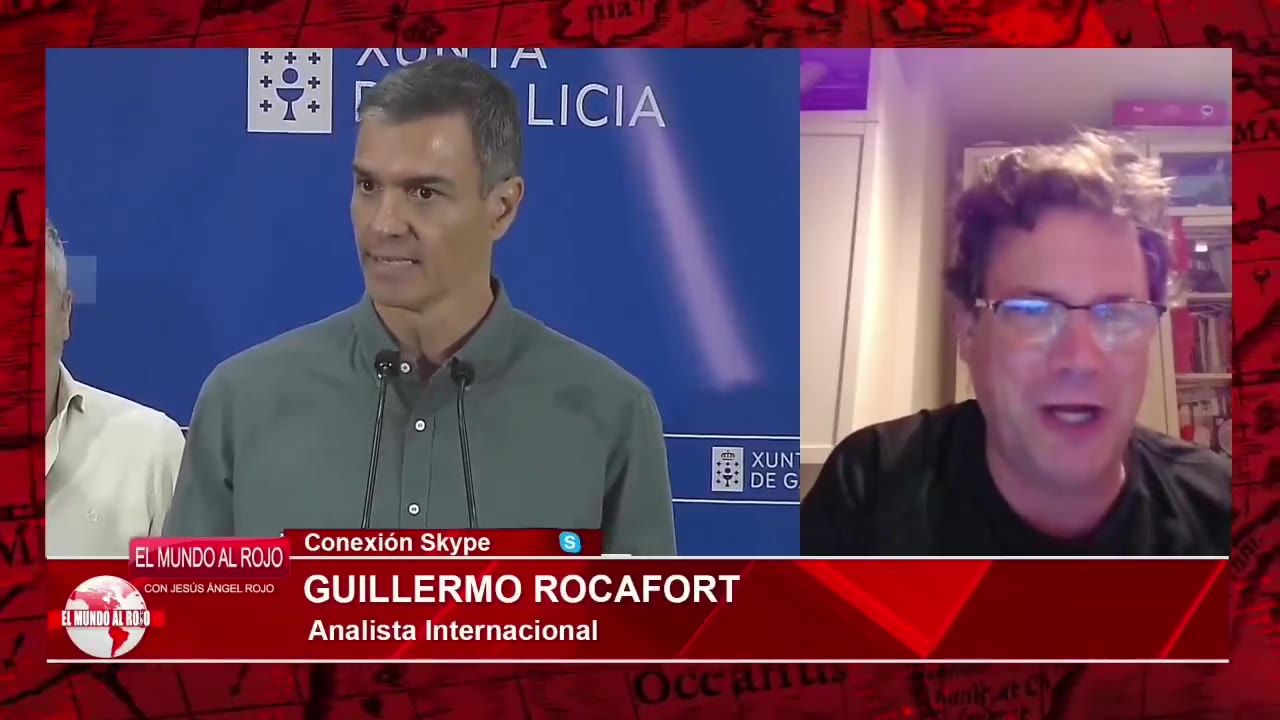
XA post on X shares a video clip of a Spanish-language online talk show featuring an interview with analyst Guillermo Rocafort. In the clip, Rocafort argues that the risk of electoral fraud in Spain lies not in the count at each polling station, which he says is signed and public, but in the computerised entry and tabulation of results by Indra, comparing Spain to Angola. The post asks readers to believe that this computerised process is opaque and allows a 'pucherazo'.
“🔴 EL riesgo de FRAUDE ELECTORAL o PUCHERAZO VIENE DEL SISTEMA DE INDRA, NO DE LAS URNAS El recuento de votos a pie de mesa no es el problema, ahí todo se firma ante testigos, interventores y presidentes de mesa. El verdadero punto crítico comienza cuando esos datos se”
“🔴 The risk of ELECTORAL FRAUD or RIGGING COMES FROM THE INDRA SYSTEM, NOT FROM THE BALLOT BOXES. The vote count at the polling station is not the problem; everything there is signed before witnesses, party representatives and polling station presidents. The real critical point begins when those data are...” — translated
Posted on X by the account GuillermoRocaf1. The clip comes from the online programme 'El Mundo al Rojo' (host Jesús Ángel Rojo) and refers to the run-up to Spain's 29 November 2026 general election. Similar theses by the same analyst were published by El Distrito in October 2025.
Who posted it
XAccount check
Estimates from public signals — account age, posting pattern, audience — not a judgement of the person behind the account, and separate from whether this post is true.
What stood out
- Handle maps to a real, identifiable person: Guillermo Rocafort Pérez (b. 1970, Madrid), lawyer, doctor in economics, ex-university lecturer and author (ORCID, Library of Congress, Dialnet records).
- Account created April 2020, ~58,000 followers, ~111,000 posts by late 2026 — a very high posting cadence (~45-50/day) sustained over years, consistent with heavy manual use rather than pure automation.
- Not platform-verified, and the handle appears in media coverage only via its own posts — no institutional affiliation claimed in profile.
- Repeatedly implicated in false claims: promoted a 'pucherazo'/'apagón informativo' election hoax ahead of the 9-J 2024 European elections, which El Nacional.cat documented as false.
- Fact-checkers have logged his content as open disinformation cases (Maldita.es Buloteca) and rebutted his claims as 'bulo' (e.g., consular nationality/IDU 'pucherazo' claim, Oct 2026; a fabricated TIME cover about Ukraine, Nov 2026).
- Spanish courts convicted him twice for defamation/intromisión al honor against journalist Ana Pastor (2023 and upheld on appeal Sept 2024) over unproven SICAV/tax allegations; a separate suit by him against Newtral was dismissed with costs.
- Accused by TVE presenter Xabier Fortes of harassment after publishing his company's tax data on X (April 2024) — a doxxing-adjacent behaviour signal.
- Content style is partisan commentary/accusation threads rather than reporting; he is a source of claims, not a relayer of documented evidence, and courts have found he did not check veracity.
- Classified in press and by a court ruling as part of the 'entorno de la extrema derecha' media ecosystem, with cross-amplification by Telegram/alt-media channels.
Signals (12)+
- Account created
- 2020-04
- Followers approx
- 58000
- Following approx
- 1224
- Follower ratio
- 47.4
- Posts approx
- 111418
- Posting cadence
- Very high (~45-50 posts/day average since 2020)
- Identity
- Real named individual (Guillermo Rocafort Pérez), self-described lawyer/economist/author
- Fact check history
- Multiple: Maldita.es Buloteca entries; El Nacional.cat debunk of 2024 'pucherazo/apagón informativo' claim; Maldita rebuttal of TIME cover claim (Nov 2026); Newtral rebuttal of consular IDU claim (Oct 2026)
- Legal record
- Convicted of intromisión al honor against Ana Pastor (2023, upheld Sept 2024); defamation suit against Newtral dismissed with costs (Mar 2024)
- Harassment allegation
- Accused by journalist Xabier Fortes of publishing his tax/company data (Apr 2024)
- Affiliation
- Far-right/alt-media commentator ecosystem in Spain; frequent guest on partisan broadcasts and Telegram channels
- Automation evidence
- None direct; high volume and template-like formatting (#BOMBAZO, 👇🧐, ALL-CAPS) but idiosyncratic human voice
Account checked November 29, 2026, 03:01 UTC
The media
Video✓ What is genuine
The video is a genuine recording of a broadcast segment. The interview, the guest and the programme are real. What is misleading is the argument spoken in it, not the footage itself.
The tells
- ●●○ Supporting signal The clip is a split-screen Skype interview with an on-screen caption naming the programme and the guest, typical of this online talk show.our visual review
- ●●● Strong signal Faces, lip-sync, lighting, microphones, flags and signage are consistent across the keyframes, with no morphing or garbled text.our visual review
- ●●○ Supporting signal The cutaway footage of Spanish political events is ordinary broadcast material consistent with the programme's format.our visual review
Synthetic-media detector
Detector not consultedThe media is incidental to the claim; the detector was not needed.
How we checked the media
- We reviewed the keyframes visually: a split-screen Skype interview with a named guest, on-screen programme captions, and ordinary broadcast cutaway footage.
- We checked faces, lip-sync, lighting, microphones, flags and signage across the keyframes for consistency and found no morphing, garbled text or impossible detail.
- We matched the segment to the Spanish-language online programme 'El Mundo al Rojo', which the captions identify.
Sources
11 sources reviewed- 1Indra no realiza el recuento de votos en las elecciones del 29N, solo transmite datos provisionales ↗
EFE Verifica · verifica.efe.comPrimary / fact-checkerIFCN; Spanish wire deskEvidence
Fact-check stating Indra does not count votes and only transmits provisional data.
- 2Elecciones generales del 29N: vuelve el bulo de que Indra recuenta los votos tras el adelanto electoral ↗
RTVE Verifica · rtve.esReputable outletCenter/Lean Left — public serviceEvidence
Fact-check quoting the Junta Electoral Central on the limited purpose of Indra's contract.
- 3Indra, de nou a la diana dels rumors de frau electoral: quin paper té l'empresa en el recompte de vots? ↗
Verificat · verificat.catUntiereduntiered — treated as signal only, never decisiveEvidence
Fact-check explaining that manipulation of provisional dissemination would not change the final parliamentary composition.
- 4Los mensajes sobre el fraude aumentan la jornada de votación y la semana posterior ↗
Newtral · newtral.esPrimary / fact-checkerIFCN + EFCSN; Spain
“Indra no se encarga del recuento de votos (que es un proceso manual), sino de la transmisión de los datos.”
- 5The AI campaign has already started: videos supporting the narrative of voter fraud in the November 29 vote ↗
EDMO / Maldita.es · edmo.euUntiereduntiered — treated as signal only, never decisiveEvidence
Maldita.es explanation that Indra transmits data sent by the government representative.
- 6Elegiones Generales anticipadas, 23 Julio 2023 - ODIHR Informe final del Equipo de Expertos Electorales ↗
OSCE/ODIHR · osce.orgUntiereduntiered — treated as signal only, never decisiveEvidence
OSCE/ODIHR recommendation 8 on timely publication of results disaggregated by polling station.
- 7Informe final de la Misión de Evaluación Electoral de la OSCE/OIDDH - Elecciones a Cortes Generales, 20 de diciembre de 2015 ↗
OSCE/ODIHR · osce.orgUntiereduntiered — treated as signal only, never decisive
“El Ministerio del Interior organizó la recopilación de datos de las mesas electorales el día de las elecciones, incluidos los relativos a resultados preliminares, contratando para ello a una empresa privada.”
- 8EU Election Observation Mission Angola - Legislative Elections 5 September 2008 (final report) ↗
EU Election Observation Mission (via ecoi.net) · ecoi.netUntiereduntiered — treated as signal only, never decisiveEvidence
EU observation mission report on Angola 2008 documenting the opacity of the computerised tabulation.
- 9Minsait, seleccionada para gestionar las elecciones generales de Angola ↗
Indra / Minsait · indracompany.comUntiereduntiered — treated as signal only, never decisiveEvidence
Indra's own release confirming its participation in Angola's elections in 2008, 2012, 2017 and 2022.
- 10Infoelectoral - Metodología de resultados electorales ↗
Ministerio del Interior (Infoelectoral) · infoelectoral.interior.gob.esPrimary / fact-checkerprimary/official source (by domain)Evidence
Infoelectoral's methodology confirming results are published down to polling-station level.
- 11Indra y el método angoleño: la sombra del pucherazo electoral de Sánchez ↗
El Distrito · eldistrito.esUntiereduntiered — treated as signal only, never decisiveContext
Low-reliability outlet that published the analyst's theses; used only as a signal of the narrative.
Further reading
- 1EFE Verifica EFE Verifica's fact-check explains Indra's limited role and the official count in detail.
- 2RTVE Verifica RTVE Verifica quotes the Junta Electoral Central on the sole purpose of Indra's contract.
- 8EU Election Observation Mission (via ecoi.net) The EU observation report on Angola is the document the clip cites; reading it shows what it actually says.
- 10Ministerio del Interior (Infoelectoral) Infoelectoral's methodology page shows that results are published down to polling-station level.
The full story
The claim works because it starts from something true. At each polling station in Spain the count is manual and public, done before the members of the mesa and party representatives, and recorded in a signed acta. Copies of that acta go to the parties, the court and the provincial electoral board. Anyone who has watched a count knows this part is real.
The analyst then points to the next step: the provisional results transmitted on election night. Indra, through its Minsait unit, holds the Interior Ministry contract to transmit and disseminate those data. That is also real. And the company did supply technology for Angola's elections in 2008, 2012, 2017 and 2022, as its own release says. The EU observation mission to Angola in 2008 did criticise the opacity of the country's central computerised tabulation.
Where the story breaks is in the leap from those facts to the conclusion. Indra does not count or tabulate the vote. The official count, the 'escrutinio general', is carried out by the provincial electoral boards five days later and published in the BOE. Party representatives hold copies of the signed acta. The Interior Ministry publishes results down to polling-station level through Infoelectoral. So even if the provisional transmission were manipulated, it would not change the final result.
The recurring allegation has been rated a hoax by Spanish fact-checkers, including in the run-up to the 29 November 2026 general election. The Angola comparison gives it an air of documented research, but it compares a system with no separate manual tabulation to one with a signed acta and a later official count.
Kernel of truth
Indra does transmit provisional Spanish election results under an Interior Ministry contract, and it did supply technology for Angola's elections, whose 2008 computerised tabulation the EU criticised as opaque. The polling-station count in Spain is indeed manual and public.
Timeline
September 5, 2008
Angola holds legislative elections; the EU observation mission later reports a lack of transparency in the central computerised tabulation. 8EU Election Observation Mission (via ecoi.net)
2023
OSCE/ODIHR final report on Spain's July 2023 general election recommends timely publication of results disaggregated by polling station (recommendation 8). 6OSCE/ODIHR
October 2025
The low-reliability outlet El Distrito publishes the analyst's theses on Indra and the 'Angolan method'. 11El Distrito
November 29, 2026
Spain holds general elections; fact-checkers publish ratings of the 'Indra rigs the count' allegation as a hoax. 1EFE Verifica
How it was framed
The post mixes true facts (the public polling-station count, Indra's contracts in Angola and Spain, the EU's 2008 criticism, the OSCE recommendation) with a false inference: that Indra counts votes and that its role allows a rigged result. It also draws a connection between Angola's 2008 tabulation and Spain's system without showing that the two share the criticised features.
- Emotional language. The caption uses capital letters and alarmist wording: 'EL riesgo de FRAUDE ELECTORAL o PUCHERAZO'.
- Borrowed authority. The clip cites 'ese informe de la misión electoral de la Unión Europea del 2008' and 'la OSCE' to lend weight to the argument.
- Missing context. The clip does not mention that the official count is done by the electoral boards five days later or that party representatives hold copies of the signed acta.
- “Visual proof”. The post shares broadcast footage of a named analyst speaking, which gives the argument the appearance of a documented interview.
Posted on X by the account GuillermoRocaf1. The clip is from the online programme 'El Mundo al Rojo'. The analyst's theses were also published by El Distrito, an outlet the input describes as low-reliability.
Bias
Leans election-fraud conspiracy narrative, anti-Sanchez government. The clip is a one-sided interview with a recurring promoter of the 'Indra rigs Spanish elections' narrative, presented without any counter-evidence or response from electoral authorities, and it frames an unproven systemic fraud risk as established fact. Comparative material cited (Angola 2008, OSCE recommendations) is arranged to imply that Spanish elections are being stolen.
Bias describes how the post frames its message — the slant of the language, selection and emphasis — and is judged separately from whether the claim is true. A true claim can still be framed with a strong slant.
How we checked
1 min 16 s- 1
We searched for fact-checks and official explanations of Indra's role in Spanish elections.
- 2
We searched for the EU observation mission's 2008 report on Angola and for OSCE/ODIHR reports on Spain.
- 3
We reviewed the video visually for signs of tampering, lip-sync problems or impossible detail.
- 4
We compared the claims in the clip with the documents it cites and with the official description of the count.
✓ Claim checked✓ Media checked✓ Sources checked
Why 82% confidence
HighWe rated the central claim MISLEADING with HIGH confidence because the official process, the Junta Electoral Central's explanation and three independent fact-checks all point the same way. The only point of uncertainty is the exact scope of the Angola comparison, which is why one sub-claim is rated PARTLY_TRUE with MODERATE confidence.
Limits. We did not run an AI-generation detector on the video because the footage is not pivotal to the claim; our assessment of the video rests on visual review. We did not obtain the full text of the EU 2008 report or the OSCE 2023 report beyond the quoted passages in the sources.
What we don’t know
- Whether the government representative's transmission of each polling-station acta is witnessed by party representatives in every case is not described in the input.
- The exact date and audience of the original broadcast are not established in the input.
- We do not know whether the poster intended to deceive or was repeating an allegation he believed.
Spot it yourself
Spot the fakeLooks suspicious, isn’t proof
- The post is an alarmist, all-caps claim about fraud. Tone is a reason to check, not evidence that the claim is false.
- The video is a broadcast interview with a named guest. Looking professional does not make the argument correct.
- The clip cites official reports and organisations. Citing a document does not prove the document says what the speaker claims, or that it applies to Spain.
The actual evidence
- Electoral law and the Junta Electoral Central: the official count is manual at each mesa and the definitive count is done by the provincial boards five days later. Indra only transmits provisional data.
- Independent fact-checkers (EFE Verifica, RTVE Verifica, Verificat) have rated the 'Indra rigs the count' allegation as a hoax, including for the 29 November 2026 election.
- Infoelectoral publishes results down to polling-station level, which contradicts the claim that nothing can be checked.
- The EU's 2008 criticism was about Angola's system, which the report says had no separate manual tabulation. Spain's system has a signed acta and a later official count.
- 1
Ask who would be reporting this if it were true.
If a company could alter Spain's official election result, the electoral boards, the parties and the international observers would be reporting it. A claim that depends on everyone else missing it is a reason to look for the official process.
- 2
Find the official source for how the count works.
Check the Junta Electoral Central and the Interior Ministry's Infoelectoral page. They explain the difference between the provisional transmission on election night and the official count by the electoral boards.
- 3
Check whether the cited document says what the speaker claims.
Search for the EU 2008 Angola report and the OSCE 2023 Spain report. Read what each says about the specific country. A document about Angola does not describe Spain.
- 4
Run a search for the specific allegation plus 'bulo' or 'fact check'.
Spanish fact-checkers have covered this exact claim repeatedly. A quick search for 'Indra fraude electoral bulo' brings up their explanations.
Takeaway
A claim built from true facts can still reach a false conclusion. Check the step where the argument jumps from what is documented to what is alleged.
Questions people ask
¿Indra cuenta los votos en España?+
No. El recuento es manual y público en cada mesa electoral, ante los vocales y los interventores de los partidos. Indra, a través de su contrato con el Ministerio del Interior, solo transmite y difunde los resultados provisionales la noche electoral. El escrutinio oficial lo realizan las juntas electorales provinciales cinco días después.
¿Qué pasó en Angola en 2008 con el sistema informático?+
La misión de observación electoral de la Unión Europea concluyó que hubo falta de transparencia en la tabulación de resultados. Según el informe, ni los representantes de los partidos ni los observadores pudieron presenciar la introducción de datos en el sistema informático nacional, no hubo tabulación manual separada y los resultados no se publicaron desglosados por mesa.
¿Es cierto que la OSCE criticó a España por no publicar resultados por mesa?+
La OSCE/ODIHR recomendó en 2023 que España publicara de forma oportuna los resultados preliminares y definitivos desglosados por colegio electoral. Pero el Ministerio del Interior sí publica resultados hasta el nivel de mesa a través de Infoelectoral, y los representantes de los partidos reciben copia del acta firmada la noche electoral.
¿Puede un fraude en la transmisión provisional cambiar el resultado final?+
No. La transmisión de Indra es un adelanto provisional. El resultado oficial depende del escrutinio general que hacen las juntas electorales y que se publica en el BOE. Aunque la transmisión provisional se manipulase, no cambiaría la composición final del parlamento.
¿Por qué se repite esta acusación en cada elección?+
Porque mezcla hechos reales, como el contrato de Indra y su presencia en Angola, con una conclusión falsa. Eso hace que la historia parezca documentada. Los verificadores españoles la han calificado de bulo en varias ocasiones, incluida la campaña de las elecciones del 29 de noviembre de 2026.
Go deeper
- Pucherazo
- A Spanish term for electoral fraud or rigging, often implying manipulation of the count.
- Acta
- The signed official record of the count at a polling station, of which copies go to the parties, the court and the electoral board.
- Escrutinio general
- The official count carried out by the provincial electoral boards five days after the election, which produces the binding result published in the BOE.
- Infoelectoral
- The Interior Ministry's public platform for election results, which publishes data down to polling-station level.
- LOREG
- Spain's electoral law, which sets out how the count and the official scrutiny are carried out.
People also search for
For educators+
- The clip says the polling-station count is public and signed. Why does that true statement make the rest of the argument more persuasive?
- If a company transmitted provisional results but did not count the votes, what would an observer need to see to be confident that the final result was correct?
- How would you check whether a report about Angola tells you anything about Spain?
About this check
- Platform
- X
- Posted by
- @guillermorocaf1
- Posted
- November 27, 2026
- Age when checked
- 1–2 days old when checked
- Where it spread
- Spain
- Audience
- UK & EU audience
- Language
- ES
- Status
- ● Post is live
- Verified
- November 29, 2026, 03:03 UTC
- Published
- November 29, 2026, 03:03 UTC
Reach. Debunked by Maldita (3 pieces, 28 Nov) and EFE Verifica (27 Nov); copy-paste posts on X; the 'pucherazo' story was trending in the final days of the campaign (Newtral TikTok analysis, Xataka)
This verdict was generated with AI from the sources shown. AI can make mistakes — check the sources before relying on it.
Check anything yourself, in seconds.
Share any social post or video to What the Fact and get the verdict, the confidence, and the receipts.