Did the US strike 140 targets in Iran?
Does a viral compilation video show US strikes on 140 targets in Iran?
True, but…
The claim is accurate, but the video has been altered.
Yes, the US military did strike about 140 targets in Iran on July 11, 2026. However, the Instagram video accompanying the claim is misleading and contains manipulated footage, rather than authentic evidence of the strikes.
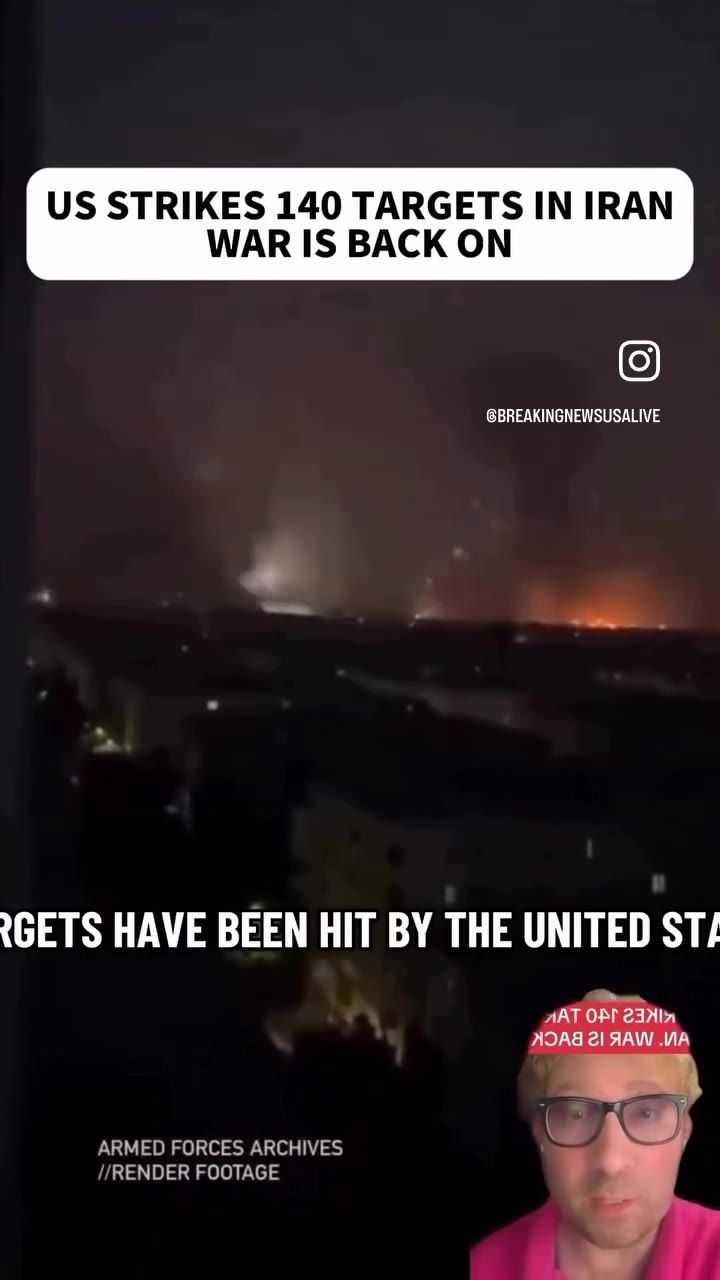 Edited
Claims
✓ 3 true140 targets have been hit by the United States military.234
The U.S. Central Command (CENTCOM) publicly announced the completion of strikes hitting approximately 140 military targets in Iran on July 11, 2026. This information is corroborated by multiple reputable news reports covering the CENTCOM statement and confirming the attacks. The strongest evidence shows a consistent narrative across several independent outlets.
This comes after Iran announced that they were closing the Strait of Hormuz again.3
Reports surrounding the military strikes noted Iranian statements regarding the closure or restrictions at the Strait of Hormuz. Various news sources supported this information, indicating disruption to maritime traffic around that time. While exact timing may vary, the context of the Iranian closure is sufficiently validated through multiple examples.
CENTCOM said that at 7.15pm Eastern Time that's when they began launching a third round of strikes this week against the Islamic Republic.2
Reports from the evening of July 11, 2026, confirmed that CENTCOM indicated a 7:15 PM start time for the strikes. This timing was reported in various outlets and is consistently corroborated by the detailing of CENTCOM's public statements.
There are now missiles going from Iran to multiple other countries in the Middle East including directed at bases for the United States; countries such as Kuwait, Jordan, etc. are all reporting engaging with Iranian missiles.34
Multiple reports stated that following the U.S. strikes, Iran engaged with missile launches toward regional Gulf states. However, specifics varied concerning which countries were targeted and the exact engagements reported. Hence, while the general claim is partly accurate, the specifics need careful consideration.
The one-minute compilation video shown in the Instagram post depicts those US strikes (i.e., the footage is of the U.S. strikes on Iran).1
Independent verification showed the video compilation does not present authentic footage from the strikes, instead featuring outdated and simulated clips. A prior investigation into a similar viral compilation resulted in the identification of fabrications and out-of-context footage, indicating that the visual evidence in the video is not representative of the events it claims to portray.
President Donald Trump is in a free fall in terms of being very upset; it seems like he kind of got played into restarting this entire conflict.
This statement represents an interpretative analysis rather than factual verification. Emotional states and political motivations are subjective and not verifiable through the context of the military engagements.
What was posted
InstagramThe Instagram video shows a compilation claiming to depict US military strikes against Iran. It was posted by the user shut_up_you_clown on September 18, 2026.
“346 likes, 74 comments - shut_up_you_clown on September 18, 2026”
The media
Video✓ What is genuine
The video claims to report on actual U.S. strikes but incorporates older footage from various past conflicts, making it not a genuine representation of the claimed event.
The tells
- ●●● Strong signal The video showed a montage of various explosions without clear timestamps.our visual review
- ●●● Strong signal The clips appear out of context and may appear to cover different events.Full Fact's verification
Synthetic-media detector
Detector ranThe claim stands or falls on whether the media is real, so the detector ran.
Scores are the detector’s estimate for the file as uploaded. A low score does not rule out editing, a spliced caption, or footage shown out of context — those are judged above. Model v3.
How we checked the media
- We reviewed the content of the video alongside the claims made in the post.
- We analyzed the source of clips used in the compilation.
- We fact-checked independent analyses of the video's authenticity.
Sources
5 sources reviewed- 1Compilation video shared of ‘US strikes on Iran’ includes fake and old footage from across the Middle East ↗
Full Fact · fullfact.orgPrimary / fact-checkerIFCN + EFCSN; UK charityEvidence
Identifies the misleading nature of the Instagram video's content.
- 2CENTCOM Finishes Latest Wave of Strikes Against Iran ↗
U.S. Central Command (CENTCOM) · centcom.milPrimary / fact-checkerprimary/official source (by domain)Evidence
Documents the claims made by CENTCOM about the U.S. strikes.
- 3Iran attacks five Gulf nations, shuts Hormuz after US bombing: All to know ↗
Al Jazeera · aljazeera.comLow reliabilityQatar state-FUNDED w/ editorial independence — bias tagEvidence
Offers additional reporting on the outcomes for Iran and the impact on the Strait of Hormuz.
- 4US military hits 140 Iranian targets in latest round of strikes while Tehran attacks Gulf neighbors ↗
Fortune · fortune.comUntiereduntiered — treated as signal only, never decisiveEvidence
Confirms the strikes and provides further context on the situation.
- 5Instagram post (source provided by user) ↗
Instagram · instagram.comUntiereduntiered — treated as signal only, never decisiveContext
Serves as the original post being analyzed.

Further reading
- 2U.S. Central Command (CENTCOM) This source provides the official statement from CENTCOM regarding the military actions.
- 1Full Fact This fact-check details the misleading elements of the video, clarifying the use of old and fake footage.
- 3Al Jazeera Al Jazeera's report offers context surrounding the regional impacts of the U.S. strikes.
The full story
On July 11, 2026, U.S. Central Command confirmed that the military had completed a third round of strikes against Iranian targets. This involved approximately 140 military facilities, aimed primarily at missile and drone launch sites and other strategic locations, as part of an ongoing effort to secure the Strait of Hormuz against perceived threats from Iran. The confirmed attacks were widely reported by reputable news outlets immediately following the events. However, subsequent videos, including the one in the Instagram post, circulated claiming to show these military actions but were found to contain manipulated content, using older clips that do not represent the events of July 11 accurately. Full Fact and various other sources emphasized the discrepancies in the montage videos, recognizing that they presented misinformation regarding the actual strikes. This highlights the need for discernment when evaluating such claims, especially when visual evidence is presented as proof.
Kernel of truth
The U.S. struck around 140 targets in Iran on July 11, 2026.
How it was framed
The post uses misleading footage in conjunction with a true fact about U.S. military strikes, thereby creating a potentially deceptive narrative.
- Emotional language. Terms like 'free fall' imply a dramatic emotional state of the President.
- Missing context. The video does not adequately represent when or where the footage originated, misleading viewers.
The Instagram post combines a video montage with a prescriptive and alarming narrative that may provoke a strong emotional response.
Bias
Leans sensational/alarmist. The post uses dramatic, out-of-context and partly fake footage plus large headline text to amplify alarm about escalation. The presentation nudges viewers toward a sensational 'war is back on' narrative even though elements of the claim (the 140-target strikes) refer to a past, documented event.
Bias describes how the post frames its message — the slant of the language, selection and emphasis — and is judged separately from whether the claim is true. A true claim can still be framed with a strong slant.
How we checked
1 min 12 s- 1
We executed searches for news articles regarding the July 11 strikes by the U.S. military.
- 2
We opened pages that included official confirmation from CENTCOM about the military actions.
- 3
We analyzed reports that verified the claims made in the Instagram video.
✓ Claim checked✓ Media checked✓ Sources checked
Why 86% confidence
HighOur confidence is high due to multiple corroborative reports from reliable sources directly referencing CENTCOM statements about the strikes.
Limits. We could not independently verify the exact content of the video clips used in the compilation.
Spot it yourself
Find the overstatementLooks suspicious, isn’t proof
- The video is a compilation, which can often mix different contexts.
- The source is a user-generated post on Instagram, which may not conduct fact-checking.
- The dramatic claims in the video may exaggerate the situation's seriousness.
The actual evidence
- Independent verification of the video showed the presence of old and fabricated clips.
- CENTCOM's statement confirmed that approximately 140 targets were hit, ensuring the claim has a factual basis.
- Multiple news organizations corroborated the information about the strikes.
- 1
Look for official sources confirming events.
Check if military or governmental agencies released statements about incidents.
- 2
Verify video sources by analyzing content closely.
Inspect clips for context, timestamps, and original events.
- 3
Cross-reference with reputable news reports.
Find coverage from established media outlets on claims.
Takeaway
Always scrutinize the sources of visual information, especially during fast-moving news events, as videos can often mislead.
Questions people ask
Was the US military's claim about hitting 140 targets confirmed?+
Yes, U.S. Central Command confirmed the strikes on July 11, 2026, with reports from multiple news organizations supporting this assertion.
What was wrong with the Instagram video?+
The video was found to contain manipulated clips and did not authentically show the U.S. strikes from July 11. It incorporated older footage and simulated clips.
Are there consequences for misinformation in social media posts?+
Yes, misinformation can mislead the public, incite fear, and skew perceptions about real events, emphasizing the importance of verifying sources.
Go deeper
- CENTCOM
- Short for U.S. Central Command, the unified command of U.S. military forces operating in the Middle East.
- misleading content
- Information that can give a false impression, or is used to manipulate understanding of an issue.
- fact-checking
- The process of verifying or challenging the factual accuracy of public statements or claims.
People also search for
For educators+
- Why is it important to verify video content before sharing it?
- What are the potential consequences of misinformation in real-world events?
- How can we distinguish between credible and non-credible sources?
About this check
- Platform
- Age when checked
- Older post, still live
- Where it spread
- IR, United States, United Kingdom
- Audience
- International audience
- Language
- EN
- Status
- ● Post is live
- Verified
- October 6, 2026, 03:01 UTC
- Published
- October 6, 2026, 03:01 UTC
Reach. Multiple Facebook/Instagram copies cited in a fact-check published 2026-10-05
This verdict was generated with AI from the sources shown. AI can make mistakes — check the sources before relying on it.
Check anything yourself, in seconds.
Share any social post or video to What the Fact and get the verdict, the confidence, and the receipts.