Did the US press Israel to carry out a strike operation against Iran?
Did the US press Israel to carry out a solo strike on Iran so Trump would avoid political fallout before the midterms?
Can't verify
The claim lacks independent verification and is deemed unsupported.
The claim that the US urged Israel to strike Iran lacks independent verification. While reported by The Jerusalem Post, U.S. and Israeli officials denied it, indicating a lack of definitive proof.
 Genuine
Claims
1 checkedThe United States pressed Israel to carry out a solo strike operation against Iran during discussions between the two countries over the past two weeks, sources told Maariv.123
The assertion originates from a report by the Israeli newspaper Maariv, which has been echoed by The Jerusalem Post without adequate independent verification. While the U.S. officials initially urged Israel to act against Iran amid rising tensions, this claim has been denied by key officials and lacks further substantiation from primary sources. It has been suggested that various outlets are largely repeating the original report without new evidence, leading to a consensus that the claim remains weak without reliable confirmation.
What was posted
XThe post on Twitter by The Jerusalem Post discussed a report alleging that the US pressured Israel to carry out a unilateral strike on Iran, citing sources from Maariv. The claim detailed previous discussions between the two countries.
“Report: The US pressed Israel to carry out a solo strike operation against Iran during discussions between the two countries over the past two weeks, sources told Maariv in a report published on Saturday.”
Who posted it
XAccount check
Estimates from public signals — account age, posting pattern, audience — not a judgement of the person behind the account, and separate from whether this post is true.
What stood out
- The Jerusalem Post is a reputable Israeli newspaper with a significant online presence.
- The Twitter handle @Jerusalem_Post is associated with The Jerusalem Post's official website, which has been active for over a decade.
- The account has a substantial follower count, indicating a large audience.
- The account has been active for over 17 years, suggesting a long-standing presence on the platform.
- The account has a high follower-to-following ratio, indicating credibility and influence.
Signals (4)+
- Posting cadence
- Approximately 80 posts per day
- Follower ratio
- Approximately 934 followers per following
- Notable news coverage
- The Jerusalem Post has been cited in various reputable news outlets, indicating its credibility.
- Fact check history
- The Jerusalem Post has been involved in fact-checking initiatives, contributing to its reputation as a reliable news source.
Account checked October 11, 2026, 03:06 UTC
The media
Image✓ What is genuine
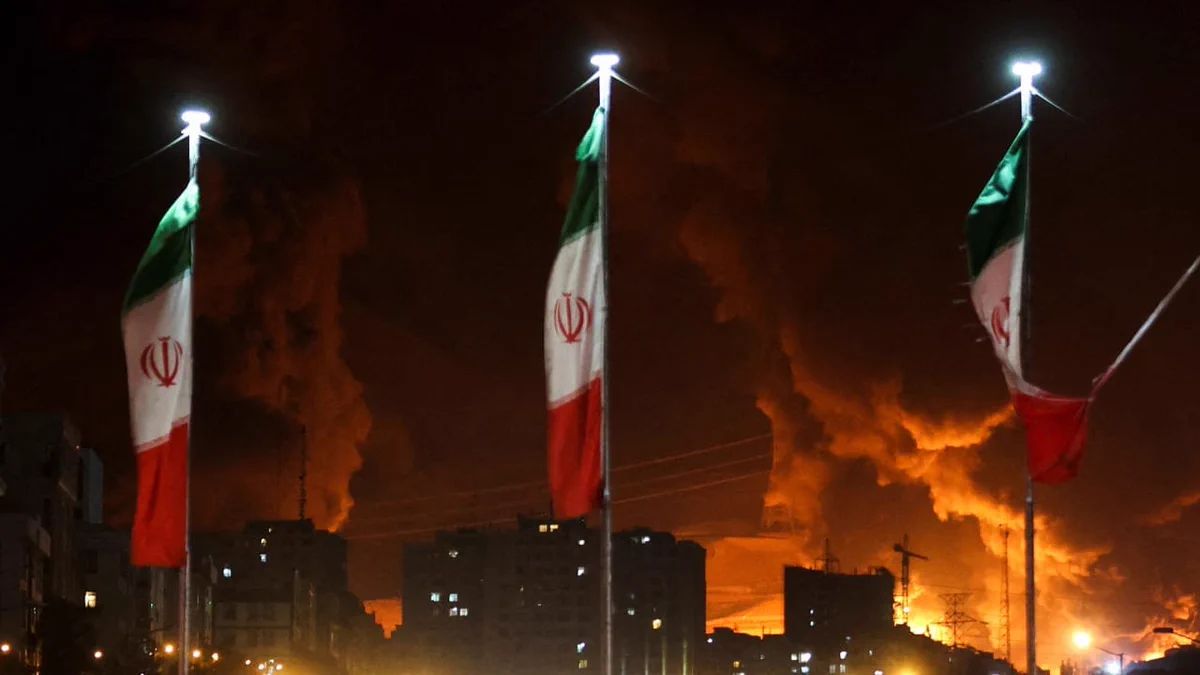
The image is an authentic Reuters photo dated June 15, 2025, used for illustrative purposes.
The tells
- ●●○ Supporting signal The image depicts a generic scene of military activity with no direct connection to the diplomatic claim.our visual review
Synthetic-media detector
Detector not consultedThe media is incidental to the claim; the detector was not needed.
How we checked the media
- Analyzed the image used in the post against recognized sources for authenticity.
- Checked the image credits provided in the article to cross-reference its origin.
Sources
4 sources reviewed- 1US pushed for lone Israeli Iran operation as midterm elections loom ↗
The Jerusalem Post · jpost.comUntiereduntiered — treated as signal only, never decisiveEvidence
The claim regarding U.S. pressure on Israel to strike Iran, mentioning denials from officials.
- 2Report: US pressed Israel to strike Iran ahead of elections ↗
i24news · i24news.tvUntiereduntiered — treated as signal only, never decisiveEvidence
Reports similar claims by Maariv and discusses the context.
- 3US pressured Israel to strike Iran, Maariv reports ↗
Ajel English · english.ajel.saUntiereduntiered — treated as signal only, never decisiveEvidence
Summarizes the same events from Maariv while noting the lack of confirmation.
- 4US Reportedly Asked Israel To Strike Iran Alone, Then Put Plan On Hold ↗
VINnews · vinnews.comUntiereduntiered — treated as signal only, never decisiveFurther reading
Provides the same context about the alleged U.S. request to Israel and the backdrop of potential upcoming elections.
Further reading
- 1The Jerusalem Post This article provides a detailed account of the alleged U.S. pressure on Israel regarding Iran.
- 2i24news i24news offers additional context surrounding the implications of this claim.
- 3Ajel English Ajel English covers the same claims while also acknowledging the lack of primary-source confirmation.
The full story
The claim centers on a report by Israeli journalist Ben Caspit for Maariv, which states that U.S. officials attempted to press Israel into conducting a unilateral strike against Iran during discussions in early October 2026. This significant allegation, relayed by The Jerusalem Post, raised international attention given the geopolitical implications. However, both the U.S. and Israeli officials denied the allegations following publication. A lack of primary-source support highlights the difficulty in verifying such claims about sensitive diplomatic matters. The photograph associated with the claim is a Reuters image dated from earlier coverage and does not serve as direct evidence for the reported conversations.
How it was framed
The tweet implies authority with direct claims about U.S. actions; however, suspicion remains due to the absence of independent confirmation.
- Selective evidence. Citing Maariv without independent corroboration.
- Urgency. The news suggests immediate implications due to the referenced discussions.
Bias
The post amplifies a politically consequential allegation that could affect perceptions of U.S. and Israeli motives; reporting outlets largely repeated the Maariv claim and some framing emphasizes the alleged political calculus, so there is a slight potential for selection/framing bias even though denials were noted.
Bias describes how the post frames its message — the slant of the language, selection and emphasis — and is judged separately from whether the claim is true. A true claim can still be framed with a strong slant.
How we checked
41 s- 1
We searched for reports from various sources concerning the claim of U.S. pressure on Israel to strike Iran.
- 2
We examined The Jerusalem Post article to identify its sources and the context of the presented claim.
- 3
We verified the media attached to the post for authenticity, checking its credits against recognized agencies.
✓ Claim checked✓ Media checked✓ Sources checked
Why 40% confidence
LowThe confidence band is low due to the absence of independent verification beyond the original report. Although the media is authentic, it played no role in confirming the claim.
Limits. No official U.S. statements were available for verification during our investigation.
What we don’t know
- What further details U.S. officials might provide about the alleged discussions with Israel.
- Whether the diplomatic dialogues were documented in any official communications.
- If new reports will surface that may clarify the claims surrounding U.S. discussions with Israel.
Spot it yourself
Why we can't tellLooks suspicious, isn’t proof
- The claim cites a single source (Maariv) without solid backing from U.S. officials.
- The urgency implied may cloud objective assessment of the report.
- Coherent reports that lack direct evidence can be easily misinterpreted.
The actual evidence
- Denials came from multiple official sources recognized in the reporting.
- Multiple outlets failed to provide additional confirmation, raising doubts about the claim.
- The repeated referencing of one source without new evidence indicates possible misinformation.
- 1
Check the credibility of the source reporting the claim.
Look for recognized news outlets and compare the report to their findings.
- 2
Look for denials or confirmations from reputable officials.
Search for any government statements or interviews discussing the issue.
- 3
Consider the implications of the reported information.
Evaluate whether the information aligns with known facts about diplomatic relations.
Takeaway
Always seek additional sources before believing claims that could have significant political implications. Question reports that depend heavily on a single source.
Questions people ask
What does it mean when claims are described as unsupported?+
Claims labeled as unsupported indicate a lack of independent verification or credible evidence to confirm the allegations.
Why are denials from officials important in reporting?+
Denials from officials serve as critical checks on claims that have significant implications; they often highlight discrepancies or fact-check the reports.
What role does media play in diplomatic claims?+
Media reports can shape public perception, but claims without independent corroboration may mislead due to a lack of reliable evidence.
Go deeper
- Unsupported claim
- A statement that lacks credible evidence or verification from reliable sources.
- Independent verification
- The process of confirming a claim through sources not directly involved in the assertion.
- Diplomatic pressure
- Efforts exerted by one nation on another to influence decisions or actions.
People also search for
For educators+
- What are the responsibilities of journalists when reporting on sensitive international claims?
- How can consumers of news evaluate the credibility of a claim?
- In what ways do media reports influence public perception of global conflicts?
About this check
- Platform
- X
- Posted by
- @Jerusalem_Post
- Posted
- October 10, 2026
- Age when checked
- Under 24 hours old when checked
- Where it spread
- United States, Israel
- Audience
- International audience
- Language
- EN
- Status
- ● Post is live
- Verified
- October 11, 2026, 03:07 UTC
- Published
- October 11, 2026, 03:07 UTC
Reach. Only 68 likes on the JPost post; Barak Ravid (Axios) quote-post with denials, 323 likes; Raw Story headline 'Explosive report'
This verdict was generated with AI from the sources shown. AI can make mistakes — check the sources before relying on it.
Check anything yourself, in seconds.
Share any social post or video to What the Fact and get the verdict, the confidence, and the receipts.