Did archaeologists find Noah's Ark in Turkey?
Did archaeologists in Turkey just find Noah's Ark near Mount Ararat, as viral videos claim?
False
The claim that archaeologists found Noah's Ark is false.
The claim that archaeologists in Turkey found Noah's Ark is false. The accompanying video has been identified as AI-generated, and no authentic discovery exists at the claimed site.
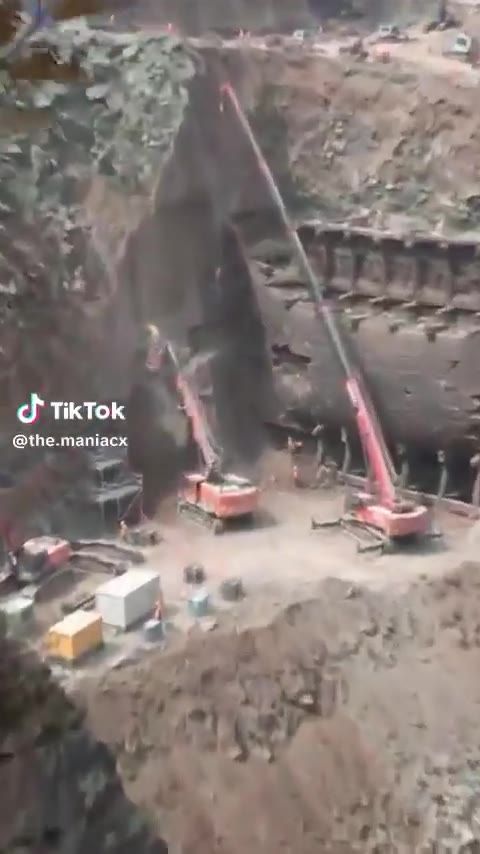 AI-generated
Claims
✕ 1 falseTurkey: archaeologists searching for fossils found Noah's Ark; science has confirmed the Bible story.123
“Türkiye: Fosil arayan arkeologlar Nuh'un Gemisi'ni buldu; bilim, bu güne dek İncil'de bir başka masal sandığımız şeyi doğruladı.”
Expert assessments and fact-checking from reputable sources show that the claim of finding Noah's Ark is baseless. The relied-upon video has been confirmed as AI-generated or synthetic, misleading viewers to believe an archaeological discovery occurred. Valid academic work in the area is ongoing, but no authenticated discovery has been made. Research continues at the Durupınar formation, but official statements indicate results have not yet led to confirmed findings of wooden remains or an ark. Readers should scrutinize video sources and check for endorsements from legitimate scientific entities.
What was posted
XA video post on Twitter claims that archaeologists in Turkey have discovered Noah's Ark, stating that science has confirmed the Bible story. The post is presented as a significant revelation.
“ÇOK ÖNEMLİ Türkiye: Fosil arayan arkeologlar Nuh'un Gemisi'ni buldu. Bilim, bugüne dek İncil'deki bir başka masal sandığımız şeyi doğruladı. Detayları genişleteceğiz.@tvolaycom”
“VERY IMPORTANT Turkey: Archaeologists searching for fossils found Noah's Ark. Science has confirmed what we thought was another fairy tale in the Bible. We will expand on the details.” — translated
Who posted it
XAccount check
Estimates from public signals — account age, posting pattern, audience — not a judgement of the person behind the account, and separate from whether this post is true.
What stood out
- Account lacks a display name and bio, which are typically present in genuine profiles.
- No follower count available, making it difficult to assess the account's reach or influence.
- Account is not verified, which is common for personal or less-established accounts but also for automated ones.
- No recent posts, suggesting inactivity or a lack of content generation.
- The handle 'Celalciftcitr' does not correspond to any known individual or organization, raising suspicion about its authenticity.
Signals (1)+
- Posting cadence
- No recent posts
Account checked October 13, 2026, 02:56 UTC
The media
Video✓ What is genuine
The video portrays archeological work at a recognizable site but is ultimately fabricated.
The tells
- ●●● Strong signal The video seems too perfect or aligned with sensational claims.our visual review
- ●●○ Supporting signal Lack of sourcing from authoritative archaeological or academic institutions.our visual review
Synthetic-media detector
Detector ranThe claim stands or falls on whether the media is real, so the detector ran.
Scores are the detector’s estimate for the file as uploaded. A low score does not rule out editing, a spliced caption, or footage shown out of context — those are judged above. Model v3.
How we checked the media
- Performed verification checks on the visual content of the video.
- Utilized tools to identify potential AI-generated markers.
- Reviewed independent fact-checking sources analyzing the video.
Sources
4 sources reviewed- 1Nuh'un Gemisi'nin bulunduğu iddiası ↗
Teyit · teyit.orgUntiereduntiered — treated as signal only, never decisiveEvidence
Turkish fact-checker confirms the discovery claim is false.
- 2Fact Check: FAKE Video Depicts Excavation of Noah's Ark on Mount Ararat -- It Is AI-Generated ↗
Lead Stories · leadstories.comPrimary / fact-checkerIFCN; strong on viral/AI mediaEvidence
Identifies the accompanying video as AI-generated and untrustworthy.
- 3مقاطع فيديو حصدت 40 مليون مشاهدة.. هل عُثر على سفينة نوح شرقي تركيا؟ ↗
Al Jazeera (Arabic) · aljazeera.netUntiereduntiered — treated as signal only, never decisiveEvidence
Reports on the viral nature and fabrication of the videos.
- 4Search for Noah's Ark: Radar scan reveals claimed 'man-made' structure in Turkey ↗
The Jerusalem Post · jpost.comUntiereduntiered — treated as signal only, never decisiveEvidence
Discusses the ongoing research efforts and lack of mainstream verification.
Further reading
- 1Teyit Analyzes the claim that Noah's Ark was found and details ongoing research at the Durupınar site.
- 2Lead Stories Identifies the video as AI-generated, providing insight into verification techniques.
- 3Al Jazeera (Arabic) Investigates the viral status of multiple clips claiming to depict Noah's Ark.
The full story
Despite claims circulating on social media that archaeologists discovered Noah's Ark at the Durupınar formation in Turkey, these assertions are unverified and misleading. The area has indeed been a site of interest for researchers, including scans and drilling by academic teams such as Noah's Ark Scans. However, the findings have not yielded authenticated remains of a wooden ship or any concrete evidence supporting the claims of a discovery. The viral video supporting this assertion was flagged as AI-generated by multiple verification agencies; thus, it lacks legitimacy. The actual work being conducted at the site remains ongoing, and there have been no official confirmations of any archaeological find. This case highlights the danger of misinformation propagated through synthetic media, especially when framed as credible documentary evidence.
Timeline
October 5, 2026
A matching video post on X was archived and discussed by fact-checkers.
October 10, 2026
The social media claim about Noah's Ark's discovery circulated widely.
October 12, 2026
Al Jazeera published an investigation detailing the viral nature of the clips. 3Al Jazeera (Arabic)
How it was framed
The claim and accompanying video were fabricated to mislead viewers into believing a genuine archaeological discovery was made.
- Emotional language. Using terms like 'ÇOK ÖNEMLİ' (VERY IMPORTANT) to emphasize gravity.
- Urgency. Implying the discovery needs immediate attention and dissemination.
Bias
Leans pro-biblical / sensational. The post frames a contested research effort as a definitive, Bible-verifying discovery and uses urgent language to encourage viral spread, a pattern consistent with sensational religiously-tinged claims rather than measured scientific reporting.
Bias describes how the post frames its message — the slant of the language, selection and emphasis — and is judged separately from whether the claim is true. A true claim can still be framed with a strong slant.
How we checked
48 s- 1
Conducted searches on social media and fact-checking sites to verify the authenticity of the claim.
- 2
Analyzed the circulating video using verification tools and consulted fact-checkers
- 3
Reviewed conflicting evidence and expert opinions regarding the event.
✓ Claim checked✓ Media checked✓ Sources checked
Why 87% confidence
HighOur confidence is HIGH because the video has been consistently flagged as AI-generated by reputable sources, and there is no corroborative evidence of the claimed discovery.
Limits. We could not access potential traditional media coverage that might have emerged after our searches.
What we don’t know
- What future findings, if any, will emerge from ongoing research at the Durupınar site.
- If there will be any further verification of claims regarding archaeological discoveries made in Turkey.
Spot it yourself
Spot the fakeLooks suspicious, isn’t proof
- The post is alarmist, presenting unverifiable claims.
- The video is of low quality and resembles synthetic media.
- The account posting lacks established scientific credentials.
- The urgency of the claim raises red flags.
The actual evidence
- The video was identified as AI-generated by multiple fact-checkers.
- Independent sources confirm no authenticated discovery exists.
- The original research reported ongoing analyses, not confirmed findings.
- 1
Check if credible news outlets are reporting the claim.
Look for articles in large media organizations discussing the same event.
- 2
Investigate the source of the content.
Research the author or account posting to see if they have a history of credible claims.
- 3
Look for scientific publications on the subject.
Search for articles or reports from recognized academic entities about recent findings.
- 4
Use AI-detection tools.
Employ tools designed to analyze whether the media is synthetic or altered.
Takeaway
Misinformation can easily spread through social media, especially when it combines emotionally charged language with striking visuals.
Questions people ask
Why was the video deemed AI-generated?+
Verification tools identified it as AI-generated due to unnatural visual aspects and inconsistencies with known practices in archaeology.
Have there been any legitimate findings at the Durupınar site?+
Ongoing research at the Durupınar formation has not yet produced authenticated remains of Noah's Ark despite scans and drilling.
How can I verify claims of archaeological discoveries?+
Check for coverage in reputable academic and media sources, look for supporting evidence from recognized experts, and verify the authenticity of accompanying media.
What can I do if I encounter suspicious videos online?+
Look for verification from fact-checkers, use identification tools for AI or altered media, and consult trustworthy news sources for context.
What are the implications of misinformation in archaeology?+
Misinformation can distort public understanding of scientific findings, creating false narratives that undermine actual research efforts.
Go deeper
- AI-generated
- Content created by artificial intelligence, often lacking authenticity.
- fabricated content
- Information that is false or intentionally misleading, designed to deceive.
- verification
- The process of confirming the truth or authenticity of information.
People also search for
For educators+
- How can we distinguish between credible information and misinformation?
- What roles do emotions play in the spread of information online?
- How should content creators approach the verification of their claims?
About this check
- Platform
- X
- Posted by
- @Celalciftcitr
- Posted
- October 10, 2026
- Age when checked
- Older post, still live
- Where it spread
- TR, United States
- Audience
- International audience
- Language
- TR
- Status
- ● Post is live
- Verified
- October 13, 2026, 02:58 UTC
- Published
- October 13, 2026, 02:58 UTC
Reach. Al Jazeera says the clips got 40M+ views; the TikTok creator 'themaniac' alone has 25M+. Celal Ciftci post: 2,982 likes and 639 replies (syndication, 13 Oct). Copy-paste English versions on X ('VERY IMPORTANT Turkey...').
This verdict was generated with AI from the sources shown. AI can make mistakes — check the sources before relying on it.
Check anything yourself, in seconds.
Share any social post or video to What the Fact and get the verdict, the confidence, and the receipts.