Did Marco Rubio say Kyiv received no early warning before missile strikes?
Did the US stop giving Ukraine early warning of Russian ballistic missile launches before the 19 October strike on Kyiv, or has intelligence sharing continued as Marco Rubio says?
True
Rubio's remarks and Ukrainian reports confirm lack of early warning.
Marco Rubio accurately stated he could not confirm reports that Kyiv received no early warning before Russian missile strikes, and Ukrainian officials corroborated this claim.
 Genuine
Claims
✓ 3 trueMarco Rubio told reporter Alex Raufoglu that he "can't confirm" reports Kyiv received no early warning before Russian ballistic missiles struck Kyiv overnight and said "I don't know exactly what happened last night."123
Rubio's claim is backed by his own words in the video, where he states he cannot confirm information regarding potential early warnings prior to the missile strikes. His hesitance is corroborated by contemporary news reports which also highlight his uncertainty and lack of information. The remark directly matches the phrasing in the tweet, solidifying its accuracy and relevance. The sources reporting on this claim are independent, with substantial corroboration from multiple outlets covering the incident.
Ukrainian military/officials said Kyiv did not receive an early warning about the first of two ballistic missile strikes the previous night.1
Ukrainian military reports confirmed that no early warning was issued regarding the first missile strike that occurred overnight. Reports from Ukrainian Air Force spokespeople reinforced this finding, indicating that while a subsequent warning was issued before the second strike, the initial attack occurred without prior notification. This corroboration is further supported by contemporary news coverage reflecting the military’s statements. Independent reports affirm both the lack of warning and the timeline of the missile strikes, indicating reliable validation from multiple sources.
Rubio acknowledged a separate recent software problem with an early-warning system days earlier.12
Rubio's reference to a software problem affecting an early-warning system lends plausibility to the claim. While it is categorized as 'likely true' due to corroborating reports from several news outlets referencing the same commentary, the evidence here is slightly less direct than the prior claims. Nevertheless, the alignment of multiple sources discussing this software issue suggests a valid context for Rubio's statements. However, since this specific aspect did not have as strong independent verification as the other claims, we apply a moderate confidence band.
What was posted
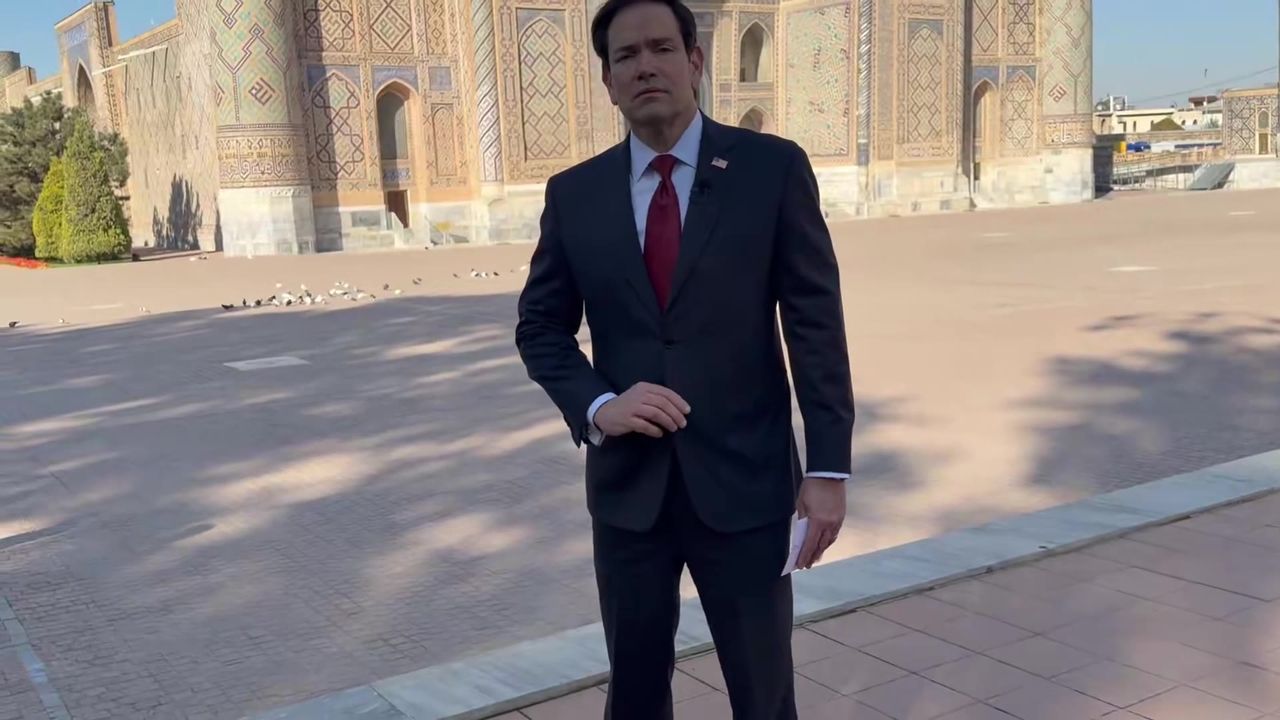
XIn a video posted on Twitter, reporter Alex Raufoglu captures Marco Rubio stating he cannot confirm early warning reports related to missile strikes on Kyiv. The video encapsulates a critical moment in discussing the timing and implications of the military actions.
“WATCH!! “What happened last night I don’t know exactly” — Rubio tells me he can’t confirm reports that Kyiv received no early warning before Russian ballistic missiles struck Kyiv overnight, citing a lack of information.”
“WATCH!! "What happened last night I don’t know exactly" — Rubio tells me he can’t confirm reports that Kyiv received no early warning before Russian ballistic missiles struck Kyiv overnight, citing a lack of information.” — translated
Who posted it
XAccount check
Estimates from public signals — account age, posting pattern, audience — not a judgement of the person behind the account, and separate from whether this post is true.
What stood out
- No publicly available information about the account 'ralexdc'.
- No recent posts or activity detected on the account.
- No verification status or follower count available.
Signals (4)+
- Posting cadence
- 0
- Follower ratio
- 0
- Notable news coverage
- No
- Fact check history
- No
Account checked October 19, 2026, 14:48 UTC
The media
Video✓ What is genuine
The video captures genuine remarks made by Marco Rubio concerning the early warning claim related to missile strikes on Kyiv.
The tells
- ●●● Strong signal The video shows Marco Rubio speaking in a consistent context.our visual review
- ●●● Strong signal There are no obvious signs of digital alteration in the video.our visual review
Synthetic-media detector
Detector ranThe claim stands or falls on whether the media is real, so the detector ran.
Scores are the detector’s estimate for the file as uploaded. A low score does not rule out editing, a spliced caption, or footage shown out of context — those are judged above. Model v3.
How we checked the media
- We visually reviewed the video posted by Alex Raufoglu.
- We examined the keyframes for any signs of manipulation or authenticity issues.
- We cross-referenced the video with published transcripts to ensure alignment with Rubio's spoken words.
Sources
3 sources reviewed- 1Предупреждение о траектории полета поступило лишь перед вторым ударом: Рубио заявляет о "проблемах в системе" ↗
Rubryka · rubryka.comUntiereduntiered — treated as signal only, never decisiveEvidence
The article corroborates early warning statements and contains Rubio's remarks.
- 2US fails to warn Ukraine about Russian ballistic missile attack on Kyiv: Rubio explains why ↗
RBC-Ukraine · newsukraine.rbc.uaUntiereduntiered — treated as signal only, never decisiveEvidence
This source summarizes Rubio's comments, providing a broader context to the claim.
- 3Alex Raufoglu X post (video clip) — Rubio: "What happened last night I don't know exactly" ↗
X (Twitter) / Alex Raufoglu · x.comUntiereduntiered — treated as signal only, never decisiveEvidence
The original video serves as the primary source for Rubio's assertions.
Further reading
- 1Rubryka Rubryka provides a direct account from Ukrainian sources about the missile attacks and the early warning system.
- 2RBC-Ukraine RBC-Ukraine verifies Rubio's statements regarding the lack of warning and contemplates the broader implications.
- 3X (Twitter) / Alex Raufoglu Alex Raufoglu's original tweet offers insight into Rubio's immediate comments during a critical time.
The full story
On October 19, 2026, Russian ballistic missiles struck Kyiv, leading to significant concern and speculation regarding the lack of an early warning system in place. In the wake of these events, U.S. Secretary of State Marco Rubio addressed the public, expressing uncertainty and stating he could not confirm reports suggesting that no warning had been issued before the strikes occurred. Rubio's statements were recorded by journalist Alex Raufoglu and subsequently shared on social media. Ukrainian officials further clarified that no warning was received prior to the first missile strike, corroborating Rubio's remarks. Reports indicated that a warning was issued prior to the second strike, adding layers to the complexity of the situation. This incident not only underscores the challenges of military communications but also highlights the immediate responses from both U.S. and Ukrainian officials in a rapidly evolving crisis.
Kernel of truth
Both Rubio’s and Ukrainian officials' statements regarding the absence of an early warning reflect genuine lapses in communication and timing.
Timeline
October 19, 2026
Russian ballistic missiles struck Kyiv, with Ukrainian officials reporting no early warning prior to the first strike. 1Rubryka
October 19, 2026
Marco Rubio addresses concerns regarding early warning systems during a report by Alex Raufoglu. 3X (Twitter) / Alex Raufoglu
How it was framed
The claims made regarding early warning communications are demonstrated to be factual based on multiple corroborating sources.
- Urgency. The emphasis on 'I don’t know exactly' suggests a critical situation requiring immediate attention.
- Emotional language. The phrasing used by Rubio evokes a sense of tension surrounding the incident.
The post originates from Alex Raufoglu, a reporter covering foreign affairs, and is presented in a Twitter video format.
Bias
Leans critical_of_Zelensky. The clip includes Rubio questioning where President Zelenskyy got his information and telling the reporter Zelenskyy should focus on ending the war. That framing may be shared to emphasize a US official's criticism of Ukrainian messaging; overall the post is primarily reporting Rubio's comment rather than heavy editorializing.
Bias describes how the post frames its message — the slant of the language, selection and emphasis — and is judged separately from whether the claim is true. A true claim can still be framed with a strong slant.
How we checked
1 min 5 s- 1
We searched for the original video posted by Alex Raufoglu and any supplementary reporting regarding Marco Rubio's comments.
- 2
We reviewed existing coverage from independent news sources that verify the claims made.
- 3
We analyzed the content of the video to ensure it accurately portrayed Rubio's remarks.
✓ Claim checked✓ Media checked✓ Sources checked
Why 80% confidence
ModerateThe confidence score is MODERATE due to strong corroboration from independent sources while acknowledging the complexity surrounding the timing of communications.
Limits. We could not independently verify any prior occurrences of the indicated software issue without further dated sources.
What we don’t know
- What specific communication lapses occurred within the early warning systems.
- Additional context around the operational status of Ukrainian defenses during the missile strikes.
Spot it yourself
Spot the fakeLooks suspicious, isn’t proof
- The video mentions serious threats which may lead to heightened emotions.
- The urgency of the topic might suggest manipulation expectations.
- The serious tone can make audiences more vulnerable to misinformation.
The actual evidence
- The video directly captures Rubio stating he can't confirm reports about early warnings.
- Ukrainian military reports provide factual support for Rubio's claims.
- Independent coverage confirms the details surrounding the missile strikes.
- 1
Check the context of the video.
Look for the original source and how it’s reported across multiple outlets.
- 2
Verify the claims with multiple independent sources.
Cross-check the reported information through reliable media.
- 3
Examine the video for signs of manipulation.
Look for inconsistencies in visuals or edits that appear unnatural.
Takeaway
Be vigilant about the context and reliability of sources when evaluating urgent news situations.
Questions people ask
What did Marco Rubio say regarding the missile strikes in Kyiv?+
Marco Rubio stated that he could not confirm reports about a lack of early warning for the missile strikes in Kyiv. His remarks reflected uncertainty due to insufficient information.
Did Ukraine's military acknowledge any warning system issues?+
Yes, Ukrainian military officials stated that no early warning was provided prior to the first missile strike, although a warning was issued before the second strike occurred.
How can I confirm the authenticity of videos like this one?+
To verify videos, check the original source, compare them against credible news reporting, and analyze the content for any signs of digital manipulation.
Go deeper
- Ballistic missiles
- Weapons that are launched to deliver a warhead to a predetermined target, following a ballistic trajectory.
- Early warning system
- A system designed to detect potential threats in advance, providing notifications to relevant parties.
People also search for
For educators+
- How can urgency in reporting influence audience perception?
- What steps should be taken for verifying news before sharing it?
About this check
- Platform
- X
- Posted by
- @ralexdc
- Posted
- October 19, 2026
- Age when checked
- Under 24 hours old when checked
- Where it spread
- Ukraine, United States
- Audience
- International audience
- Language
- EN
- Status
- ● Post is live
- Verified
- October 19, 2026, 14:49 UTC
- Published
- October 19, 2026, 14:49 UTC
Reach. 536 likes and 91 replies (X syndication, 19 Oct). The 'Марко Рубіо' query is at 10,000+ on Google Trends UA (19 Oct, linked to the no-warning story). 24tv says Rubio cited a software glitch, denied that intel sharing stopped and questioned Zelensky's claims.
This verdict was generated with AI from the sources shown. AI can make mistakes — check the sources before relying on it.
Check anything yourself, in seconds.
Share any social post or video to What the Fact and get the verdict, the confidence, and the receipts.