Did Iran capture a US MQM-170 drone intact west of the Strait of Hormuz?
Did Iran's IRGC Navy take control of and land a US MQM-170 drone west of the Strait of Hormuz on 29 Oct 2026?
Can't verify
The footage is real Iranian military video, but the capture claim is denied by the US and not independently confirmed.
Iran's Revolutionary Guard Navy announced on 29 October 2026 that its electronic warfare unit seized control of a US Army MQM-170 Outlaw drone and landed it intact west of the Strait of Hormuz, releasing night-vision footage. US Central Command called the report false. No independent evidence of the capture, the drone's identity or the launch site has surfaced, so the claim is unverifiable.
 Likely genuine
Claims
✓ 1 trueA US MQM-170 drone was captured intact west of the Strait of Hormuz after the IRGC Navy's electronic warfare unit took control of its guidance and control systems.135
This is the claim the whole post rests on, and it has a single origin: Iranian state and IRGC-linked media. IRNA, Tasnim, Fars, Mehr and Press TV all carried the same announcement and the same footage, so their reports do not corroborate each other — they are one source repeated. The one accountable party that could confirm or refute it, US Central Command, rejected it the same day. Spokesman Tim Hawkins said the IRGC 'has repeatedly lied out of desperation, and today is no different' and said US operational drones remained under positive control. That denial does not by itself prove the capture did not happen; a military can deny an embarrassing loss. But it means the only support is from a state broadcaster that controls what it publishes, and no third party has inspected the airframe or confirmed the location. With no independent corroboration either way, the claim cannot be verified. We rate confidence HIGH in that assessment because the source structure is clear, not because we think we know what happened.
Still open: Whether any third party has examined the airframe, and where exactly the footage was filmed.
The MQM-170 Outlaw is a US drone used for reconnaissance and decoy missions.34
This part checks out as a general description of the hardware. The MQM-170 Outlaw is a real unmanned target and decoy aircraft built by the US company Griffon Aerospace and used by the US Army, as the reporting notes. Outlets describing the type are on solid ground: it is designed to simulate aerial threats and can carry sensors. But describing a drone type correctly is not evidence that this particular airframe was captured. A post can be accurate about the model and still wrong about the event. The type identification raises the plausibility of the story — such drones exist and do fly — while telling us nothing about whether one was taken intact west of Hormuz. We treat this as a real but limited point: it explains why the claim felt credible, not why it is true.
Recovered data shows the drone took off from the coast of a southern Persian Gulf state.
This is the most detailed and least supported part of the announcement. It asserts that data extracted from the drone's systems shows a launch from the coast of a southern Persian Gulf state. No data, imagery, flight log or forensic detail was released to back it, and no independent party has examined the airframe. The claim also depends on the capture having happened at all, which CENTCOM denies. When a specific technical assertion like this arrives with no underlying evidence and from a single state source, there is nothing for an outside checker to test. It is not automatically false; it is simply unsupported. We rate confidence MODERATE rather than HIGH because the absence of released data is clear, but we cannot rule out that such data exists and was withheld.
Still open: Whether Iran holds data it has not released, and what it would show if examined independently.
What was posted
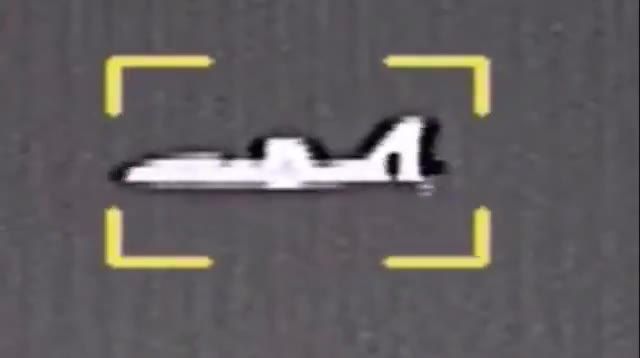
XAn X post by an open-source intelligence aggregator account shares a video said to have been released by Iran's Fars News Agency. The clip shows a small aircraft being tracked in infrared and then a white airframe on the ground surrounded by troops. The post asks readers to believe that a US MQM-170 drone was brought down intact west of the Strait of Hormuz by an Iranian electronic-warfare operation.
“A U.S. MQM-170 drone was brought down intact west of the Strait of Hormuz, according to Iran's Fars News Agency. The IRGC Navy claims its electronic warfare unit seized the drone's guidance and control systems and landed it. Iran alleges the aircraft launched from the coast of a”
Posted by the account Open Source Intel, which republishes military and intelligence-related material from other outlets. The same footage was carried on 29 October 2026 by Iranian state outlets including IRNA, Tasnim, Mehr and Press TV.
Who posted it
XAccount check
Estimates from public signals — account age, posting pattern, audience — not a judgement of the person behind the account, and separate from whether this post is true.
What stood out
- Genuine, long-running media operation: Open Source Intel (@Osint613), founded January 2020 by Jay Letni, a US-born, Israel-based analyst; self-reports ~1.5M followers and a small named team.
- Supplied metadata is sparse: no bio, follower count, creation date or recent posts, and the account is listed as not platform-verified.
- High-volume breaking-news aggregator: it has said it posts 'hundreds of times a day', a speed-over-verification model prone to error.
- Repeated fact-check failures: a 2023 false claim that $50M was found in a Gaza aid truck (photo was from a 2017 Nigeria raid); an August 2025 Syria explosion photo misattributed to a Pakistani strike in Afghanistan; a June 2025 Hormuz ship fire video that was actually a collision; and a July 2026 old/AI-altered Chabahar strike image that was amplified by Trump and the White House before being corrected.
- In March 2026, India Today named @Osint613 among prominent OSINT-branded accounts spreading disinformation during the US-Israel-Iran war.
- It does issue corrections, but often only after false claims have spread widely, indicating weak pre-publication controls.
- Content has a clear pro-Israel/pro-US partisan framing, and an Eekad open-source investigation listed it among accounts participating in a coordinated narrative campaign.
- Bot probability is low: identifiable founder, human team, irregular posting and Shabbat breaks suggest a human-run operation, despite automated source-aggregation tooling.
Signals (9)+
- Account created at self reported
- January 2020
- Follower count approx
- 1500000
- Posting cadence
- Hundreds of posts per day (self-reported)
- Platform
- Known affiliation
- Open Source Intel / OSINT613, founded by Jay Letni; US-born, Israel-based
- Notable news coverage
- Yes
- Fact check history
- 2023 false $50M Gaza aid truck photo (Nigeria 2017 image); 2025 Syria explosion photo misattributed to Pakistan strike in Afghanistan; 2025 Hormuz burning ship video misattributed to Iranian drone attack; actually a collision; 2026 old/AI-altered Chabahar strike image spread by senior US officials before correction; 2026 fake video of Ukrainian soldiers threatening Iran amplified without verification
- Correction behaviour
- Issues corrections, but often after viral spread
- Editorial lean
- Pro-Israel/pro-US partisan framing
Account checked October 29, 2026, 15:07 UTC
The media
Video✓ What is genuine
The video itself appears to be genuine Iranian military footage released by the IRGC and broadcast by state media. What is not established is that the aircraft is an American MQM-170 or that it was electronically captured, which CENTCOM denies.
The tells
- ●●● Strong signal The detector scored the clip as not AI-generated at 0.99998 and deepfake at 0.00086, with no generator class above a negligible fraction.our detector
- ●●○ Supporting signal The video shows infrared tracking brackets on a small aircraft, then a white airframe on dark ground with soldiers around it, some in red night-vision lighting — consistent with genuine military sensor footage.our visual review
- ●●○ Supporting signal Persian-language watermarking typical of Iranian state television appears on the clip.our visual review
- ●○○ Weak signal The airframe's proportions are plausible for an MQM-170 Outlaw-class target drone, roughly 2.7 m long with a 4.9 m span.our visual review
Synthetic-media detector
Detector ranThe claim stands or falls on whether the media is real, so the detector ran.
Scores are the detector’s estimate for the file as uploaded. A low score does not rule out editing, a spliced caption, or footage shown out of context — those are judged above. Model v3.
How we checked the media
- Reviewed the video frames for synthetic artefacts: geometry, crew movement, text rendering and interface stability.
- Compared the footage with published descriptions of the IRGC-released package carried by outlets on 29 October 2026.
- Ran the clip through our AI-generation detector (hive-v3).
Sources
5 sources reviewed- 1US military denies Iran captured American drone ↗
OrissaPOST (Associated Press) · orissapost.comUntiereduntiered — treated as signal only, never decisiveEvidence
US Central Command's denial and Hawkins's quote.
- 2US military denies claim that Iran captured American drone ↗
Siasat (Associated Press) · siasat.comUntiereduntiered — treated as signal only, never decisiveEvidence
That Iranian state television reported the claim and CENTCOM rejected it.
- 3Iran's Guards navy captures US drone intact over strait of Hormuz ↗
Free Malaysia Today · freemalaysiatoday.comUntiereduntiered — treated as signal only, never decisiveEvidence
The IRGC announcement as carried by IRNA and the description of the MQM-170.
- 4Iran tuyên bố chiếm quyền điều khiển, tịch thu UAV trinh sát Mỹ ↗
VnExpress · vnexpress.netUntiereduntiered — treated as signal only, never decisiveContext
A detailed description of the released video's contents.
- 5Iranian Revolutionary Guard seizes U.S. spy drone west of Strait of Hormuz ↗
Saba News Agency · saba.yeUntiereduntiered — treated as signal only, never decisiveEvidence
The IRGC's own account of the electronic operation and intact landing.
Further reading
- 1OrissaPOST (Associated Press) Carries the US Central Command denial and Tim Hawkins's statement in full.
- 3Free Malaysia Today Shows how the IRGC announcement was reported and describes the MQM-170 type.
- 4VnExpress Describes the released video in detail, useful for comparing footage with claims.
The full story
The kernel of truth here is the footage. Something was filmed: an aircraft tracked by an infrared sensor, then a white airframe on the ground with troops standing around it, released through Iran's state media on 29 October 2026. Our detector and our visual review both point to a genuine recording rather than a synthetic clip. That is why the post travels: real video feels like proof.
The claim built on top of it is another matter. The IRGC Navy says its electronic warfare unit took control of a US Army MQM-170 Outlaw and landed it intact west of the Strait of Hormuz. That account comes through IRNA, Tasnim, Fars, Mehr and Press TV — outlets under Iranian state control, repeating one announcement rather than independently confirming it. US Central Command rejected it the same day. Spokesman Tim Hawkins said the IRGC 'has repeatedly lied out of desperation, and today is no different', and said US drones remained under positive control.
The MQM-170 is a real target and decoy drone used by the US Army. Such aircraft are cheap, unarmed and often expended in training, which is part of why the story is plausible. Iran has made a comparable electronic-capture claim before, over an RQ-170 Sentinel in 2011, which US officials attributed to a malfunction. That history cuts both ways: it shows Iran publicises such claims, and it shows they are disputed. None of it settles this instance, and no independent inspection has been published.
Kernel of truth
Genuine Iranian military video of an airframe on the ground exists, and the MQM-170 Outlaw is a real US Army target drone.
Timeline
2011
Iran claims an electronic ambush of a US RQ-170 Sentinel; US officials attribute the loss to a malfunction.
October 29, 2026
IRGC Navy announces its electronic warfare unit landed a US MQM-170 drone intact west of the Strait of Hormuz; state media release night-vision footage. 3Free Malaysia Today
October 29, 2026
US Central Command spokesman Tim Hawkins calls the report false, saying the IRGC 'has repeatedly lied out of desperation'. 1OrissaPOST (Associated Press)
How it was framed
The post presents a claim that cannot be confirmed or refuted with the evidence available: it rests on a single state-media origin and is denied by the accountable party, with no independent inspection. The footage is genuine, so this is not fabricated or manipulated media; the problem is the unverified assertion built around it.
- Borrowed authority. The post attributes the claim to 'Iran's Fars News Agency' and 'The IRGC Navy', lending it the weight of official sources.
- “Visual proof”. The clip of an airframe on the ground is presented as physical evidence of the capture.
- Missing context. The post does not mention that CENTCOM denied the report or that the sources trace to Iranian state media.
Posted on X by Open Source Intel, an aggregator account that republishes military and intelligence material. The underlying claim was carried on 29 October 2026 by Iranian state outlets including IRNA, Tasnim, Fars, Mehr and Press TV.
Bias
Leans amplifies Iranian state-media and IRGC claims without independent verification. The alert account relays the IRGC Navy statement and Iranian state-television footage essentially as supplied, with attribution but no caveat that the Pentagon denies the capture and that the only sourcing is Iranian state media. The framing mirrors Tehran's information-operations messaging rather than balancing it.
Bias describes how the post frames its message — the slant of the language, selection and emphasis — and is judged separately from whether the claim is true. A true claim can still be framed with a strong slant.
How we checked
1 min 25 s- 1
Searched for coverage of the IRGC announcement and the MQM-170 claim.
- 2
Searched for the US military response and any denial.
- 3
Searched for independent verification or prior fact-checks of this specific claim.
- 4
Reviewed the video frames for synthetic artefacts.
- 5
Ran the clip through our AI-generation detector.
✓ Claim checked✓ Media checked✓ Sources checked
Why 62% confidence
LowWe are confident the claim is unverifiable because the source structure is clear: a single Iranian state-media origin and a same-day US denial, with no independent evidence. We are not confident about what actually happened, which is why the headline band is LOW.
Limits. We could not inspect the airframe, confirm the filming location, or obtain any data on the claimed launch site. No independent party has examined the drone.
What we don’t know
- Whether any third party has examined the airframe or the footage's location.
- What data, if any, Iran holds about the drone's origin.
- Whether a US drone was lost in the area on or around 29 October 2026.
Spot it yourself
Why we can't tellLooks suspicious, isn’t proof
- The source is an aggregator account rather than a news organisation with editorial standards. That is a reason to check further, not evidence the claim is false.
- The footage is night-vision and low-resolution. Poor image quality makes verification harder but is not a sign of fabrication.
- The claim comes from a state broadcaster with a stake in the story. That is a reason to look for independent confirmation, not proof of lying.
The actual evidence
- Every version of the claim traces back to the same Iranian state-media announcement, so repetition across outlets is not independent corroboration.
- US Central Command, the accountable party, denied the report the same day and said its drones were under positive control.
- Our AI detector and visual review found the video consistent with genuine military footage, so the dispute is about the claim, not a fake clip.
- No third party has inspected the airframe or confirmed the location, and no data supporting the claimed launch site was released.
- 1
Check who could confirm the story independently
If a US drone were captured, the US military would be asked and would respond. Look for that response before accepting the claim.
- 2
Trace how many sources there really are
Follow each report back. If they all quote the same agency announcement, count it as one source, not five.
- 3
Separate the footage from the claim
Ask what the video actually shows — an aircraft on the ground — and what it does not show: its identity, its origin or how it got there.
- 4
Look for the official account
Check the military command's own statements or briefings for a denial or confirmation before sharing.
Takeaway
Real footage can carry an unproven claim. Genuine video is evidence of something being filmed, not evidence that the story around it is true.
Questions people ask
Did Iran capture a US MQM-170 drone?+
Iran's IRGC Navy says its electronic warfare unit landed a US MQM-170 Outlaw intact west of the Strait of Hormuz on 29 October 2026. US Central Command called the report false. No independent verification has been published, so the claim cannot be confirmed.
Is the video of the drone real?+
Our detector and visual review found the clip consistent with genuine Iranian military footage, not an AI-generated fake. It shows an airframe on the ground, but it does not by itself prove the aircraft is American or that it was electronically captured.
What did US Central Command say?+
Spokesman Tim Hawkins said the report was false, that the IRGC 'has repeatedly lied out of desperation, and today is no different', and that US operational drones remained under positive control. A denial is not proof of fabrication, but it means the claim is contested by the accountable party.
Why do so many outlets report the same claim?+
Because they are all drawing on the same announcement from Iranian state media, including IRNA, Tasnim, Fars, Mehr and Press TV. Outlets repeating one source do not provide independent confirmation; they amplify a single origin.
What is an MQM-170 Outlaw?+
It is a real unmanned target and decoy aircraft built by US company Griffon Aerospace and used by the US Army for training and simulation. It is relatively cheap and unarmed, which is part of why a loss might not be acknowledged in detail.
Go deeper
- IRGC
- Iran's Islamic Revolutionary Guard Corps, a branch of the armed forces separate from the regular military.
- Electronic warfare
- Using electronic signals to disrupt, deceive or take control of an adversary's equipment, such as a drone's guidance systems.
- Decoy drone
- An unarmed aircraft designed to simulate a threat or distract defences, often used in training.
- CENTCOM
- United States Central Command, the US military command responsible for operations in the Middle East.
People also search for
For educators+
- If five outlets report the same announcement from one agency, how many sources do you actually have?
- Does a military denial settle whether a captured drone story is true? What else would you want to see?
- How does real footage make an unproven claim more convincing, and how can viewers guard against that?
About this check
- Platform
- X
- Posted by
- @osint613
- Posted
- October 29, 2026
- Age when checked
- Under 24 hours old when checked
- Where it spread
- IR, United States
- Audience
- International audience
- Language
- EN
- Status
- ● Post is live
- Verified
- October 29, 2026, 15:09 UTC
- Published
- October 29, 2026, 15:09 UTC
Reach. Post with video 283 likes (check.py 29 Oct); CENTCOM spokesman called the IRGC report false; conflicting versions (captured MQM-170 vs MEE report of MQ-1 shot down); covered by Gulf News, Middle East Eye, Saudi Gazette, Xinhua, CBS live blog 29 Oct
This verdict was generated with AI from the sources shown. AI can make mistakes — check the sources before relying on it.
Check anything yourself, in seconds.
Share any social post or video to What the Fact and get the verdict, the confidence, and the receipts.