Did Zia Yusuf call Alastair Campbell a war criminal to his face on Question Time?
Did the Iraq war kill around 600,000 Iraqi civilians and almost 180 British troops, as Reform UK's Zia Yusuf told Alastair Campbell on BBC Question Time?
True, but…
The exchange happened as shown — but the death toll and the 'war criminal' label carry real caveats.
True, with caveats. On BBC Question Time from Warwick on 29 October 2026, Reform UK's Zia Yusuf called Alastair Campbell a war criminal to his face over Iraq, and Campbell pushed back. The clip is genuine broadcast footage. Yusuf's core facts on the 45-minute dossier and the absence of WMD stockpiles check out; his 600,000 civilian deaths figure is a contested high-end estimate, and 'war criminal' is opinion.
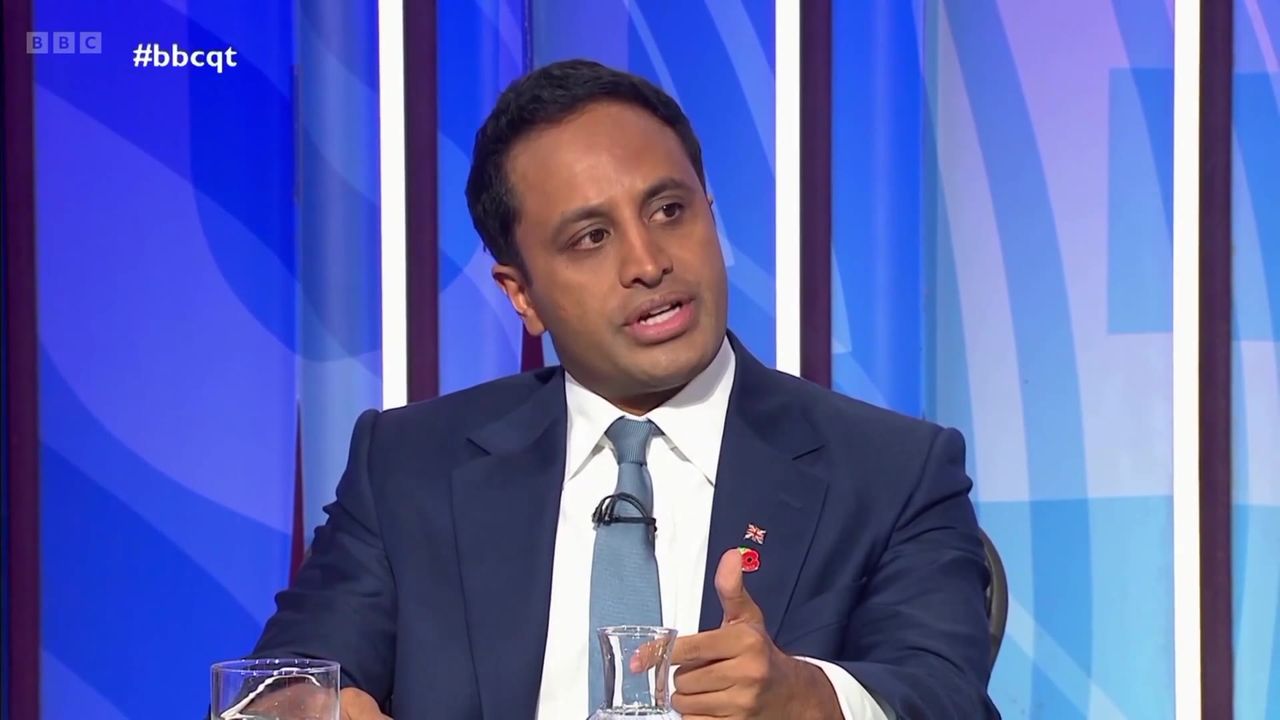 Genuine
Claims
✓ 5 trueOn BBC Question Time, Zia Yusuf called Alastair Campbell a war criminal over Iraq, and Campbell pushed back.123
The broadcast is documented. The BBC's own episode listing for the Warwick edition of 29 October 2026 names Zia Yusuf and Alastair Campbell among that week's panellists, and same-day reporting by the Daily Express and GB News quotes the exchange in almost exactly the words in the clip, including the 'war criminal' line and Campbell's reply. The clip's setting, panel and verbatim speech match the broadcast. The caveats sit inside the exchange, not outside it: the two men trade factual claims, and not all of them are equally solid. Yusuf's points about the September 2002 dossier, the failure to find WMD stockpiles and the UK military death toll stand up. His 600,000 Iraqi civilian deaths figure is a high-end survey estimate, not a documented count. 'War criminal' is a political accusation — neither man has been charged or convicted. Campbell's own defences are mostly accurate but selectively framed. A reader should treat the clip as real footage of a real argument, and then weigh each number separately.
Alastair Campbell presented a dossier to the British public claiming Saddam Hussein could launch weapons of mass destruction within 45 minutes.23
This is the strongest part of Yusuf's attack. The UK government published a dossier in September 2002, while Campbell was Downing Street director of communications, stating that Iraq could deploy chemical or biological weapons within 45 minutes of an order. Campbell launched and defended that document publicly. The claim is specific and checkable, and it holds. It matters because it is the hinge on which the rest of Yusuf's argument turns: if the dossier existed and said this, then the question of how the intelligence was presented becomes legitimate. The evidence here traces to the published dossier and the inquiries that examined it, not to partisan retellings, which is why confidence is high. What a reader should weigh is the difference between 'presented a dossier with this claim' — which is established — and 'deliberately deceived the public', which is a separate judgement that the inquiries examined and did not settle in Yusuf's favour.
No weapons of mass destruction of any sort were found in Iraq.23
This is accurate. After the 2003 invasion, the Iraq Survey Group and successive UK inquiries, including Chilcot, found no stockpiles of chemical, biological or nuclear weapons in Iraq. That is the factual foundation for the widespread criticism of the pre-war case. The claim is not disputed by any serious source in our material, and it is the kind of statement that would be widely contradicted if it were wrong — it isn't. For a reader, the important distinction is between 'no stockpiles were found' and 'the government knew there were none'. The first is established; the second is what the deception charge asserts, and the inquiries did not conclude that officials lied. Keeping those two apart is the whole ball game in this argument.
Almost 180 British troops are dead as a direct result of the Iraq war.23
The number checks out. UK armed forces fatalities in Iraq from 2003 to 2009 total 179, so 'almost 180' is accurate as a figure. What is doing extra work in the sentence is the phrase 'as a direct result of your deception'. The count of deaths is a fact; attributing each one to a deliberate deception is Yusuf's political characterisation, not an established finding. This is a common and effective pattern: a precise, verifiable number embedded in a causal claim the number cannot support on its own. A reader should accept the toll and separately ask whether the causal framing is proven. It isn't — it's an argument.
600,000 Iraqi civilians are dead as a result of the war.45
Estimates of Iraqi deaths vary enormously, and 600,000 sits near the top of the range rather than at its centre. The 2006 Lancet household survey estimated about 655,000 excess deaths up to mid-2006 — but that figure includes combatants and indirect deaths, not just civilians killed violently. A PLOS Medicine survey put excess deaths at roughly 405,000 by mid-2011, with a very wide uncertainty range. Iraq Body Count's documented violent civilian deaths run far lower, in the low hundreds of thousands. So 600,000 is a high-end survey estimate, not a documented civilian body count, and researchers dispute it. Our sources here are not fully independent of the debate — one is an opinion piece, one is an advocacy group's critique — which is why confidence is moderate rather than high. A reader should treat the number as one widely cited estimate among several, not as settled fact.
Still open: Which estimate Yusuf was drawing on is not stated on air.
Alastair Campbell and Tony Blair are war criminals who should be on trial.2
'War criminal' is a political and moral charge, not a legal status. Neither Campbell nor Blair has been charged or convicted by any court, and no tribunal has made such a finding. Chilcot criticised the legal basis for the war and the certainty with which the WMD case was presented, but it did not find that ministers or officials lied. That means the label is an accusation the speaker is entitled to make and the audience is entitled to weigh, but it is not a fact that can be checked true or false. Treating it as opinion is not a defence of Campbell; it is simply the correct category. The risk in posts like this one is that the surrounding true facts — the dossier, the missing weapons, the death toll — make the opinion feel like a proven conclusion. It is a conclusion drawn from those facts, and reasonable people can weigh the same facts differently.
Multiple inquiries into the Iraq case found that the government did not lie.23
Campbell's defence is broadly consistent with the record but framed selectively. Hutton and Butler, and later Chilcot, did not conclude that Campbell or Blair deliberately lied, and Hutton cleared Campbell over the 'sexed up' dossier allegation. So the core of his reply holds. But the framing leaves out what Chilcot did find: that the legal basis for war was inadequate, that peaceful options were not exhausted, and that judgements about WMD were presented with a certainty the intelligence did not justify. Confidence is moderate rather than high because the counts differ between the clip and the reporting — the transcript says sixteen inquiries, the press quotes six — and the exact tally is not something we resolved. What matters for a reader is that 'no inquiry found we lied' and 'the inquiries cleared the decision' are different statements. Only the first is supported.
Still open: The number of inquiries cited differs between the clip and press reports; we did not resolve the exact tally.
A general election was held after the fall of Saddam Hussein and Tony Blair was re-elected.2
This is straightforwardly correct. Labour under Tony Blair won the May 2005 general election, after the 2003 invasion and the fall of Saddam Hussein's regime. Campbell's point is a political one — that voters passed judgement and re-elected the government — but the underlying fact is accurate. The rhetorical move is worth noticing: an election result is being used to answer a charge about honesty and legality. Voters can re-elect a government for many reasons, and a win does not establish that the pre-war case was truthful. That's an argument about relevance, not about the fact. A reader can accept the election result and still weigh whether it settles the deception question, which it does not do on its own.
Brexit has taken 6 to 8 per cent out of the UK economy.6
The 6-8 per cent figure is real in the sense that it has been published, but it is a contested projection, not a measured outcome. It comes from a November 2025 paper cited by pro-EU campaigners and rests on estimating what the economy would have done without Brexit — a counterfactual that cannot be observed directly. The Office for Budget Responsibility's official assumption is a roughly 4 per cent long-run hit to productivity, and other economists dispute the larger doppelganger-based numbers. The OBR letter in our material actually cites the 6-8 per cent study while making its own lower assumption, which is exactly the gap a reader should notice. Question Time's host called it a projection, which was the right characterisation. Confidence is moderate because the underlying study is real and cited; the number is simply not the settled official figure it is presented as.
What was posted
XZia Yusuf's X account posted a clip from BBC Question Time showing his exchange with Alastair Campbell, with the caption framing it as Campbell being uncomfortable at being called a war criminal. The clip is a trimmed segment of the broadcast from the Warwick edition of 29 October 2026. Nothing in the post asks the reader to doubt that the exchange happened; it asks them to agree with the charge.
“Alastair Campbell did not appear to enjoy being called a war criminal to his face: The truth hurts.”
Posted on X by the account of Zia Yusuf, a Reform UK figure who was a panellist on the episode. Alastair Campbell replied on X dismissing the attack, which independently confirms the exchange took place.
Who posted it
XAccount check
Estimates from public signals — account age, posting pattern, audience — not a judgement of the person behind the account, and separate from whether this post is true.
What stood out
- The handle @ZiaYusufUK is the genuine, widely cited X account of Zia (Muhammad Ziauddin) Yusuf — British businessman, former Reform UK chairman, and Reform's home affairs spokesperson.
- Mainstream outlets (BBC, PA/Daily Mail, Express, LBC, The Spectator, Irish News) repeatedly embed posts attributed to @ZiaYusufUK, confirming the handle belongs to a real, prominent individual rather than a sock-puppet.
- The account is genuinely operated by a real person, but it is partly staff-managed: in July 2025 Yusuf said 'one of the team who post to my X account accidentally pressed like' on an antisemitic post — so some output is delegated, not purely personal.
- Record of unsourced or inaccurate claims: Full Fact rated false a viral claim he was on TIME100 2026; Full Fact found his 'almost 1 in 100' small-boat death rate was ~10x too high (closer to 1 in 1,000); his 'foreign-born population up 143% in a decade' figure was also flagged as far too high.
- Critics have challenged him to publish evidence for claims such as Kent County Council paying TV licences for asylum seekers (e.g. @dramarmashru), and he has been fact-checked over selective use of polling data.
- High-volume, highly partisan framing ('traitors', 'invasion', 'enemy of the British people') — a politician-advocacy account, not a neutral news source.
- The supplied metadata is empty (no bio, followers, creation date, posts, verification flag), so nothing in the profile record itself can corroborate identity; no evidence of automated posting cadence either way.
- No evidence found of the account being a fake or impersonation; the main risk is that copycat/impersonation accounts exist around high-profile UK political figures.
Signals (7)+
- Identity confirmation
- Handle corroborated by BBC, PA/Daily Mail, Express, LBC, The Spectator, Irish News
- Real world identity
- Zia Yusuf, ex-Reform UK chairman, party home affairs spokesperson, businessman
- Posting cadence
- Unknown (no posts supplied); historically very high volume during political events
- Staff operated
- Yes
- Fact check history
- Multiple Full Fact / press fact-checks of claims and figures (TIME100 false, small-boat death rate overstated, 143% foreign-born figure)
- Notable news coverage
- Extensive UK national coverage
- Metadata completeness
- Very low — bio, followers, creation date and sample posts all missing
Account checked October 30, 2026, 02:49 UTC
The media
Video✓ What is genuine
The whole clip is genuine television footage from the Warwick edition of Question Time broadcast on 29 October 2026. It is trimmed but not altered. No synthetic-media detector was run: this assessment rests on visual review and the broadcast and press record, which is enough because the clip is not what the claim hinges on.
The tells
- ●●● Strong signal Studio set, '#bbcqt' door branding and panellists (Yusuf, Campbell, and the wider panel) match the documented BBC Question Time broadcast.our visual review
- ●●● Strong signal Clothing, microphone clips, lighting and props stay consistent from frame to frame, with no physical impossibilities.our visual review
- ●●● Strong signal Transcript matches the verbatim quotes published by the Express and GB News from the same edition.our visual review
- ●●○ Supporting signal The clip is trimmed to a segment — normal for a social post, not itself a sign of alteration.our visual review
Synthetic-media detector
Detector not consultedThe media is incidental to the claim; the detector was not needed.
How we checked the media
- Reviewed the keyframes and visual detail of the clip — studio set, '#bbcqt' door branding, panellists, consistent clothing and microphone clips across frames.
- Compared the clip's transcript against the verbatim quotes published by the Daily Express and GB News from the 29 October 2026 Warwick edition.
- Checked the BBC's own episode listing for the Warwick edition to confirm the panellists.
Sources
6 sources reviewed- 1Question Time, Warwick (29 October 2026) ↗
BBC · bbc.co.ukReputable outletCenter; light bias tag (BBC Verify is Tier A)Evidence
The BBC's episode page for the Warwick edition lists Yusuf and Campbell on the panel, establishing the broadcast.
- 2BBC Question Time erupts into chaos after Zia Yusuf calls Alastair Campbell 'war criminal' ↗
Daily Express · express.co.ukLow reliabilityRight — tabloidEvidence
The Daily Express quotes the exchange and Campbell's reply in near-identical wording to the clip.
- 3Zia Yusuf tears into 'war criminal' Alistair Campbell in brutal BBC Question Time dressing down ↗
GB News · gbnews.comLow reliabilityRight — reliability concernsEvidence
GB News reports the confrontation and Campbell's inquiry defence.
- 4Half a Million Deaths is a Statistic ↗
Slate · slate.comLow reliabilityLeft — opinionEvidence
Sets out the competing Iraqi death-toll estimates and documented civilian counts.
- 5Iraq Body Count press release on the Lancet mortality estimate ↗
Iraq Body Count · iraqbodycount.orgUntiereduntiered — treated as signal only, never decisiveContext
Iraq Body Count argues for scepticism about the Lancet mortality estimate.
- 6Letter from David Miles and Tom Josephs to Sir Mel Stride MP on the Autumn 2025 forecast process ↗
Office for Budget Responsibility · obr.ukUntiereduntiered — treated as signal only, never decisiveEvidence
The OBR's official Brexit assessment is a roughly 4 per cent productivity hit, against the cited 6-8 per cent study.
Further reading
- 1BBC The BBC's own episode listing confirms the panel and date independently of the post.
- 6Office for Budget Responsibility The OBR letter sets out the official Brexit productivity assumption next to the higher study figure.
- 5Iraq Body Count Iraq Body Count's critique shows why the high-end death-toll estimates remain disputed.
The full story
The argument Zia Yusuf made on Question Time draws on a real and well-documented history, which is why it carried weight in the room.
The UK government published a dossier in September 2002, while Alastair Campbell was Downing Street director of communications, warning that Iraq could deploy chemical or biological weapons within 45 minutes. After the 2003 invasion, the Iraq Survey Group and successive inquiries found no stockpiles of such weapons. UK armed forces fatalities in Iraq from 2003 to 2009 total 179. Those facts are established, and they are the kernel of truth in the post.
What the post adds on top of them is where it becomes contestable. The 600,000 Iraqi civilian deaths figure is one high-end survey estimate among several, not a documented count. The 'war criminal' label is a political charge that no court has upheld. And the causal story — that deception by Campbell directly produced every death — is Yusuf's argument, not an inquiry finding.
Campbell's reply has its own selective framing. It is true that Hutton, Butler and Chilcot did not find that he or Blair lied, but Chilcot did find the legal basis for war inadequate and the WMD case presented with unjustified certainty. His 6-8 per cent Brexit figure is a published projection, not the official estimate.
So both men said things that check out and things that need asterisks. That is what makes the clip so persuasive on its own: the true facts do most of the emotional work, and the contested ones ride along with them.
Kernel of truth
The September 2002 dossier, the failure to find WMD stockpiles and the 179 UK military deaths are all real, which is what gives the accusation its force.
Timeline
September 2002
The UK government publishes its September dossier, warning Iraq could deploy chemical or biological weapons within 45 minutes; Campbell launches and defends it. 3GB News
March 2003
The invasion of Iraq begins; Saddam Hussein's regime falls. 2Daily Express
May 2005
Labour under Tony Blair wins the general election. 2Daily Express
October 29, 2026
On BBC Question Time from Warwick, Zia Yusuf calls Alastair Campbell a war criminal over Iraq; Campbell pushes back. 1BBC
October 29, 2026
Yusuf posts the clip to X with the caption 'The truth hurts'; Campbell replies on X dismissing the attack. 2Daily Express
How it was framed
The footage is genuine and the confrontation happened as shown, but the post's framing — 'The truth hurts' — invites readers to read a political accusation as a proven fact. The clip is accurate; the way it is packaged bundles contested claims (the 600,000 figure) and opinion ('war criminal') in with established facts.
- Emotional language. 'The truth hurts' and 'did not appear to enjoy being called a war criminal to his face' — the caption frames the clip as a deserving humiliation rather than an argument.
- “Visual proof”. The post relies on the clip itself as the proof: viewers see the accusation delivered to Campbell's face, which makes the charge feel established.
- Selective evidence. The clip is a trimmed segment; the audience sees the confrontation, not the full programme or the wider panel discussion.
- Missing context. The caption does not mention that 'war criminal' is a political charge, or that the 600,000 figure is a contested estimate.
Posted on X by the account of Zia Yusuf, a Reform UK figure who was a panellist on the 29 October 2026 Warwick edition of BBC Question Time. Alastair Campbell replied on X dismissing the attack.
Bias
Leans anti-Alastair Campbell / pro-Reform UK. The clip is posted by Zia Yusuf's own account and is trimmed to showcase his attack on Campbell, with an editorial caption ('The truth hurts') that endorses the war criminal framing as fact. Campbell's rebuttal is included, so the excerpt is not wholly one-sided, but the selection and commentary are openly partisan.
Bias describes how the post frames its message — the slant of the language, selection and emphasis — and is judged separately from whether the claim is true. A true claim can still be framed with a strong slant.
How we checked
1 min 9 s- 1
Searched for coverage of the exchange between Zia Yusuf and Alastair Campbell on Question Time.
- 2
Compared the clip's transcript against the wording published by the Daily Express and GB News.
- 3
Checked the BBC's own episode listing for the Warwick edition of 29 October 2026.
- 4
Reviewed the video frames visually for consistency with the broadcast — studio set, branding, panellists, clothing, microphone clips.
- 5
Searched the estimates behind the Iraqi civilian death toll figure and the Brexit economic projection.
✓ Claim checked✓ Media checked✓ Sources checked
Why 85% confidence
HighHIGH for the central finding: the exchange is established by the broadcaster's own listing and two same-day reports, and the clip is visually and textually consistent with the broadcast. Individual claims inside the exchange carry their own bands — HIGH where the record is clear (the dossier, the WMD stockpiles, the 179 deaths), MODERATE where estimates are genuinely contested (the 600,000 figure, the Brexit projection, the exact number of inquiries).
Limits. We did not open the full pages behind our sources, only worked from the snippets in our search results. No synthetic-media detector was run because the clip's authenticity was not pivotal — the event is independently established. We did not resolve the exact number of inquiries Campbell was referring to.
What we don’t know
- Which specific Iraqi death-toll study Yusuf was drawing on when he said 600,000.
- Whether the number of inquiries Campbell cited on air (sixteen in the transcript, six in some reporting) is the figure he intended.
- Whether the clip is the whole exchange or a trimmed version of a longer segment.
- How the Question Time audience reacted beyond the immediate exchange.
Spot it yourself
Find the overstatementLooks suspicious, isn’t proof
- The post comes from a partisan account — that alone tells you nothing about whether the clip is real.
- The caption's mocking tone ('The truth hurts') is a reason to slow down, not a reason to disbelieve the footage.
- The clip is trimmed — normal for social media, and not evidence of manipulation.
- The set looks like television, which is exactly what it is; 'it's a TV clip' is neither proof nor disproof of anything.
The actual evidence
- The BBC's own episode listing for the Warwick edition names both men on the panel, establishing the broadcast independently of the poster.
- Two same-day outlets quote the exchange in near-identical wording to the clip, which corroborates the audio.
- The 45-minute dossier claim and the absence of WMD stockpiles are documented, concrete facts that can be checked separately from the accusation.
- The 600,000 figure sits at the top of a wide range of estimates, which puts an asterisk on that part of the speech.
- Neither man has been charged or convicted, which tells you 'war criminal' is opinion, not a finding.
- 1
Separate the checkable numbers from the labels
Ask which sentences in the clip could be verified against a record (the dossier date, the death toll) and which are characterisations ('war criminal'). Check the first; weigh the second.
- 2
Look for the official record of the broadcast
If it's television, the broadcaster's own episode listing will name the participants and the date. That establishes the event even if the clip came from a partisan account.
- 3
Check the highest and lowest versions of a disputed number
For death tolls and economic estimates, search for more than one estimate, including ones from the low end. If the post gives only the top figure, ask why.
- 4
Notice when a true fact is being used to carry an opinion
Ask: does the number prove the conclusion, or does it sit next to it? Here the dossier and death toll are true, but they don't establish that Campbell is a war criminal.
Takeaway
A clip can be completely genuine and still lead you to a conclusion the evidence doesn't support. Check the footage, then check each claim inside it — the true ones don't vouch for the contested ones.
Questions people ask
Did Zia Yusuf call Alastair Campbell a war criminal on Question Time?+
Yes. On BBC Question Time from Warwick on 29 October 2026, Reform UK's Zia Yusuf accused Alastair Campbell of deceiving the British public over Iraq and said he and Tony Blair would more aptly be described as war criminals. Campbell responded that inquiries had not found the government lied. The BBC's own episode listing and same-day press reports confirm the exchange.
Is the video of the exchange real?+
Yes. The clip is genuine BBC Question Time footage from the Warwick edition broadcast on 29 October 2026. The studio set, '#bbcqt' branding, panellists and verbatim quotes match the broadcast and the same-day reporting. It is trimmed to a segment, which is normal for social media, but not altered.
Was there really a 45-minute weapons of mass destruction claim?+
Yes. The UK government's September 2002 dossier, published while Alastair Campbell was Downing Street director of communications, stated that Iraq could deploy chemical or biological weapons within 45 minutes of an order. After the 2003 invasion, the Iraq Survey Group and successive inquiries found no stockpiles of such weapons in Iraq.
Is the 600,000 Iraqi civilian death toll accurate?+
It is one high-end estimate, not a documented count. A 2006 Lancet survey estimated about 655,000 excess deaths including combatants and indirect deaths. A PLOS Medicine survey put excess deaths at roughly 405,000 by mid-2011. Documented violent civilian deaths recorded by Iraq Body Count run far lower. Researchers dispute the larger figures.
Does calling someone a war criminal prove they committed war crimes?+
No. 'War criminal' is a political and moral charge, not a legal status. Neither Alastair Campbell nor Tony Blair has been charged or convicted by any court, and no tribunal has made such a finding. The UK's Chilcot inquiry criticised the legal basis for the war but did not find that ministers or officials lied.
Go deeper
- WMD dossier
- The UK government's September 2002 document setting out the case that Iraq possessed weapons of mass destruction, including the claim that some could be deployed within 45 minutes.
- Iraq Survey Group
- The multinational team sent after the 2003 invasion to search for Iraq's weapons of mass destruction; it found no stockpiles.
- Excess deaths
- Deaths above the number that would have been expected without the war, including indirect deaths from disease, displacement and damaged infrastructure — not just people killed violently.
- Counterfactual estimate
- A projection of what would have happened under different conditions (such as no Brexit), which cannot be directly observed and therefore depends on assumptions.
- Doppelganger method
- An economic technique that compares the UK with similar countries to estimate what its economy would have done without a policy change; used in Brexit impact studies.
People also search for
For educators+
- Yusuf's dossier and WMD points check out, but his 'war criminal' line is opinion. How should a viewer decide which parts of a speech to treat as evidence?
- Campbell says inquiries found the government did not lie. What did Chilcot actually find, and does 'not lying' settle the question of whether the war was justified?
- If a clip is real but its caption overstates what it proves, is that misinformation? Where would you draw the line?
About this check
- Platform
- X
- Posted by
- @ziayusufuk
- Posted
- October 29, 2026
- Age when checked
- Under 24 hours old when checked
- Where it spread
- United Kingdom
- Audience
- UK & EU audience
- Language
- EN
- Status
- ● Post is live
- Verified
- October 30, 2026, 02:51 UTC
- Published
- October 30, 2026, 02:51 UTC
Reach. 7,638 likes / 647 replies within about 5h (X syndication, 30 Oct); 'Zia Yusuf', '#bbcqt' and 'Fiona Bruce' trending on X UK (trends24, 30 Oct); Express, GB News, Mirror and AOL coverage 29-30 Oct; Campbell replied (1,385 likes)
This verdict was generated with AI from the sources shown. AI can make mistakes — check the sources before relying on it.
Check anything yourself, in seconds.
Share any social post or video to What the Fact and get the verdict, the confidence, and the receipts.