Does this video show the explosion at Al-Maashiq Palace in Aden?
Does a viral video show a huge explosion at Aden's al-Maashiq presidential palace after a Houthi strike in late October 2026?
Misleading
Real footage, wrong event: the clip is from 2024, not the 2026 palace strike.
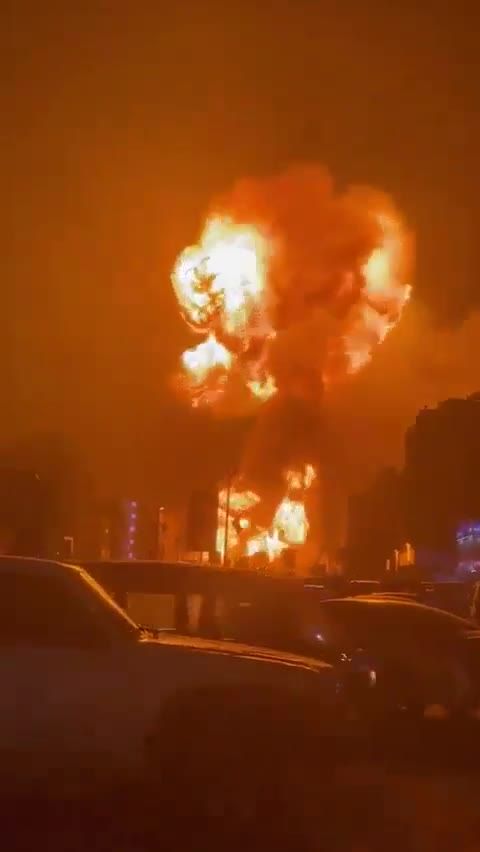
The video is authentic but recycled. It shows the gas-station explosion on Al-Taseen Street in Aden's Mansoura district on 30 August 2024, not the missile attack on Al-Maashiq Palace on 30 October 2026. Misbar and earlier AFP, Newtral and RTVE Verifica fact-checks tie the same clip to this 2024 event.
 Genuine
Claims
✓ 1 true · ✕ 1 falseThe video shows the massive explosion that shook Al-Maashiq Palace in Aden moments before the post was published1234
“لحظة الانفجار الضخم الذي هزّ قصر المعاشيق في عدن قبل قليل”
This is where the case turns, and the evidence is unusually clean. Misbar fact-checked this exact clip and this exact palace claim on 31 October 2026, a day after the attack, and traced the video to a gas-station explosion on Al-Taseen Street in Aden's Mansoura district first published on 30 August 2024. That finding does not stand alone: the same footage was independently identified by AFP Fact Check when it was passed off as an attack on Israel, by Newtral when it was passed off as an Israeli strike on Beirut, and by RTVE Verifica when it appeared as footage from Afghanistan, Idlib and elsewhere. These are separate newsrooms, in different countries and languages, working on different viral claims over more than a year, and all of them landed on the same 2024 Yemeni origin. A shared origin would weaken the evidence if these outlets were all repeating one report; they are not. What settles it is provenance, not the image: the clip looked real because it is real footage of a real explosion, just not this explosion. Our own visual review found nothing generated or altered, so no part of the debunk rests on calling the video fake.
Still open: Who first attached this 2024 clip to the 2026 palace attack, and whether that account was repeating someone else's post, is not established in our record.
Al-Maashiq Presidential Palace in Aden was struck by missiles in late October 2026567
The backdrop is genuine, which is exactly why the post travelled. Yemen's army spokesman Col. Majed Al-Nuzaili announced ballistic-missile attacks on Aden International Airport and Al-Maashiq Palace on the evening of 30 October 2026. Regional outlets carried the same evening: Asharq News reported five explosions heard from the direction of the presidential palace, and AFP, via Al Khaleej, reported that security sources and witnesses said the palace was targeted with missiles, with smoke rising nearby. Yemen Monitor reported the government saying the palace had been hit for the second time that month, after the 15 October missile and drone attack that killed and injured palace guards. These accounts are not fully independent of the Yemeni government's framing, and in a conflict that matters; but they agree on the basic fact that an attack occurred on that date. So a reader scanning the news on 31 October would find real palace-strike coverage, which made a real explosion video feel like it belonged. The false step is the attachment of this particular clip to that attack.
What was posted
XA post on X shares a short night-time phone video of a large fireball and burning debris beside parked cars and city buildings. The Arabic caption presents it as the moment of a huge explosion at Al-Maashiq Palace in Aden "a short while ago", and adds a stack of hashtags naming Aden, Aden airport, Yemen, Taiz, Saudi Arabia and Marib. No on-screen text, watermark or narration appears in the clip itself.
“🚨💥🔥 #عــــــــــاجـــــــــــــل_وهــــــــــام لحظة الانفجار الضخم الذي هزّ #قصر_المعاشيق في عدن قبل قليل! 💥💥 صوت مدوٍ ومشهد صادم وثقته الكاميرا في لحظات خاطفة! شاهدوا المقطع.. المشهد يهزّ المكان! 😱😱😱👇🔥 #عدن #مطار_عدن #اليمن #تعز #السعودية #مأرب”
“🚨💥🔥 #URGENT_AND_IMPORTANT The moment of the huge explosion that shook #Al-Maashiq_Palace in Aden a short while ago! 💥💥 A resounding sound and a shocking scene captured by the camera in fleeting moments! Watch the clip.. The scene shakes the place! 😱😱😱👇🔥 #Aden #Aden_Airport #Yemen #Taiz #Saudi_Arabia #Marib” — translated
Posted from an X account under the display name "سارة الطالبي - سارة الطالبي" with an accompanying t.co short link. The post carries no original timestamp visible in our record and no sourcing for the footage.
Who posted it
XAccount check
Estimates from public signals — account age, posting pattern, audience — not a judgement of the person behind the account, and separate from whether this post is true.
What stood out
- Profile is effectively transparent-free: no display name, bio, follower count, creation date or sample posts supplied — no verifiable identity anchors at all.
- Yemeni monitoring/fact-check account @BashaReport (6 Oct 2026) named @Sarah_AlTalibi specifically as 'another Houthi account impersonating a woman,' part of an ongoing Taiz-focused disinformation campaign posting clips filmed in multiple other countries while claiming they were shot in Taiz.
- Recycling old/out-of-country footage as 'Taiz' content is a documented pattern among Houthi-aligned 'Taizi name' persona cells flagged by Yemeni fact-checkers (SidqYemen, Yemeni Windows) — cf. the 28 Oct 2026 Aden airport strike wave, where Houthi-aligned accounts including a female-name persona ('سارة ناصر العبدلي') circulated 2020 footage as new.
- Female first-name + tribal/family-name handle with no personal footprint is a classic sock-puppet construction intended to lend civilian credibility to conflict messaging; no independent trace of a real 'Sarah Al-Talibi' journalist/activist exists in search results.
- No platform verification, no news coverage establishing the person, and no correction/retraction record either way — absence of provenance is itself a red flag for sourcing claims.
- Caveat: the impersonation allegation rests on a single, politically aligned Yemeni source (authority ~2) and should be treated as strong but not independently corroborated.
- Account should not be cited as a source for Taiz/Yemen conflict footage without independent geolocation and reverse-image verification.
Signals (10)+
- Posting cadence
- Unknown — no posts supplied
- Follower ratio
- Unknown (follower_count null)
- Profile completeness
- Empty (no bio, no display name)
- Handle pattern
- Female first name + Arabic family name, no corroborating real-person footprint
- Notable news coverage
- None as a person; only mentioned inside a Yemeni disinformation-monitoring thread
- Fact check history
- Named by @BashaReport (Oct 2026) as a Houthi-run account impersonating a woman and mislabelling foreign footage as Taiz; consistent with patterns documented by SidqYemen and Yemeni Windows
- Alleged affiliation
- Houthi/Ansar Allah-aligned influence network (single-source allegation)
- Content type
- Conflict footage recycling / mislabeled video
- Source diversity
- Low — one monitoring account
- Evidence recency days
- 26
Account checked November 1, 2026, 03:01 UTC
The media
Video✓ What is genuine
All of it as imagery: this is real, unedited footage of a large fuel explosion filmed at night in Aden's Mansoura district on 30 August 2024. Nothing in the video itself was fabricated or manipulated.
The tells
- ●●● Strong signal Detector output strongly indicates the clip is not AI-generated, with a deepfake score of 0.0.our detector
- ●●○ Supporting signal The scene is continuous night-time phone footage: a fireball, flying debris and parked cars, with no cuts, overlays or morphing.our visual review
- ●●○ Supporting signal Visible landmarks — a blue-lit building and a roadside sign beside the blast — match the locations described in the 2024 fact-checks.RTVE Verifica and Newtral
Synthetic-media detector
Detector ranThe claim stands or falls on whether the media is real, so the detector ran.
Scores are the detector’s estimate for the file as uploaded. A low score does not rule out editing, a spliced caption, or footage shown out of context — those are judged above. Model v3.
How we checked the media
- Ran the clip through our AI-generation detector (hive-v3), which returned a not-AI-generated score of 0.9996 and a deepfake score of 0.0.
- Reviewed the footage visually for signs of compositing, morphing or physical impossibility.
- Compared what the clip shows with the published descriptions of the 2024 Aden gas-station blast in our sources.
Sources
7 sources reviewed- 1Does the Video Show the Houthis Targeting Al-Maashiq Palace in Aden? ↗
Misbar · misbar.comUntiereduntiered — treated as signal only, never decisiveEvidence
Rules this exact palace-explosion claim misleading and traces the clip to the 30 August 2024 Mansoura gas-station blast.
- 2Video shows Yemen gas station explosion, not attack on Israel ↗
AFP Fact Check · factcheck.afp.comPrimary / fact-checkerIFCN + EFCSN; wire-backedEvidence
Identifies the clip as the Aden gas-station explosion on Al-Taseen Street when it was falsely linked to an attack on Israel.
- 3El vídeo de gente huyendo de una explosión en la calle no muestra un bombardeo de Israel sobre Beirut ↗
Newtral · newtral.esPrimary / fact-checkerIFCN + EFCSN; SpainEvidence
Records the earliest known upload of the footage on 30 August 2024 after the Aden gas-station explosion.
- 4No es Afganistán y tampoco Siria, Líbano o Israel: es un vídeo de Yemen y se usa para difundir bulos ↗
RTVE Verifica · rtve.esReputable outletCenter/Lean Left — public serviceEvidence
Traces and geolocates the clip to the 2024 Aden blast after it appeared as footage from Afghanistan, Syria and Lebanon.
- 5Yemeni Government: Houthi Attacks on Aden and Attempted Strike on Mecca Threaten Regional Security ↗
Yemen Monitor · yemenmonitor.comUntiereduntiered — treated as signal only, never decisiveContext
Reports the Yemeni government saying the palace was targeted for the second time in October 2026.
- 6سماع دوي 5 انفجارات في قصر معاشيق الرئاسي بعدن ↗
Asharq News · asharq.comUntiereduntiered — treated as signal only, never decisiveContext
Reports five explosions heard from the direction of Al-Maashiq Palace on 30 October 2026.
- 7أ.ف.ب: الحوثيون استهدفوا القصر الرئاسي في عدن ↗
Al Khaleej / AFP · alkhaleej.aeUntiereduntiered — treated as signal only, never decisiveContext
Reports security sources and witnesses saying the palace was hit by missiles, with smoke rising nearby.
Further reading
- 1Misbar Misbar's check addresses this exact palace claim and dates the footage to the 2024 Aden blast.
- 3Newtral Newtral documents the earliest known upload of the clip, which is the core provenance evidence.
- 4RTVE Verifica RTVE Verifica traces the clip's reuse across several unrelated conflicts and geolocates it in Aden.
- 6Asharq News Asharq News reporting shows what the real 30 October 2026 attack looked and sounded like to people in Aden.
The full story
The kernel of truth here is unusually large. On the evening of 30 October 2026, Yemen's army spokesman said Houthi forces had fired ballistic missiles at Aden International Airport and at Al-Maashiq Presidential Palace. It was the palace's second targeting that month, after a 15 October missile and drone attack that killed and injured guards. Asharq News reported five explosions heard from the direction of the palace; AFP, via Al Khaleej, reported witnesses seeing smoke rise near it. Anyone following Yemen that week had good reason to expect explosion footage from Aden.
They also had good reason to believe a video like this one. The clip is a genuine night-time recording of a genuine explosion: a fireball and burning debris beside parked cars, filmed on a phone by someone close enough to feel it. It matches, in every visible detail, the real 30 August 2024 explosion of a gas distribution station on Al-Taseen Street in the Mansoura district of Aden.
That is what makes the post work. Nothing needed to be faked. The clip only had to be lifted out of its own disaster and dropped into a newer, bigger one, with a caption saying "a short while ago". The video supplies the shock; the caption supplies the meaning. And this particular asset has been doing that job for a while: newsrooms have already found it passed off as an Israeli strike on Beirut, an attack on Israel, Russian strikes in Idlib and an incident in Afghanistan. A widely shared clip with no watermark and no on-screen text is a reusable tool, and it keeps being reused whenever a new explosion fills the news.
Kernel of truth
A missile attack on Al-Maashiq Palace in Aden really did happen on 30 October 2026, and this video really does show a large explosion in Aden — just the 2024 gas-station blast in Mansoura, not the palace strike.
Timeline
August 30, 2024
A gas distribution station explodes on Al-Taseen Street in Aden's Mansoura district; phone footage of the fireball is posted to TikTok and YouTube and later spreads widely. 3Newtral
October 2024
AFP Fact Check and Newtral identify the same clip when it is falsely linked to an attack on Israel and to an Israeli strike on Beirut. 2AFP Fact Check
October 20, 2025
RTVE Verifica identifies the clip again after it is passed off as footage from Afghanistan, Syria and Lebanon, and geolocates it to the 2024 Aden blast. 4RTVE Verifica
October 15, 2026
A missile and drone attack targets Al-Maashiq Palace, killing and injuring palace guards. 5Yemen Monitor
October 30, 2026
Yemen's army spokesman announces ballistic-missile attacks on Aden International Airport and Al-Maashiq Palace; explosions are heard near the palace. 6Asharq News
October 31, 2026
Misbar publishes a fact-check ruling the palace-explosion video misleading and tracing it to the 2024 gas-station blast. 1Misbar
How it was framed
The video is genuine and unaltered; the falsehood sits entirely in the caption, which moves a 2024 gas-station explosion into a 2026 palace strike. The surrounding claim also leans on a real event, framing an old clip as fresh evidence of an attack that did happen.
- Urgency. "#عــــــــــاجـــــــــــــل" ("urgent") in the first line and "قبل قليل" ("a short while ago") — the post is framed as breaking and immediate.
- Emotional language. "صوت مدوٍ ومشهد صادق وثقته الكاميرا في لحظات خاطفة" and "المشهد يهزّ المكان" ("a resounding sound", "a shocking scene", "the scene shakes the place"), plus the siren and fire emojis.
- “Visual proof”. The post offers the explosion footage itself as the proof of the palace strike, with no link to any official statement or report.
- Missing context. The caption gives no date, location or source for the clip beyond naming the palace; the video carries no on-screen text or watermark tying it to 2026.
- Borrowed authority. The hashtags name Aden airport, Taiz, Saudi Arabia and Marib, positioning the post inside recognised conflict coverage without citing any outlet or official.
The post appeared on X from an account displayed as "سارة الطالبي - سارة الطالبي". It carries no timestamp in our record, no link to an official or news source, and points to an external t.co short link. Misbar and the earlier fact-checks record the clip as circulating without attribution across social platforms before this post.
Bias
Leans anti-Houthi / pro-Yemeni government. The post dresses recycled 2024 gas-station footage as a fresh strike on the seat of Yemen's internationally recognised government during an active Houthi missile escalation, with alarmist 'URGENT' hashtags and emojis. The framing amplifies the narrative of Houthi aggression against state institutions using fabricated visual evidence.
Bias describes how the post frames its message — the slant of the language, selection and emphasis — and is judged separately from whether the claim is true. A true claim can still be framed with a strong slant.
How we checked
41 s- 1
We searched in Arabic and English for coverage of the Al-Maashiq Palace explosion and for the 2024 Aden gas-station blast.
- 2
We ran the clip through our AI-generation detector (hive-v3), which returned a not-AI-generated score of 0.9996 and a deepfake score of 0.0.
- 3
We reviewed the footage visually for signs of compositing, morphing or physical impossibility.
- 4
We compared the published provenance of the clip across Misbar, AFP Fact Check, Newtral and RTVE Verifica, and checked regional reporting on the 30 October 2026 attack.
✓ Claim checked✓ Media checked✓ Sources checked
Why 90% confidence
HighThe central claim is rated HIGH because four separate newsrooms, working in different languages and on different viral claims, traced this same footage to the 30 August 2024 Aden gas-station explosion, and Misbar addressed this exact palace version the day after the attack. Our detector and visual review independently found no manipulation, which is consistent with that provenance and rules out the alternative explanation that the clip is synthetic.
Limits. We did not open the source pages themselves and relied on their published summaries in our record. We could not establish who first attached the clip to the palace attack, or the post's exact publication time.
What we don’t know
- Who first matched this 2024 clip to the 2026 palace attack, and how the post author came by it.
- The exact time the post was published relative to the 30 October 2026 attack.
- Whether any footage of the actual palace strike was filmed and published, and what it shows.
Spot it yourself
Spot the fakeLooks suspicious, isn’t proof
- The all-caps "urgent" framing and the wall of emojis. Alarmist styling is a reason to slow down, but plenty of real breaking-news posts look like this too.
- The long hashtag list mixing Aden, Taiz, Saudi Arabia and Marib. Hashtag stuffing signals reach-seeking, not automatically a false claim.
- An anonymous-looking X account with no credentials. A named newsroom would carry more weight, but plenty of eyewitnesses post real footage first.
- The night-time, shaky, low-light image quality. Grainy video is what real phone footage of a sudden explosion at night looks like.
The actual evidence
- The clip was published on 30 August 2024, more than two years before the event it is said to show — established by Misbar, AFP, Newtral and RTVE Verifica independently.
- Multiple newsrooms in different countries and languages identified the same footage in unrelated conflict claims over more than a year, which makes accidental confusion much less likely.
- The event the post describes really happened on 30 October 2026, which is why the caption reads as plausible — but no reporting of the palace strike uses this footage.
- Our detector found no sign of AI generation or deepfake manipulation, which rules out "fake video" but not "real video of the wrong thing".
- 1
Ask what this footage would look like if it were really from the palace strike
A missile strike on a presidential compound in a guarded city would be filmed from many angles and published by news agencies within hours. A single unattributed clip circulating alone is a warning sign.
- 2
Reverse image search a still frame, not the whole video
Pause on the clearest frame — the fireball or a building — and run it through a reverse image search. Old viral clips almost always leave earlier copies behind.
- 3
Check for landmarks against the claimed location
Look for distinctive buildings, signs or road layouts. Fact-checkers placed this clip at a blue-lit building and roadside sign near the Alsalam roundabout in Mansoura, not near the palace.
- 4
Find the official version of the event
Search for the army spokesman's statement or agency reporting on the attack itself and see what imagery they used. If none of it matches the viral clip, that gap matters.
- 5
Remember what a detector can and cannot tell you
An AI-detection result can rule out generation and deepfakes. It says nothing about whether the footage is from the right place or date.
Takeaway
Real footage is the easiest thing to lie with: if a clip passes the "is it fake?" test, ask the harder question — is it from this event, this place and this year?
Questions people ask
Is the Al-Maashiq Palace explosion video real?+
The footage is real but not of the palace. It shows a gas-station explosion on Al-Taseen Street in Aden's Mansoura district on 30 August 2024. Misbar, AFP Fact Check, Newtral and RTVE Verifica have all traced the same clip to that 2024 blast, not to any 2026 strike.
Was Al-Maashiq Palace actually attacked in October 2026?+
Yes. Yemen's army spokesman announced ballistic-missile attacks on Aden International Airport and Al-Maashiq Palace on the evening of 30 October 2026. It was the second attack on the palace that month, after a 15 October missile and drone strike that killed and injured guards. The attack is real; this video is not of it.
Why do the same explosion videos keep appearing in different conflicts?+
Dramatic footage with no watermark or on-screen text can be lifted and recaptioned for any new disaster. This clip has already been passed off as an Israeli strike on Beirut, an attack on Israel, Russian strikes in Idlib and an incident in Afghanistan before reappearing as the Aden palace blast.
Can an AI detector tell whether a video is misleading?+
No. A detector can flag AI generation or deepfake manipulation, and here it found none — the video is genuine. But it cannot tell you whether the footage is from the place and date the caption claims. That requires provenance work, such as reverse image search and locating earlier copies.
What should I check before sharing explosion footage?+
Look for the source and date, run a reverse image search on a still frame, and compare with official statements or agency reporting on the event. If the clip appears nowhere except in one social post with no attribution, wait before sharing.
Go deeper
- False context
- Sharing genuine material with a caption or framing that wrongly says where, when or why it happened.
- Provenance
- The documented history of where a piece of media first appeared and how it has travelled since.
- Reverse image search
- A search that takes an image or video frame as the query and finds other places it has appeared online.
- Deepfake
- Synthetic media in which a person or scene is convincingly replaced or generated using AI.
- Geolocation
- Working out where a photo or video was filmed by matching visible landmarks, signs and road layouts.
People also search for
For educators+
- The video is not fake at all. Does that make the post more or less misleading than a fully fabricated one, and why?
- Four newsrooms on three continents identified the same clip independently. Why does that independence strengthen the conclusion compared with four outlets repeating one report?
- If an AI detector says a clip is genuine, what questions should you ask next before trusting the caption?
About this check
- Platform
- X
- Posted by
- @sarah_altalibi
- Posted
- October 30, 2026
- Age when checked
- 1–2 days old when checked
- Where it spread
- YE, SA
- Audience
- International audience
- Language
- AR
- Status
- ● Post is live
- Verified
- November 1, 2026, 03:02 UTC
- Published
- November 1, 2026, 03:02 UTC
Reach. Primary 170 likes; reposted on X (31 Oct), Facebook reels and Instagram amid the Houthi-Saudi escalation
This verdict was generated with AI from the sources shown. AI can make mistakes — check the sources before relying on it.
Check anything yourself, in seconds.
Share any social post or video to What the Fact and get the verdict, the confidence, and the receipts.