Does this video show US and Gulf money seized by Iran's Revolutionary Guard?
Does a viral video show millions of dollars seized by Iran when it broke up a Mossad-linked spy network?
Misleading
Genuine video, false caption: it shows an Afghan cash room from 2020, not IRGC-held US or Gulf money.
No. The footage is real but recycled: the same clip was online by 30 January 2020 and published in a longer version by Pajhwok Afghan News on 12 February 2020 as a 'dollar warehouse' apparently filmed in Afghanistan. There is no evidence it shows US or Gulf money, or a Revolutionary Guard seizure in Iran.
 Genuine
Claims
✕ 1 falseThe video shows US tax money and money from Gulf states that was sent to Iran to stir up unrest and then seized by the Revolutionary Guard.1234
“لينظر الشعب الامريكي أين تذهب ضرائبهم و ايضا اين تذهب اموال شعب دول الخليج.. انها كلها في ايران لاجل اثارة الفوضى لكن استولى عليه الحرس الثوري”
The decisive point is the clip's documented origin, not what the room looks like. Three fact-checking teams independently traced the same footage to a longer video published by Pajhwok Afghan News, an Afghan news agency, on 12 February 2020. That version was described as a 'dollar warehouse' apparently filmed in a mud room in Afghanistan, with unconfirmed reports linking the cash to a former official and a security-forces recovery in Samangan province. Teyit found the earliest upload on 30 January 2020 and noted that the uncropped version shows a paper dated 20 January 2020, which rules out the clip being recent or filmed in Iran. None of these outlets traces to a single origin: AFP, Misbar and Teyit worked separately and reached the same conclusion. Against that, the post offers no sourcing, no location and no date. The footage is genuine and unaltered beyond trimming, but it is not evidence of money in Iran or of an IRGC seizure.
American taxpayers' money and Gulf states' money all ends up in Iran.1
“انها كلها في ايران لاجل اثارة الفوضى”
This is a broad political assertion pinned to a video that is not about Iran. It is not the kind of statement that a single check can confirm or refute, but the post presents the clip as if it proved it. The provenance of the footage actively points the other way: if the cash was filmed in Afghanistan in January 2020, it cannot demonstrate where US or Gulf money goes. No credible reporting in our search results supports the implication that the cash shown is US or Gulf money destined for Iran. Readers should weigh the difference between a general opinion about Iranian funding and a specific, documented claim about a particular video. The first is a debate; the second requires evidence the post does not provide.
Still open: The post gives no source for the wider assertion about US or Gulf funding, so there is nothing specific to verify beyond the video's provenance.
What was posted
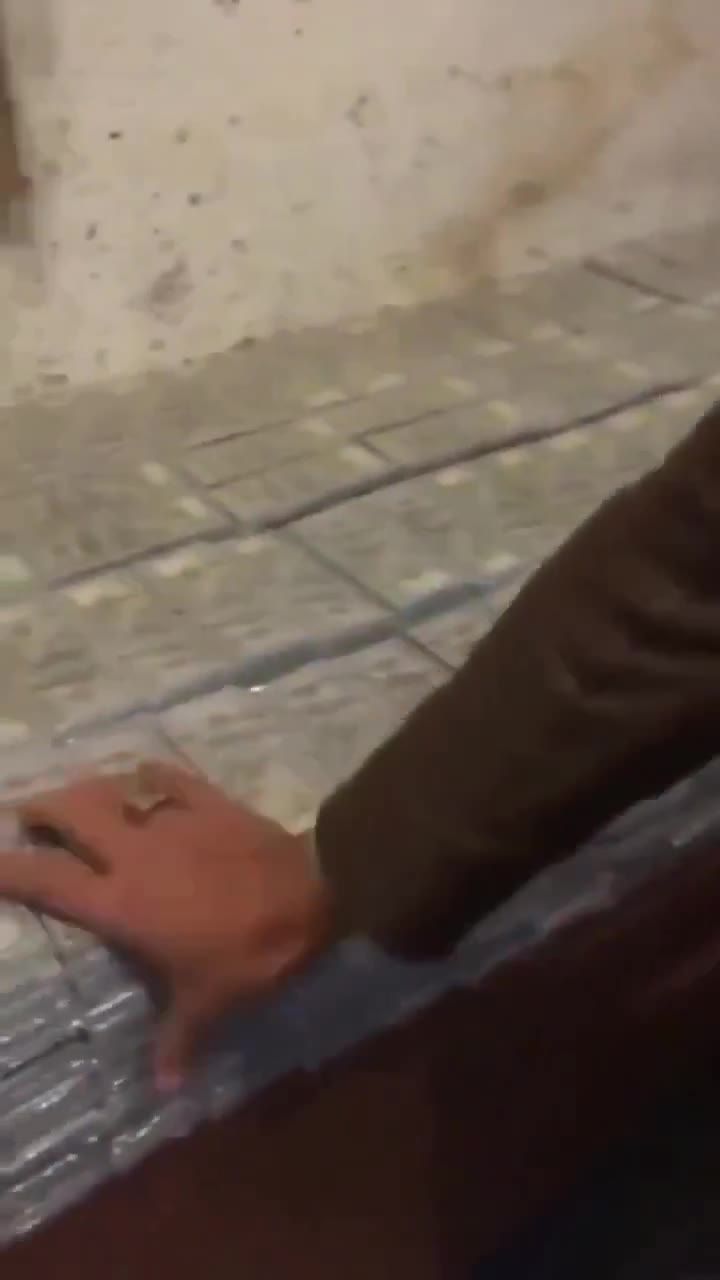
XA post on X shares a short handheld video clip. In it, a hand lifts plastic-wrapped bundles of US $100 bills stacked on the floor of a bare room with peeling walls. The caption tells American taxpayers and Gulf publics that their money was sent to Iran to stir up unrest and was then taken over by the Revolutionary Guard.
“لينظر الشعب الامريكي أين تذهب ضرائبهم و ايضا اين تذهب اموال شعب دول الخليج.. انها كلها في ايران لاجل اثارة الفوضى لكن استولى عليه الحرس الثوري وأصبحت في اياديهم رغم ما كانت تريده امريكا!”
“Let the American people look at where their taxes go, and also where the money of the peoples of the Gulf states goes.. it is all in Iran in order to stir up chaos, but the Revolutionary Guard seized it and it became in their hands despite what America wanted!” — translated
Posted on X by an Arabic-language account. The post gives no date, location or sourcing for the footage.
Who posted it
XAccount check
Estimates from public signals — account age, posting pattern, audience — not a judgement of the person behind the account, and separate from whether this post is true.
What stood out
- @almohamadawi31 (display name 'صادق المحمداوي', self-identified Iraqi) is a serial originator of fabricated war footage, not an incidental re-sharer.
- Lead Stories debunked its March 2026 claim that the USS Abraham Lincoln was hit by Iranian ballistic missiles — the clip was recycled Arma 3 game footage from June 2025 and drew millions of views.
- Eekad debunked its September 2026 'Iran detonated a naval mine in the Gulf' video, which was actually 1958 US Operation Hardtack 'Wahoo' nuclear test footage.
- Wattan's Daqiq and a Medium/OSINT analysis found its June 2026 and May 2026 war clips to be AI-generated (Hive Moderation confirmed), reused with shifting captions.
- Faraq and Tadqiq24 documented it circulating old 2013 Syria massacre footage and a 2023 Istanbul consulate protest as fresh events (Dec 2024, Mar 2025).
- In late October 2026 it pushed a 2013 Bulgarian video as a Netanyahu assassination/injury story, and separately a fabricated JD Vance assassination claim — both debunked within days.
- An-Nahar/Al-Lahtha analyses note the account focuses intensely on Iran–US–Israel escalation content and that its posts are rapidly amplified by networks of pro-Iran accounts.
- No platform verification, no bio/follower data supplied, and no identifiable newsroom, outlet or institutional affiliation behind the 'name' — consistent with a pseudonymous narrative amplifier rather than a reporter.
- Pattern is one of deliberate, repeat-offence fabrication (recycled, game, AI and mislabelled clips) with virality-seeking captions, so it fails as an information source regardless of whether a human types the posts.
Signals (7)+
- Posting cadence
- High-volume, event-driven around Middle East escalation news
- Fact check hits
- Lead Stories (2026-03-01, USS Abraham Lincoln / Arma 3 footage); Eekad (2026-09-01, Gulf naval mine / 1958 nuclear test); Wattan Daqiq (2026-06-16, AI-generated Iran-Israel escalation video); Faraq (2024-12, 2024-10: recycled Syria massacre footage); Tadqiq24 (2025-03, old Istanbul consulate fire video); Telugu Post / An-Nahar (2026-10-29, Netanyahu 'assassination' video; JD Vance hoax); Medium/OSINT AI-detection study (2026-06, May 4 AI naval video)
- Notable news coverage
- Recurrently cited by international and Arabic fact-checkers as the origin point of viral false war claims
- Affiliation indicators
- Pro-Iran/'axis of resistance' framing; amplification by coordinated pro-Iran X accounts
- Content type
- Recycled old footage, video-game clips, AI-generated video, mislabelled event video
- Sentiment framing
- Triumphalist, anti-US/anti-Israel/anti-Gulf-monarchy
- Platform verified
- No
Account checked November 1, 2026, 14:59 UTC
The media
Video✓ What is genuine
The video itself is genuine handheld phone footage of US dollar bundles in a bare room. Nothing in the imagery identifies Iran, the Revolutionary Guard, or the money's origin; that identification comes only from the caption.
The tells
- ●●● Strong signal The detector scored AI-generated content at about 1.3%, with the 'not AI-generated' class at over 99.9% — the pixels show no sign of synthesis.our detector
- ●●● Strong signal The same frames appear in a longer clip published by Pajhwok Afghan News on 12 February 2020, so the footage predates the post by years.AFP Fact Check, Misbar and Teyit
- ●●○ Supporting signal The uncropped version shows a paper dated 20 January 2020, consistent with an upload in late January 2020.Teyit
Synthetic-media detector
Detector ranThe claim stands or falls on whether the media is real, so the detector ran.
Scores are the detector’s estimate for the file as uploaded. A low score does not rule out editing, a spliced caption, or footage shown out of context — those are judged above. Model v3.
How we checked the media
- Watched the clip and noted the visual content: a hand lifting plastic-wrapped $100 bundles on a floor in a shabby room.
- Ran our AI-video detector (hive-v3), which scored the clip as not AI-generated with very high confidence.
- Searched for the clip's origin and opened Misbar's 1 November 2026 fact-check.
- Compared our findings with existing fact-checks from AFP, Teyit and Misbar.
Sources
4 sources reviewed- 1This video has circulated online since 2020 ↗
AFP Fact Check · factcheck.afp.comPrimary / fact-checkerIFCN + EFCSN; wire-backedEvidence
Establishes that the clip circulated before August 2021 and was published in a longer version by Pajhwok Afghan News on 12 February 2020.
- 2هل الفيديو لأموال ضبطتها إيران خلال تفكيك شبكة تابعة للموساد الإسرائيلي؟ ↗
Misbar · misbar.comUntiereduntiered — treated as signal only, never decisiveEvidence
Confirms the clip was published by Pajhwok Afghan News in a longer version and describes the Afghan location and the unconfirmed reports about the cash.
- 3ABD'nin oda dolusu parasının Taliban'a kaldığını gösterdiği iddia edilen video ↗
Teyit · teyit.orgUntiereduntiered — treated as signal only, never decisiveEvidence
Traces the earliest upload to 30 January 2020 and notes the visible paper dated 20 January 2020.
- 4Hoaxbuster: Heboh Video Gepokan Uang Dolar Pasukan Taliban ↗
Kumparan · kumparan.comUntiereduntiered — treated as signal only, never decisiveContext
Reports the Pajhwok publication and the Samangan cash recovery, corroborating the provenance.
Further reading
- 1AFP Fact Check AFP's earlier fact-check on the same clip shows how it was previously passed off as Taliban cash.
- 2Misbar Misbar's Arabic-language check covers the same footage presented as a Mossad-linked seizure in Iran.
- 3Teyit Teyit documents the earliest upload and the visible date in the uncropped video.
- 4Kumparan Kumparan adds reporting on the Pajhwok Afghan News publication and the Samangan cash recovery.
The full story
The clip is not a fake. It shows what it shows: plastic-wrapped bundles of $100 bills stacked on the floor of a shabby room, filmed by hand. What changed is the story attached to it.
The documented trail starts in late January 2020. Teyit found the earliest upload on 30 January 2020, and the uncropped version shows a paper dated 20 January 2020. On 12 February 2020, Pajhwok Afghan News, an Afghan news agency, published a longer version describing a 'dollar warehouse' apparently filmed inside a mud room in Afghanistan. Reports at the time, which the fact-checkers describe as unconfirmed, said the cash belonged to a former official and was recovered by security forces in Samangan province.
From there the clip travelled. AFP fact-checked it in 2021 when it was passed off as Taliban cash. Misbar flagged the same footage on 1 November 2026 when it was presented as money seized from an alleged Mossad network in Iran. This post adds a third layer: US tax revenue and Gulf money sent to Tehran to stir up unrest, then taken by the Revolutionary Guard.
That layering is why the claim feels plausible. Large sums of US dollars do turn up in poor rooms in conflict zones, and Iran funding and IRGC seizures are real subjects of reporting. The post borrows that background and attaches it to footage from a different country and a different year.
Kernel of truth
The footage is real: a genuine clip of US dollar bundles filmed in early 2020, apparently in Afghanistan. The false part is the claim about whose money it is and where it is.
Timeline
January 20, 2020
A paper visible in the uncropped version of the clip is dated 20 January 2020, according to Teyit. 3Teyit
January 30, 2020
Earliest known upload of the video, traced by Teyit. 3Teyit
February 12, 2020
Pajhwok Afghan News publishes a longer version, describing a 'dollar warehouse' apparently filmed in a mud room in Afghanistan. 1AFP Fact Check
2021
AFP Fact Check reports on the same clip after it was passed off as Taliban cash. 1AFP Fact Check
November 1, 2026
Misbar publishes a fact-check on the same footage when it was presented as money seized from an alleged Mossad network in Iran. 2Misbar
How it was framed
The video is genuine and unaltered beyond trimming, but it is presented with a false location, a false owner and a false event: an IRGC seizure in Iran. The post then uses that framing to support a broader political argument about US and Gulf money.
- “Visual proof”. The post relies on the sight of cash bundles to stand in for evidence, with no date, location or document.
- Us vs. them. The caption sets 'the American people' and 'the peoples of the Gulf states' against Iran and the Revolutionary Guard.
- Emotional language. Phrases like 'where their taxes go' and 'stir up chaos' invite outrage rather than verification.
- Missing context. The post omits that the clip had been online since January 2020 and was published by an Afghan news agency.
Posted on X by an Arabic-language account. The post does not state where or when the footage was filmed or where it obtained the clip.
Bias
Leans anti-Iran. The post uses a real but unrelated cash clip to push a strongly slanted narrative that US and Gulf money is funnelled to Tehran to foment chaos and is now held by the Revolutionary Guard, with no sourcing for any of it.
Bias describes how the post frames its message — the slant of the language, selection and emphasis — and is judged separately from whether the claim is true. A true claim can still be framed with a strong slant.
How we checked
1 min 4 s- 1
We watched the video and noted its visual content: a hand lifting plastic-wrapped $100 bundles in a bare room.
- 2
We ran our AI-video detector (hive-v3), which returned an AI-generated score of about 1.3% and a 'not AI-generated' score of over 99.9%.
- 3
We searched in English and Arabic for reporting on the claimed IRGC seizure and for the clip's origin.
- 4
We opened Misbar's fact-check of 1 November 2026 on the same footage.
- 5
We compared the provenance details with existing fact-checks from AFP, Teyit and Kumparan.
✓ Claim checked✓ Media checked✓ Sources checked
Why 82% confidence
HighWe rate confidence HIGH because three independent fact-checking teams — AFP, Misbar and Teyit — traced the same footage to January–February 2020 and to Afghanistan. The AI detector also confirms the video is not synthetic, so the dispute is purely about context. The core finding does not rest on any single source.
Limits. We could not independently confirm the exact location or the ownership of the cash in the original 2020 reports; those details were described as unconfirmed by the fact-checkers. We also did not speak to the account holder.
What we don’t know
- The exact location of the room in the original footage; the fact-checkers describe it as apparently in Afghanistan, not confirmed.
- Who the cash belonged to; reports of a former official and a Samangan recovery were described as unconfirmed.
- Whether the account holder knew the clip was old when posting, or shared it in good faith.
- Whether the post was coordinated with others using the same footage.
Spot it yourself
Spot the fakeLooks suspicious, isn’t proof
- The account posting it is partisan and the tone is angry. That is a reason to check, not proof the video is false.
- The room looks poor and the cash looks thrown on the floor, which some readers read as 'staged'. Cash seizures often do look like this.
- The clip is short and cropped, which hides context, but short clips are also normal on social platforms.
- There is no logo or on-screen text identifying a source. Many authentic videos have none.
The actual evidence
- The same footage was published in a longer version by Pajhwok Afghan News on 12 February 2020, which places it in Afghanistan, not Iran.
- Teyit traced the earliest upload to 30 January 2020 and found a paper dated 20 January 2020 in the uncropped version, ruling out a recent seizure.
- AFP Fact Check had already examined the clip in 2021 when it was labelled as Taliban cash, showing the footage has been reused with different captions.
- Our AI-video detector found no sign of generation, so the question is not whether the video is fake but what it actually shows.
- 1
Search the clip's distinctive details, not the caption's claim.
Look for a visible date, a place name or a unique object, then search for that alongside 'video'. Here, the paper dated 20 January 2020 was the thread that led to the 2020 uploads.
- 2
Ask who would have reported this if it were true.
A seizure of US or Gulf cash by the Revolutionary Guard would be major news. Search for reporting from major agencies and Iranian outlets. If nothing appears beyond social posts, treat the claim with caution.
- 3
Look for the longer or uncropped version.
Cropped clips hide dates, watermarks and surroundings. Search the video's frames or use a reverse image or video search to find the original upload.
- 4
Check existing fact-checks before sharing.
Search a phrase from the caption plus 'fact check' or the Arabic word 'تحقق'. AFP, Misbar and Teyit had all examined this same clip.
Takeaway
A real video can carry a false story. Before you trust a caption, find out where and when the footage first appeared — the pixels can be genuine while the claim is wrong.
Questions people ask
Does the video show money seized by Iran's Revolutionary Guard?+
No. The footage has been online since at least 30 January 2020 and was published by Pajhwok Afghan News on 12 February 2020 as a 'dollar warehouse' apparently filmed in Afghanistan. There is no credible record of an IRGC seizure matching this clip.
Where was the cash video actually filmed?+
Fact-checkers describe it as apparently filmed in a mud room in Afghanistan. Teyit and Misbar both point to the longer Pajhwok Afghan News version. The exact location was not independently confirmed, and reports linked the cash to a former official in Samangan province.
Why has this same clip been used before?+
The clip has been recycled with different captions since 2020. AFP fact-checked it in 2021 when it was presented as Taliban cash, and Misbar flagged it on 1 November 2026 when it was presented as money seized from an alleged Mossad network in Iran. The footage stays the same; the story changes.
Is the video AI-generated or fake?+
No. Our AI-video detector found no sign of generation, and the footage matches a longer clip published in 2020. The video is genuine. The false part is the caption, which gives it a wrong country, owner and event.
What is 'false context' misinformation?+
False context is when genuine content — a real photo or video — is shared with a caption or framing that makes it mean something untrue. The media itself is not altered, but the story around it is. This post is an example: real footage, wrong country and wrong claim.
Go deeper
- False context
- Genuine media shared with a caption or framing that makes it mean something untrue, such as the wrong place, date or owner.
- Provenance
- The documented history of a piece of media: where it first appeared, when, and who published it.
- Islamic Revolutionary Guard Corps (IRGC)
- A branch of Iran's armed forces that the post says seized the cash shown in the video.
- AI-generated
- Created or altered by artificial intelligence rather than a camera. Our detector found no sign of this in the clip.
People also search for
For educators+
- If the video is real, why is the post still misleading? What exactly is false?
- How would you check the origin of a video like this in under five minutes? What would you search for?
- Why might people believe a claim like this even after seeing the fact-check? What role does the wider political context play?
About this check
- Platform
- X
- Posted by
- @almohamadawi31
- Posted
- October 30, 2026
- Age when checked
- 1–2 days old when checked
- Where it spread
- IR, Israel, TR
- Audience
- International audience
- Language
- AR
- Status
- ● Post is live
- Verified
- November 1, 2026, 15:00 UTC
- Published
- November 1, 2026, 15:00 UTC
Reach. Primary 768 likes / 52 replies (X syndication, 1 Nov); Turkish versions ('SON DAKIKA ... Mossad terror cell') from 29 Oct with low engagement; Misbar EN+AR debunk 1 Nov
This verdict was generated with AI from the sources shown. AI can make mistakes — check the sources before relying on it.
Check anything yourself, in seconds.
Share any social post or video to What the Fact and get the verdict, the confidence, and the receipts.