Is Iranian state TV broadcasting nuclear-blast survival instructions to prepare for an attack?
Is Iranian state TV broadcasting instructions telling citizens how to survive a nuclear explosion (take cover, avoid windows, shelter for 24 hours)?
Misleading
The state guide is real; this clip is an AI-made imitation passed off as the broadcast.
MISLEADING. Iran's state news agency IRNA did publish a nuclear-survival civil-defence guide on 29 October 2026, prepared by Isfahan emergency services. But the viral clip itself is not an Iranian state television broadcast: fact-checkers traced it to a private Instagram account on 21 October 2026, Instagram labelled it AI-generated, and our detector also found it synthetic.
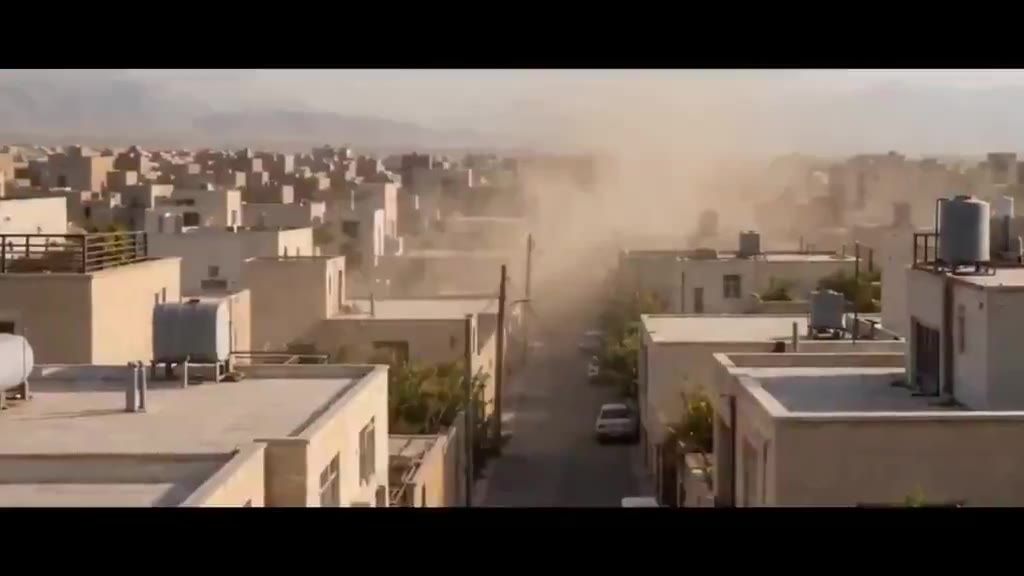 AI-generated
Claims
✓ 2 true · ✕ 1 falseIranian state TV is broadcasting this video of nuclear-blast survival instructions.12
This is the claim the post stands on, and it fails on provenance. Two Arabic-language fact-checks, Annahar FactCheck and Alquds, reverse-traced the clip and found its earliest appearance on Instagram on 21 October 2026, roughly two weeks before the claims went viral, on a private account rather than any broadcaster's verified channel. Instagram itself classified the post as AI-generated or modified content, and our own detector scored the footage as synthetic at 0.9999. The decisive point is not that the clip looks slick; it is that a dated, earlier, non-official origin exists. The video also carries no IRIB or IRNA branding. Iran's actual advisory was a different, eight-minute IRNA video published 29 October 2026, with interviews of named Isfahan emergency officials and details such as iodine tablets, Prussian blue and battery radios that this clip never mentions. Two fact-checks plus a dated original upload is a strong independent base; the high band reflects that agreement.
Still open: Who runs the Instagram account @aoeimedia.ir, and whether the same clip was ever aired by any Iranian broadcaster, is not established by the input.
Iranian state media did publish guidance on how to survive a nuclear explosion in late October 2026.346
This part holds up. IRNA, Iran's state news agency, carried an eight-minute civil-defence video on 29 October 2026 explaining how civilians should respond to a nuclear explosion. India Today, News18 and Index.hr all report the same core facts: the video was prepared by emergency services in Isfahan province and covered shelter, ventilation, decontamination and staying indoors for at least 24 hours. News18 adds that officials from the Isfahan Red Crescent were quoted. La Nación describes it as broadcast by Iranian state television and notes it used AI-created imagery to depict a detonation near housing, which is worth keeping in mind: the genuine guide also contained synthetic visuals, so 'AI imagery' alone would not have settled this. What settles it is the specific clip and its specific origin. These outlets report the same underlying release rather than independent findings, so they count largely as one line of evidence; the high band comes from their agreement on date, producer and content.
Citizens should avoid looking at the flash, lie flat behind a barrier, move into a sturdy building, stay away from windows, switch off outside-air ventilation, remove contaminated clothing and shelter for at least 24 hours.3
The narration is accurate safety advice, not invention. It matches what Iranian emergency officials told IRNA: get to a basement or inner room away from windows and outer walls, shut doors and windows, turn off cooling or ventilation that draws outside air, bag contaminated clothing without shaking it, wash with warm water and plain shampoo, use bottled water and sealed food, and be ready to stay sheltered for at least 24 hours. The clip even adds the correct qualifier that 24 hours does not automatically mean the area is safe and that exit timing should follow official rescue announcements, and it explicitly calls the scenario hypothetical ('we are talking about a hypothetical scenario'). It also warns that cars do not provide enough protection, which matches the IRNA guidance as reported. So the content is sound; the problem sits entirely in the framing around it. A viewer who checked only the advice would find nothing wrong, which is exactly why the clip travels.
Iran is now preparing its population for an imminent nuclear attack.36
The guidance exists, but nothing in the record shows it was issued as a warning of a specific, expected strike. Iranian authorities presented it as part of the annual Passive Defence Week, a recurring civil-defence observance, and Index.hr notes that publishing such a guide does not mean the emergency services know of an imminent nuclear attack. The wider context is public speculation rather than a confirmed decision: the claim wave followed US commentator Tucker Carlson raising the possibility of a strike on the deeply buried Pickaxe Mountain site near Natanz, while President Trump had publicly ruled out using nuclear weapons against Iran. The post's words 'now' and 'the unthinkable' convert a routine civil-defence exercise into an alarm. The band is moderate because the input establishes how officials framed the release, but cannot rule out internal planning that was never made public.
Still open: Whether Iranian authorities had any non-public threat assessment behind the timing is unknown.
What was posted
XA post on X sharing a short Persian-language video that walks viewers through what to do during a nuclear explosion: don't look at the flash, lie flat behind cover, get inside a sturdy building, stay away from windows, shut outside-air ventilation, remove contaminated clothing and shelter for at least 24 hours. The caption tells readers this is Iranian state television preparing the population for the unthinkable, implying an attack is expected.
“🇮🇷🚨 TERRIFYING: Iran is now preparing its population for the unthinkable, a nuclear explosion. Iranian state TV is broadcasting survival instructions, telling citizens how to take cover, avoid windows and shelter for 24 hours after a nuclear blast.”
Posted on X by the account Defence Index. The clip itself has no visible IRIB or IRNA branding. Fact-checkers traced its earliest appearance to a private Instagram account (@aoeimedia.ir) on 21 October 2026.
Who posted it
XAccount check
Estimates from public signals — account age, posting pattern, audience — not a judgement of the person behind the account, and separate from whether this post is true.
What stood out
- Anonymous 'Defence Index' brand created April 2023; roughly 3.6 years old with about 26,000 posts (~20/day) and ~254,000 followers.
- No named operator, parent organisation, external website, or editorial/corrections policy is identifiable; bio is a generic OSINT/breaking-news description.
- Supplied metadata says not platform-verified, despite a third-party Grok summary calling it 'verified'; pinned post solicits subscriptions/support, suggesting a monetised engagement model.
- Grok community feedback estimates only 60–70% accuracy and notes 'occasional inaccuracies or unverified claims'; no formal fact-checker record was found.
- High-volume, emoji-heavy 'BREAKING' aggregation with little visible sourcing or first-hand reporting.
- Cited by some OSINT aggregators, showing topical reach, but this is not evidence of reliable sourcing.
Signals (11)+
- Account created
- 2023-04
- Posting cadence
- ~26,000 posts in ~3.6 years, roughly 20 per day
- Following count
- 2811
- Follower ratio
- 90.4
- Identity transparency
- Anonymous brand; no named operator or organisation
- External presence
- No independent website or editorial page found
- Monetisation
- Pinned post asks for subscriptions/support
- Accuracy assessment
- Mixed; third-party community estimate 60-70% accuracy
- Fact check history
- No formal fact-check or Community Note record found
- Content style
- High-volume breaking-news/OSINT aggregation with emojis and limited sourcing
- Notable news coverage
- Occasionally cited by OSINT aggregators; no mainstream editorial citation found
Account checked November 4, 2026, 02:53 UTC
The media
Video✓ What is genuine
The underlying story is real: IRNA did publish an eight-minute nuclear-survival civil-defence guide on 29 October 2026, prepared by Isfahan emergency services. The Persian narration in the viral clip is also accurate, standard nuclear-blast safety advice, and it openly calls its scenario hypothetical. Reporting notes the genuine state video itself used AI-created imagery to depict a detonation, so synthetic visuals appeared on both sides of this story.
The tells
- ●●● Strong signal Detector score of 0.9999 for AI-generated content, with the deepfake class near zero.our detector
- ●●● Strong signal No IRIB or IRNA branding anywhere in the clip, despite being presented as state television output.our visual review
- ●●● Strong signal Instagram classified the original post as AI-generated or modified content.Annahar FactCheck and Alquds
- ●●○ Supporting signal Repetitive generic architecture, a uniformly hazy grade, slightly warped vehicle shapes and waxy faces in the family scene.our visual review
- ●●○ Supporting signal Missing the segments the real IRNA video contained: named officials and specifics such as iodine tablets, Prussian blue and battery radios.Annahar FactCheck
Synthetic-media detector
Detector ranThe claim stands or falls on whether the media is real, so the detector ran.
Scores are the detector’s estimate for the file as uploaded. A low score does not rule out editing, a spliced caption, or footage shown out of context — those are judged above. Model v3.
How we checked the media
- Ran the clip through our AI-generation detector (hive-v3), which returned an AI-generated score of 0.9999.
- Reviewed the footage visually for the hallmarks of generated video.
- Compared the clip's branding and structure with the documented IRNA broadcast as described in reporting.
- Relied on the provenance tracing published by Annahar FactCheck and Alquds.
Sources
6 sources reviewed- 1إيران تنشر فيديو تحذيرياً لمواطنيها استعداداً لضربة نووية أميركية؟ النهار تتحقق ↗
Annahar · annahar.comUntiereduntiered — treated as signal only, never decisiveEvidence
Traces the clip to an Instagram post of 21 October 2026 and describes it as AI-produced awareness content on unofficial accounts.
- 2حقيقة الفيديو المتداول حول هجوم نووي على إيران ومزاعم بثه عبر التلفزيون الرسمي ↗
Alquds · alquds.comUntiereduntiered — treated as signal only, never decisiveEvidence
Finds no evidence of state TV origin, notes Instagram's AI label and the absence of official logos.
- 3Shut ACs, hide for 24 hours: Iran issues nuclear survival guide amid US strike threat ↗
India Today · indiatoday.inUntiereduntiered — treated as signal only, never decisiveEvidence
Establishes the genuine IRNA eight-minute guide of 29 October 2026, prepared by Isfahan emergency services within Passive Defence Week.
- 4'Close Windows, Turn Off AC': Iran Releases Video Guide On How To Survive Nuclear Attack Amid US Threat ↗
News18 · news18.comUntiereduntiered — treated as signal only, never decisiveEvidence
Confirms the IRNA publication date and advice, and the involvement of Isfahan Red Crescent officials.
- 5La televisión estatal iraní difundió un video que explica qué hacer ante un ataque nuclear estadounidense ↗
La Nación · lanacion.com.arUntiereduntiered — treated as signal only, never decisiveContext
Reports that Iranian state television broadcast the eight-minute guide and that it used AI-created imagery.
- 6Iran objavio video s uputama građanima kako preživjeti nuklearni napad ↗
Index.hr · index.hrUntiereduntiered — treated as signal only, never decisiveEvidence
Places the guide in national civil-protection week and notes publication does not mean knowledge of an imminent attack.
Further reading
- 1Annahar The Arabic fact-check with the reverse-image tracing that dates the clip to 21 October 2026.
- 2Alquds Second independent fact-check finding no link between the clip and Iranian state TV.
- 6Index.hr Explains the Passive Defence Week framing and that the guide does not imply knowledge of an imminent attack.
- 4News18 Details what the genuine IRNA guide contained, including Isfahan Red Crescent officials.
The full story
Iran did publish nuclear-blast survival advice in late October 2026. On 29 October, the state news agency IRNA carried an eight-minute civil-defence video prepared by emergency services in Isfahan province. It told citizens to avoid the flash, shelter in basements away from windows, shut off ventilation that draws outside air, bag contaminated clothing, wash with soap and water, and be ready to stay indoors for at least 24 hours.
Authorities placed the release within the annual Passive Defence Week, a recurring civil-defence observance. The timing, though, was not quiet. Speculation was circulating, driven by US commentator Tucker Carlson, that Washington might strike the deeply buried Pickaxe Mountain site near Natanz. President Trump had publicly ruled out using nuclear weapons against Iran. A civil-defence guide published during that chatter reads very differently from one published in a calm month, and that gap is where the viral post does its work.
The clip in this post is not that broadcast. Fact-checkers traced it to a private Instagram account on 21 October 2026, about two weeks before the IRNA release and before the claim wave. It carries no broadcaster branding, Instagram flagged it as AI-generated, and it lacks the interviews with named Isfahan officials and the specific medical and equipment details the real guide contained. The narration is accurate safety advice, which is part of why it spreads: a viewer who checks the content finds nothing false.
Kernel of truth
Iranian state media genuinely published a nuclear-survival civil-defence guide in late October 2026, during a period of loud public speculation about a possible US strike on Iran's nuclear sites.
Timeline
October 21, 2026
The AI-generated Persian clip first appears on the private Instagram account @aoeimedia.ir, per fact-checker tracing. 1Annahar
October 29, 2026
IRNA publishes an eight-minute nuclear-survival civil-defence video prepared by Isfahan province emergency services, framed as part of Passive Defence Week. 3India Today
October 29, 2026
Outlets including News18 and Index.hr report the IRNA guide, noting officials did not present it as a warning of an imminent attack. 4News18
How it was framed
A genuine, accurate piece of safety content (the narration) is wrapped in a false frame: that it is an Iranian state television broadcast and that it shows the population being prepared for an imminent strike. The clip is also synthetic video passed off as real broadcast footage, hence the secondary type.
- Emotional language. The caption opens with 'TERRIFYING' and calls the scenario 'the unthinkable'.
- Ongoing-threat framing. 'Iran is now preparing its population' presents a civil-defence guide as an active build-up to an attack.
- Borrowed authority. 'Iranian state TV is broadcasting survival instructions' lends the clip the weight of an official broadcaster.
- “Visual proof”. A polished video is offered as the evidence for the claim, with no disclosure that it is synthetic.
- Urgency. The word 'now' and the alarm framing push readers to share before checking.
Posted on X by the account Defence Index. The clip's earliest traced upload was a private Instagram account on 21 October 2026, with no IRIB or IRNA branding; the genuine IRNA guide followed on 29 October 2026.
Bias
Leans alarmist, anti-Iran war-fear framing. The post uses 'TERRIFYING' and 'the unthinkable' and presents an AI-made awareness clip as an official Iranian state broadcast to imply Tehran is bracing for an imminent nuclear strike, amplifying an already tense US-Iran news cycle without disclosing that the footage is synthetic.
Bias describes how the post frames its message — the slant of the language, selection and emphasis — and is judged separately from whether the claim is true. A true claim can still be framed with a strong slant.
How we checked
1 min 26 s- 1
Searched for reporting on Iranian state television and nuclear-survival instructions.
- 2
Searched for the IRNA eight-minute Isfahan civil-defence video of 29 October 2026.
- 3
Searched for fact-checks on AI-generated or fake Iranian state TV nuclear videos.
- 4
Reviewed the clip visually and compared it with the documented IRNA release.
- 5
Ran the clip through our AI-generation detector (hive-v3).
✓ Claim checked✓ Media checked✓ Sources checked
Why 68% confidence
ModerateThe central attribution claim is rated high because two fact-checks independently traced the clip to the same earlier Instagram upload, Instagram applied an AI label, and our detector scored it as synthetic. The 'imminent attack' claim is moderate because the input shows how officials framed the release but cannot prove what they discussed privately.
Limits. We did not open the original Instagram post or the IRNA video ourselves; provenance rests on the two fact-checks and on reporting. We cannot identify who runs the originating Instagram account.
What we don’t know
- Who operates the Instagram account @aoeimedia.ir, and why the clip was made.
- Whether any Iranian broadcaster aired this specific clip at any point.
- Whether Iranian authorities had any non-public threat assessment behind the timing of the guide.
Spot it yourself
Spot the fakeLooks suspicious, isn’t proof
- The account's alarmist tone and all-caps 'TERRIFYING'. A loud caption is a reason to check, not evidence of fakery; real broadcasters are sometimes quoted in loud posts too.
- The slick, cinematic look of the footage. Good production values prove nothing either way, and the genuine IRNA video also used AI-created imagery.
- The absence of a visible channel logo in a short clip. Broadcasters' clips are often trimmed or cropped by re-posters, so a missing logo on its own settles little.
The actual evidence
- Dated provenance: fact-checkers traced the clip to Instagram on 21 October 2026, two weeks before the IRNA release, on a private account.
- A platform label: Instagram classified the original post as AI-generated or modified content.
- A detector score of 0.9999 for AI-generated video, with the deepfake class near zero.
- Structural comparison: the real eight-minute IRNA video included named Isfahan officials and details like iodine tablets, Prussian blue and battery radios, none of which appear in this clip.
- 1
Find where the clip first appeared
Run a reverse image or keyframe search on a few frames, or search the Persian narration's opening line. Note the earliest date and account. If it predates the event it supposedly shows, the attribution is wrong.
- 2
Look for the broadcaster's own upload
Check the verified IRIB or IRNA channels and their sites. A state broadcast of this significance would be published there. If it isn't, treat the claim as unattributed.
- 3
Compare details with the official release
Read reporting on the real guide and note its named officials and specifics. A viral version missing all of them is probably a different product.
- 4
Inspect the footage itself
Pause on vehicles, faces and architecture. Warped geometry, waxy skin and a uniformly hazy grade are reasons to run a detector, not proof on their own.
- 5
Separate the advice from the frame
Ask whether the post's claim is about the content or about who broadcast it. Here the advice is accurate; the attribution is what fails.
Takeaway
A post can mix a true story, accurate content and a fake artefact. Check each part separately, and never let correct details inside a video vouch for where the video came from.
Questions people ask
Did Iran's state TV broadcast nuclear survival instructions?+
Iran's state news agency IRNA did publish an eight-minute nuclear-survival civil-defence video on 29 October 2026, prepared by Isfahan province emergency services and framed as part of Passive Defence Week. But the viral clip in this post is not that broadcast: it was traced to a private Instagram account on 21 October 2026 and flagged as AI-generated.
Is the viral video AI-generated?+
Yes. Our detector scored the footage as AI-generated at 0.9999, Instagram classified the original post as AI-generated or modified content, and fact-checkers found no broadcaster branding. The narration, however, is accurate safety advice, which is part of why the clip spreads so easily.
Was Iran warning citizens about an imminent nuclear attack?+
Nothing in the record shows that. Officials presented the guide as part of the annual Passive Defence Week, and Index.hr notes that publishing such advice does not mean emergency services know of an imminent attack. The 'imminent' framing came from public speculation, including a claim by US commentator Tucker Carlson, while President Trump had ruled out nuclear weapons against Iran.
What did Iran's actual nuclear survival guide say?+
The IRNA guide advised avoiding the flash, sheltering in basements away from windows, shutting off outside-air ventilation, decontaminating clothing and skin, and staying indoors for at least 24 hours. It included interviews with named Isfahan emergency officials and details such as iodine tablets, Prussian blue and battery radios, none of which appear in the viral clip.
Why does an AI-made video about a real event spread so widely?+
Because the event behind it is real. Iran did publish nuclear-survival guidance, so a viewer who checks the content finds accurate advice and a plausible story. The false part is the attribution, which is harder to check and travels with the images.
Go deeper
- False context
- When genuine or partially genuine content is shared with a misleading caption, date or attribution.
- Provenance
- The documented history of where a piece of media first appeared and who uploaded it.
- AI-generation detector
- A tool that estimates the probability that an image or video was produced by artificial intelligence, rather than by a camera.
- Reverse image search
- A search that takes a picture or video frame as the query to find earlier or identical copies online.
- Passive Defence Week
- An annual Iranian civil-defence observance, during which the IRNA guide was released.
People also search for
For educators+
- The advice in the video is accurate, but the post is misleading. Can a post be wrong if everything it says about safety is right?
- If a real government guide also used AI-generated imagery, how should readers decide when synthetic visuals are acceptable?
- What would you check first to test a claim that a foreign broadcaster aired a specific clip, and why?
About this check
- Platform
- X
- Posted by
- @defence_index
- Posted
- November 3, 2026
- Age when checked
- Under 24 hours old when checked
- Where it spread
- IR, United States, United Kingdom
- Audience
- International audience
- Language
- EN
- Status
- ● Post is live
- Verified
- November 4, 2026, 02:55 UTC
- Published
- November 4, 2026, 02:55 UTC
Reach. X post 160 likes with video (verify 2026-11-04); covered by IBTimes UK and Metro ('Iranian TV broadcasts advice on a nuclear strike') 3 Nov
This verdict was generated with AI from the sources shown. AI can make mistakes — check the sources before relying on it.
Check anything yourself, in seconds.
Share any social post or video to What the Fact and get the verdict, the confidence, and the receipts.