Did every calf on a Texas ranch die stillborn after a data center arrived?
Has every calf born on a Texas ranch been stillborn since an AI data center was built next door, as viral posts claim?
Misleading
A real politician really told an anecdote. Nothing about the stillbirth claim itself has been verified.
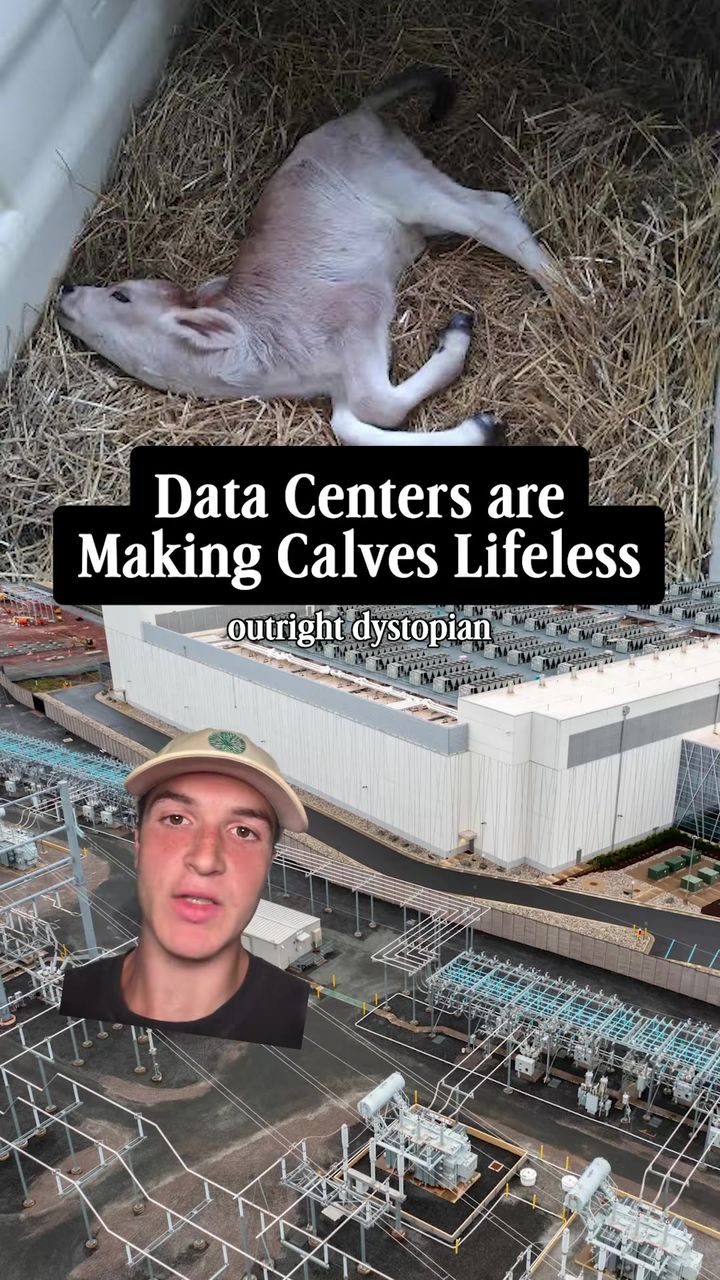
Misleading. The video is real commentary, and a candidate for Texas agriculture commissioner did publicly repeat a rancher's story about stillborn calves. But no rancher, ranch or facility has ever been named, the Texas Animal Health Commission told Snopes it has no matching reports, and researchers told AFP the science does not support data centers causing stillbirths.
 Likely genuine
Claims
✓ 2 trueEvery calf born on a Texas ranch since a data center arrived has been stillborn.12
This is the claim the headline rests on, and after two independent fact-checks it remains exactly where it started: an anecdote with no identifying details. No rancher, ranch or facility has ever been named. Accounts differ on whether the installation is an AI data center or a battery energy storage system — a meaningful difference, because the two produce different noise and emissions profiles. The decisive piece of evidence is an official one: the Texas Animal Health Commission told Snopes it has received no complaints or reports matching the account. A single ranch losing every calf would normally trigger veterinary investigation and, very likely, local reporting. Our own searches surfaced only the original political anecdote and its reposts, plus the two fact-checks. AFP also spoke to researchers, who said controlled studies show only subtle effects on cattle and that EMF from data centers is not shown to cause stillbirths or severe health problems. Snopes labels the story unproven; AFP reports the claims as misinformation. The two outlets are independent of each other, and both rested on the same absence: nobody can point to the ranch.
Still open: Which ranch, which rancher and which facility? Whether the installation is a data center or a battery storage plant remains unresolved in the public accounts.
Clayton Tucker, a candidate for Texas Agriculture Commissioner, shared a rancher's story at a public meeting that every calf born since a nearby data center arrived has been stillborn.23
This part checks out, and it is worth separating from the rest. Tucker did publicly relay the anecdote — including at a 1 June 2026 Bell County Commissioners Court meeting and a 7 July 2026 Lubbock City Council meeting, and in a May 2026 YouTube video, according to Snopes and the Fort Worth Star-Telegram. So the video's framing that a farmer 'claims' this, and that a candidate repeated it, is literally accurate. The Star-Telegram reports Tucker said he was told the story by a cattle farmer but that it has not been independently verified. That distinction matters: accurate attribution of a claim is not evidence for the claim. The narrator here is careful enough to say 'shared the rancher's story,' which is true, but the surrounding script treats the story itself as established. A reader should weigh these as two separate questions: did someone say this (yes), and is it true (unproven).
Fowler Farms of Bell County, Texas reports that a $700 million data center within five miles emits low-frequency noise that prevents cattle from breeding and causes grown cattle to lose about 30% of body weight.178
There is a real farm making a real complaint. Alton Fowler of Fowler Farms has publicly described low-frequency noise from a nearby $700 million Rowan Digital Infrastructure data center, which he says prevents cattle and goats from breeding and causes about 30% body weight loss, in advocacy material hosted on Change.org. So the narrator is not inventing the source. What is missing is any measurement behind the numbers. According to AFP and the Edge of the Story podcast, the 30% body-weight-loss figure traces to a single social-media post by Clayton Tucker, with no study, agency finding or named veterinarian behind it. That is the weak link: a precise-sounding percentage presented as an observation when it is really one person's estimate, passed along. The confidence here is lower than on the stillbirth claim because the farm and the facility can at least be identified, which means the dispute is about causation and measurement rather than about whether anything exists at all.
Still open: No published noise measurement or veterinary assessment of Fowler Farms' herd appears in the sources we reviewed.
Nearly 2 million acres and 20,000 farms have disappeared from Texas agriculture in just five years.56
The direction is right; the numbers are rounded up and the cause is implied rather than shown. The USDA Census of Agriculture, as reported by the Texas Farm Bureau, shows Texas farmland declined by more than 1.6 million acres with a loss of over 17,700 farms. The Texas A&M Natural Resources Institute goes somewhat further, putting working-land loss above 1.8 million acres and more than 17,000 operations lost in the last five-year period. So 'nearly 2 million acres and 20,000 farms' sits at or just beyond the top of the credible range, depending on which measure you use. The bigger issue is the framing. The video places these figures right after the data center discussion, inviting the conclusion that data centers drove the loss. The census attributes farmland loss to development and consolidation broadly, and neither source isolates data centers as the cause. Large numbers can be approximately right and still be used to point at the wrong culprit.
There are still no long-term studies on the impact of EMFs and data centers on animals.1
This is the most defensible line in the video, and it deserves to be acknowledged as such. Researchers told AFP that evidence on livestock and EMF from data centers is sparse, and that no study supports stillbirth or severe health effects. The WHO has found no confirmed health consequences from low-level EMF exposure. So describing a research gap is fair. The problem is what the video does next: it uses the gap as the setup for 'the scariest part,' sliding from we don't know to something alarming is happening. A missing study cuts both ways — it is not evidence of harm, and it is not evidence of safety. The honest version of this claim is 'we lack long-term data,' full stop. It cannot carry the weight of a causal assertion about dying calves, and treating an absence of research as a warning sign is a common move in health and environment scares of every political stripe.
What was posted
TikTokA TikTok commentary video by the creator Zephyr Zoidis, filmed selfie-style over generic aerial and farm b-roll. The narrator relays a claim that every calf born on a Texas ranch since a nearby data center arrived has been stillborn, plus a second account from Fowler Farms in Bell County about noise, breeding problems and about 30% weight loss in cattle. The clip also cites farmland-loss figures and ends by urging viewers to use a specific farmers-market app.
“A Texas farmer claims every calf born since a data center arrived has been stillborn.”
According to provenance records, the creator cross-posted this script to LinkedIn on 23 July 2026, and AFP identifies a TikTok post by the same account on the same date headlined 'data centers are making calves lifeless'. AFP Fact Check and Snopes have both examined the underlying claim.
Who posted it
TikTokAccount check
Estimates from public signals — account age, posting pattern, audience — not a judgement of the person behind the account, and separate from whether this post is true.
What stood out
- Handle @zephzoid maps to a real, named individual — Zephyr Zoidis, an Austin-based US food-system journalist/creator and founder of the 'Localize – Farmers Market' app.
- Mainstream outlets (HuffPost, The Kitchn, Daily Mail, NewsNation, Yahoo) have independently credited @zephzoid with breaking the January 2026 Vital Farms egg controversy, confirming a genuine human author behind the handle.
- The supplied TikTok profile is a metadata shell: no bio, no follower count, no creation date, no verification and zero posts — nothing here can confirm this specific TikTok account is the same person rather than an impersonator or a stub.
- Track record is mixed on sourcing: the Vital Farms exposé centred on a lab study run by Nourish Food Club, a commercial competitor selling rival 'Angel Acres' eggs, and the results were disputed by Vital Farms, farmer-creators and independent dietitians as overstated/negligible in practical terms.
- Strong commercial conflict of interest: nearly every retrospective of his videos shows a pivot to promoting his own Localize app, so 'exposé' framing doubles as marketing.
- Style is consistent, long-form, human-written explanatory content with cited sources (USDA, university studies, news) — not indicative of automated or coordinated posting.
- Content pattern is more advocacy/consumer-campaign than neutral reporting; framing (e.g. 'the war on butter', 'billionaires want fake food') leans on emotive narratives that can outrun the evidence.
- Cross-platform footprint (Instagram ~140-260k followers, Threads, Facebook, LinkedIn) is organic and journalist-like, with engagement rates typical of a real creator rather than a bot farm.
Signals (10)+
- Account age note
- TikTok creation date not supplied; person's public activity documented since at least mid-2025
- Posting cadence
- Unknown (no posts supplied); cross-platform cadence appears near-daily
- Profile completeness
- Empty (no bio, avatar data, followers or posts provided)
- Identified person
- Zephyr Zoidis (food-system journalist; founder, Localize app)
- Notable news coverage
- HuffPost, The Kitchn, Daily Mail, NewsNation, Yahoo, The Cool Down
- Fact check history
- No dedicated fact-check ruling found; several claims challenged by brand, farmer-creators and dietitians
- Commercial interest
- Promotes own paid/monetised app in most videos; source study run by a competing egg seller
- Cross platform presence
- Instagram, Threads, Facebook, LinkedIn under same handle
- Content type
- Investigative-style food/agriculture exposés with cited sources
- Controversy
- Jan 2026 Vital Farms linoleic-acid claim drove #BoycottVitalFarms; evidence called exaggerated by critics
Account checked November 7, 2026, 15:08 UTC
The media
Video✓ What is genuine
The presenter and the commentary format are real. The events he describes — a candidate relaying a rancher's anecdote at public meetings — genuinely happened. What is not genuine evidence is the b-roll: the aerial shots illustrate the topic but document nothing about the claim.
The tells
- ●●● Strong signal The presenter's face and lip-sync are consistent with a normal recording; no deepfake or compositing artifacts were visible in our review.our visual review
- ●●● Strong signal The background footage is generic aerial and farm b-roll and is never presented as film of the unnamed ranch, so it cannot verify anything.our visual review
- ●●○ Supporting signal The clip ends on a promotional prompt for a specific app, showing the video carries a commercial purpose alongside its argument.our visual review
Synthetic-media detector
Detector not consultedThe media is incidental to the claim; the detector was not needed.
How we checked the media
- Reviewed the clip visually: the presenter is filmed selfie-style over laid-in background footage in a standard green-screen commentary format, with no blending artifacts on his face and lip-sync matching the narration.
- Checked what the background material actually shows — generic aerial views of large data-center campuses, construction sites, cattle and a phone app screen — and whether it is tied to the specific claimed ranch.
Sources
8 sources reviewed- 1Data center backlash sparks misinformation on animal deaths ↗
AFP Fact Check · factcheck.afp.comPrimary / fact-checkerIFCN + EFCSN; wire-backedEvidence
Reports the stillbirth and weight-loss claims as unproven misinformation and quotes researchers on the limits of the science.
- 2Posts claim Texas data center caused every calf birthed on nearby ranch to be stillborn. Here's what we know ↗
Snopes (via Yahoo) · yahoo.comUntiereduntiered — treated as signal only, never decisiveEvidence
Independent fact-check that found the story unproven and reported the Texas Animal Health Commission has no matching reports; also documents when and where Tucker relayed the anecdote.
- 3Tensions flare at Fort Worth City Council meeting over $10B data center ↗
Fort Worth Star-Telegram · star-telegram.comUntiereduntiered — treated as signal only, never decisiveEvidence
Reports Tucker said he was told the story by a cattle farmer and that it has not been independently verified.
- 4Big Tech wants rural America's land and water. What happens to the farmers? ↗
AGDAILY · agdaily.comUntiereduntiered — treated as signal only, never decisiveEvidence
Notes that the claims came without data, a ranch or rancher name, or third-party verification.
- 5Ag census shows Texas lost over 17,700 farms ↗
Texas Farm Bureau · texasfarmbureau.orgUntiereduntiered — treated as signal only, never decisiveEvidence
Provides the Census of Agriculture figures on Texas farmland and farm losses.
- 6Changes in Texas Working Lands (1997-2022) ↗
Texas A&M Natural Resources Institute · nri.tamu.eduPrimary / fact-checkerprimary/official source (by domain)Evidence
Provides working-land loss figures for Texas over the latest five-year period.
- 7S2E10 - The Intelligence Isn't Artificial - It's Assisted ↗
Edge of the Story (iHeart) · iheart.comUntiereduntiered — treated as signal only, never decisiveEvidence
Traces the 30% body-weight-loss number to a single social-media post with no study or veterinary source behind it.
- 8Data Centers, Farmland, and You ↗
Change.org · change.orgUntiereduntiered — treated as signal only, never decisiveContext
Contains Alton Fowler's own account of noise from a nearby $700 million data center and its alleged effects on his animals.
Further reading
- 1AFP Fact Check AFP's full examination of the animal-death claims, including what researchers say about the science.
- 2Snopes (via Yahoo) Snopes follows the story to the state animal-health agency and explains what could not be confirmed.
- 7Edge of the Story (iHeart) Traces the 30% weight-loss figure back to its single social-media origin.
- 6Texas A&M Natural Resources Institute The primary analysis behind Texas working-land loss figures, useful for checking the numbers yourself.
The full story
The kernel here is real frustration. Rural communities in Texas and elsewhere are pushing back on a rapid build-out of large data centers, and their concerns about land, water, power and noise are not invented. The figures in this video about farmland loss are roughly right. A farm in Bell County has publicly described noise problems it blames on a nearby facility. A candidate for state agriculture commissioner took those worries to county and city meetings and told a rancher's story as an illustration.
That is how the story entered public life: not as a fabricated screenshot, but as testimony. Once it was spoken at a public meeting, it became quotable, and quoting it became easy. The video does exactly that — it accurately says a candidate shared the story — and then lets the drama of the story do the persuading. Two details get lost along the way: the rancher was never named, and the accounts do not even agree on what kind of facility is involved, a data center or a battery storage plant.
The missing pieces are the ones that would settle it. No ranch, no facility, no veterinary record, no state complaint. That is why the Texas Animal Health Commission's statement matters so much: a whole herd losing every calf is the kind of thing that leaves a paper trail. Here, the trail starts and ends with the telling.
Kernel of truth
Data centers are expanding fast into rural Texas, farmland loss is real and documented, and at least one farm has publicly complained about noise. The leap from those facts to 'every calf is stillborn' is where the story breaks.
Timeline
May 2026
A video relays the stillborn-calf anecdote via Clayton Tucker's YouTube channel, according to Snopes. 2Snopes (via Yahoo)
June 1, 2026
Tucker relays the rancher's story at a Bell County Commissioners Court meeting. 2Snopes (via Yahoo)
July 7, 2026
Tucker repeats the account at a Lubbock City Council meeting. 2Snopes (via Yahoo)
July 23, 2026
The creator cross-posts this script to LinkedIn; AFP identifies a TikTok post by the same account the same day headlined 'data centers are making calves lifeless'. 1AFP Fact Check
September 3, 2026
AFP Fact Check publishes its examination, reporting the claims as unproven misinformation. 1AFP Fact Check
November 5, 2026
Snopes publishes its assessment, reporting that the Texas Animal Health Commission has no matching complaints or reports. 2Snopes (via Yahoo)
How it was framed
Every building block is real — a real creator, a real politician, a real public meeting, real farmland statistics — but they are arranged to lead the viewer to a conclusion the evidence does not support. The genuine farmland-loss figures are also placed beside the data-center claims in a way that implies a cause nobody has established.
- Emotional language. "outright dystopian" and "The scariest part" frame the anecdote as horror before any evidence is offered.
- “Visual proof”. Aerial shots of large data-center campuses and cattle play under the narration, giving the claims an illustrative backdrop they have not earned.
- Missing context. The stillborn-calf account is relayed without noting that no rancher, ranch or facility has been named, or that accounts differ on what kind of facility it is.
- Selective evidence. Farmland-loss figures are presented right after the data center discussion and described as 'growing every single day', implying data centers as the driver.
- Borrowed authority. "They believe the low-frequency hum and vibration ... are causing his cows to now sleep by the road" leans on a rancher's interpretation as if it were a finding.
- Urgency. "It's up to consumers to help put a stop to this... you can use the Localized Farmers Market app" converts concern into an immediate action tied to a product.
Posted on TikTok by the account @zephzoid. According to provenance records, the same script was cross-posted to LinkedIn on 23 July 2026, and AFP identifies a TikTok post by the same account on that date headlined 'data centers are making calves lifeless'. The clip closes with a promotional call to use a named farmers-market app.
Bias
Leans anti-data-center / pro-local-farming advocacy. The video is campaign-style advocacy: an on-screen headline states outright that 'Data Centers are Making Calves Lifeless', unverified anecdotes are stacked with a genuine farmland-loss statistic to imply causation, and the clip closes with a call to download a specific farmers-market app, making it promotional as well as slanted.
Bias describes how the post frames its message — the slant of the language, selection and emphasis — and is judged separately from whether the claim is true. A true claim can still be framed with a strong slant.
How we checked
1 min 34 s- 1
We ran searches on the claim itself, on the candidate's role in spreading it, on the Fowler Farms account, and on the Texas farmland-loss figures.
- 2
We reviewed the video's format, presenter and background footage to assess whether the media itself was manipulated.
- 3
We compared the findings of two independent fact-checks, AFP Fact Check and Snopes, which had each examined the underlying claim.
- 4
We checked official statistics on Texas farmland and farm loss against the figures quoted in the clip.
- 5
We looked for any local reporting, veterinary record or agency action that would corroborate a herd-wide stillbirth event and found none.
✓ Claim checked✓ Media checked✓ Sources checked
Why 78% confidence
HighWe set confidence HIGH on the central claim not because we proved the event did not happen, but because the evidence needed to check it is consistently missing: two independent fact-checks, a state agency saying it has no matching reports, and no traceable ranch. Confidence is MODERATE on the Fowler Farms claim and the research-gap claim, where a real source or a real gap exists and the dispute is about measurement and interpretation rather than existence.
Limits. We could not contact the rancher, because no rancher has been named, and we did not inspect any herd or facility ourselves. Our assessment of the video's authenticity rests on visual review and on the published fact-checks, not on a forensic detector run.
What we don’t know
- Who the rancher is, where the ranch is, and which facility is involved.
- Whether the facility in the account is an AI data center or a battery energy storage plant.
- Whether any veterinary records exist for the herd, even if they have not been made public.
- Whether the creator knew the anecdote was unproven when he made the video, or relayed it in good faith.
Spot it yourself
Spot the fakeLooks suspicious, isn’t proof
- It's a TikTok by a commentator rather than a news outlet. Anyone can post a video; that tells you nothing about whether the underlying story is true or false.
- The tone is alarmist — 'dystopian', 'the scariest part'. Frightening language is a reason to slow down, not a verdict.
- It ends with a promotion for an app. A commercial motive makes the framing suspect, but it does not by itself make the anecdote false; plenty of people with something to sell describe real problems.
The actual evidence
- No rancher, ranch or facility is named anywhere in the chain. A claim that cannot be traced to a specific place or person cannot be checked — and a whole herd losing every calf is exactly the kind of event that would have a named location.
- The Texas Animal Health Commission told Snopes it had received no complaints or reports matching the account. An official body saying 'we have nothing like this on file' is concrete evidence against the story, not just a lack of evidence for it.
- Accounts of the facility drift between an AI data center and a battery energy storage plant. When the central object of a story changes depending on who is telling it, the story is being retold rather than reported.
- Independent fact-checkers on two separate occasions — AFP in September 2026 and Snopes in November 2026 — reached the same conclusion, and researchers told AFP the science does not support stillbirths from this kind of exposure.
- The farmland figures are real but rounded: the Census of Agriculture shows Texas lost just over 1.6 million acres and over 17,700 farms, not 'nearly 2 million acres and 20,000 farms' — and nothing in that data pins the loss on data centers.
- 1
Ask who would have recorded this if it were true
A ranch losing every calf would involve veterinarians, a state animal-health agency and probably local reporters. Search for the ranch name, the county and the agency's name together. If the only results are the original anecdote and its reposts, you have learned something important.
- 2
Check whether the claim survives being repeated without the word 'claims'
Read the sentence as a statement of fact. 'Every calf is stillborn' is a very different assertion from 'a man says he was told every calf is stillborn'. Notice which one the surrounding script nudges you toward.
- 3
Separate the statistics from the story
Look up the numbers in a primary source such as the USDA Census of Agriculture. Then ask what that source actually attributes the change to. A real number attached to an unproven cause is still misleading.
- 4
Look at what the footage really shows
Pause and ask whether the visuals are of the specific place being described. Generic aerial shots of data centers illustrate a topic; they do not document a claim. Here, nothing on screen is tied to the unnamed ranch.
- 5
Check the research-gap argument
When someone says 'there are no studies', ask whether that is being used as proof of harm. A gap in research means we don't know — it does not mean the alarming thing is happening.
Takeaway
An accurate claim about what someone said is not evidence that what they said is true. When a story has no name, no place and no record, the absence is the finding.
Questions people ask
Is the claim that every calf on a Texas ranch was stillborn true?+
Unproven. No rancher, ranch or facility has been identified, accounts differ on what kind of facility is involved, and the Texas Animal Health Commission told Snopes it has received no complaints or reports matching the account. Fact-checkers at AFP and Snopes both examined the story and found it unsubstantiated.
Did Clayton Tucker really tell this story?+
Yes. Tucker, a candidate for Texas Agriculture Commissioner, relayed the rancher's account at public meetings, including a Bell County Commissioners Court meeting in June 2026 and a Lubbock City Council meeting in July 2026, according to Snopes. The Fort Worth Star-Telegram reports he said he was told the story and that it has not been independently verified.
What does science say about data centers and cattle health?+
Researchers told AFP that controlled studies show only subtle effects on cattle and that EMF from data centers is not shown to cause stillbirths or severe health problems. They also said the evidence base is sparse. A gap in research means the question is open — it does not show that harm is occurring.
Are the farmland-loss figures in the video accurate?+
They are close but rounded up. The USDA Census of Agriculture, as reported by the Texas Farm Bureau, shows Texas lost more than 1.6 million farmland acres and over 17,700 farms. The video says nearly 2 million acres and 20,000 farms, and implies data centers caused the loss, which the census does not attribute.
Why would someone make a video like this?+
We can't know the creator's motive. What is observable is that the clip closes by urging viewers to use a specific farmers-market app, so it carries a commercial purpose alongside its argument about data centers. Being made by a commentator, or carrying a promotion, doesn't decide whether the underlying facts are true — that has to be checked separately.
Go deeper
- Misleading content
- Real information or real sources used in a way that frames an issue or a person so the audience draws a conclusion the evidence does not support.
- EMF
- Electromagnetic fields — invisible energy given off by electrical and electronic equipment, which researchers study for possible effects on people and animals.
- Low-frequency noise
- Sound at the low end of the audible range, often described as a hum or rumble, that can travel further and pass through walls more easily than higher pitches.
- Battery energy storage system
- A facility of large batteries that stores electricity for the grid — a different kind of installation from a data center, with different noise and emissions.
- Census of Agriculture
- A national count of farms and farmland run by the US Department of Agriculture every five years, used as the standard source for figures on farmland loss.
People also search for
For educators+
- The video says accurately that a candidate shared a rancher's story. At what point does accurately reporting someone's claim become spreading it?
- If a study on data centers and livestock has never been done, what can and can't you reasonably conclude? How should a journalist phrase that gap?
- The farmland numbers are roughly correct, but the video implies data centers caused the loss. How would you rewrite that section to be accurate without changing the numbers?
About this check
- Platform
- TikTok
- Posted by
- @zephzoid
- Posted
- July 23, 2026
- Age when checked
- Older post, still live
- Where it spread
- United States
- Audience
- US audience
- Language
- EN
- Status
- ● Post is live
- Verified
- November 7, 2026, 15:10 UTC
- Published
- November 7, 2026, 15:10 UTC
Reach. Snopes (6 Nov) says the claim spread widely on X, Facebook, YouTube, Reddit and TikTok throughout 2026; attributed to Clayton Tucker, who just won the Texas agriculture commissioner race (renewed attention). No view count available
This verdict was generated with AI from the sources shown. AI can make mistakes — check the sources before relying on it.
Check anything yourself, in seconds.
Share any social post or video to What the Fact and get the verdict, the confidence, and the receipts.