Did Iran start striking American ships in the Strait of Hormuz?
Does a viral video show Iran's IRGC striking American ships and oil tankers in the Strait of Hormuz?
Misleading
Real tanker blasts — but no American ship was struck.
The tanker explosions in the Strait of Hormuz on 10 November 2026 are real and were widely reported, but the post's headline claim that Iran has begun striking American ships is unsupported. The vessels were unidentified commercial tankers, and US Central Command denies any US ship was hit.
 Likely genuine
Claims
✓ 1 true · ✕ 1 falseIran has begun striking American ships in the Strait of Hormuz.12
“ايران بدأت بضرب السفن الأمريكية في مضيق هرمز”
No source in the record reports an American vessel struck on 10 November 2026. Iran's Revolutionary Guard said two commercial oil tankers were stopped and set ablaze on a route Tehran calls unauthorised, and claimed one had US fighter-jet cover — cover, not an American hull. The IRGC did not name the ships, their flags or operators. ADNOC confirmed one of its vessels was damaged in UAE waters, and UK Maritime Trade Operations reported a tanker hit by an unspecified projectile off Oman; neither describes a US ship. US Central Command has repeatedly and flatly denied Iranian claims that US Navy ships were hit. The decisive point is the gap between "American ships" and what every source actually describes: commercial tankers with, at most, an Iranian claim of US air cover. That the underlying explosions happened does not make the headline true; it is the headline, not the event, that fails.
Still open: Iran has not identified the two tankers or their flags, so it remains unclear which countries' vessels were involved beyond ADNOC's confirmation.
Two oil tankers exploded and caught fire in the Strait of Hormuz.123
“انفـجـ ـ ـار ناقلتي نفط”
This part holds up, with qualifications. The IRGC announced on 10 November 2026 that two "violating" tankers were stopped and set ablaze after explosions on an unauthorised route, one after hitting a naval mine. The announcement ran through Tasnim/Sepah News and was reported by AFP, Anadolu and Al Arabiya. Partial independent support exists: ADNOC said one of its vessels was damaged in an attack in UAE waters the same afternoon, and UKMTO reported a tanker hit by an unspecified projectile off Oman. But note how these sources connect. The Iranian announcement spreads through Iranian outlets, and the wire reports largely relay it; ADNOC and UKMTO confirm vessels were hit without confirming the Iranian account of how or why. That is corroboration of an incident, not of the explanation. No independent verification of the mine and escort details has been published, which is why the band is MODERATE rather than HIGH.
Still open: Whether the explosions were caused by mines, projectiles or something else has not been independently established.
The tankers exploded after ignoring warnings.2
“بعد تجاهلهما للتحذيرات”
This detail comes solely from the Iranian side. The IRGC statement said both vessels switched off navigation and identification systems and disregarded Iranian warnings before entering a corridor Tehran deems illegal. That framing is the Iranian justification for the incident. No US military statement, flag state or maritime authority in the record independently confirms that warnings were issued or ignored. Because the only source for the warning sequence is the party that says it carried out the attack, the claim is unverified rather than established. A reader should treat "after ignoring the warnings" as the attacker's account, not as a neutral fact — it explains why the incident happened in the teller's version of events, and that is exactly the kind of detail that needs outside confirmation.
Still open: No independent party has confirmed that warnings were sent or received.
What was posted
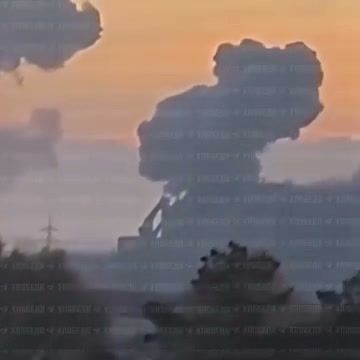
FacebookA Facebook reel posted by a page attributed to the Iraqi Facebook figure Hussein al-Fatlawi pairs a heavily degraded, watermarked image of a burning vessel and a huge smoke plume with a caption urging viewers to "watch". The caption asserts that Iran has begun hitting American ships in the Strait of Hormuz and that two oil tankers exploded after ignoring warnings. The post presents the image as visual proof of that escalation.
“♦️ #شاهد ايران بدأت بضرب السفن الأمريكية في مضيق هرمز انفـجـ ـ ـار ناقلتي نفط بعد تجاهلهما للتحذيرات”
“♦️ #Watch Iran has begun striking American ships in the Strait of Hormuz Explosion of two oil tankers after they ignored the warnings” — translated
Public Facebook reel on the page attributed to Hussein al-Fatlawi; the title bar shows roughly 57K views and 1.5K reactions at the time of capture. The repeated semi-transparent Arabic watermark across the frame is consistent with an ordinary page watermark.
The media
Image✓ What is genuine
The underlying event is real: two commercial tankers were reported ablaze in the Strait of Hormuz on 10 November 2026, and a burning vessel with a large plume is consistent with that. The watermark is a normal social-media page mark, not evidence of manipulation.
The tells
- ●●○ Supporting signal The AI-detection model scored the image at roughly 0.73 for AI-generated, and its top named generator was Pika at about 0.67 — a signal that does not match the clean visual read.our detector
- ●●○ Supporting signal The frame is heavily degraded and carries a repeated semi-transparent Arabic watermark, so it cannot be geolocated or matched to a verified original.our visual review
- ●○○ Weak signal The scene — a burning vessel with a very large smoke plume at dusk — is physically plausible and consistent with the real incident.our visual review
Synthetic-media detector
Detector ranThe claim stands or falls on whether the media is real, so the detector ran.
Scores are the detector’s estimate for the file as uploaded. A low score does not rule out editing, a spliced caption, or footage shown out of context — those are judged above. Model v3.
How we checked the media
- Our visual review examined the frame for generative or compositing artifacts — geometry, lighting, repeated objects — and found none clear.
- We ran the image through our AI-detection model (Hive v3), which returned a moderate AI-generated score but no deepfake signal.
- We compared the scene against reporting of the 10 November 2026 Hormuz incidents to see whether a burning vessel with a large plume is consistent with the event.
Sources
5 sources reviewed- 1«الحرس الثوري»: ناقلتان تحترقان في هرمز بعد عبور «مسار غير مسموح به» ↗
Asharq Al-Awsat (AFP) · aawsat.comUntiereduntiered — treated as signal only, never decisiveEvidence
Reports the IRGC announcement of two tankers burning on an unauthorised route, plus ADNOC's confirmation of damage to one of its vessels and UKMTO's report of a projectile strike off Oman.
- 2الحرس الثوري يعلن انفجار ناقلتي نفط في هرمز.. ويصعد تحذيره ↗
Al Arabiya · alarabiya.netUntiereduntiered — treated as signal only, never decisiveEvidence
Carries the IRGC statement that one tanker was under US fighter-jet cover, which is air cover rather than an American ship being hit.
- 3两油轮在霍尔木兹海峡发生爆炸起火燃烧 ↗
8world (AFP) · 8world.comUntiereduntiered — treated as signal only, never decisiveEvidence
Confirms two tankers exploded and caught fire in Hormuz while noting Iran gave no names or nationalities.
- 4Fact Check: Video Does NOT Show Iranian Missiles Destroying U.S. Navy Warship In Strait Of Hormuz ↗
Lead Stories · hoax-alert.leadstories.comPrimary / fact-checkerIFCN; strong on viral/AI mediaFurther reading
Documents a previous fake Hormuz attack video built from military-simulation game footage, part of the pattern this post sits in.
- 5Video game footage misrepresented as Iranian attack on US warship ↗
AFP Fact Check · factcheck.afp.comPrimary / fact-checkerIFCN + EFCSN; wire-backedFurther reading
Shows a War Thunder gameplay clip presented as an Iranian attack on a US warship, establishing the precedent for fake Hormuz footage.
Further reading
- 1Asharq Al-Awsat (AFP) The fullest wire account of the incident, including ADNOC's and UKMTO's separate confirmations that vessels were hit.
- 5AFP Fact Check Shows how Hormuz attack footage has been faked with video-game gameplay, the pattern this post's audience would have seen before.
- 4Lead Stories A second debunk of game footage passed off as an Iranian strike on a US warship, useful for comparing how these fakes are built.
The full story
The kernel of truth here is a genuine maritime incident. On 10 November 2026, Iran's Revolutionary Guard announced that two oil tankers had been stopped and set ablaze after explosions in the Strait of Hormuz, on a shipping corridor Tehran calls unauthorised. One, the IRGC said, hit a naval mine; the other was said to have been moving under US fighter-jet cover. The announcement was carried by Tasnim/Sepah News and reported by AFP, Anadolu and Al Arabiya.
That afternoon, the UAE operator ADNOC said one of its vessels had been damaged in an attack in UAE waters, and UK Maritime Trade Operations reported a tanker struck by an unspecified projectile off Oman. So something real happened, and vessels were hit.
What did not happen is the headline. Iran did not identify the tankers, their flags or their operators, and reported no casualties. The "US fighter-jet cover" line is the IRGC's own claim, not confirmed by the US military. US Central Command has repeatedly denied Iranian assertions that US Navy ships were hit, and no wire service or maritime authority reported an American-flagged vessel struck that day.
The post takes a real, murky, contested incident and snaps a clean enemy-versus-enemy story onto it: Iran attacking America. That is why it spread. The image of a burning ship is real enough to feel like proof, and the caption supplies the meaning the picture cannot: who is fighting whom. This conflict has already produced a stream of game footage and AI clips passed off as Hormuz attacks — AFP and Lead Stories have debunked several — so the plausible picture deserves more scrutiny than it usually gets, not less.
Kernel of truth
Two commercial tankers really did explode and burn in the Strait of Hormuz on 10 November 2026, and at least one operator confirmed a vessel damaged — but they were not American ships.
Timeline
November 10, 2026
Iran's Revolutionary Guard announces two oil tankers exploded and burned in the Strait of Hormuz on an unauthorised route, one said to have hit a naval mine. 2Al Arabiya
November 10, 2026
ADNOC reports one of its vessels damaged in an attack in UAE waters; UK Maritime Trade Operations reports a tanker hit by an unspecified projectile off Oman. 1Asharq Al-Awsat (AFP)
November 10, 2026
Wire and regional outlets report the IRGC announcement, noting the vessels were not named and the Iranian account was not independently verified. 38world (AFP)
How it was framed
The post takes a real incident — two commercial tankers burning in Hormuz — and frames it as Iran striking American ships, an escalation the evidence does not support. The genuine image and genuine explosions are used to lend credibility to a false characterisation.
- “Visual proof”. The caption opens with "#Watch" (شاهد) and pairs the text with an image of a burning vessel and a huge plume, inviting the viewer to treat the picture as proof of the claim.
- Us vs. them. The framing sets Iran directly against "American ships" (السفن الأمريكية), turning a murky commercial incident into a clear adversary-versus-adversary story.
- Borrowed authority. The line "after they ignored the warnings" (بعد تجاهلهما للتحذيرات) imports the IRGC's justification as if it were established fact.
- Missing context. The caption does not say the vessels were unidentified commercial tankers, that Iran gave no flags or operators, or that US Central Command denies any US ship was hit.
Posted as a public Facebook reel on the page attributed to Hussein al-Fatlawi, with roughly 57K views and 1.5K reactions shown in the title bar. No posting date was captured.
Bias
Leans pro-Iranian state narrative / anti-US. The caption repackages an IRGC announcement as established fact and escalates it into 'Iran has begun striking American ships', adopting Tehran's framing of the vessels as violators who 'ignored warnings' while omitting that Iran did not name the ships or flags, that no US vessel was reported hit, and that Washington denies such strikes. The phrasing mirrors Iranian state-media triumphalism.
Bias describes how the post frames its message — the slant of the language, selection and emphasis — and is judged separately from whether the claim is true. A true claim can still be framed with a strong slant.
How we checked
1 min 22 s- 1
We searched for coverage of the 10 November 2026 Hormuz tanker explosions and for any report of a US ship being hit.
- 2
We ran a search in Arabic for the post's own phrasing about Iran striking American ships.
- 3
We searched specifically for a US Navy warship struck in Hormuz in November 2026 and found none.
- 4
We searched for prior fact-checks of Hormuz attack footage, finding AFP and Lead Stories debunks of game footage passed off as real.
- 5
We reviewed the image visually for generative or compositing artifacts and ran it through our AI-detection model.
✓ Claim checked✓ Media checked✓ Sources checked
Why 78% confidence
HighHIGH on the central claim: the absence of any report of a US vessel struck, combined with US Central Command's denials and the fact that every source describes commercial tankers, leaves no room for the headline to be true as written. The supporting claims sit at MODERATE because independent confirmation of the incident exists but the Iranian account of mines and warnings does not. The image assessment is LIKELY_AUTHENTIC rather than confirmed because it cannot be geolocated, even though our detector flagged a moderate AI signal.
Limits. We could not geolocate the image or trace it to an original upload. We did not open the underlying pages behind the search results, and no source in the record independently verified the IRGC's mine and escort account.
What we don’t know
- The identity, flag and operator of the two tankers beyond ADNOC's confirmation that one of its vessels was damaged.
- Whether the explosions were caused by mines, projectiles or something else.
- Whether the Iranian claim of US fighter-jet cover for one tanker is accurate.
- Where and when the image was first posted, and whether it shows this incident specifically.
Spot it yourself
Spot the fakeLooks suspicious, isn’t proof
- The image is low-resolution, heavily watermarked and has no visible credit — poor quality is common in reposted breaking-news footage and proves nothing on its own.
- The caption is alarmist and uses an emoji and a "#Watch" tag, which is how much ordinary social video is marketed, not a marker of falsity.
- The page is partisan and its framing is dramatic; that is a reason to check the claim, not evidence the explosion is fake.
The actual evidence
- The decisive gap is between "American ships" and what every source describes: commercial tankers, unnamed, with at most an Iranian claim of US fighter cover.
- US Central Command's repeated denial that US Navy ships were hit in these incidents.
- The absence of any wire service or maritime authority reporting an American vessel struck on 10 November 2026.
- The IRGC's own statement gives no flags, operators or casualties for the two tankers — a major escalation would normally come with details.
- 1
Identify exactly which ship is claimed to be hit.
Ask: whose ship, what flag, what operator? If the post says "American ships" but the reports name only commercial tankers, the headline has outrun the evidence.
- 2
Look for the official denial or confirmation.
US Central Command and UK Maritime Trade Operations publish statements during Gulf incidents. Search their names plus the date; a major US ship being hit would be confirmed or denied there within hours.
- 3
Reverse-image search the frame.
Use the image search tool on the picture to find earlier or higher-quality copies. If the only copies are reposts of the same watermarked frame, you have no independent source.
- 4
Check whether a big claim got big coverage.
An American warship struck in Hormuz would lead every international outlet. If you can only find it on social pages, that absence is a finding.
Takeaway
A real event can be wrapped around a false headline; check whether the specific actor named in the claim is the one the evidence describes. "Something exploded" and "Iran attacked American ships" are different claims, and only the first is supported here.
Questions people ask
Did Iran attack American ships in the Strait of Hormuz?+
No. On 10 November 2026 Iran's Revolutionary Guard said two commercial oil tankers exploded and burned on a route it calls unauthorised, but it did not identify them as American. US Central Command denies any US Navy ship was hit, and no wire service or maritime authority reported an American vessel struck.
Were the tanker explosions in Hormuz real?+
Yes, the incident is well reported. The IRGC announced two tankers were stopped and set ablaze, one said to have hit a naval mine. ADNOC said one of its vessels was damaged in UAE waters the same day, and UK Maritime Trade Operations reported a tanker hit by a projectile off Oman.
What does "after ignoring warnings" mean in the post?+
That phrase comes from the IRGC's own statement, which said the tankers switched off identification systems and ignored Iranian warnings. It is the Iranian side's justification for the incident and has not been independently confirmed by the US military, flag states or maritime authorities.
Is the image in the post AI-generated?+
Our visual review found no clear synthetic or compositing artifacts, and the scene is consistent with real footage of a burning vessel. Our AI-detection model returned a moderate AI score, so we cannot rule it out entirely. The frame is heavily degraded and cannot be geolocated.
Why does fake Hormuz footage keep appearing?+
The Strait of Hormuz is a high-tension flashpoint, so dramatic footage spreads fast and is rarely checked. AFP and Lead Stories have both debunked clips from military video games such as War Thunder presented as real attacks on US warships, which is why imagery from this conflict deserves extra scrutiny.
Go deeper
- IRGC
- Iran's Islamic Revolutionary Guard Corps, the military branch that announced the tanker explosions and is a party to the incident rather than a neutral source.
- UKMTO
- UK Maritime Trade Operations, a British naval authority that monitors and reports on incidents affecting commercial shipping.
- ADNOC
- The Abu Dhabi National Oil Company, the UAE state oil firm that said one of its vessels was damaged in the 10 November attack.
- Misleading content
- Genuine information used in a way that frames a person or event falsely, as when real footage of burning tankers is captioned as an attack on American ships.
- AI-detection score
- A model's estimate of how likely an image is to be AI-generated; it is a signal to weigh alongside visual review, not a verdict on its own.
People also search for
For educators+
- The post says "American ships" but the reports describe unnamed commercial tankers. At what point does a caption become a false claim rather than an interpretation?
- If a government announces an attack it carried out, how should a reader weigh its account against statements from the other side or from neutral maritime authorities?
- Why might a real image of a burning ship make a false headline more persuasive than no image at all?
About this check
- Platform
- Age when checked
- 1–2 days old when checked
- Where it spread
- IR, United States, Ukraine
- Audience
- International audience
- Language
- AR
- Status
- ● Post is live
- Verified
- November 11, 2026, 02:44 UTC
- Published
- November 11, 2026, 02:44 UTC
Reach. at least 6 Facebook reels listed by Misbar; no counts given
This verdict was generated with AI from the sources shown. AI can make mistakes — check the sources before relying on it.
Check anything yourself, in seconds.
Share any social post or video to What the Fact and get the verdict, the confidence, and the receipts.