Will the world end on Friday 13 November 2026, as an old Science study predicted?
Did a 1960 study published in Science predict that the world will end on Friday 13 November 2026?
Misleading
A real paper, a real date — and a prediction about population, not the apocalypse.
No. The date comes from a real 1960 Science paper by Heinz von Foerster and colleagues, but it modelled human population growing to a mathematical limit, not the Earth being destroyed, and the date was partly a joke. Population growth left the curve around 1993. The journal, the New York Post article cited and fact-checkers all say 13 November 2026 will be ordinary.
 AI-generated
Claims
✓ 1 trueThe world will end on Friday 13 November 2026.12456
“World will end on Friday 13 Novemeber 2026”
Nothing in the cited science describes the world ending. The 1960 paper extrapolated accelerating human population growth and found the numbers running to a mathematical limit on that date — an infinitely large population, not a destroyed planet. No asteroid, war, solar event or physical catastrophe appears in it. The curve also stopped fitting reality: Western University's explainer notes the projection tracked observed population closely until about 1993 and then diverged, and Science's own October 2026 piece puts world population at roughly 8 billion, not the hundreds of billions the model implied. The United Nations, cited in our claim check, projects a peak of about 10.3 billion in the mid-2080s. On top of that, Science published pieces in October 2026, Western University published an explainer on 9 November 2026 and the Turkish fact-checker Teyit analysed the rumour — all saying the date carries no significance. The sources are genuinely independent: the journal that published the paper, a university, a fact-checker and the tabloid being cited all converge. A reader should weigh that the post keeps the real date and the real journal while dropping what the paper actually said.
The date comes from an old study published in the journal Science.1356
“According to an old study published in journal science”
The paper is real and the attribution is accurate as far as it goes. Heinz von Foerster, Patricia M. Mora and Lawrence W. Amiot published "Doomsday: Friday, 13 November, A.D. 2026" in Science on 4 November 1960, volume 132, issue 3436. What the post gets wrong is what the paper said. It projected a population singularity, and the framing was deliberately provocative: the date was chosen to fall on von Foerster's birthday, and Teyit describes the piece as scientific and humorous satire drawing attention to overpopulation. The formula itself solved to 2026.87 plus or minus 5.5 years, so even the authors' own arithmetic carried a wide margin. This is why the claim feels checkable and survives a quick search — the journal, the title and the date all verify. The decisive evidence is the original paper record plus Science's own later explanation of what it meant. Both come from the same publisher, so we treat them as one line of origin rather than two independent confirmations, and lean on Western University and Teyit for outside corroboration of the interpretation.
Source: New York Post47
“Source : NewYork Post”
The New York Post did publish a 30 October 2026 article headlined roughly "The world ends in two weeks, according to shocking 1960 study — under horrific circumstances", which is almost certainly where the post's wording comes from. So the sourcing line is accurate. The problem is what got left out. In the same article, the Post notes that the global birth rate is now around half its 1960 level and that, barring some sort of AI or nuclear apocalypse, 13 November will come to pass without incident. The post borrows the headline and drops the conclusion. This matters for how a reader should weigh the claim: the post is not inventing a source, it is misrepresenting one. That pattern — real outlet, real article, missing caveat — is common in viral recycling, and it is why checking the cited article itself, not just whether it exists, is the useful move. We treat the Post as a tabloid and corroborate rather than rely on it alone, which is why the Science and university sources carry the finding.
What was posted
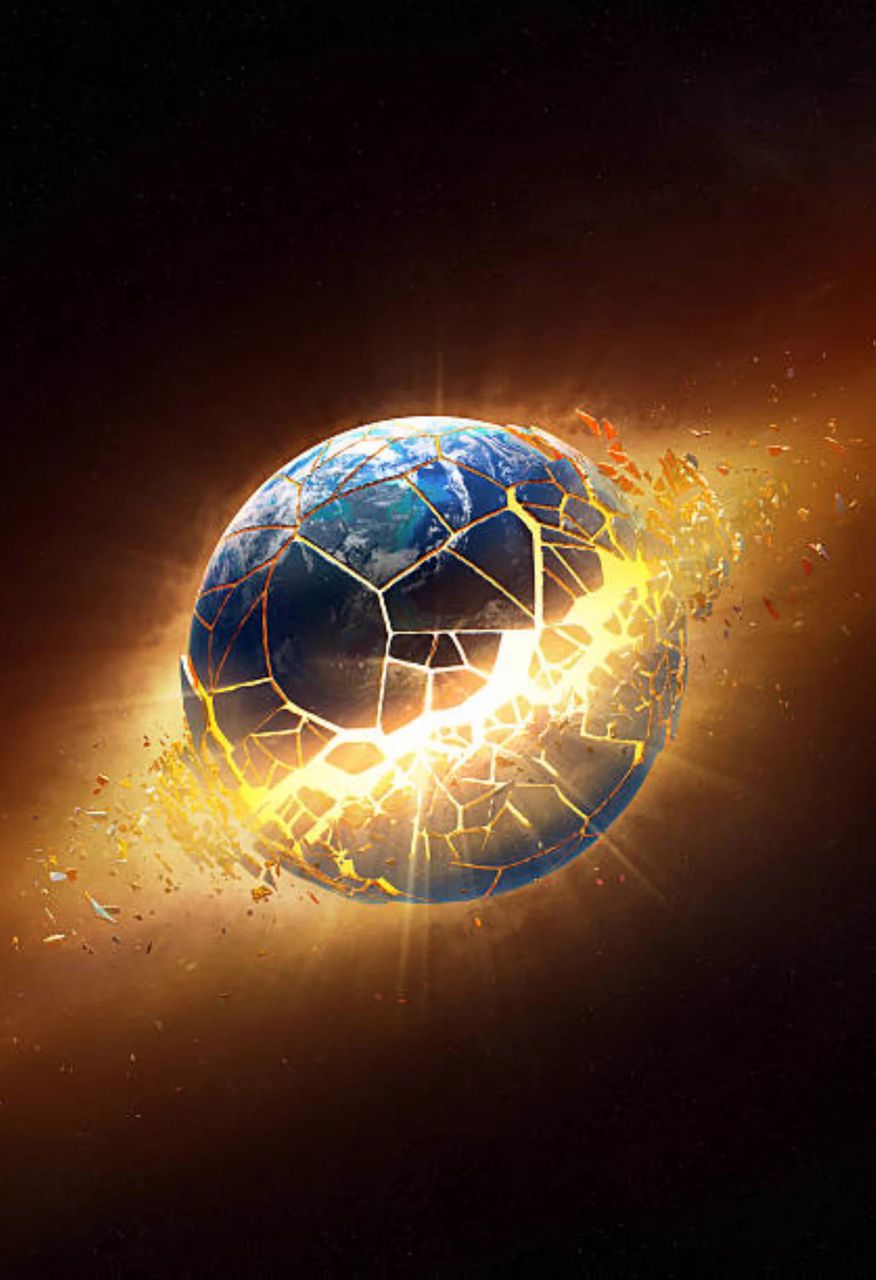
XAn X post from an account called Global Explainer announces, in capital letters, that the world will end in two weeks, naming Friday 13 November 2026. It attributes the date to an old study in the journal Science and credits the New York Post as its source. Attached is a stylised illustration of the Earth cracking open with glowing molten seams.
“BIG BREAKING: World will end in Two weeks. World will end on Friday 13 Novemeber 2026 : According to an old study published in journal science Source : NewYork Post”
Posted on X by an account using the handle @Globalexplainer. The post gives no link to the paper or the New York Post article it names. The caption contains spelling errors ("Novemeber", "NewYork").
Who posted it
XAccount check
Estimates from public signals — account age, posting pattern, audience — not a judgement of the person behind the account, and separate from whether this post is true.
What stood out
- Anonymous 'Global Explainer' handle (@Globalexplainer) bills itself as 'Quality Journalism | Global Trending Geopolitical News', but publishes templated one-line 'BREAKING'/'Breaking;' items with no sources, links or bylines.
- Profile data supplied was empty, but live lookups show ~3,990 posts and no platform verification, no named operator, and no masthead or outlet behind the brand.
- Recycled-news pattern: in Sept 2026 it posted as 'Breaking' that Saudi Arabia would withdraw from China-led mBridge and that the US would attack the Houthis on Riyadh's request; replies noted Saudi actually left mBridge in May 2025 (FT), i.e. old news repackaged as new.
- False claim match: its post asserting Australia told citizens to stockpile food/water and prepare for emergencies matches a narrative AFP fact-checked on 3 Nov 2026 as false ('The Australian Government has not asked Australians to stockpile food or water').
- Misleading framing: 'Germany blocked Canada's application to join European Union' distorts real Oct 2026 reporting (DW, GreekReporter) that EU states, led by Germany, blocked the phrase 'associate membership' in a summit declaration — Canada never applied to join the EU.
- Other recent items ('Bessent hiding on a military base over an Iran threat', 'Russia officially abandoned plans to replace the dollar with the yuan', 'maths proves the Resurrection') are unsourced, sensational and typical of engagement-farming rather than reporting.
- Every post ends with a self-promotional 'Follow @Globalexplainer…' tag, and it pushes a second near-identical handle, indicating a coordinated multi-account brand rather than an individual journalist.
- Its content is heavily re-used by low-authority aggregator sites (ftnews.cz/sk, cretaone.gr, thestival.gr) that treat the tweet as the source — circular amplification of unverified claims.
- No corrections, retractions or editorial standards visible; grammar/spelling errors ('it's' for 'its', 'tarrif') throughout the feed.
Signals (9)+
- Post count observed
- 3991
- Posting cadence
- Very high volume; multiple 'BREAKING' items per day across unrelated regions
- Bio claim
- Quality Journalism | Global Trending Geopolitical News from around the world
- Named operator
- No
- Linked secondary handle
- @Globalexplainer1 (self-promoted in every post)
- Sourcing practice
- None in-line; occasional vague 'Source: Daily Mail'; no links to primary documents or wires
- Fact check history
- Australia stockpile/emergency claim — matches AFP fact check of 2026-11-03 debunking the claim; Saudi mBridge 'Breaking' — recycled 2025 news, called out as fake news in replies; Canada EU 'application' — distorts DW/Reuters Oct 2026 coverage of associate-membership wording
- Notable news coverage
- Cited as a source by low-authority aggregator sites, not by established outlets
- Bot assessment
- Consistent templated formatting and 24/7 multi-region cadence are automation-compatible, but no direct evidence of bot operation; likely a human/anonymous engagement farm
Account checked November 11, 2026, 15:05 UTC
The media
Image✓ What is genuine
The image is artwork, not a photograph presented as documentary evidence. It carries no caption claiming to show a real event, and the post's argument does not depend on it — the claim rests on the contents of a 1960 paper.
The tells
- ●●● Strong signal The Earth is shown splitting along glowing molten seams while staying intact in orbit, with debris flying off — a scene no known physical process produces.our visual review
- ●●○ Supporting signal The rendering is clearly stylised artwork rather than a photograph, with an even, illustration-like finish.our visual review
- ●○○ Weak signal Our detector returned a very low AI-generated score for this image, which does not match the visual read, so we do not treat the detector as decisive here.our detector
Synthetic-media detector
Detector ranThe analysis suspected fabrication, so the detector ran.
Scores are the detector’s estimate for the file as uploaded. A low score does not rule out editing, a spliced caption, or footage shown out of context — those are judged above. Model v3.
How we checked the media
- Visual review of the attached illustration by our team.
- Our AI-image detector (Hive) was run on the image.
Sources
7 sources reviewed- 1Will the world end next month? Science said so, in 1960 ↗
Science (AAAS) · science.orgPrimary / fact-checkerpeer-reviewedEvidence
Explains that the paper predicted population growth to a singularity, and that world population is around 8 billion rather than hundreds of billions.
- 2Demographic 'doomsday' misses the mark ↗
Science (AAAS) · science.orgPrimary / fact-checkerpeer-reviewedEvidence
States that 13 November 2026 carries no particular significance and explains why the prediction failed.
- 3Doomsday: Friday, 13 November, A.D. 2026 (original paper record) ↗
Science (AAAS) · science.orgPrimary / fact-checkerpeer-reviewedEvidence
Confirms the paper's title, authors, journal, volume and 4 November 1960 publication date.
- 4The world ends in two weeks, according to shocking 1960 study — under horrific circumstances ↗
New York Post · nypost.comLow reliabilityLean Right; tabloid — corroborateEvidence
Confirms the New York Post article exists and itself says 13 November will pass without incident.
- 5Scientists predicted Nov. 13, 2026 will be 'doomsday.' Should we worry? ↗
Western University (Western News) · news.westernu.caUntiereduntiered — treated as signal only, never decisiveEvidence
Dates the model's divergence from observed population to around 1993 and calls for an ordinary day.
- 613 Kasım 2026'da Dünya'nın sonu mu geliyor? ↗
Teyit · teyit.orgUntiereduntiered — treated as signal only, never decisiveEvidence
Describes the 1960 paper as scientific and humorous satire on overpopulation and rates the doomsday framing false.
- 7Why A 1960 Research Paper Predicted 'Doomsday' On November 13, 2026 ↗
NDTV · ndtv.comUntiereduntiered — treated as signal only, never decisiveContext
Reports that the article was spread on social media with exaggeration and that 13 November will most likely be normal.
Further reading
- 1Science (AAAS) Science's own retrospective explains what the paper actually modelled and how far the population figure is from the runaway curve.
- 2Science (AAAS) The journal's October 2026 piece addresses the date directly and explains why the prediction failed.
- 5Western University (Western News) A university explainer that dates the model's divergence from reality to around 1993.
- 6Teyit The Turkish fact-check offers the clearest description of the paper's satirical intent.
The full story
The kernel of truth here is a real paper in a serious journal. On 4 November 1960, Heinz von Foerster, Patricia M. Mora and Lawrence W. Amiot published "Doomsday: Friday, 13 November, A.D. 2026" in Science. The title is startling, and it is why the rumour survives a first check: search the journal and the date and both come back genuine.
But the paper was about people, not planets. It took the accelerating growth of human population and extended the curve forward, finding that the numbers ran away to a mathematical limit on that date. In other words, the "doomsday" was an infinite crowd, not a shattered Earth. The framing was also partly a provocation: the date was chosen to fall on von Foerster's birthday, and Teyit describes the piece as scientific and humorous satire meant to flag overpopulation.
Reality then took a different path. Western University's explainer notes the projection looked accurate until around 1993, when population growth diverged from the curve. Science's own October 2026 retrospective puts the world at roughly 8 billion people rather than the hundreds of billions the model implied, and the United Nations projects a peak of about 10.3 billion in the mid-2080s.
The New York Post revived the story on 30 October 2026 and said plainly that, barring an AI or nuclear catastrophe, the day would pass without incident. The viral post kept the headline and discarded the caveat. Science, Western University and Teyit have all since said the date carries no significance, so the only thing arriving on 13 November is a Friday.
Kernel of truth
A genuine 1960 Science paper did name Friday 13 November 2026 as a "doomsday" — but for a runaway population curve, part of a deliberately provocative framing, not for the destruction of the world.
Timeline
November 4, 1960
Science publishes "Doomsday: Friday, 13 November, A.D. 2026" by Heinz von Foerster, Patricia M. Mora and Lawrence W. Amiot, projecting population growth to a mathematical limit on that date. 3Science (AAAS)
1993
World population growth diverges from the paper's projected curve, according to Western University's explainer. 5Western University (Western News)
October 30, 2026
The New York Post publishes an article on the 1960 study, noting that 13 November will pass without incident barring an AI or nuclear catastrophe. 4New York Post
November 9, 2026
Western University publishes an explainer on the predicted "doomsday", noting the model failed and hoping for an ordinary day. 5Western University (Western News)
November 13, 2026
The date named in the 1960 paper arrives; no scientific body expects anything to happen. 2Science (AAAS)
How it was framed
The post uses genuine material — a real paper, a real journal, a real New York Post article — but attaches a false meaning: that the paper forecast the physical end of the world. It also strips the cited article's own caveat that the day would pass quietly.
- Borrowed authority. "According to an old study published in journal science" and "Source : NewYork Post" — the post leans on the names of a prestigious journal and a major outlet.
- Emotional language. "BIG BREAKING" in capitals, followed by "World will end in Two weeks."
- Missing context. The post omits that the paper modelled population growth and that the New York Post article it cites says 13 November will pass without incident.
- “Visual proof”. A dramatic illustration of the Earth cracking open accompanies the text.
Posted on X by the account @Globalexplainer. The post cites Science and the New York Post but links to neither. No engagement figures or posting time were available to us.
Bias
Leans sensationalist apocalypse clickbait. The post strips a 66-year-old demographic model of all context and frames it as 'BIG BREAKING' news that the world ends in two weeks, omitting the source article's own statement that the date will pass uneventfully. The intent is engagement through fear rather than political advocacy.
Bias describes how the post frames its message — the slant of the language, selection and emphasis — and is judged separately from whether the claim is true. A true claim can still be framed with a strong slant.
How we checked
1 min- 1
Searched for the 1960 Science paper and its authors to confirm the paper's existence, title, journal and date.
- 2
Searched for the New York Post article the post names, to see if it exists and what it actually says.
- 3
Searched for existing fact-checks of the 13 November 2026 doomsday claim.
- 4
Reviewed the full text available from Science, Western University, Teyit, NDTV and the New York Post on what the paper predicted and whether the date has any significance.
- 5
Ran a visual review of the attached illustration and put it through our AI-image detector (Hive).
✓ Claim checked✓ Media checked✓ Sources checked
Why 88% confidence
HighWe rate this HIGH because the interpretation of the paper is settled by sources that do not depend on each other in a circular way: the publisher's own retrospective, an independent university explainer, a fact-checker and the tabloid being cited all say the same thing. The content of the paper and the population data are checkable documents, not opinions. The only weak point is our detector's low AI score for the image, which conflicted with our visual read; that does not affect the headline, because the claim rests on the paper rather than the picture.
Limits. The claimed doomsday date was two days away when we published, so there is no outcome yet to report — only the predictive record of the model and the statements of the sources. We could not see the post's engagement figures or posting time, and we did not contact the account behind it.
What we don’t know
- Who runs the @Globalexplainer account, and whether the post was written to mislead or simply copied in good faith.
- Whether the post reached a large audience or was amplified by further accounts — no engagement data was available.
- Whether the original paper was meant entirely as satire or as a serious warning wrapped in a provocative title; sources describe it as both a model and a deliberate provocation.
Spot it yourself
Spot the fakeLooks suspicious, isn’t proof
- The all-caps "BIG BREAKING" opener and the dramatic cracking-Earth illustration. An alarming tone and dramatic art are reasons to slow down, but plenty of true stories are told badly.
- The spelling errors in "Novemeber" and "NewYork". Sloppiness suggests low care, not necessarily a false claim — official accounts make typos too.
- The post is anonymous and gives no links. Missing links make verification harder but prove nothing about the claim itself.
The actual evidence
- The paper's content. Science's own retrospective (source 1) and Teyit (source 6) both describe a population-growth model, not a forecast of physical destruction.
- The population figures. Science (source 1) puts the world at about 8 billion people, far below the runaway curve the model implied.
- The model's failure. Western University (source 5) dates the divergence to around 1993 — a projection that broke decades ago cannot carry a 2026 deadline.
- The cited article's own conclusion. The New York Post (source 4) says the day will pass without incident, which the post leaves out.
- 1
Read the paper, not just the headline
Search the exact title, "Doomsday: Friday, 13 November, A.D. 2026". The record confirms the paper exists — then look for what it actually predicted, because a title alone is not a finding.
- 2
Ask what kind of disaster is claimed
The post never says what will happen. A real forecast names a mechanism — an impact, a war, a solar event. If none is given, treat the claim as an alarm bell, not a prediction.
- 3
Open the source the post names
Find the New York Post article and read past the headline. In this case its own closing lines say the date will pass without incident.
- 4
Check whether the projection still fits the data
Look at current population figures. When a model's numbers have diverged from reality for decades, its final date loses meaning.
- 5
Treat the illustration as artwork, not evidence
A dramatic image can set the mood without showing anything real. Here the cracking Earth is a stylised illustration, and the claim does not rest on it.
Takeaway
A real paper, a real journal and a real news article can all be genuine while the conclusion drawn from them is false. Check what the source actually says, not just that it exists.
Questions people ask
Will the world really end on 13 November 2026?+
No. The date comes from a 1960 Science paper that projected human population onto a runaway curve, not from any forecast of the planet being destroyed. Population growth left that curve around 1993, and Science, Western University and fact-checkers all say 13 November 2026 carries no significance. Expect an ordinary Friday.
Did a Science study actually predict doomsday?+
A real paper titled "Doomsday: Friday, 13 November, A.D. 2026" appeared in Science on 4 November 1960, by Heinz von Foerster, Patricia M. Mora and Lawrence W. Amiot. But it predicted population growing to a mathematical limit on that date, not a physical apocalypse, and the title was partly a provocation — the date fell on von Foerster's birthday.
Why does the New York Post appear as the source?+
The New York Post did publish an article on the 1960 study on 30 October 2026, so the sourcing line is accurate. The post simply leaves out what that article says at the end: barring an AI or nuclear catastrophe, 13 November will pass without incident.
What is the cracking Earth image in the post?+
It is a stylised digital illustration showing the planet splitting apart with glowing molten seams — a scene no known physical process produces. It is decorative artwork, not a photograph of a real event, and the post's claim does not depend on it.
How can a checkable claim still be misleading?+
Because every ingredient can be genuine while the conclusion is false. The journal is real, the paper is real, the date is real and the cited article is real — but the paper predicted a population limit, not the end of the world, and the article said the day would pass quietly. Real parts, false meaning.
Go deeper
- Mathematical singularity
- A point where a formula's output shoots toward infinity and stops describing anything real — in this paper, an infinitely large population.
- False context
- Sharing genuine material — a real photo, document or study — with a false explanation of what it shows or means.
- Extrapolation
- Extending a trend seen in past data into the future, on the assumption that the pattern continues.
- Population projection
- An estimate of future population size based on assumptions about birth rates, death rates and migration.
- Borrowed authority
- A persuasion technique that leans on a trusted name — a journal, an expert or an official body — instead of presenting the evidence itself.
People also search for
For educators+
- If every named source in a post turns out to exist, is the post trustworthy? What else would you need to check?
- The 1960 paper's title was deliberately provocative. How should readers treat a scientific title that is designed to grab attention?
- What would you look for first to tell whether a doomsday claim has any scientific basis?
About this check
- Platform
- X
- Posted by
- @globalexplainer
- Posted
- October 30, 2026
- Age when checked
- Older post, still live
- Where it spread
- United Kingdom, Ireland, United States
- Audience
- International audience
- Language
- EN
- Status
- ● Post is live
- Verified
- November 11, 2026, 15:07 UTC
- Published
- November 11, 2026, 15:07 UTC
Reach. 16,912 likes, 2,290 replies (X syndication, 11 Nov); date arrives 13 Nov; wide pickup in UK/IE, Turkish, Russian, Indonesian, Spanish outlets 9-11 Nov
This verdict was generated with AI from the sources shown. AI can make mistakes — check the sources before relying on it.
Check anything yourself, in seconds.
Share any social post or video to What the Fact and get the verdict, the confidence, and the receipts.