Does pollution over India shield people from sunburn while Europe's clean air lets burning sunlight through?
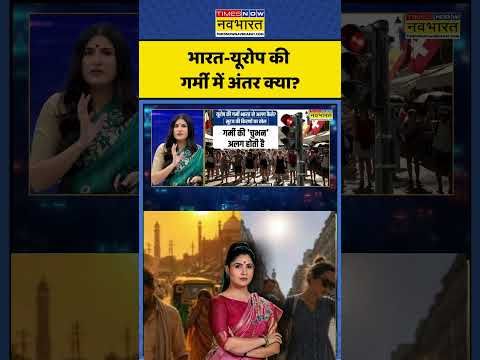
Does air pollution protect people's skin from harmful sunlight and sunburn, as Indian TV anchor Rubika Liyaquat said in a viral clip?
Misleading
Aerosol haze really does dim sunlight, but it does not protect skin, so the conclusion fails.
Misleading. In a News Ki Pathshala segment on Times Now Navbharat, anchor Rubika Liyaquat said Indian pollution and dust form a layer that blocks direct sunlight, while clean European air lets burning rays through. Haze does dim sunlight, but pollution does not protect skin, and the clip spread during Delhi's November 2026 smog crisis.
Claims
✕ 1 falsePollution and dust over Indian cities form a protective layer that partially blocks direct sunlight from reaching the ground.13
The physical kernel is real. Airborne particles scatter and absorb incoming solar radiation, cutting the amount of energy that reaches the surface, an effect climate scientists call global dimming. Because of it, parts of India have warmed more slowly than the global average, and the comparison with Europe is not invented. But the word 'shield' overstates what happens. Dimming is a partial reduction in total radiation, and it travels with black carbon, ozone and fine particulate matter that carry their own health costs. The point matters because it decides how the rest of the claim should be read: the premise is not fabricated, which is why a viewer who checks only this part will find supporting science and may assume the conclusion follows. Our searches for the original broadcast did not locate a primary recording of the segment; we rely on outlets that quote and describe it. That makes the wording of her exact remarks slightly less certain than the general thrust, and we keep the confidence at moderate rather than high.
Still open: The full original broadcast is not archived in our sources, so the exact phrasing of the dimming point is known only through second-hand quotation.
Because of that pollution layer, Indians are protected from sunburn, whereas Europe's clean air lets burning sunlight reach the skin directly and damages it.124
This is where the reasoning breaks. Haze cuts total visible light far more than it removes ultraviolet radiation, so a dusty sky is not a sunscreen. The particles that dim the sun are the same ones that settle on skin, and airborne particulate matter is itself harmful to skin: it is linked to inflammation, dryness, pigmentation and premature ageing. Presenting Indian smog as a benefit while casting clean European air as the danger inverts the public-health picture. The decisive evidence is not a single measurement but the convergence of independent sources: two outlets on opposite sides of the India-Pakistan media landscape (NewsGram and ARY News) report the same remarks and the same critical response, and a further report describes the segment in the same terms. Because those outlets are independent of one another and of the broadcaster, the claim that the remarks were made is strongly corroborated. The science that contradicts the protective conclusion is not contested in any of our sources. We rate this element false with high confidence: the statement about skin protection is not a matter of framing but a reversal of how UV and particulates affect the body.
The pollution layer protects Indians from the heat, while Europe's cleaner air leaves people exposed to harsher heat/sun.13
Aerosols can damp local temperature slightly, so there is a grain of truth to tug at. But heat stress depends on humidity, night-time minimum temperatures, housing, access to cooling and how bodies regulate themselves, not on a protective smog blanket. Describing pollution as heat protection during a severe Delhi air-quality emergency is a distortion of what the science supports and of what public-health agencies treat as a hazard. Timing makes this worse: the clip resurfaced between 11 and 13 November 2026, as Delhi was in a post-Diwali smog crisis, when the practical question was how to protect people from bad air, not whether bad air helps them. One further wrinkle: some versions circulating online appear to have added the 'protects from extreme heat' element to remarks originally about sunlight and skin, so what a viewer saw shared may not match what was said on air. We hold this at moderate confidence because the distinction between the broadcast and its later re-edits rests on the reports we have rather than on a full recording.
Still open: It is not fully established which circulating versions match the original broadcast and which added the heat-protection wording.
A text-only post: there was no media to test.
What was posted
YouTubeA YouTube listing for an episode of the Hindi-language programme News Ki Pathshala, hosted by Rubika Liyaquat. The title poses a question comparing India's and Europe's heat, and the channel is named as Times Now Navbharat. The item is text-only: no image, video file or transcript was attached, so what circulates is the title plus the broadcast clip it points to.
“News Ki Pathshala | Rubika Liyaquat | भारत-यूरोप की गर्मी में अंतर क्या? #europe #heatwave”
“News Ki Pathshala | Rubika Liyaquat | What is the difference between India's and Europe's heat? #europe #heatwave” — translated
The listing carries no uploader name or date, and the segment predates the November 2026 resurfacing; the title asks a question rather than stating a fact.
Who posted it
YouTube@timesnownavbharat
24.7M subscribers
View the account on YouTube ↗“टाइम्स नाउ नवभारत (TIMES NOW Navbharat) में हम मानते हैं कि सिर्फ़ ख़बरें आप तक लाने से परिवर्तन नहीं आता. परिवर्तन की दिशा में हम बढ़ते हैं, जब हम लाते हैं नए बदलाव. हमारा विश्वास है कि आज न्यूज़ का सही उद्देश्य है वर्तमान से आगे बढ़कर एक बेहतर कल की दिशा दिखाना. क्योंकि यह बदलाव ही ले जाएगा हमें एक बेहतर नए भारत की ओर. नवभारत के इस संकल्प के लिए हम प्रतिबद्ध हैं. और यह बदलाव सिर्फ़ ब्रेकिंग न्यूज़ या ऊंची आवाज़ से नहीं, ख़बरों में नए आगाज़ से आएगा. इसलिए हम मानते हैं कि हमारा काम सिर्फ़ सवाल उठाना नहीं, उन सवालों को जवाबों से मिलाना भी है. बीते कल में उलझने से ज़्यादा ज़रूरी आने वाले कल को सुलझाना है. एक नई सोच लाकर, हर ओर नई उम्मीद जगाना है. हमारे लिए टाइम्स नाउ नवभारत सिर्फ़ एक न्यूज़ चैनल नहीं, एक अभियान है जहां हम देश के लोगों से जुड़कर देश की और देश के लोगों की बात करते हैं. उठाते हैं वो मुद्दे जो ज़रूरी हैं इस देश को और आगे ले जाने के लिए. क्योंकि द टाइम्स ग्रुप में हमारा काम आने वाले कल में नई आशा भरना है, ना कि बीते कल की निराशा में उलझे रहना.”
Account check
Estimates from public signals — account age, posting pattern, audience — not a judgement of the person behind the account, and separate from whether this post is true.
What stood out
- Account is the genuine, platform-verified Hindi channel of Times Now Navbharat, part of Times Network / The Times Group (launched 2021, ~24.7M YouTube subscribers), with extensive press coverage of its subscriber milestones.
- Content is professionally produced newsroom output (branded shows like 'Dhurandhar' with anchor Amish Devgan, 'News Ki Pathshala'), not automated/coordinated posting — no bot indicators.
- Editorial reliability is the weak point: in May 2025 the channel aired a 2021 Israel Iron Dome clip as live 'Pakistani attack foiled in Jaisalmer' during the India–Pakistan crisis, prompting a CJP complaint to NBDSA and Alt News debunks.
- NBDSA (order dated 6 June 2025) pulled up the channel for a 'misleading' communal-harm thumbnail on a Shimla mosque video, which was then deleted.
- Its reports have been recycled out of context by other accounts (e.g. The Quint debunked a 2024 gold-repatriation segment being framed as a 2025 anti-Trump move).
- Recent uploads match real November 2026 events (Jensen Huang's resignation, Israeli election/Netanyahu legal jeopardy), but headlines are heavily sensationalised and speculative ('Trump bhi nahi bacha payenge', 'Honeytrap', 'Jail ki baari').
- Sample videos show low engagement counts (52–3,100 views) despite a 24.7M-subscriber base, consistent with high-volume churn and clickbait thumbnails rather than organic audience pull.
- Not an imposter account: branding, bio and show line-up align with the official Times Group channel, though the specific channel ID could not be independently confirmed via search.
Signals (12)+
- Account type
- Major broadcaster / media organisation (Hindi news)
- Parent organisation
- Times Network, The Times Group (Bennett, Coleman & Co.)
- Platform verification
- Yes
- Followers
- 24700000
- Estimated account age years
- 5.3
- Account created source
- Channel launched 2021 (5M subs milestone Aug 2023); exact date not provided in metadata
- Posting cadence
- Very high volume, multi-daily news and debate clips
- Engagement quality
- Low views per sampled video relative to subscriber base; clickbait thumbnails
- Fact check history
- Jaisalmer/Iron Dome false broadcast (May 2025), NBDSA order on misleading Shimla mosque thumbnail (June 2025), out-of-context gold repatriation report recycled
- Regulatory action
- NBDSA directive to remove misleading thumbnail
- News coverage
- Extensive trade-press coverage of channel growth and programming
- Content basis check
- Recent Netanyahu and Nvidia/Jensen Huang stories correspond to real Nov 2026 reporting, but framed with unverified speculation
Recent posts from this account
- Israel Election: Netanyahu का खेल खत्म, जेल जाने की बारी? 3 केस की फांस, Trump भी नहीं बचा पाएंगे ?
- Dhurandhar | Amish Devgan | Owaisi के प्रवक्ता के किस बयान पर Debate में छिड़ी तगड़ी बहस ! | News576 views
- Alice Huang का नाम और Nvidia में भूचाल ! Jensen के इस्तीफे की पूरी कहानी ! Hindi News Global Hatt524 views
- UP Elections 2027 : BJP की Lucknow में बड़ी बैठक, Chandrashekhar का अखिलेश को बड़ा ऑफर | UP New3.1K views
- Jensen Huang को Nvidia से बाहर होने पर कितना नुकसान? । #jensenhuangnetworth #nvdia #topnews52 views
Account checked November 13, 2026, 14:57 UTC
Sources
5 sources reviewed- 1Delusional Take: “Pollution prevents direct sunlight from reaching the Earth, protecting skin from sunburn,” says TV anchor Rubika Liyaquat ↗
NewsGram · newsgram.comUntiereduntiered — treated as signal only, never decisiveEvidence
Quotes the segment's pollution-as-barrier language and the 'Europe's clean air' contrast, and documents the backlash.
- 2Rubika Liyaquat's viral pollution benefits video brings social media storm ↗
ARY News · arynews.tvUntiereduntiered — treated as signal only, never decisiveEvidence
Independently confirms the remarks and the social-media reaction.
- 3Opinion | Why Is India Cooler As The World Burns? A Heatwave 'Mystery' ↗
NDTV · ndtv.comUntiereduntiered — treated as signal only, never decisiveEvidence
Provides the genuine scientific kernel: aerosols reflecting sunlight and dampening regional warming, per Daniel Schrag.
- 4‘Pollution Filters Sunlight in India’: Rubika Liyaquat's Remarks on Sunlight, Pollution and Rising Temperatures Face Scrutiny ↗
BuzzPedia (Instagram) · instagram.comUntiereduntiered — treated as signal only, never decisiveEvidence
Describes the same claim about Indian pollution filtering sunlight versus cleaner European air.
- 5Times Now Navbharat strengthens editorial leadership with Rubika Liyaquat ↗
MediaBrief · mediabrief.comUntiereduntiered — treated as signal only, never decisiveContext
Dates Liyaquat's tenure at Times Now Navbharat and her role on News Ki Pathshala.

Further reading
- 1NewsGram The fullest account of the quoted remarks and the public response.
- 3NDTV Explains the real science behind the claim: how pollution reflects sunlight and cooled the region.
- 2ARY News Independent reporting on the backlash, useful for seeing how the clip travelled.
- 5MediaBrief Establishes when the segment was recorded, which helps separate the broadcast from its later viral life.
The full story
The segment was not built from nothing. Climate science really does describe aerosols reflecting and absorbing sunlight, and the NDTV opinion piece we consulted cites Harvard's Daniel Schrag offering air pollution as one explanation for why India has been cooler than expected while much of the world swelters. That is a legitimate research question, discussed by serious scientists.
The move that turns a research question into a false claim is what follows it. A partial reduction in sunlight becomes a 'shield'. A shield becomes protection from sunburn. Protection from sunburn becomes an argument that Indian air is, in one respect, better than Europe's clean air. Each step is small; the chain is not supported by the first link.
The clip then landed at a particular moment. According to media reporting, Rubika Liyaquat recorded the segment during her stint hosting News Ki Pathshala on Times Now Navbharat, which she joined in June 2026 before moving to News18 in October. The clip resurfaced across X, Instagram and YouTube around 11-13 November 2026, while Delhi was in a post-Diwali smog emergency. That timing is why it travelled: people were already talking about air quality, and a confident television voice saying the pollution might be doing some good was the kind of counter-intuitive line that gets shared, quoted and argued about.
The science offers a real, narrow point about dimming. It does not offer a health benefit, and the public-health reality during that week ran in the opposite direction.
Kernel of truth
Aerosol pollution really does scatter and absorb sunlight, and has damped warming in parts of India. The error is turning that dimming effect into protection for skin and health.
Timeline
June 2026
Rubika Liyaquat joins Times Now Navbharat and takes charge of the prime-time show News Ki Pathshala. 5MediaBrief
October 2026
She leaves for News18, after the News Ki Pathshala segment in question was recorded. 5MediaBrief
November 11, 2026
The clip resurfaces and spreads across X, Instagram and YouTube during Delhi's post-Diwali smog crisis. 2ARY News
How it was framed
The post is built on a genuine scientific effect — aerosols dimming sunlight — and uses it to frame pollution as a health benefit and clean air as a danger. The framing distorts a public-health emergency rather than inventing the underlying fact.
- Borrowed authority. The claim is delivered by a named television anchor on a branded prime-time programme, so the format lends it the weight of a newsroom.
- Missing context. The dimming effect is presented without its companions: that haze cuts visible light far more than UV, and that particulate matter harms skin.
- Us vs. them. The argument sets Indian air against 'Europe's clean air', which is framed as the source of the danger.
The item is a YouTube listing under the channel description 'Times Now Navbharat'; the listing shows no uploader name and no date. Liyaquat took charge of News Ki Pathshala in June 2026 per MediaBrief, and the clip resurfaced in November 2026.
Bias
Leans apologetic toward India's air-quality crisis. The segment reframes a public-health emergency as an advantage — Indian smog as a protective shield and clean European air as the hazard. That framing minimises the documented harm of PM2.5 and tends to deflect from pollution-control failure, which is why the clip drew heavy criticism when it resurfaced during Delhi's November smog crisis.
Bias describes how the post frames its message — the slant of the language, selection and emphasis — and is judged separately from whether the claim is true. A true claim can still be framed with a strong slant.
How we checked
1 min 7 s- 1
We read the YouTube listing itself and confirmed it carries a title and channel description only, with no image, video file or transcript attached.
- 2
We ran four searches: for the segment and presenter by name, for 2026 Europe and India heat comparisons, for the pollution-sunscreen claim specifically, and for the 'India versus Europe heat' framing.
- 3
We reviewed independent reports on the segment from NewsGram, ARY News and BuzzPedia, each quoting or describing the same remarks.
- 4
We read an NDTV opinion piece citing Harvard climatologist Daniel Schrag on air pollution reflecting sunlight and cooling the region.
- 5
We checked MediaBrief's coverage of Liyaquat's appointment to establish when the segment was made.
✓ Claim checked– Media not applicable✓ Sources checked
Why 62% confidence
ModerateWe set the overall verdict at moderate confidence, and the central skin-protection element at high, because the evidence is asymmetric. That the remarks were made is strongly corroborated by independent outlets, but we could not open a primary recording of the broadcast, so the exact wording of the dimming point and the boundary between the original segment and later re-edits remain second-hand.
Limits. We did not obtain the archived broadcast or a transcript. We did not locate a ruling from an IFCN-signatory fact-checker. No media authenticity assessment applied, because there was no media asset to test; our assessment rests on the listing and the sources.
What we don’t know
- Whether the version most widely shared in November 2026 matches the original broadcast, or whether the heat-protection element was added later.
- The exact on-air wording of the dimming explanation, and whether any qualification was given in the full segment.
- Whether the broadcaster issued any correction or clarification; none appears in our sources.
Spot it yourself
Spot the fakeLooks suspicious, isn’t proof
- It comes from a mainstream Hindi television channel. Outlet identity tells you nothing about whether a specific claim is right; broadcasters air errors too.
- The title is a question rather than a statement. A question mark can feel like a dodge, but it is not evidence either way.
- The tone is confident and counter-intuitive. Confidence on air is a style, not a finding.
The actual evidence
- The physics cuts both ways: aerosols dim sunlight, but they remove visible light far more than ultraviolet, so the protection does not follow.
- Airborne particulate matter is itself harmful to skin, which reverses the health framing.
- The timing: the clip recirculated precisely when Delhi was in an air-quality emergency, which is when public-health advice treats pollution as a hazard.
- Independent outlets on different sides of the media landscape reported the same remarks, so there is little doubt about what was said.
- 1
Separate the real premise from the conclusion
Write the claim as two sentences: 'Aerosols dim sunlight' and 'therefore pollution protects skin'. Then ask whether the second follows from the first. Often it does not, and that gap is the story.
- 2
Check whether the effect is being measured in the right units
Dimming is usually described in total solar radiation or visible light. Sunburn is driven by ultraviolet. Look for a source that addresses UV specifically before accepting a sunburn claim.
- 3
Ask who treats this as a hazard
Health agencies and heat-action plans are the bodies that deal with pollution and heat. If a claim says something is beneficial and every official plan says it is dangerous, the burden is on the claim.
- 4
Watch for re-edits
Before judging a viral clip, check whether the wording you saw matches the original broadcast. Summaries and reposts often add a step the presenter did not say.
- 5
Check the date against the news
An old segment reshared during a crisis is not fake, but its timing explains why it spread. Note what else was happening that week.
Takeaway
Claims built on a real scientific effect usually fail at the 'therefore'. Check the step from the effect to the conclusion, and check whether the effect is being measured in the same units as the risk.
Questions people ask
Did Rubika Liyaquat really say Indian pollution protects people from sunburn?+
Multiple independent outlets, including NewsGram and ARY News, report that in a News Ki Pathshala segment she described Indian pollution and dust as a barrier against direct sunlight and said clean European air lets burning rays reach the ground. The remarks drew wide criticism when the clip resurfaced in November 2026.
Does air pollution block sunlight?+
Partly, yes. Airborne particles scatter and absorb incoming solar radiation, reducing how much reaches the surface — an effect called global dimming. Scientists cited by NDTV note it has cooled parts of India. But it is a partial cut in total radiation, not a clean shield.
Can smog protect your skin from sunburn?+
No. Haze cuts visible light far more than ultraviolet, which is what drives sunburn. The same particles that dim the sky also harm skin, contributing to inflammation, dryness, pigmentation and premature ageing. Clean air is not the danger here.
When did this clip go viral and why?+
It resurfaced across X, Instagram and YouTube around 11-13 November 2026, during Delhi's post-Diwali smog emergency. The segment itself was recorded earlier, while Liyaquat hosted News Ki Pathshala on Times Now Navbharat after joining in June 2026.
Why do fact-checkers call this misleading rather than fake?+
Because the starting point is real. Aerosol dimming is genuine science. The problem is the conclusion drawn from it — that pollution protects skin and heat, and that clean air is the risk — which distorts a public-health hazard into a benefit.
Go deeper
- Aerosols
- Tiny solid or liquid particles suspended in the air, from sources like dust, smoke and vehicle exhaust.
- Global dimming
- The reduction in sunlight reaching the Earth's surface caused by particles and pollution in the atmosphere.
- PM2.5
- Fine particulate matter smaller than 2.5 micrometres, small enough to penetrate deep into the lungs and bloodstream.
- Ultraviolet (UV) radiation
- The part of sunlight that causes sunburn and skin damage; it behaves differently from visible light when it passes through haze.
- Misinformation
- False or misleading information spread without evidence of intent to deceive.
People also search for
For educators+
- If the first sentence of a claim is scientifically accurate, does that make the overall claim more trustworthy? Why might it feel that way?
- Why does an old clip surfacing during a crisis reach more people than the same clip at another time?
- How would you check a health claim made on television if you had five minutes and a phone?
About this check
- Platform
- YouTube
- Posted by
- @timesnownavbharat
- Age when checked
- Older post, still live
- Where it spread
- India, Pakistan
- Audience
- International audience
- Language
- HI
- Status
- ● Post is live
- Verified
- November 13, 2026, 14:59 UTC
- Published
- November 13, 2026, 14:59 UTC
Reach. Old clip resurfaced during Delhi's post-Diwali smog. ARY (12 Nov) says it flooded X with mockery, and NewsGram (13 Nov) says it is going viral. Google suggests 'rubika liyaquat pollution' as #1
This verdict was generated with AI from the sources shown. AI can make mistakes — check the sources before relying on it.
Check anything yourself, in seconds.
Share any social post or video to What the Fact and get the verdict, the confidence, and the receipts.