Did Iran bomb four US planes on an aircraft carrier deck?
Does a viral video show Iran striking a US aircraft carrier and destroying four American fighter jets before they could take off?
False
Real Navy accident footage from 1976, 1991 and 2002 — passed off as a fresh Iranian strike.
FALSE. The clip is genuine US Navy deck-camera film, but it shows old carrier landing accidents, not an Iranian strike. The visible timestamp reads 19 July 1991; Misbar traced the segments to accidents in 1976, 1991 and 2002. No credible report exists of Iran destroying four US planes on a carrier deck.
 Genuine
Claims
✕ 2 falseIran bombed US aircraft on an aircraft carrier deck before they could take off, and America lost four of its planes in the operation.1
“قبل أن تتمكن الطائرات من الإقلاع من حاملة الطائرات، نفذت إيران عملية قصف.. وهنا فقدت أمريكا 4 من طائراتها”
The video is a compilation of three separate, genuine US Navy carrier accidents, and none of them involved Iran. The decisive evidence is a detail inside the footage itself: the deck-camera overlay reads 07-19-91, so the key segment was filmed on 19 July 1991, decades before the current conflict. Misbar's fact-check identified that segment as the crash of an A-6E Intruder landing on USS Ranger, which lost control, struck parked F/A-18Cs and fell into the sea. It identified the other two as a 14 September 1976 F-14A accident on USS John F. Kennedy and an 8 March 2002 F-14A accident on USS John C. Stennis. There is one originating explanation here rather than several independent ones: the archives and the fact-check all point to the same three Navy accidents. What a reader should weigh is that this is not a dispute over interpretation. The footage is real, and it is not what the caption says it is.
Still open: Whether the four destroyed aircraft comes from a specific real accident's toll, or was added to make the post more dramatic, is not established in our sources.
The clip shows a recent Iranian strike on a US aircraft carrier during the current Iran–US hostilities.123
Every part of the footage that can be dated falls decades before the 2026 conflict. The black-and-white overlay in the keyframes carries the date 19 July 1991, and the components are old online: provable provenance shows the 1991 USS Ranger segment was on YouTube by 24 September 2021, the 2002 Stennis segment online as early as 5 September 2013, and the 1976 clip hosted on an aviation-accident archive. Lead Stories and DW Fact Check both report that recycled and AI-generated "Iran hits US carrier" videos have circulated repeatedly during this conflict, and that there is no credible evidence of a successful strike. The sources are not fully independent of each other in origin, since they describe the same recycled clips, but the timestamp and the archival upload dates stand on their own. The caption's claim of recency collapses on the date burned into the picture.
What was posted
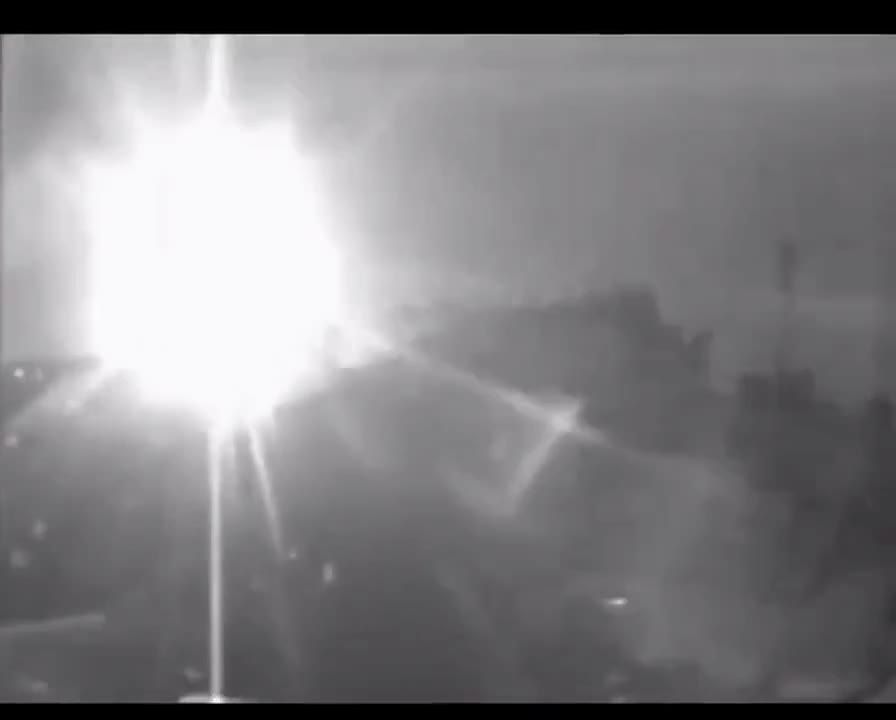
XA post on X from an account named "الصراع الإيراني ☫" ("The Iranian Conflict") shares a short video and calls it breaking news. The footage is grainy grey flight-deck camera material showing parked Navy jets, deck crew, an explosion flash and parachutes, with a date/time overlay burned into the picture. The caption asks readers to believe Iran bombed US aircraft on a carrier deck before they could take off and destroyed four American planes.
“🚨 عاجل: قبل أن تتمكن الطائرات من الإقلاع من حاملة الطائرات، نفذت إيران عملية قصف.. وهنا فقدت أمريكا 4 من طائراتها 🚀💥🔥🇮🇷🇺🇸”
“🚨 Breaking: Before the planes could take off from the aircraft carrier, Iran carried out a bombing operation.. and here America lost 4 of its planes 🚀💥🔥🇮🇷🇺🇸” — translated
Posted from an account whose display name frames it around the Iran conflict; the post uses an "عاجل" (breaking) tag and both Iranian and US flag emojis. No date is given for the claimed strike.
Who posted it
XAccount check
Estimates from public signals — account age, posting pattern, audience — not a judgement of the person behind the account, and separate from whether this post is true.
What stood out
- Anonymous Arabic-language breaking-news aggregator 'الصراع الايراني' (@iranconflict_ar); profile supplied no bio, follower count, creation date or sample posts, so nothing is self-verifiable.
- Documented misinformation: Misbar fact-check (22 Sep 2026) rated a 21 Sep 2026 post by this handle as misleading — an old video of a fire at a Moscow refinery (hit by Ukrainian drones, 20 Sep 2026) was presented as 'Yemenis blew up an Israeli oil pipeline and hit a depot in Tel Aviv'.
- House style is unsourced '🚨عاجل' (urgent) breaking claims built on emoji-laden video clips rather than named agencies, links or datelines — classic engagement-farming aggregation in a conflict zone saturated with recycled and AI-generated footage (BBC Arabic, ISD, dpa have all documented such networks around the 2026 Iran war).
- Still active and cited: posts in Sep–Oct 2026 (Iran warning of strikes on US energy firms; an alleged Iranian target list) were picked up and quoted by other accounts, i.e. it functions as a content-supply hub rather than an original reporter.
- Handle pattern ('iranconflict' + '_ar' locale suffix), zero platform verification and no named editor/outlet indicate a brand-style aggregator, possibly one node in a multi-language network, not a traceable individual or newsroom.
- No evidence of state affiliation could be confirmed, and no correction/retraction behaviour observed.
Signals (7)+
- Posting cadence
- High-volume, near-daily breaking-news posts (observed Sept–Oct 2026)
- Notable news coverage
- Quoted/embedded by other X accounts; featured as the source post in a Misbar fact-check
- Fact check history
- 1 documented misleading-content ruling (Misbar, 22 Sep 2026)
- Sourcing practices
- No named sources, no links, emoji-heavy urgent framing
- Affiliation
- Unknown / anonymous; handle suggests multi-locale 'iranconflict' brand
- Content pattern
- Aggregation of war videos and unverified breaking claims
- Recent activity
- Active as of at least late Oct 2026
Account checked November 15, 2026, 14:55 UTC
The media
Video✓ What is genuine
The footage itself. All three segments are real US Navy carrier accident film from 1976, 1991 and 2002. The only obvious addition is a pointing-hand emoji overlaid on the picture.
The tells
- ●●● Strong signal The deck-camera overlay reads 07-19-91 08:48:36, dating the key segment to 19 July 1991.our visual review, confirmed by Misbar
- ●●● Strong signal The footage is a splice of three separate accidents with different ships and eras, not one continuous event.Misbar
- ●●○ Supporting signal The radio audio ("Power booster, power… Lightning, close aboard") is routine landing-signal traffic from accident footage, not combat communications.our review of the transcript
- ●●○ Supporting signal The clip is grainy, low-resolution grey deck-camera film, consistent with genuine archival Navy footage rather than synthetic video.our visual review
Synthetic-media detector
Detector not consultedSources settled the claim on their own; the detector was not needed.
How we checked the media
- Reviewed the keyframes and the deck-camera overlay by eye, including the burned-in date and time stamp.
- Compared the visual details (parked jets, flight-deck crew, explosion flash, parachutes, grey deck-camera look) against what genuine Navy accident film looks like.
- Matched the video's three segments to documented accidents through the Misbar fact-check and the provenance record of the component clips online.
Sources
4 sources reviewed- 1هل الفيديو لاستهداف إيران مقاتلات أميركية على حاملة طائرات؟ ↗
Misbar (Al-Arabi TV) · misbar.comUntiereduntiered — treated as signal only, never decisiveEvidence
Identifies the three spliced accidents and their dates and ships, including the 19 July 1991 USS Ranger crash.
- 2Fact Check: Old Video Does NOT Show Iranian Attack On U.S. Aircraft Carrier On Nov. 3, 2026 ↗
Lead Stories (via Yahoo News) · yahoo.comUntiereduntiered — treated as signal only, never decisiveEvidence
Confirms no credible evidence of an Iranian carrier attack and describes the recycling pattern.
- 3Fact check: Three viral Iran war posts debunked ↗
DW Fact Check · dw.comReputable outletCenter — independent public intl broadcasterEvidence
Reports no credible evidence of a successful carrier attack and documents recycled or AI-generated carrier videos.
- 4US denies reports of preparations for fresh military action against Iran ↗
Pakistan Observer · pakobserver.netUntiereduntiered — treated as signal only, never decisiveContext
Shows CENTCOM rejecting reports of regional force-posture changes amid Iranian claims about US assets.
Further reading
- 1Misbar (Al-Arabi TV) The fact-check that traced each of the three segments to a specific ship and date.
- 2Lead Stories (via Yahoo News) Covers the recycled and AI-generated carrier-attack videos behind this recurring claim.
- 3DW Fact Check Documents several viral Iran war posts that failed checks, putting this one in a wider pattern.
The full story
The power of this post comes from the fact that nothing in the video is fake. There is no synthetic explosion, no generated aircraft, no invented ship. What a viewer sees is genuine US Navy flight-deck camera film: grey light, parked jets, deck crew, a flash, parachutes. That authenticity is exactly why it travelled.
What changed is the frame around it. The footage is a compilation of three separate accidents. Misbar identified the segment carrying the 07-19-91 overlay as the 19 July 1991 crash of an A-6E Intruder on USS Ranger, which struck parked F/A-18Cs while landing. The other two segments were dated to a 14 September 1976 F-14A accident on USS John F. Kennedy and an 8 March 2002 F-14A accident on USS John C. Stennis. The component clips have been online for years, the earliest uploads recorded in our provenance notes dating to 2013 and 2021.
During the 2026 Iran–US conflict, claims about hits on US carriers have been a recurring theme. Lead Stories and DW Fact Check both note that recycled and AI-generated carrier-attack videos have circulated, and CENTCOM has repeatedly denied Iranian claims of striking a carrier, including rejecting reports of force-posture changes. A real deck accident, stripped of its date and given a Breaking label, slots neatly into that information environment. The falsehood lives in the caption, not in the pixels.
Kernel of truth
Genuine US Navy carrier-deck accidents did happen, in 1976, 1991 and 2002, and this is real film of them. The claim borrowed that real footage and attached an invented Iranian attack to it.
Timeline
September 14, 1976
F-14A accident on USS John F. Kennedy, one of the three segments in the clip. 1Misbar (Al-Arabi TV)
July 19, 1991
A-6E Intruder crash on USS Ranger, the segment carrying the visible 07-19-91 deck-camera date. 1Misbar (Al-Arabi TV)
March 8, 2002
F-14A accident on USS John C. Stennis, the third segment in the clip. 1Misbar (Al-Arabi TV)
November 15, 2026
Misbar publishes its fact-check tracing all three segments, as the post circulates. 1Misbar (Al-Arabi TV)
How it was framed
The video is genuine archival footage shown with a false time, place and meaning: old US Navy accidents relabelled as a current Iranian strike. Nothing in the pixels was altered beyond an overlaid emoji.
- “Visual proof”. The video is presented as raw flight-deck footage of the strike, with no explanation of where it came from.
- Ongoing-threat framing. The caption opens with "🚨 عاجل" (Breaking) and describes an attack happening "before the planes could take off."
- Emotional language. The emoji string 🚀💥🔥 and the claim that America "lost 4 of its planes" frame a dramatic defeat.
- Missing context. No date, ship name or location is given for the claimed strike, and the date burned into the footage is not mentioned.
Posted on X by an account displayed as "الصراع الإيراني ☫" ("The Iranian Conflict"). No posting date, author details or engagement figures were available in our record of the post.
Bias
Leans pro-Iran / anti-US military propaganda. An account branding itself as covering the 'Iranian conflict' presents unrelated decades-old US Navy accident footage as a fresh Iranian combat success, with urgent 'breaking' framing, explosion emojis and both national flags to suggest an Iranian victory over the United States.
Bias describes how the post frames its message — the slant of the language, selection and emphasis — and is judged separately from whether the claim is true. A true claim can still be framed with a strong slant.
How we checked
1 min 5 s- 1
Searched for any fact-check or report on an Iranian attack that destroyed four US aircraft on a carrier.
- 2
Searched for the visible date string 07-19-91 and for archive material on the 1991 carrier deck explosion video.
- 3
Searched for CENTCOM statements denying Iranian claims of striking a US carrier in November 2026.
- 4
Opened and read Misbar's fact-check of the same video, which identified each of the three segments and its ship and date.
- 5
Reviewed the keyframes by eye, including the burned-in deck-camera date and time, and compared the transcript audio with the scene.
✓ Claim checked✓ Media checked✓ Sources checked
Why 88% confidence
HighHIGH. The finding does not rest on a judgement call: the date is visible in the footage, an independent fact-check identified each segment's real accident, the component clips have been online for years, and no coverage exists of the claimed attack. The sources converge on one explanation, and the video's own timestamp confirms it.
Limits. We could not identify who first assembled this particular three-part compilation, or when. No AI-generation detector was run, because the footage was identified as genuine archival film and the claim was resolved by the date and the accident records.
What we don’t know
- Who first spliced the three accident clips together and when they first appeared in this combination.
- Where the figure of four destroyed aircraft comes from, and whether it matches any real accident's toll.
- How widely this specific version of the video circulated before and after Misbar's fact-check.
Spot it yourself
Spot the fakeLooks suspicious, isn’t proof
- The account name and flag emojis signal a partisan framing. That is a reason to slow down, not proof the video is fake.
- The caption is in Arabic and the video is grainy. Language and poor image quality prove nothing either way; plenty of real archival film looks like this.
- The "Breaking" tag and explosion emojis are designed to grab attention. Alarmist packaging is a warning sign, not evidence.
The actual evidence
- The date overlay inside the footage reads 07-19-91, which rules out any 2026 strike.
- The clip is a splice of three different accidents, so it cannot show one continuous event on one deck.
- No credible report of four US aircraft destroyed on a carrier exists, although such an event would be reported worldwide.
- The audio is routine carrier landing-signal radio traffic, not combat communications.
- 1
Read the stamp burned into the picture
Deck-camera and security footage often carries a date and time. Pause and zoom in. If the date is years or decades old, the caption's 'today' is already in trouble.
- 2
Ask who would be reporting this
A strike that destroyed four US aircraft would be covered by major outlets and confirmed or denied by US Central Command within hours. Search for the event, not the video. If only anonymous accounts carry it, weigh that.
- 3
Check whether the clip is one event
Watch for cuts: different ships, different aircraft, different lighting or film quality between segments. A compilation is not a single incident.
- 4
Trace the footage backwards
Run key frames through a reverse image search, or search the visible date plus 'aircraft carrier accident'. Old accident clips are usually already online with their real ship and year attached.
- 5
Listen to what the audio actually is
Landing-signal radio calls like 'power' and 'close aboard' belong to routine carrier operations, not combat. Audio that fits an accident fits an accident's video.
Takeaway
Authentic footage can still carry a false story. When a video is the whole claim, check its date, its source and whether it is one event before you check how dramatic it looks.
Questions people ask
Does the video really show an Iranian attack on a US aircraft carrier?+
No. The footage is real US Navy flight-deck film, but it shows accidents, not combat. Misbar traced the segments to crashes in 1976 on USS John F. Kennedy, 19 July 1991 on USS Ranger, and 2002 on USS John C. Stennis. The date overlay in the footage reads 07-19-91.
Why does the video have a date stamp showing 1991?+
The segment was filmed by a flight-deck camera that printed the date and time into the picture: 07-19-91 08:48:36. That was the day an A-6E Intruder crashed while landing on USS Ranger. The overlay survived the reupload and undermines the claim that the clip is recent.
Has Iran ever hit a US aircraft carrier in this conflict?+
US Central Command has repeatedly denied Iranian claims of strikes on US carriers during the 2026 conflict, according to our sources. Lead Stories and DW Fact Check both found no credible evidence of a successful carrier attack. Fact-checkers describe carrier-strike videos as a recurring recycled or AI-generated theme.
Is the footage AI-generated?+
No. The imagery is genuine archival Navy film of real accidents. The deception is in the caption, which relabels old accident footage as a current Iranian strike. That makes it false context rather than fabricated media, and it is why the video looks convincing.
What is "false context" misinformation?+
It is genuine material — a real photo, video or quote — presented with the wrong time, place or meaning. The content is authentic, but the story attached to it is not. It is often harder to spot than a fake image, because nothing in the picture itself has been altered.
Go deeper
- False context
- When genuine content is shared with the wrong information about when, where or why it was made.
- Provenance
- The history of where a piece of media came from and where it appeared first.
- Absence of expected coverage
- A check that asks whether a major event would have been widely reported if it had happened, and notes when it was not.
- Flight-deck camera
- A camera mounted on an aircraft carrier's deck that records landings and launches, often with a date and time printed into the image.
People also search for
For educators+
- If the video is real footage, at what point does sharing it with this caption become misinformation?
- What should a newsroom do before reporting a dramatic strike video? Who would it call, and what would it check?
- How does the emotional packaging of the caption (Breaking tag, flag emojis, 'lost 4 planes') affect a viewer's willingness to question the footage?
About this check
- Platform
- X
- Posted by
- @iranconflict_ar
- Posted
- November 14, 2026
- Age when checked
- 1–2 days old when checked
- Where it spread
- IR, United States, Global
- Audience
- International audience
- Language
- AR
- Status
- ● Post is live
- Verified
- November 15, 2026, 14:56 UTC
- Published
- November 15, 2026, 14:56 UTC
Reach. 2,169 likes, 59 replies on X (syndication 15 Nov); Misbar fact-check 15 Nov rates it misleading (carrier deck landing accident, not an Iranian strike)
This verdict was generated with AI from the sources shown. AI can make mistakes — check the sources before relying on it.
Check anything yourself, in seconds.
Share any social post or video to What the Fact and get the verdict, the confidence, and the receipts.