Did Ukraine really strike the Kerch Bridge on 16–17 November 2026?
Did Ukraine's strikes on 16-17 November collapse an arch and a road span of the Crimean (Kerch) Bridge, as Zelensky's 'unprecedented operation' post and viral videos say, despite Kremlin claims the damage was minor?
True
The Kerch Bridge strike happened, and Russia's own Crimea authorities confirmed it.
TRUE. The video posted by Volodymyr Zelenskyy shows Ukraine's strike on the Kerch Strait Bridge overnight on 16–17 November 2026. Reuters/AP, CNBC, Al Jazeera and the Institute for the Study of War reported the attack, and Russian-installed Crimea officials confirmed the crossing was hit and traffic halted. Imagery showed a collapsed arch and road span in the water.
 Likely genuine
Claims
✓ 4 trueUkrainian forces struck the Kerch (Crimean) Bridge overnight on 16–17 November 2026, causing one of its arches and a road span to collapse into the water.1235
This is the claim the whole post rests on, and it holds up on every level. The strike and the structural collapse were reported separately by Reuters/AP (carried by ABC News), CNBC, Al Jazeera and Spectrum News, and placed in a wider campaign by the Institute for the Study of War. Ukraine's General Staff said an arch and a span of the road section came down, and the railway section's arch was damaged. The decisive evidence is not the Ukrainian side at all: Russian-installed Crimea governor Sergei Aksyonov confirmed the crossing was attacked and that traffic was suspended, and the Russian Investigative Committee acknowledged structural damage. When the adversary concedes the core fact, the claim is no longer one side's word. Satellite images and daylight photographs showing the deformed arch and a road span in the water tie the physical result to the release. Note that the sources are not fully independent of one another — several trace back to the same Ukrainian official statements — but the Russian acknowledgements and third-party imagery supply the independent leg.
The strike was the seventh and final stage of an operation prepared over several weeks, in which Ukrainian forces first degraded Russian air defence, radar and electronic warfare assets.78
The seven-stage structure is stated consistently by Zelenskyy, the SBU and the General Staff, and repeated in Ukrainian and international reporting — which is what earns it 'likely true' rather than unproven. But consistency across official Ukrainian channels is not the same as independent confirmation. Several of those statements share a single origin, so they count as one account, not several. No public evidence in our material independently verifies the earlier phases, such as the specific degradation of Russian air defence, radar and electronic warfare assets, or fixes the number of stages at seven from outside Ukraine's own account. Readers should weigh the overall operation as well established and the internal sequence as a plausible but self-reported military narrative. It is the kind of detail that often firms up later as analysts reconstruct the campaign.
Still open: No outside source in our material independently reconstructs the seven earlier phases or confirms the count of stages.
Palianytsia drones hit the road section, while Neptune missiles, Ruta drones and FP-5 Flamingo missiles struck the railway section, with Flamingo delivering a guided final strike.268
The weapon mix is partly corroborated rather than fully independent. The SBU said its Alfa unit hit the road section with Palianytsia missile-drones, and the footage it released shows a series of hits near the attachment points of the metal arches. More usefully, Fire Point — the manufacturer of the FP-5 Flamingo — publicly confirmed its missiles were used and described the resulting damage, which is a party with direct knowledge of its own product, though not a neutral observer. The exact division of labour between Neptune missiles, Ruta drones and Flamingo missiles for the railway section remains self-reported by Ukraine. No independent munitions analysis in our material has confirmed which weapon hit which target, so the attribution is well supported but not nailed down. That is enough for 'likely true' and not enough for 'true'.
Still open: Which specific weapon caused which part of the damage has not been independently established.
The operation was a response to Russian strikes on Ukrainian infrastructure, including bridges in Zaporizhzhia, Dnipro, Kyiv and Odesa region.134
The underlying fact is solid even though the word 'response' is the speaker's framing. On the same night as the Kerch strike, Russian ballistic missiles and drones hit Kyiv's North and South bridges, causing casualties and disrupting water and heating supplies. Kyiv mayor Vitali Klitschko confirmed the strikes on the capital's bridges, and CNBC, ABC/Reuters and Al Jazeera all reported them. Earlier Russian strikes on Ukrainian bridges are also documented. So the factual core — that Russian forces were hitting Ukrainian bridges, including in the capital, at the same time — is independently established. Whether the Kerch strike should be described as retaliation is a matter of interpretation, not a factual claim we can settle. We verify the concurrent attacks; we do not endorse the causal framing.
What was posted
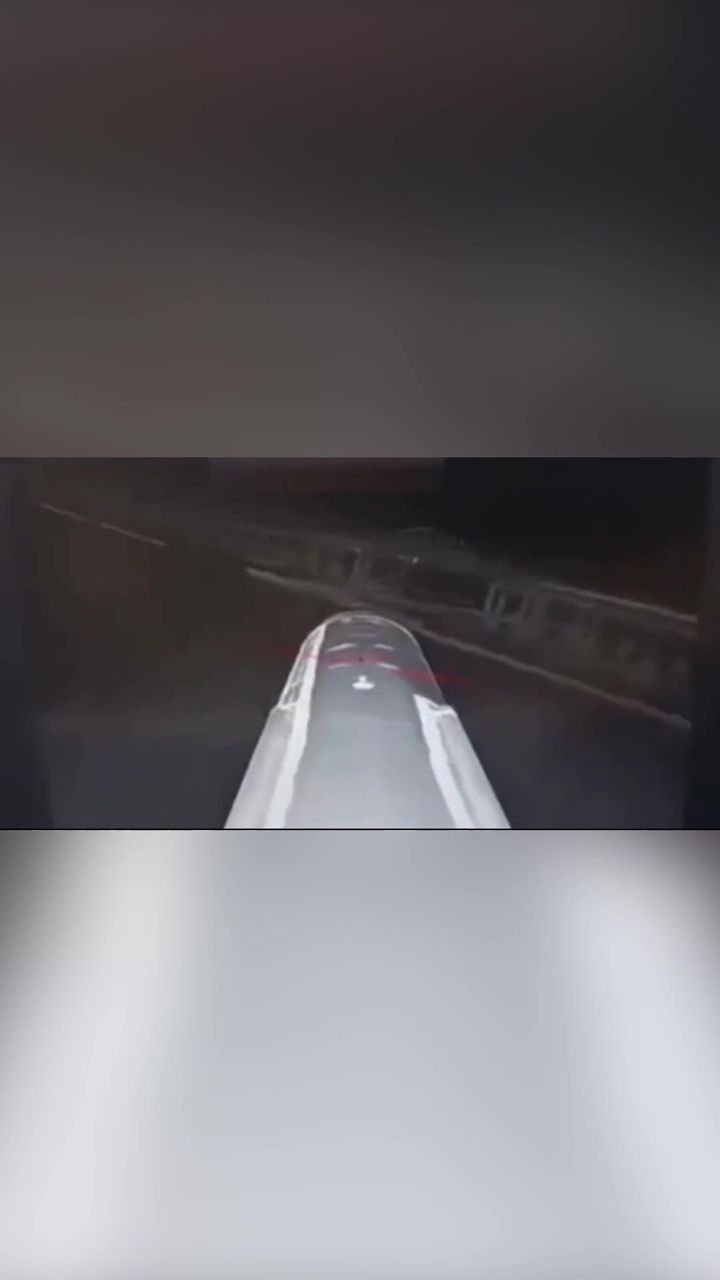
XA video posted on Volodymyr Zelenskyy's official X account on 17 November 2026, thanking Ukraine's Security Service, defence units, defence minister, commander-in-chief, General Staff and weapons manufacturers for what he calls an 'unprecedented operation'. The footage compiled in the post shows weapon-camera and thermal views of the Kerch Strait Bridge during strikes, then daytime long-lens shots of the damaged crossing with a collapsed arch in the water. The post asks readers to accept that Ukraine carried out a major, coordinated attack on the bridge.
“Grateful to the Security Service of Ukraine, all units of Ukraine’s Defense Forces involved, Ukraine’s Minister of Defense, the Commander-in-Chief of the Armed Forces of Ukraine and the General Staff, and all our weapons manufacturers for an unprecedented operation in response to”
Posted on the Ukrainian president's official X account and released alongside footage from the Security Service of Ukraine (SBU); syndicated the same day by Euronews, EFE and Ukrainian outlets, with EFE crediting the footage to Zelenskyy's X account.
Who posted it
XAccount check
Estimates from public signals — account age, posting pattern, audience — not a judgement of the person behind the account, and separate from whether this post is true.
What stood out
- @ZelenskyyUa is the long-established official X/Twitter account of Volodymyr Zelenskyy, President of Ukraine; created April 2019 and publicly announced by his press service on 7 May 2019.
- Handle is routinely cited and quoted as the official presidential account by major outlets (Ukrinform, Denník N on 29 Oct 2026, ANI, eNCA, Royal Family posts, academic studies of digital diplomacy).
- Recent post attribution is consistent and current (e.g. condolence tweet about the Dnipro train strike, 29 October 2026), indicating an active, continuously operating account rather than a dormant or hijacked one.
- Known impersonation/parody ecosystem exists (e.g. @Zelenskyy_Uaa, flagged by fact-checker Facta in 2024) — the exact handle spelling 'ZelenskyyUa' is the genuine one, not the lookalikes.
- All supplied metadata fields (bio, followers, created_at, verification flag) are null/false, which looks like a failed scrape or API limitation rather than evidence about the account itself; identity should be confirmed from the live profile page.
- Caveat on use as a source: it is official government/presidential communication — reliable for Kyiv's stated positions, but inherently partisan framing of war events; treat claims as official statements requiring corroboration.
Signals (9)+
- Account created
- 2019-04
- Handle matches official
- Yes
- Official announcement
- Press service announcement, 7 May 2019 (Babel, NV, TSN, LIGA.net)
- Metadata completeness
- Very low (all key fields null) — probable collection failure
- Notable news coverage
- Extensive and ongoing; quoted by wire services through October 2026
- Impersonation risk
- Lookalike parody accounts exist (@Zelenskyy_Uaa) but are distinct handles
- Posting cadence
- High-volume official communications, likely staff-operated
- Source type
- State/government official channel
- Fact check history
- Account itself not a fact-check target; its tweets frequently used as primary quote source
Account checked October 29, 2026, 15:05 UTC
The media
Video✓ What is genuine
The event itself is real and independently documented: the Kerch Strait Bridge was struck, an arch and a road span collapsed, and Russian-installed authorities confirmed the attack. The scenes in the footage match the documented damage.
The tells
- ●●○ Supporting signal The keyframes show weapon-camera and thermal views of the bridge deck, a night view of a naval or surface drone, a monochrome aerial view of the crossing, and daytime long-lens shots of the damaged span — a sequence consistent with what the SBU says it released.our visual review
- ●●● Strong signal The damage shown — a collapsed arch and a road span in the water — matches satellite imagery, photographs and Russian acknowledgements of structural damage.our visual review and the sources
- ●●○ Supporting signal No generative tells such as warped structure or impossible geometry appear in the frames, though low resolution limits close inspection.our visual review
- ●○○ Weak signal CNBC stated it could not independently verify the released footage, so the material is best described as likely authentic rather than fully certified.CNBC (source 2)
Synthetic-media detector
Detector not consultedSources settled the claim on their own; the detector was not needed.
How we checked the media
- Reviewed the extracted keyframes visually, comparing the scenes with published descriptions of the footage released by the president's office and the SBU.
- Checked the scenes for generative artefacts: structure, geometry and background consistency.
- Compared the depicted damage with independent photographs, satellite imagery and Russian statements recorded in our sources.
Sources
11 sources reviewed- 1Ukraine damages Crimean bridge in major strike as Russia pounds Kyiv bridges ↗
ABC News (Reuters/AP) · abc.net.auUntiereduntiered — treated as signal only, never decisiveEvidence
Reuters/AP reporting that the bridge was struck and a section collapsed into the water.
- 2Ukraine damages Putin's prized Crimea bridge as Zelenskyy lauds 'unprecedented operation' ↗
CNBC · cnbc.comReputable outletCenter/Lean Left — marketsEvidence
Aksyonov's confirmation of the attack, CNBC's inability to verify the footage, and ISW's campaign assessment.
- 3Ukraine drone attack kills two in Crimea as Kyiv targets bridge to Russia ↗
Al Jazeera · aljazeera.comLow reliabilityQatar state-FUNDED w/ editorial independence — bias tagEvidence
The collapse of the car segment and concurrent Russian strikes on Kyiv's bridges.
- 4Ukraine strikes Russia's Kerch Bridge with drones and missiles as aerial attacks escalate ↗
Spectrum News (AP) · spectrumnews1.comUntiereduntiered — treated as signal only, never decisiveEvidence
The General Staff's statement on the collapsed arch and span, and the weapons described.
- 5Arch and road span collapse: General Staff confirms results of strike on Crimean Bridge ↗
Ukrinform · ukrinform.netUntiereduntiered — treated as signal only, never decisiveEvidence
The General Staff's confirmation of the structural damage.
- 6Ukraine's SBU reveals footage of strikes on Crimean Bridge ↗
RBC-Ukraine · newsukraine.rbc.uaUntiereduntiered — treated as signal only, never decisiveEvidence
The SBU's account that its Alfa unit struck the road section with Palianytsia drone missiles.
- 7SBU Releases Video of 'Palianytsia' Strikes on the Crimean Bridge ↗
LB.ua · en.lb.uaUntiereduntiered — treated as signal only, never decisiveEvidence
Description of the SBU-released footage showing sequential hits and a fire.
- 8Ukraine destroys Kerch Bridge arch, over 270 meters of roadway, Fire Point reports ↗
The New Voice of Ukraine · english.nv.uaUntiereduntiered — treated as signal only, never decisiveEvidence
The seven-stage operation description and Fire Point's confirmation of its missiles and the damage caused.
- 9Zelenskyy on strike on Kerch Bridge: War will always return to where it began ↗
Interfax-Ukraine · en.interfax.com.uaUntiereduntiered — treated as signal only, never decisiveEvidence
The text of Zelenskyy's Telegram statement matching the post's caption.
- 10Video. Moment Ukrainian drones strike the Kerch Bridge linking Crimea to Russia ↗
Euronews · euronews.comReputable outletCenter — VERIFY editorial independenceContext
Euronews' syndication of the released footage.
- 11Fact Check: FAKE Video From 'SUETA' Shows Damage To Kerch Strait Bridge After Ukrainian Drone Attack -- Video Is AI-Generated ↗
Lead Stories · yahoo.comUntiereduntiered — treated as signal only, never decisiveEvidence
That the AI-generated bridge video came from a different account and is not the footage in this post.
Further reading
- 2CNBC Adds the Russian-installed administration's confirmation of the attack and ISW's assessment of the wider campaign.
- 8The New Voice of Ukraine The most detailed account of the weapon mix and the manufacturer's own confirmation of damage.
- 11Lead Stories Shows how an AI-generated video of the same event spread separately, and how a watermark exposed it.
- 10Euronews A broadcast-news roundup of the released footage, useful for seeing how the video circulated beyond X.
The full story
Most false claims about a major strike fall apart because the event never happened. This one is the opposite: the claim is true, and the footage fits what actually took place. That is worth explaining, because it shows what verification looks like when the post is right.
Overnight on 16–17 November 2026, Ukrainian drones and missiles hit the Kerch Strait Bridge linking occupied Crimea to mainland Russia — the second attack on the crossing in two days, and, according to Ukrainian officials, the culmination of a seven-stage operation run by the SBU with the General Staff. An arch and a road span collapsed into the water, road traffic stopped, the railway section was damaged, and Russian-installed authorities in Crimea confirmed the attack and reported at least two deaths. The same night, Russian ballistic missiles hit Kyiv's North and South bridges.
What makes this checkable is that the physical outcome is visible from several directions at once. Photographs, satellite imagery and Russian statements all point to the same collapsed structure. That is the strongest position a claim can be in: the people with every reason to deny it have conceded the core fact.
One complication is worth naming. A fact-checker, Lead Stories, found that an AI-generated video of the same bridge damage, posted by the Instagram account @suetanews and carrying a SynthID watermark, was circulating at the same time. That fake concerns a different video, not the footage on the president's official account. The existence of a fake about a real event does not make the event false — and it does not make genuine footage fake.
Kernel of truth
The strike genuinely happened, and the footage released by the president's office and the SBU corresponds to a documented attack that Russia's own installed officials in Crimea acknowledged.
Timeline
November 16, 2026
Russian ballistic missiles and drones hit Kyiv's North and South bridges, causing casualties and disrupting water and heating supplies, according to Kyiv mayor Vitali Klitschko. 3Al Jazeera
November 17, 2026
Ukrainian drones and missiles strike the Kerch Strait Bridge; an arch and a road span collapse into the water and road traffic is halted. 1ABC News (Reuters/AP)
November 17, 2026
Russian-installed Crimea governor Sergei Aksyonov confirms the crossing was attacked and traffic suspended; the Russian Investigative Committee acknowledges structural damage. 2CNBC
November 17, 2026
Zelenskyy posts footage and a statement thanking the SBU and defence units for an 'unprecedented operation'; the SBU and Fire Point describe the weapons used. 9Interfax-Ukraine
How it was framed
The post's central claim — a Ukrainian strike on the Kerch Bridge with a collapsed arch and road span — is confirmed by independent reporting, satellite imagery and Russia's own installed authorities. The footage matches the documented damage.
- Borrowed authority. The caption thanks named institutions — the Security Service of Ukraine, the Minister of Defense, the Commander-in-Chief and the General Staff — lending the post the weight of the official chain of command.
- Emotional language. The word 'unprecedented' frames the operation as extraordinary.
- “Visual proof”. The post carries video of the strikes and the damaged crossing as direct evidence.
Posted on Volodymyr Zelenskyy's official X account, the same account that carried his statement thanking the SBU for the operation. The footage was released together with material from the Security Service of Ukraine and syndicated by Euronews, EFE and Ukrainian outlets.
Bias
Leans pro-Ukrainian government. The post is the Ukrainian president's own victory statement, thanking his own services and framing the strike as a justified response to Russian attacks on civilian infrastructure; it presents no Russian or neutral perspective and does not address the bridge's civilian use or reported casualties. It is advocacy from a party to the war rather than a neutral news account, though the factual core is independently corroborated.
Bias describes how the post frames its message — the slant of the language, selection and emphasis — and is judged separately from whether the claim is true. A true claim can still be framed with a strong slant.
How we checked
0 s- 1
Searched for coverage of Zelenskyy's 'unprecedented operation' statement and the November 2026 Kerch Bridge attack.
- 2
Searched for verification of the SBU strike footage and satellite evidence of the damage.
- 3
Searched for fact checks about AI-generated Kerch Bridge videos to see whether the footage in this post had been flagged.
- 4
Reviewed the extracted keyframes from the video visually against published descriptions of the footage and against the documented damage.
- 5
Compared the depicted damage with independent photographs, satellite imagery and Russian statements recorded in our sources.
✓ Claim checked✓ Media checked✓ Sources checked
Why 88% confidence
HighWe rate the central claim HIGH: beyond multiple independent news organisations, the adversary's own installed authorities in Crimea confirmed the attack and acknowledged structural damage. The 'seven stages' and weapon-mix claims are MODERATE because they rest largely on Ukrainian official statements, though Fire Point's confirmation of its own missiles adds partial independent support. The media verdict is LIKELY_AUTHENTIC rather than certain because the frames are low resolution and CNBC noted it could not independently verify the footage.
Limits. We did not run an AI-detection tool on the video; our assessment rests on visual review and the sources. We could not inspect higher-resolution versions of the footage frame by frame, and we did not independently analyse munitions debris to confirm which weapon caused which damage.
What we don’t know
- Whether every second of the compilation is from the same moment, or assembled from several phases of the operation.
- Which specific weapon caused which specific part of the damage, beyond the self-reported account.
- How much of the seven-stage operation can be independently reconstructed from outside Ukrainian official sources.
- The final engineering assessment of the bridge's condition and how long the crossing will remain restricted.
Spot it yourself
Why it looked fakeLooks suspicious, isn’t proof
- The source is a head of state at war, so the post is not neutral — that is a reason to look for independent confirmation, not proof the claim is false.
- The video is a compilation with low-resolution extracted frames and thermal and weapon-camera views, which can look like edited or synthetic footage.
- A fact-checker found an AI-generated video about the same bridge damage circulating at the same time — but that was a different video from a different account.
- The caption uses emphatic language ('unprecedented operation'), which can read as propaganda regardless of whether the underlying event occurred.
The actual evidence
- Multiple independent outlets — Reuters/AP via ABC News, CNBC, Al Jazeera and Spectrum News — reported the strike and the structural collapse.
- Russian-installed Crimea governor Sergei Aksyonov confirmed the crossing was attacked and traffic suspended, and the Russian Investigative Committee acknowledged structural damage.
- Satellite imagery and daylight photographs show the deformed arch and a road span in the water, matching the footage.
- The SBU and Fire Point both described the weapons used, with Fire Point confirming its own missiles were involved.
- 1
Ask who else would be reporting this if it were true.
A strike on a bridge of this size would appear in international wire services within a day. Search the bridge name plus the date and look for Reuters, AP or major broadcasters, not just the original poster.
- 2
Look for confirmation from the other side.
In a war, the strongest evidence is often an adversary's admission. Search for statements from Russian-installed officials in Crimea or Russian state agencies acknowledging the attack.
- 3
Check the visual details against the real place.
Compare distinctive structures in the footage — the arch shape, the road layout — with satellite images of the bridge, and look for daylight or long-lens shots that show the same damage from outside the original clip.
- 4
Separate a fake about an event from the event itself.
When you hear that a video of an event is AI-generated, check which video. A fake circulating alongside real footage does not make the real footage fake, or the event false.
- 5
Run a reverse image search on still frames.
Search a screenshot to find earlier or independent uploads. If the same frames appear from news agencies and official accounts within hours, that supports authenticity.
Takeaway
A post can come from a partisan source, use emotional language and sit alongside a known fake, and still be true. Separate the question 'is this a trustworthy messenger?' from 'did this event happen?' — and check the second one against the other side.
Questions people ask
Did Ukraine really hit the Kerch Bridge in November 2026?+
Yes. Ukrainian drones and missiles struck the Kerch Strait Bridge overnight on 16–17 November 2026. Reuters/AP, CNBC, Al Jazeera and the Institute for the Study of War reported the attack, and Russian-installed Crimea governor Sergei Aksyonov confirmed the crossing was hit and traffic suspended. An arch and a road span collapsed into the water.
Is Zelenskyy's Kerch Bridge video AI-generated?+
No evidence suggests the footage in the president's post is AI-generated. It matches what the SBU released and the documented damage. A separate AI-generated video about the same bridge, posted by the Instagram account @suetanews and carrying a SynthID watermark, was flagged by Lead Stories — that is a different video from a different account.
What is SynthID and why does it matter here?+
SynthID is a watermark that some AI image and video tools embed in their output, so the material can later be identified as machine-generated. In this case the watermark helped fact-checkers identify a fake video about the bridge damage. It was not found on the presidential or SBU footage.
Did Russia confirm the bridge was damaged?+
Yes. Russian-installed Crimea governor Sergei Aksyonov confirmed the crossing was attacked and traffic suspended, and the Russian Investigative Committee acknowledged structural damage. That kind of admission from the opposing side is among the strongest forms of corroboration in a conflict.
Why do people doubt official footage in wartime?+
Governments at war release material to shape how events are seen, and official compilations can be edited or presented selectively. That is a fair reason to look for independent confirmation — satellite imagery, other outlets, the adversary's statements — rather than to accept or reject the footage on the source alone.
Go deeper
- SBU
- The Security Service of Ukraine, the country's domestic intelligence and security agency.
- SynthID
- A digital watermark that some AI image and video generators embed in their output so the material can be identified as machine-generated.
- Satellite imagery
- Photographs of the Earth's surface taken from orbit, often used to confirm damage to buildings and infrastructure independently of any side's claims.
- Missile-drone
- A drone that carries an explosive warhead and flies to its target like a missile, rather than being discarded after use.
- False context
- When genuine content is shared with a misleading caption, date or location, so the real material tells a false story.
People also search for
For educators+
- Why is an admission from the opposing side in a war often considered stronger evidence than several reports from one side?
- A fact-checker found an AI-generated video of the same bridge damage. Does that make you more or less likely to believe other footage of the event, and why?
- Zelenskyy calls the strike a 'response' to Russian attacks on Ukrainian bridges. Which parts of that sentence are checkable facts and which are interpretation?
About this check
- Platform
- X
- Posted by
- @zelenskyyua
- Posted
- November 17, 2026
- Age when checked
- Under 24 hours old when checked
- Where it spread
- Ukraine, Russia
- Audience
- International audience
- Language
- EN
- Status
- ● Post is live
- Verified
- November 17, 2026, 14:49 UTC
- Published
- November 17, 2026, 14:49 UTC
Reach. Zelensky post has 28,791 likes (syndication, 17 Nov). @DenShtilierman quote-post of the collapse video has 2,925 likes. Global pickup on 17 Nov from NYT, CNN, NBC, NPR, ABC, Guardian, DW, Kyiv Independent, Ukrinform ('General Staff confirms arch and road span collapse') and Ukrainska Pravda. The...
This verdict was generated with AI from the sources shown. AI can make mistakes — check the sources before relying on it.
Check anything yourself, in seconds.
Share any social post or video to What the Fact and get the verdict, the confidence, and the receipts.