Did Iran's army video show a missile hitting a U.S. F-16 over the Persian Gulf?
Did Iran's air defenses hit a US F-16 over the Persian Gulf on 20 November 2026, forcing it to abort its mission and make an emergency landing?
Misleading
Iran's army really published the clip, but the U.S. denies any F-16 was hit.
Iran's army did release this footage on 21 November 2026, claiming a missile damaged a U.S. F-16 over the Persian Gulf the night before and forced an emergency landing. But U.S. Central Command called the claim false the same day, saying all American fighter jets in the Middle East were safe and accounted for. The post relays Iran's claim without the U.S. denial.
 Likely genuine
Claims
✓ 1 trueIran's army released a video claiming its air defence systems fired a missile at a U.S. F-16 over the Persian Gulf on 20 November 2026.34
This part checks out. Iran's army public relations office issued exactly this statement on 21 November 2026, and the footage carries IRIB/SNN state-television branding consistent with that release. International outlets including Anadolu Agency, News18, The Times of India and Arab News (AFP) all reported the Iranian claim. The post's description of what Iran published is accurate: the clip is the army's release, and the claim it carries is the one Tehran made. The evidence here is strong because multiple independent outlets, plus the on-screen branding, point to the same origin. A reader can weigh this as confirmed: Iran did put out this video and this statement. What the post does not do is report the other half of the story, the U.S. denial, which we assess separately below. The caption is a faithful summary of the Iranian release; the problem lies in presenting that release without the response to it.
The missile damaged the U.S. F-16, forcing the pilot to abort the mission and make an emergency landing at a nearby regional airport.125
This is the contested part, and it rests on one belligerent's word in an active war. U.S. Central Command rejected it directly on 21 November, saying Iran did not attack a U.S. F-16 'at all' and that all American fighter jets in the Middle East were safe and accounted for. No independent party has confirmed damage to any aircraft. Social media chatter about an F-16 squawking emergency code 7700 and diverting towards Al Dhafra Air Base in the UAE was never officially confirmed, and even if true it would not prove a missile hit. The sources are not independent of the claim: the assertion comes from Iran's army, and the denial from the U.S. military, two parties to the same conflict. Arab News (AFP) notes Iran has made similar F-16 claims during the war that the U.S. has denied. With no neutral confirmation of damage, the damage claim cannot stand as fact.
Still open: No independent confirmation of the aircraft's status or of any damage has been released.
The released footage shows an Iranian missile striking the F-16.46
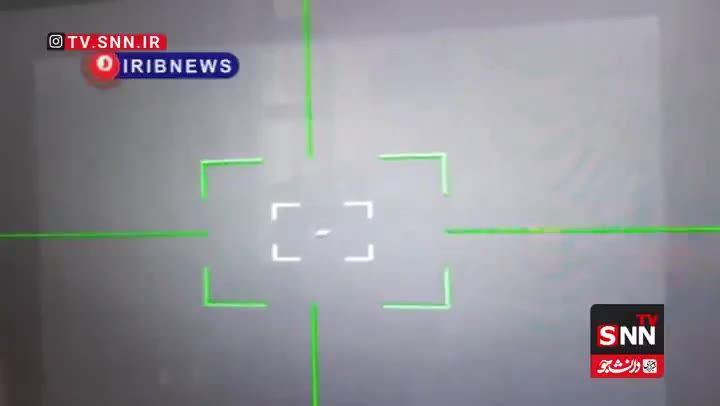
The clip shows an infrared tracking display, a missile launch with a large plume, a smoke trail and a small heat return inside a designation box. But no frame independently establishes an impact on the aircraft. Independent verification is impossible from the footage alone: it is a sensor display released by one side, with no second angle, no crash site and no neutral observer. Iranian fact-checkers at Factnameh have previously examined releases of this kind and found the footage showed an F-16 dispensing flares and escaping rather than being struck. That does not prove this specific clip is the same, but it shows the pattern. The clip is authentic as a state-media product, which is why our detector found no sign of AI generation; that says nothing about whether the event it claims to show happened. Readers should treat the visual as a claim, not proof.
Still open: We could not obtain the full uncut release or any independent sensor data to confirm what the display shows.
What was posted
XClash Report posted a video on X with a caption stating that Iran's army released footage claiming its air defences fired a missile at a U.S. F-16 over the Persian Gulf on 20 November. The caption says the missile damaged the aircraft, forcing the pilot to abort the mission and make an emergency landing. The post presents the Iranian claim as the story, without mentioning the U.S. response.
“Iran’s army released a video claiming its air defense systems fired a missile at a U.S. F-16 over the Persian Gulf on November 20. It claims the missile damaged the aircraft, forcing the pilot to abort the mission and make an emergency landing.”
Posted on X by Clash Report, an account that regularly shares conflict footage and military claims. The post relays statements from Iran's army public relations office.
Who posted it
XAccount check
Estimates from public signals — account age, posting pattern, audience — not a judgement of the person behind the account, and separate from whether this post is true.
What stood out
- Clash Report is a real, high-volume news aggregation operation with ~910K followers, not an obvious fake persona.
- May 2026 investigation by Eitan Fischberger found it is the English-language arm of Turkish outlet GDH, operated by Monolog Medya, a company tied to figures and foundations close to Erdoğan.
- Account created May 2015 but dormant until 28 Feb 2020, when it suddenly gained ~49,200 followers within a day during Turkey's Operation Spring Shield — a strong bot/coordination signal.
- Media Bias/Fact Check rates it Right-Center with 'Mixed' factual reporting, citing limited ownership transparency and inconsistent sourcing.
- Documented false or misleading posts include VOA/Polygraph debunking footage from Colombia presented as Venezuela-Guyana border fighting, an AI-generated MiG-29 video, and a misrepresented Russia-US prisoner exchange video.
- Location metadata reportedly changed from Turkey to 'West Asia' after X added location labels, suggesting deliberate concealment of origin.
- Editorial staff reportedly include former Turkish state broadcaster TRT and Anadolu Agency employees; site advertising includes Turkish defence firm Aselsan.
- Despite the supplied metadata showing unverified status, third-party trackers display a verification checkmark; the account has substantial mainstream amplification by journalists and officials.
- Assessment: human-edited propaganda/influence outlet rather than a purely automated bot, but a low-trust source due to covert ownership and repeated sourcing failures.
Signals (12)+
- Account created
- May 2015
- First activity
- 28 February 2020
- Following count
- 2
- Follower ratio
- Extremely high (~455,000:1)
- Posting cadence
- Very high, ~645 posts in recent tracked period
- Engagement rate
- ~0.5%
- Ownership
- Monolog Medya / GDH Media, Istanbul; links to TÜRGEV and Teknofest
- Notable news coverage
- Washington Examiner, Kathimerini, WIRED Greece, Media Bias/Fact Check, Greek and Turkish outlets
- Fact check history
- Multiple failed or misleading claims documented by VOA/Polygraph, DFRAC, PolitiFact references and MBFC
- Bot amplification signal
- ~49,200 followers gained within 24 hours of first post
- Coordination signal
- Investigation describes it as part of a Turkish government-aligned influence ecosystem
- Content type
- Breaking-news aggregation, conflict video, defence and geopolitical content
Account checked November 22, 2026, 02:51 UTC
The media
Video✓ What is genuine
The video is a genuine Iranian state-media product: an infrared sensor-style clip released by the army and broadcast with IRIB/SNN branding. The detector found no AI generation. What is not established is that it shows a missile hitting a U.S. F-16.
The tells
- ●●○ Supporting signal The clip carries IRIB/SNN state-television branding consistent with the Iranian army's release.our visual review
- ●●○ Supporting signal The imagery matches what an infrared air-defence sensor release looks like: tracking brackets, a launch plume and a thermal return in the reticle.our visual review
- ●●● Strong signal Our detector found no sign of AI generation or deepfake manipulation (AI-generated score 0.0009, deepfake score 0.0).our detector
- ●●● Strong signal No frame independently establishes an impact on the aircraft.our visual review
Synthetic-media detector
Detector ranThe claim stands or falls on whether the media is real, so the detector ran.
Scores are the detector’s estimate for the file as uploaded. A low score does not rule out editing, a spliced caption, or footage shown out of context — those are judged above. Model v3.
How we checked the media
- Reviewed the keyframes for visual signs of manipulation or AI generation.
- Ran our AI-generation detector on the clip; it scored 0.0009 for AI-generated and 0.0 for deepfake.
- Compared the on-screen branding and display style with the described IRIB/SNN release.
- Checked whether any independent source had verified the footage's content.
Sources
6 sources reviewed- 1CENTCOM denies Iranian claim of damage to US F-16 fighter jet ↗
Anadolu Agency · anadolu.agencyUntiereduntiered — treated as signal only, never decisiveEvidence
CENTCOM's denial that any U.S. F-16 was attacked and that all jets were safe.
- 2Did Iran Strike US F-16 Fighter Jet In The Gulf? Washington Says... ↗
News18 · news18.comUntiereduntiered — treated as signal only, never decisiveEvidence
Reports the U.S. military dismissing Iran's claim as false.
- 3Iran claims it hit F-16 jet over Gulf, forced emergency landing; US denies attack ↗
The Times of India · timesofindia.indiatimes.comUntiereduntiered — treated as signal only, never decisiveEvidence
Reports both the Iranian claim and the U.S. denial.
- 4Watch: Missile seen approaching aircraft in video as Iran claims US F-16 was hit ↗
The Times of India · timesofindia.indiatimes.comUntiereduntiered — treated as signal only, never decisiveEvidence
Reports the release of the footage and notes it is unverified and denied.
- 5US denies Iranian account that missile damaged F-16 over Gulf ↗
Arab News (AFP) · arabnews.pkUntiereduntiered — treated as signal only, never decisiveContext
Notes Iran has made similar claims during the war that the U.S. has denied.
- 6ویدیوی رسانههای ایران، رهگیری و سرنگونی اف-۱۶ را نشان نمیدهد ↗
Factnameh · factnameh.comUntiereduntiered — treated as signal only, never decisiveEvidence
Iranian fact-checkers found earlier footage showed an F-16 dispensing flares and escaping.
Further reading
- 1Anadolu Agency CENTCOM's direct denial is the decisive statement on the damage claim.
- 6Factnameh Iranian fact-checkers' earlier examination of a similar F-16 release shows the pattern.
The full story
The kernel of truth here is that Iran's army really did publish this footage. On 21 November 2026 its public relations office announced that air defences had detected and engaged a U.S. F-16 over the Persian Gulf the previous evening, saying a missile detonated near the jet and damaged it, forcing an emergency landing at a nearby regional airport. State broadcaster IRIB/SNN carried the clip, and international outlets picked it up.
That is where the confirmed part ends. U.S. Central Command responded the same day, calling the claim false and stating that Iran did not attack a U.S. F-16 'at all' and that all American fighter jets in the Middle East were safe and accounted for. No independent party has verified damage to any aircraft. Reports of an F-16 squawking emergency code 7700 and diverting towards Al Dhafra Air Base circulated on social media but were never officially confirmed, and a diversion would not by itself prove a missile hit.
The claim felt plausible for a reason. This is an active conflict in which Iran has repeatedly said it hit or damaged U.S. aircraft, and each time the U.S. military has denied it. Arab News (AFP) notes that pattern. Iranian fact-checkers have also examined earlier releases of this kind and found the footage showed an F-16 dispensing flares and escaping rather than being struck. A real state-media clip, real branding and a real official statement can all be genuine while the event they describe remains unproven or denied. That gap is where this post sits.
Kernel of truth
Iran's army did release this footage and make this claim on 21 November 2026; the U.S. denies the claim and no independent party has confirmed damage.
Timeline
November 20, 2026
Evening: Iran's army says its air defences engaged a U.S. F-16 over the Persian Gulf and damaged it, forcing an emergency landing. 3The Times of India
November 21, 2026
Iran's army public relations office issues the claim and releases infrared footage via IRIB/SNN. 4The Times of India
November 21, 2026
U.S. Central Command rejects the claim as false and says all U.S. fighter jets in the Middle East are safe and accounted for. 1Anadolu Agency
How it was framed
The post takes a genuine Iranian state-media release and relays its claim without the U.S. denial, framing a contested wartime assertion as an established strike. The footage is real; the conclusion it is arranged to support is not established and is denied by the other party.
- Missing context. The caption reports Iran's claim but does not mention U.S. Central Command's denial the same day.
- Borrowed authority. The post leans on the Iranian army's official release and state-television footage as the basis for the claim.
- “Visual proof”. The embedded infrared clip is presented as showing the engagement, though no frame establishes an impact.
Posted on X by Clash Report, an account that regularly shares conflict footage and military claims. The post attributes the claim to Iran's army.
Bias
Leans pro-Iranian military, anti-US/anti-Israel propaganda. The footage is an official Iranian military propaganda release broadcast on state television, framed as proof of an air-defence success against the United States, and its Arabic/Persian audio track carries chants cursing America and Israel in memory of 'resistance martyrs'. The account sharing it relays the claim without the U.S. denial.
Bias describes how the post frames its message — the slant of the language, selection and emphasis — and is judged separately from whether the claim is true. A true claim can still be framed with a strong slant.
How we checked
1 min 13 s- 1
Searched for coverage of the Iranian claim and the U.S. response.
- 2
Reviewed the keyframes of the video for visual signs of manipulation.
- 3
Ran our AI-generation detector on the clip.
- 4
Compared the footage with prior Iranian releases examined by fact-checkers.
✓ Claim checked✓ Media checked✓ Sources checked
Why 75% confidence
HighThe verdict is MISLEADING at HIGH confidence. The release itself is confirmed by multiple independent outlets and the on-screen branding. The damage claim is denied by U.S. Central Command and unconfirmed by any independent party, and the footage does not establish an impact. That combination supports a clear finding that the post is misleading, though the exact status of any aircraft remains contested.
Limits. We could not obtain the full uncut release, independent sensor data or any confirmation of the aircraft's status. No independent party has verified damage.
What we don’t know
- Whether any U.S. F-16 was in the area at the time or experienced any mechanical issue.
- What the full uncut Iranian release shows beyond the keyframes we reviewed.
- Whether the social media reports of a 7700 squawk and a diversion to Al Dhafra have any basis.
- Whether Iran's army has any evidence of damage it has not released.
Spot it yourself
Spot the fakeLooks suspicious, isn’t proof
- The account shares conflict footage from many sides; that alone does not make this post false.
- The clip is grainy infrared sensor video; low quality is normal for this kind of military release and proves nothing.
- The post is in English and summarises a foreign-language release; translation alone is not evidence of distortion.
- The footage looks dramatic; dramatic footage can be genuine.
The actual evidence
- U.S. Central Command explicitly denied the claim, saying no F-16 was attacked and all jets were safe and accounted for.
- No independent party confirmed damage to any aircraft.
- The only source for the damage claim is Iran's army, one party to the conflict.
- Iranian fact-checkers previously found similar releases showed an F-16 dispensing flares and escaping.
- The post omitted the U.S. denial entirely.
- 1
Ask who else would be reporting this if true.
A damaged U.S. fighter jet would be a major story. Search for coverage from multiple outlets and for the U.S. military's own statement. If only one side's media is reporting it, treat it as a claim.
- 2
Find the official response.
Look for statements from U.S. Central Command or the Pentagon. In this case, CENTCOM's denial was reported the same day by multiple outlets.
- 3
Separate the footage from the claim.
A real video released by a military does not prove the event it describes. Ask what the clip actually shows frame by frame, and whether any independent source has verified an impact.
- 4
Watch for one-sided relay.
If a post reports one side's claim without the other side's response, the missing half is often the decisive part.
Takeaway
Genuine footage and genuine official statements can still be used to support an unproven claim. Check whether the other party has responded, and whether anyone independent has confirmed the event.
Questions people ask
Did Iran's army really release this video?+
Yes. Iran's army public relations office issued the claim and released the footage on 21 November 2026, and it was carried by IRIB/SNN and reported by international outlets including Anadolu Agency, News18 and The Times of India. The post accurately describes what Iran published.
Did a missile hit a U.S. F-16 over the Persian Gulf?+
U.S. Central Command says no. It called the Iranian claim false the same day, stating that Iran did not attack a U.S. F-16 'at all' and that all American fighter jets in the Middle East were safe and accounted for. No independent party has confirmed damage to any aircraft.
Is the video AI-generated or fake?+
Our detector found no sign of AI generation (score 0.0009) or deepfake manipulation (score 0.0), and the clip carries genuine IRIB/SNN branding. It is a real state-media product. That does not mean the event it claims to show happened; the footage itself does not establish an impact.
Why is the post rated misleading if the video is real?+
Because it relays Iran's claim without the U.S. denial, leaving readers with the impression that a strike is established fact. The footage is genuine, but the conclusion it is arranged to support is contested and denied by the other party.
What does it mean when a military releases sensor footage like this?+
It is a claim, not proof. Infrared sensor footage from one side shows what that side says happened, with no second angle or independent observer. Fact-checkers have previously found similar Iranian releases showed a jet dispensing flares and escaping rather than being hit.
Go deeper
- CENTCOM
- U.S. Central Command, the U.S. military command responsible for operations in the Middle East.
- IRIB/SNN
- Islamic Republic of Iran Broadcasting and its news channel, Iran's state broadcaster.
- Squawk 7700
- An emergency transponder code that an aircraft broadcasts to signal a general emergency.
- Infrared sensor footage
- Video from a heat-detecting camera, often used by militaries to track aircraft and missiles at night.
- Deepfake
- Media manipulated with AI to make someone appear to say or do something they did not.
People also search for
For educators+
- The video is real and the Iranian statement is real. Why is the post still rated misleading?
- How would you check a claim like this yourself, and which sources would you trust?
- Why might a fact-checker rate the same post differently from a news outlet that simply reports the claim?
About this check
- Platform
- X
- Posted by
- @clashreport
- Posted
- November 21, 2026
- Age when checked
- Under 24 hours old when checked
- Where it spread
- United States, IR
- Audience
- US audience
- Language
- EN
- Status
- ● Post is live
- Verified
- November 22, 2026, 02:53 UTC
- Published
- November 22, 2026, 02:53 UTC
Reach. clashreport post 568 likes (syndication, 22 Nov); CENTCOM rebuttal 4,196 likes; covered by Mediaite, NDTV, MEAWW fact-check 21 Nov
This verdict was generated with AI from the sources shown. AI can make mistakes — check the sources before relying on it.
Check anything yourself, in seconds.
Share any social post or video to What the Fact and get the verdict, the confidence, and the receipts.