Did Russian air defence open fire over Kaliningrad during a Ukrainian drone attack?
Did Ukrainian drones attack Russia's Baltic Fleet base at Baltiysk in Kaliningrad on 21 November 2026, as viral posts claim, or was the alert a drill set off by a false report, as Russian officials say?
True, but…
Real footage of real air-defence fire; the claimed target is the poster's guess, not a finding.
Very probably genuine footage of a real event. Outlets including the Kyiv Independent, RBC-Ukraine, DW and The Moscow Times reported air-defence fire and drone alerts around Baltiysk, Kaliningrad Oblast, on the evening of 21 November 2026. But nothing confirms what the drones were aiming at, and no impact, damage or casualties have been verified.
 Likely genuine
Claims
2 checkedRussian air defence opened fire in the Kaliningrad region on the evening of 21 November 2026.13567
“Here we go: Russian air defense in the Kaliningrad region is opening fire.”
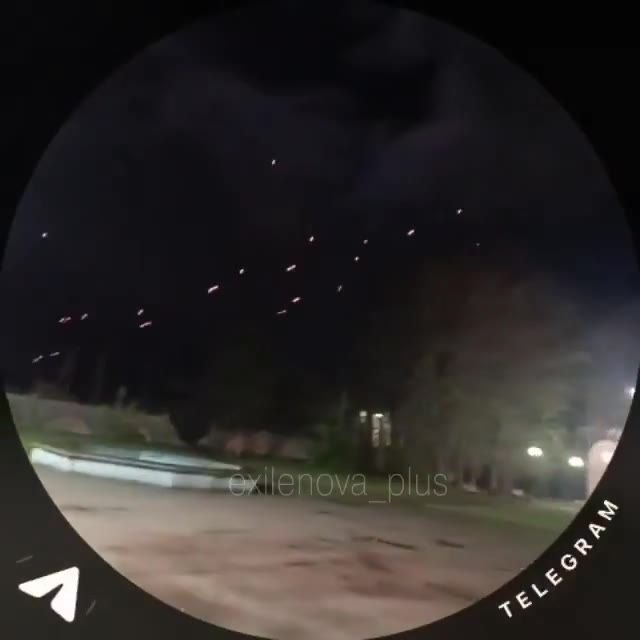
This part holds up. Seven outlets dated 21–22 November 2026 describe air-defence fire, explosions or drone activity around Baltiysk: the Kyiv Independent, RBC-Ukraine, DW, The Moscow Times, Euromaidan Press, Delfi and Times Now. The specifics they report line up: sirens sounding twice in Kaliningrad Oblast, the governor Alexey Besprozvannykh first attributing an alert to a 'suspicious object from Lithuania' and saying there was no threat, Khrabrovo airport briefly restricting flights around 20:22 local time, and mobile operators warning of possible internet shutdowns. The decisive detail is the footage trail. The clip here carries the exilenova_plus watermark, and DW and The Moscow Times both describe Exilenova+ publishing residents' video of air-defence activity in Baltiysk. So the video and the reported event trace to the same originating channel and night. How independent are the outlets? Many of them are recycling the same Ukrainian monitoring material, which counts as one origin, not seven. That is why our confidence is moderate rather than high: the event is well attested, the exact scale is not.
Still open: Whether any drone reached a target, and what exactly was fired at, remains unresolved.
Ukrainian drones were 'most certainly' targeting naval installations or the oil terminals in the area.13468
“Ukrainian drones are most certainly targeting naval installations or the oil terminals in this area.”
The footage shows fire going up. It does not show what, if anything, was hit. Every outlet in our source set says the same thing in different words: no impact, damage or casualties have been confirmed, and Moscow has not acknowledged a strike. The target suggestion appears to come from the monitoring channels themselves. DW attributes the port-infrastructure guess to the authors of Exilenova+, not to officials or independent verification. Analysts quoted in the coverage floated competing explanations, including the possibility of a Russian provocation. There is also a documented contamination problem in the wider media pool around this night: the New Voice of Ukraine reported that a photo described as showing a strike in Baltiysk was actually Qeshm Island in Iran, and Euromaidan Press noted some circulating images were older footage. None of that makes this particular clip false, but it means confident target claims drawn from the same pool deserve scepticism. The word 'certainly' is the giveaway: it is doing work the evidence cannot support.
Still open: The origin of the 'oil terminals' alternative is unclear; no source in our set ties it to a specific facility.
What was posted
XA short night-time video posted on X shows tracer fire and bursts of air-defence or small-arms rounds stitching across a dark sky above a residential street, filmed with a wide-angle lens. It carries an 'exilenova_plus' watermark and Telegram logo. The poster tells readers this is Russian air defence opening fire in the Kaliningrad region and asserts that Ukrainian drones are 'most certainly' targeting naval installations or oil terminals there.
“Here we go: Russian air defense in the Kaliningrad region is opening fire. Ukrainian drones are most certainly targeting naval installations or the oil terminals in this area.”
Posted on X by the account Tendar. The video carries the watermark of the Ukrainian monitoring Telegram channel Exilenova+, which published residents' footage of the Baltiysk air-defence activity on the evening of 21 November 2026.
Who posted it
XAccount check
Estimates from public signals — account age, posting pattern, audience — not a judgement of the person behind the account, and separate from whether this post is true.
What stood out
- Long-established account: joined X/Twitter in April 2010, roughly 16.6 years old, with ~454K followers and ~42.5K posts.
- Behaves like a genuine human/independent analyst: consistent pseudonymous persona, replies, original maps/satellite analysis and high engagement (~0.6% interactions per follower).
- Widely cited or embedded by media including Newsweek, RBC-Ukraine, Ukrinform and Business Insider, indicating real informational influence.
- Strongly pro-Ukraine and partisan framing; frequently amplifies Ukrainian official claims and combat footage, sometimes before independent verification.
- Transparency signal: publicly deleted and apologised for a false claim about an F-16 with Ukrainian markings (Feb 2024).
- Reliability caveats: a speculative Belgorod 'explosion from inside' assessment (May 2024) was caveated but widely repeated as fact; the Kotluban arsenal strike claim (Sep 2024) was disputed by RFE/RL satellite analysis.
- Not platform-verified, but on X verification is largely pay-based and is a weak authenticity signal.
- No evidence of automated behaviour, fake follower patterns or coordinated inauthentic networks.
Signals (11)+
- Following count
- 887
- Post count
- 42544
- Posting cadence
- ~1.2-7 posts/day; active on 37% of sampled days
- Follower ratio
- 512:1
- Engagement rate
- 0.608% per follower; ~49K views per typical post
- Location indicated
- Germany
- Bio
- Tyrants are my enemies | Si vis pacem para bellum | German/EU flags | Military & History
- Notable news coverage
- Newsweek, RBC-Ukraine, Ukrinform, Business Insider, Obozrevatel
- Fact check history
- Corrected false F-16 photo claim; amplified disputed Kotluban depot claim; Belgorod blast assessment was speculative but widely repeated
- Platform presence
- X, Bluesky (~62K followers), Mastodon
- Affiliation
- Independent pro-Ukraine OSINT commentator; no formal institutional affiliation found
Account checked November 22, 2026, 02:46 UTC
The media
Video✓ What is genuine
The night-time scene itself: real air-defence fire over a built-up area on a night when multiple outlets report sirens and drone alerts in Kaliningrad Oblast.
The tells
- ●●● Strong signal Detection model scored the clip as not AI-generated at 0.9998, with deepfake probability 0.0.our detector
- ●●● Strong signal The 'exilenova_plus' watermark matches the Ukrainian monitoring channel whose Baltiysk footage DW and The Moscow Times describe being published on the night.our visual review
- ●●○ Supporting signal Tracer arcs and bursts behave physically against a dark sky, with no morphing objects, impossible geometry or garbled on-screen text.our visual review
- ●●○ Supporting signal Dnipro Osint geolocated air-defence activity to the Baltiysk port area, though not this exact clip.Euromaidan Press
Synthetic-media detector
Detector ranThe claim stands or falls on whether the media is real, so the detector ran.
Scores are the detector’s estimate for the file as uploaded. A low score does not rule out editing, a spliced caption, or footage shown out of context — those are judged above. Model v3.
How we checked the media
- Watched the clip frame by frame for visual artefacts, geometry and text rendering.
- Compared the visible 'exilenova_plus' watermark and Telegram branding with the channel the outlets cite.
- Ran an AI-generation detection model on the video.
- Searched for dated reporting and geolocation of the same night's footage.
Sources
8 sources reviewed- 1Explosions reported near Russian Baltic Fleet base in Kaliningrad Oblast amid drone alerts ↗
The Kyiv Independent · kyivindependent.comUntiereduntiered — treated as signal only, never decisiveEvidence
Reports the Baltiysk explosions and drone activity, and that the naval base strike could not be verified.
- 2Drones target Baltiysk, key Russian naval base on Baltic Sea ↗
RBC-Ukraine · newsukraine.rbc.uaUntiereduntiered — treated as signal only, never decisiveEvidence
Reports explosions near the Baltiysk port area and geolocation of drone sightings.
- 3В Калининградской области объявили воздушную тревогу ↗
DW · dw.comReputable outletCenter — independent public intl broadcasterEvidence
Attributes the air-defence activity footage to Exilenova+ and the port target theory to that channel's authors.
- 4Sirens sound in Kaliningrad Oblast for first time as blasts reported in Baltiysk ↗
The New Voice of Ukraine · english.nv.uaUntiereduntiered — treated as signal only, never decisiveEvidence
Records that a photo described as a Baltiysk strike was actually of Qeshm Island, Iran.
- 5Калининградскую область впервые атаковали дроны. Украинские каналы пишут об ударе по базе Балтфлота ↗
The Moscow Times (Russian service) · ru.themoscowtimes.comUntiereduntiered — treated as signal only, never decisiveEvidence
Describes monitoring channels publishing residents' clips of anti-aircraft fire in the region.
- 6Explosions reported at Russia's Baltic Fleet base in Kaliningrad, a strategic exclave between NATO states ↗
Euromaidan Press · euromaidanpress.comUntiereduntiered — treated as signal only, never decisiveEvidence
Notes Dnipro Osint's geolocation and that no damage to military or port infrastructure was confirmed.
- 7Õhuhäire Kaliningradis. Droonid võisid tabada Vene Balti laevastiku baasi ↗
Delfi · delfi.eeUntiereduntiered — treated as signal only, never decisiveEvidence
Reports the alert and drone activity, and Lithuania's denial that any drone crossed its airspace.
- 8Russian Exclave Kaliningrad Reportedly Attacked for the First Time Since the War Began ↗
Times Now · timesnownews.comUntiereduntiered — treated as signal only, never decisiveEvidence
States that Moscow has not confirmed a strike and the reports were not independently verified.
Further reading
- 1The Kyiv Independent The most careful account of what was and was not confirmed on the night.
- 3DW Shows that the port-infrastructure target theory came from the monitoring channel itself.
- 4The New Voice of Ukraine Documents the fake image from Iran that circulated with the same event.
- 6Euromaidan Press Explains the geolocation work and states plainly that no damage was confirmed.
- 7Delfi Adds Lithuania's denial that any drone crossed its airspace.
The full story
The core of the post is real. On the evening of 21 November 2026, air-raid alerts sounded across parts of Kaliningrad Oblast. According to the reporting we reviewed, the governor, Alexey Besprozvannykh, first said an alert in the Neman district had been set off by a 'suspicious object from Lithuania' and that there was no threat. Less than an hour later, sirens sounded again. Residents' footage of tracer fire, bursts and smoke around Baltiysk — the port city that hosts the main Baltic Fleet base — went out through Ukrainian monitoring channels, including Exilenova+, and was picked up by the Kyiv Independent, RBC-Ukraine, DW, The Moscow Times, Delfi, Euromaidan Press and Times Now.
That makes the exclave a plausible setting for exactly the scene in the clip. Kaliningrad sits between NATO states, hosts a major naval base, and had not reportedly been hit in this way before, which is why the story travelled fast.
What did not travel with it was confirmation. No outlet could verify an impact, damage or casualties. Russian officials denied a strike, and Russian state media called port-explosion videos inauthentic. Lithuania's crisis management centre and foreign minister denied that any drone crossed Lithuanian airspace, contradicting the governor's earlier account. And the wider pool of images around the night was demonstrably mixed: the New Voice of Ukraine found a photo labelled as a Baltiysk strike was really Qeshm Island in Iran.
Kernel of truth
Air-defence fire and drone alerts were genuinely reported around Baltiysk on the night of 21 November 2026; what was never established is what the drones were aimed at or whether anything was hit.
Timeline
November 21, 2026
Air-raid alerts sound in parts of Kaliningrad Oblast; the governor attributes an alert to a 'suspicious object from Lithuania' and says there is no threat. 1The Kyiv Independent
November 21, 2026
Sirens sound again and residents' footage of air-defence fire around Baltiysk is published by Ukrainian monitoring channels, including Exilenova+. 5The Moscow Times (Russian service)
November 21, 2026
Khrabrovo airport briefly restricts flights around 20:22 local time; mobile operators warn of possible internet shutdowns. 1The Kyiv Independent
November 21, 2026
Dnipro Osint says it geolocated air-defence activity to the Baltiysk port area; no damage is confirmed. 6Euromaidan Press
November 21, 2026
Lithuania's crisis management centre denies that any drone crossed Lithuanian airspace toward Kaliningrad. 7Delfi
How it was framed
The footage is very probably genuine local video from the reported night, but it is paired with an unverified claim about the target presented as near-certain. That is genuine content carrying a meaning the evidence does not support.
- “Visual proof”. Posting the night-time firing footage as 'Here we go' invites the reader to treat the video as proof of the whole claim, including the target.
- Missing context. The caption does not say that the footage came from a monitoring channel or that no impact had been confirmed.
- Emotional language. The opener 'Here we go' and the phrase 'most certainly' signal certainty the reporting does not carry.
Posted on X by the account Tendar. The clip carries the watermark of the Ukrainian monitoring Telegram channel Exilenova+, which published residents' footage of the same night's air-defence activity; DW describes that channel as the source of the port-infrastructure target theory.
Bias
Leans pro-Ukraine. The post is a fast-turnaround OSINT-style item that frames the night-time air-defence fire as the visible result of a Ukrainian drone strike, adding a confident guess about the targets ('most certainly targeting naval installations or the oil terminals') that is not sourced and has not been established. It is sympathetic to the Ukrainian side but is not crude propaganda; the first sentence is a defensible description of what was reported.
Bias describes how the post frames its message — the slant of the language, selection and emphasis — and is judged separately from whether the claim is true. A true claim can still be framed with a strong slant.
How we checked
49 s- 1
Searched for dated reporting on drone activity and air-defence fire in Kaliningrad in November 2026.
- 2
Reviewed coverage from the Kyiv Independent, RBC-Ukraine, DW, The Moscow Times, Delfi, Euromaidan Press and Times Now.
- 3
Ran an AI-generation and deepfake detector on the video.
- 4
Compared the clip's watermark and Telegram branding with the channel named in the reporting.
- 5
Checked whether any source confirmed impact, damage, casualties or a specific target.
- 6
Looked for reporting on recontextualised images circulating with the same event.
✓ Claim checked✓ Media checked✓ Sources checked
Why 72% confidence
ModerateWe set moderate confidence, not high, because the outlets we found largely draw on the same Ukrainian monitoring material rather than independently confirming it. The event is well attested and the clip very probably genuine; the target claim is not established at all.
Limits. We did not independently geolocate this specific clip, open the full text of every source, or obtain any official Russian or Ukrainian statement or damage assessment. No prior fact check of this clip exists in our records.
What we don’t know
- Whether any drone reached a target, and whether anything was damaged.
- What the 'oil terminals' part of the claim refers to specifically.
- Whether the wider alert was connected to the Lithuanian border report in any way.
- Who first filmed this particular clip and from which street.
Spot it yourself
Find the overstatementLooks suspicious, isn’t proof
- The source is a partisan social media account amplifying one side of a war. That is a reason to check, not evidence the video is fake.
- The footage is dark, shaky and low resolution, as most genuine night phone video is.
- The caption is confident and dramatic. Tone tells you about the poster, not about the facts.
- One photo in the same media pool turned out to be from Iran. That warns you about the pool, not automatically about this clip.
The actual evidence
- The clip's watermark matches the monitoring channel that outlets describe publishing the Baltiysk footage on the same night.
- Seven dated outlets independently describe air-defence fire, sirens and drone alerts in Kaliningrad Oblast on 21 November 2026.
- Every one of those outlets states that no impact, damage or casualties were confirmed.
- Our detection model found no sign of AI generation in the video.
- An image circulated alongside the event was shown to be of Qeshm Island, Iran — evidence the pool was contaminated.
- 1
Separate the two sentences
Ask which part the video actually proves. Here it supports 'air defence fired'; it says nothing about the target. Check each part of a caption on its own.
- 2
Look for the phrase that overreaches
Words like 'most certainly', 'confirmed' or 'proves' are claims to test. Search whether any official or outlet confirms that specific detail.
- 3
Find the original uploader
Read the watermark. Searching the channel name tells you who filmed or first published it, and whether outlets cited the same source.
- 4
Check for confirmed outcomes
A real strike on a naval base or oil terminal produces damage assessments, satellite images and official statements. If none appear, treat target claims as unproven.
- 5
Check the wider image pool
When one photo in a story is exposed as recycled, look for reporting on which images were verified before sharing any of them.
Takeaway
A video can be entirely real and still be attached to a claim it does not support. Check the caption's confident parts against what has actually been confirmed, not against how convincing the footage looks.
Questions people ask
Was there really a drone attack on Kaliningrad in November 2026?+
Multiple outlets reported air-defence fire, explosions and drone alerts around Baltiysk in Kaliningrad Oblast on the evening of 21 November 2026, with sirens sounding twice and Khrabrovo airport briefly restricting flights. None of them could confirm a strike, damage or casualties, and Russian officials did not acknowledge one.
Is the air-defence video real or AI-generated?+
It is very probably real. Our detection model scored it as not AI-generated with a deepfake probability of zero, the tracer fire behaves physically, and the exilenova_plus watermark matches the monitoring channel that outlets say published Baltiysk footage that night. It has not been independently geolocated, though.
Were Ukrainian drones targeting the naval base or oil terminals?+
That is unproven. The target suggestion appears to come from the monitoring channels, and DW attributes the port-infrastructure theory to Exilenova+ itself. Every outlet we reviewed said no impact or damage had been confirmed, and analysts offered competing explanations.
Why do people doubt footage like this?+
Because the same event produced at least one fake image: the New Voice of Ukraine reported that a photo described as a Baltiysk strike was actually of Qeshm Island in Iran. One bad image does not make a video fake, but it means each item needs checking on its own.
What does 'exilenova_plus' mean on the video?+
It is the watermark of a Ukrainian monitoring Telegram channel, Exilenova+, which collects and republishes footage from various sources. A watermark tells you who published the clip; it does not by itself prove where or when it was filmed.
Go deeper
- OSINT
- Open-source intelligence: information gathered from publicly available material such as social media posts and satellite images, then geolocated or verified.
- Geolocation
- Working out where a photo or video was filmed by matching visible features such as buildings, roads or coastlines to maps.
- False context
- Sharing genuine content but with a caption, date or place that changes what it means.
- Watermark
- A logo or name overlaid on a video or image showing who published or owns it, which can identify a source but does not prove authenticity.
- Exclave
- A piece of a country's territory separated from the rest of it by other countries, as Kaliningrad is from Russia.
People also search for
For educators+
- The video shows air defence firing. What else would you need before you could say what the drones were targeting?
- Seven outlets reported this event, but many used the same monitoring channel's material. Does that make it seven sources or one?
- If one photo from the same night turned out to be from Iran, how should that change how you treat the other images?
About this check
- Platform
- X
- Posted by
- @tendar
- Posted
- November 21, 2026
- Age when checked
- Under 24 hours old when checked
- Where it spread
- Russia, Ukraine, PL, LT
- Audience
- International audience
- Language
- EN
- Status
- ● Post is live
- Verified
- November 22, 2026, 02:48 UTC
- Published
- November 22, 2026, 02:48 UTC
Reach. @Tendar post 4,351 likes / 72 replies; @sentdefender 'Reports are emerging of a Ukrainian drone attack on Baltiysk' 1,734 likes (syndication, 22 Nov). Coverage: Kyiv Independent, Euromaidan Press, NV, RBC-Ukraine, UNN, Charter97 (21-22 Nov)
This verdict was generated with AI from the sources shown. AI can make mistakes — check the sources before relying on it.
Check anything yourself, in seconds.
Share any social post or video to What the Fact and get the verdict, the confidence, and the receipts.