Did Russia lose more soldiers taking Pokrovsk than the USSR lost taking Berlin?
Did Russia lose more than 100,000 soldiers in the battle for Pokrovsk, more than the Soviet Union lost taking Berlin in 1945?
True, but…
Comparison holds on the records, but the totals are estimates from a hacked database.
True, with caveats. On 23 November 2026, Proekt and Agentstvo published an investigation based on a leaked Rosstat death database, estimating over 100,000 Russian soldiers killed in the wider Pokrovsk district. Soviet irrecoverable losses in the 1945 Berlin offensive were about 78,000. The totals are journalist estimates from hacked data, not official figures.
Claims
✓ 3 trueThe Russian army lost more than 100,000 soldiers killed in the battle for Pokrovsk and its district.1236
The figure comes from one investigation, not from Russia's own statistics. Proekt and Agentstvo published it on 23 November 2026 after analysing 11.7 million death records leaked from Rosstat. They counted about 116,000 deaths recorded in the wider Pokrovsk district, and about 5,000 inside the city itself — so the "100,000" applies to the district, not only street fighting in Pokrovsk. The decisive question is whether the leak is real. More than ten independent outlets examined the records and compared them with the inheritance register, the Mediazona/BBC name-by-name casualty lists and earlier leaks, and concluded it is genuine; a separate OSINT exercise matched the geographic spread of the death records against the DeepState frontline map. That is unusually strong corroboration for a hacked dataset, and it is why we rate the claim true. What keeps it at moderate confidence rather than high is that every total is a journalist's estimate: the database records deaths with registration lags, and the outlets' corrections for those lags differ.
Still open: The input lists no specific date of death for each record, so we cannot say how the district total splits between 2024 and 2026, or how much double-counting the outlets may have corrected for.
These Russian losses exceed Soviet military deaths in the 1945 Berlin offensive (about 78,000–80,000 killed).579
This is the part of the claim that needs no hacking to check, and it is the reason the comparison survives even a sceptical reading of the leak. The Soviet figure comes from Krivosheev's archival work, the standard source, which puts irrecoverable losses in the Berlin operation at 78,291; the start of the Berlin operation is often rounded to about 80,000, and one reference lists 81,116 for the offensive including Seelow Heights and Halbe. Independent reporting on the Proekt investigation uses the same roughly 80,000 figure. The gap is therefore not marginal. Even Proekt's raw count of deaths attributed to the Pokrovsk district, before any adjustment, sits above 100,000, so the comparison holds whether you prefer the conservative or the adjusted total. The caveat is one of scope: the Berlin number covers a whole offensive from the Oder to the city, not house-to-house fighting alone, whereas Proekt's figure is pinned to one district. That asymmetry is worth knowing but does not flip the result.
Still open: The precise Soviet figure varies by source (78,291, about 80,000, 81,116) depending on which formations and which phase of the offensive are counted; we did not compare the underlying archival tables.
Russia may have lost around 325,000 soldiers killed in its campaign to seize the Donbas as of September 2026, more than in any Soviet offensive operation of World War II.37
This is the most estimate-heavy of the three claims. Proekt counted 270,547 records coded as combat deaths in the Donbas, then adjusted upward to about 325,000 to account for records not yet filed. The comparison with the largest Soviet offensives is not close: the Berlin operation sits at about 78,000 and the 1943 Donbas offensive at 66,000. The direction of the claim is therefore well supported. What is less settled is the size of the adjustment. Outlets working from the same leak give different totals for Russian war dead nationally, from about 490,000 registered to somewhere between 573,000 and 720,000 after correction, and Meduza and Mediazona have published their own figures in that range. When several teams reach different numbers from one dataset, the honest reading is that the total is large and the exact figure is contested. We say likely true rather than true for that reason.
Still open: The adjustment method Proekt used to move from 270,547 recorded deaths to 325,000 is described in the investigation's own methodology, which our input summarises but does not reproduce.
A text-only post: there was no media to test.
What was posted
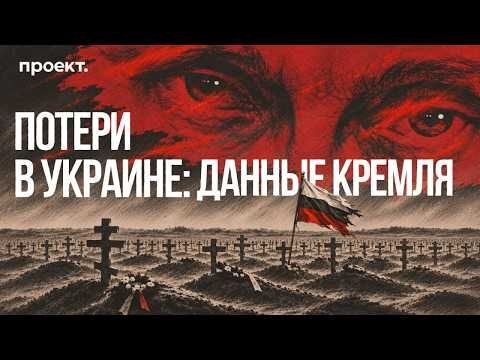
YouTubeA YouTube video whose Russian title credits a Proekt project and makes a comparison: Russia's losses, the title says, are greater than at Berlin. The description is a single word, "Проект" ("Project"). The post itself contains no images, data tables or casualty figures beyond that headline; the numbers come from the investigation the title points to.
“Потерь больше, чем под Берлином: где и сколько россиян Путин положил в Украине”
“More losses than at Berlin: where and how many Russians Putin has laid down in Ukraine” — translated
Uploaded to YouTube; our input records no upload date, channel name display or engagement data, and there is no visual or audio material to examine.
Who posted it
YouTube@proekt_media
1.1M subscribers · Account 8.4 years old
View the account on YouTube ↗“Proekt is an independent Russian media specialising in in-depth journalism. All investigations in Russian: https://www.proekt.media/ All investigations in English: https://www.proekt.media/en/home/ Support Proekt: https://www.proekt.media/donate/”
Account check
Estimates from public signals — account age, posting pattern, audience — not a judgement of the person behind the account, and separate from whether this post is true.
What stood out
- Channel ID UC5UwzkI8NlcDHgrRkVBkR5Q is the outlet's own listed YouTube link on proekt.media, and third-party trackers confirm @proekt_media joined YouTube on 21 June 2018 — the same year Proekt was founded.
- Proekt is a well-documented Russian investigative outlet founded by Roman Badanin (ex-TV Rain, RBC, Forbes Russia editor), with named staff, a public editorial 'about us' page, and multiple journalism awards incl. Free Media Awards 2020 and 20+ Redkollegia awards.
- Subscriber count (~1.08M), ~404 videos and 206M lifetime views match Proekt's own published claim of '1,000,000+ YouTube subscribers' and 2.5M monthly views — no sign of purchased or inflated audience; HypeAuditor flags 0.01% monthly growth and average engagement (2.7%), consistent with an organically grown news channel, not bot farms.
- Recent video topics (Kirill's 'common-law wife', Nemtsov case, oligarch 'Fellow Travelers', poison labs, Mariupol occupation) are original long-form investigations; the Kirill investigation is independently corroborated and summarised by Meduza, Charter'97 and Russia Matters in Dec 2025–Jan 2026.
- Proekt's reporting is cited by the Institute for the Study of War and has been co-published with The Daily Beast and Mikhail Khodorkovsky's Dossier Center; Amnesty International and CPJ document Russian state raids, fines and prosecutions against its journalists, indicating a real newsroom under pressure rather than a synthetic operation.
- Russian authorities designated Proekt an 'undesirable organisation' (July 2021) and later a 'foreign agent'; founder Badanin and colleagues are on the foreign-agent register. This is a political/legal label, not a credibility finding, but it explains the outlet's non-verification by Russian-facing platforms and its exile status.
- Some pro-Kremlin outlets (Bloknot, Nakanune, Rambler syndication, Politonline) allege Proekt fabricated documents in past investigations (Asker-zade, Timur Ivanov, Wagner in Libya). These claims come from state-aligned sources with no independent corroboration and should be treated as contested rather than established.
- Titles are advocacy-toned ('where and how many Russians Putin killed', 'Putin's ratings collapse'), so content is openly anti-Kremlin journalism — reliable sourcing but an interpretive slant users should weigh.
- No platform verification badge shown on the supplied profile metadata, which is atypical for a 1M-subscriber outlet; viewers should confirm via the proekt.media site links to avoid look-alike channels, though this channel's ID matches the official links.
Signals (12)+
- Channel created
- 2018-06-21
- Subscriber count
- 1080000
- Video count
- 404
- Lifetime views
- 206314774
- Avg views per video
- 510000
- Engagement rate pct
- 2.74
- Monthly sub growth pct
- 0.01
- Follower ratio
- Consistent with public subscriber claims
- Official site crosslink
- Yes
- Institutional backing
- Founded 2018 by Roman Badanin; named editorial team
- Notable news coverage
- Meduza, Charter'97, Russia Matters, Amnesty International, CPJ, CEPA, Library of Congress archive
- Fact check history
- No major retractions/corrections documented; 2020 fabrication allegations from state-aligned outlets only, uncorroborated
Recent posts from this account
- More casualties than Berlin: where and how many Russians Putin killed in Ukraine598K views
- How did Nemtsov's killers end up free and what are they doing now?453K views
- How Oligarchs Corrupted Everyone, Including Putin? Major Investigation: "Fellow Travelers"545K views
- The Traber Case: Why did Putin's friend from "Gangster St. Petersburg" end up in prison?581K views
- How many drones are being shot down over Russia, and which regions are hit the hardest?112K views
Account checked November 24, 2026, 14:52 UTC
Sources
9 sources reviewed- 1Pokrovsk Death Toll Surpasses Soviet Losses in Berlin ↗
Kyiv Post · kyivpost.comUntiereduntiered — treated as signal only, never decisiveEvidence
Reports the over-100,000 Pokrovsk figure and the Berlin comparison from the Proekt investigation.
- 2Russia Has Lost More Soldiers in the Battle for Pokrovsk Than in the 1945 Battle for Berlin, Investigation Finds ↗
UNITED24 Media · united24media.comUntiereduntiered — treated as signal only, never decisiveEvidence
Attributes the figures and the comparison to Proekt's 23 November 2026 investigation.
- 3Russia's war dead near 700,000 as independent media confirm Rosstat leak ↗
bne IntelliNews · intellinews.comUntiereduntiered — treated as signal only, never decisiveEvidence
Establishes that more than ten outlets examined the 11.7 million records and reached similar totals.
- 4As many Russians killed near Pokrovsk in Ukraine as Soviet troops killed in the 1945 Battle of Berlin, according to hacked data ↗
EUobserver · euobserver.comUntiereduntiered — treated as signal only, never decisiveContext
Identifies the hackers behind the Rosstat data and the Pokrovsk findings drawn from it.
- 5Putin Deployed More Soldiers Near Pokrovsk Than Stalin Did During The Assault On Berlin ↗
Charter97 · charter97.linkUntiereduntiered — treated as signal only, never decisiveEvidence
States the roughly 80,000 Soviet dead in the Berlin assault and attributes the comparison to Proekt.
- 6Росія втратила більше солдат на Донеччині, ніж СРСР у боях за Берлін – розслідування ↗
Слово і Діло · slovoidilo.uaUntiereduntiered — treated as signal only, never decisiveEvidence
Carries the Proekt and Agentstvo totals, including the Donbas campaign figure as of September 2026.
- 7Russia has lost hundreds of thousands of troops in the Donetsk region; more than 100,000 were killed in the Pokrovsk area alone ↗
UA.News · ua.newsUntiereduntiered — treated as signal only, never decisiveEvidence
Provides the 270,547 recorded combat deaths, the roughly 325,000 estimate, and the Soviet comparison figures.
- 8"Проект": в боях за украинский Покровск погибло больше солдат, чем при штурме Берлина ↗
NEWSru.co.il · txt.newsru.co.ilUntiereduntiered — treated as signal only, never decisiveContext
Attributes the data to Cyber Partisans and Silent Crow and repeats the Berlin comparison.
- 9Battle of Berlin casualty figures based on Krivosheev's archival work ↗
Wikipedia (Kiwix mirror) · browse.library.kiwix.orgUntiereduntiered — treated as signal only, never decisiveEvidence
Gives Krivosheev's archival figure for Soviet losses in the Berlin operation.
Further reading
- 3bne IntelliNews The most detailed account of how many outlets checked the leak and what totals they reached.
- 7UA.News Breaks out the recorded versus adjusted Donbas figures and the Soviet comparison numbers.
- 9Wikipedia (Kiwix mirror) The archival source for the Berlin casualty figure that the comparison rests on.
- 4EUobserver Explains the hackers' role in obtaining the Rosstat data behind the story.
The full story
The post's title carries no picture and no dataset of its own. It points to a piece of work: an investigation published on 23 November 2026 by Proekt and Agentstvo, two Russian outlets that work from outside the country.
The material behind it was a Rosstat death database hacked by the Belarusian group Cyber Partisans and Ukraine's Silent Crow. It held 11.7 million unique death records. From those records the two outlets counted roughly 116,000 deaths in the Pokrovsk district and about 5,000 inside the city, and put the Donbas campaign's toll at about 325,000 after adjusting for reporting delays.
The comparison to Berlin is what makes the story travel. Soviet irrecoverable losses in the 1945 offensive are usually given as about 78,000, a figure drawn from Krivosheev's archival work and repeated in independent reporting on the investigation. Set beside each other, a single Donbas district and a whole WWII offensive land in the same order of magnitude — which is why the title reads as it does.
The reason the claim feels plausible enough to check is that it is not the first attempt to count Russia's dead. Mediazona and the BBC Russian service have maintained a name-by-name list for years; Meduza has published estimates close to 490,000 registered and about 700,000 adjusted. What the leak added was a way to see where those deaths were concentrated. What it did not add was official confirmation: Russia publishes no such figures, so every total in circulation is somebody's reconstruction.
Kernel of truth
A genuine investigation by Proekt and Agentstvo, based on a leak that more than ten outlets independently judged authentic, did find that deaths attributed to the Pokrovsk district exceed Soviet losses in the Berlin offensive.
Timeline
September 2026
Cut-off point for Proekt's Donbas tally, which counted 270,547 recorded combat deaths and estimated about 325,000 after adjustment. 7UA.News
November 23, 2026
Proekt and Agentstvo publish their analysis of the leaked Rosstat database, including the Pokrovsk and Berlin comparison. 1Kyiv Post
November 23, 2026
Outlets including Kyiv Post, United24 Media, Charter97 and intellinews report the investigation the same day and the next. 2UNITED24 Media
November 24, 2026
bne IntelliNews reports that more than ten independent outlets examined the 11.7 million records and reached similar totals. 3bne IntelliNews
How it was framed
The post's headline restates the central finding of a published investigation whose underlying dataset was independently corroborated by more than ten outlets, and whose historical comparator is documented in archival work. It is compressed and uses an emotive verb, but it does not misrepresent what was found. The caution belongs in how the numbers are described, not in the claim's accuracy.
- Emotional language. The title says Putin "положил" ("laid down") Russians in Ukraine — a blunt, contemptuous verb for sending soldiers to their deaths.
- “Visual proof”. None observed: the post is text-only, so the comparison rests entirely on numbers borrowed from the investigation rather than on any chart or footage.
- Missing context. The title does not say that the 100,000 figure covers the whole Pokrovsk district rather than the city alone, or that the totals are estimates from a leaked database.
Posted on YouTube. Our input records no channel name display, upload date or engagement figures, and the description is the single word "Проект", crediting the outlet behind the data.
Bias
Leans anti-Kremlin / Ukraine-sympathetic framing. The title uses emotive, accusatory language ('Putin laid down in Ukraine') typical of Russian exile and Ukrainian outlets, and the sourcing is the independent Russian outlet Proekt. The underlying casualty comparison is nonetheless supported by the leaked data and by established historical figures, so the slant is in tone rather than in the substance.
Bias describes how the post frames its message — the slant of the language, selection and emphasis — and is judged separately from whether the claim is true. A true claim can still be framed with a strong slant.
How we checked
1 min- 1
We read the post's title and description and established what it was crediting: the Proekt investigation of the Rosstat leak.
- 2
We searched for the investigation's findings, for independent reporting on the leak, and for the historical Berlin casualty figure.
- 3
We checked whether any IFCN or EFCSN signatory had already fact-checked this specific comparison, and found none.
- 4
We established that the item is text-only, so there was no image, video or audio to assess.
- 5
We compared the deaths attributed to the Pokrovsk district with the archival Soviet figures for the Berlin operation, at both the raw and the adjusted totals.
✓ Claim checked– Media not applicable✓ Sources checked
Why 80% confidence
ModerateThe headline is rated moderate because almost everything rests on one leaked dataset and journalist estimates of registration lag. Within that, the Berlin claim is high confidence: it has an independent archival source, and the gap is wide enough that no reasonable adjustment closes it. The 325,000 Donbas figure is the softest of the three, since teams working from the same records publish different national totals.
Limits. We did not access or analyse the 11.7 million records themselves, and we did not audit Proekt's adjustment method. Our input gives no upload date or channel identity for the YouTube item, so we cannot say how faithfully the video covers the investigation it credits.
What we don’t know
- How the video itself treats the small print — whether it names the district-level scope of the 100,000 figure or drops it.
- Whether the 5,000 figure for deaths inside Pokrovsk city is a full count or a floor, as the district total appears to be.
- Why outlets publishing from the same leak reach national totals from about 490,000 to roughly 720,000, and which adjustment is closest to reality.
Spot it yourself
Why it looked fakeLooks suspicious, isn’t proof
- The headline is aggressively worded — "laid down" is not the language of a statistical report. Tone like this is a cue to check, but a rude headline can still carry a correct number.
- The comparison is enormous: a single district set against a WWII offensive sounds like wartime exaggeration. Scale is not evidence either way.
- The figures come from a hacked database and are repeated by news outlets in several countries. Hacked data and wide repetition can both be a warning sign — and in this case both turned out to be verifiable.
The actual evidence
- More than ten independent outlets examined the 11.7 million death records and compared them with the inheritance register, the Mediazona/BBC name lists and earlier leaks, and concluded the dataset is genuine.
- The Berlin comparator is separately documented: Krivosheev's archival work gives 78,291 Soviet irrecoverable losses for the operation, so the comparison does not depend on the leak being perfect.
- An independent OSINT geolocation of the death records matched the DeepState frontline map, tying the data to a real place and time.
- The Pokrovsk total holds even on the raw count — about 116,000 deaths recorded in the district — so the result is not an artefact of adjustment.
- 1
Find the original investigation, not the clip
The description names Proekt. Search for Proekt or Agentstvo by name plus "Pokrovsk" and read what they say they counted, which district they counted it in, and over what period.
- 2
Check whether the leak itself was verified
Hacked datasets need corroboration. Look for reporting that names which outlets cross-checked the records and against what — an official register, a name-by-name list, or an earlier independent leak.
- 3
Look up the historical figure separately
The Berlin number should stand on its own sources. If the comparison collapses when you check only the WWII side, that tells you the post was resting on one contested dataset.
- 4
Watch for scope substitutions
Ask whether "Pokrovsk" means the city, the district or the axis of advance. A true number attached to the wrong geography is still misleading.
Takeaway
A shocking comparison can be true; what decides it is whether the comparator and the underlying data each survive being checked on their own. When a claim rests on hacked or leaked records, look for who independently verified them, not for how many outlets repeated them.
Questions people ask
Did Russia really lose more soldiers at Pokrovsk than the USSR lost at Berlin?+
On the published evidence, yes. Proekt's analysis of the leaked Rosstat database estimates over 100,000 Russian deaths in the wider Pokrovsk district, and the commonly cited Soviet figure for the Berlin offensive is about 78,000. The caveat is that the Russian number is a journalist estimate from hacked records, not an official toll.
Who is behind the leaked database?+
The records came from Rosstat, Russia's statistics agency, and were hacked by the Belarusian group Cyber Partisans together with Ukraine's Silent Crow, according to reporting on the investigation. Proekt and Agentstvo then analysed 11.7 million unique death records from the leak.
How do we know the leaked data is real?+
More than ten independent outlets examined it. They cross-checked it against the inheritance register, the Mediazona and BBC Russian name-by-name casualty lists and earlier leaks, and found it consistent. A separate geolocation exercise matched the records against the frontline map. That is corroboration, not proof of every individual record.
How many Soviet soldiers died in the Battle of Berlin?+
Krivosheev's archival work gives 78,291 irrecoverable Soviet losses for the Berlin operation, which is usually rounded to about 80,000. One reference lists 81,116 when Seelow Heights and Halbe are included. The figure covers the whole offensive, not only fighting inside the city.
Why are estimates of total Russian war deaths so different?+
Because they are all reconstructions. Russia publishes no comprehensive casualty figures, so teams working from the same leak correct differently for records filed late. Published totals range from about 490,000 registered to something between 573,000 and 720,000 after adjustment.
Go deeper
- Irrecoverable losses
- Military deaths plus soldiers missing and prisoners who never returned — a broader category than killed in action.
- Rosstat
- Russia's federal state statistics service, the agency whose death records were leaked in this case.
- OSINT
- Open-source intelligence: analysis built from publicly available material such as satellite images, maps and social media.
- Registration lag
- The delay between a death occurring and the record of it being filed, which makes recent periods look emptier than they were and requires adjustment.
- Frontline map
- A regularly updated map, in this case maintained by DeepState, showing which territory each side controls.
People also search for
For educators+
- If more than ten outlets check the same leak, how independent is that corroboration really? What would make it stronger or weaker?
- The Berlin figure covers a whole offensive; the Pokrovsk figure covers a district. Does that mismatch undermine the comparison, or is it the fairest pairing available?
- Should a news headline say "about 100,000" or "more than at Berlin"? What does each version lead a reader to believe?
About this check
- Platform
- YouTube
- Posted by
- @proekt_media
- Posted
- November 23, 2026
- Age when checked
- Under 24 hours old when checked
- Where it spread
- Russia, Ukraine
- Audience
- International audience
- Language
- RU
- Status
- ● Post is live
- Verified
- November 24, 2026, 14:53 UTC
- Published
- November 24, 2026, 14:53 UTC
Reach. 595,448 views on the video; Kyiv Post pickup 24 Nov
This verdict was generated with AI from the sources shown. AI can make mistakes — check the sources before relying on it.
Check anything yourself, in seconds.
Share any social post or video to What the Fact and get the verdict, the confidence, and the receipts.