Did Jared Kushner really give an MD Meets interview about the Putin and Zelensky negotiations?
Did Ukraine attack Vladimir Putin's residence in Valdai in December 2025, stalling peace talks, as Jared Kushner said?
True
The episode is real; several claims Kushner makes inside it are not.
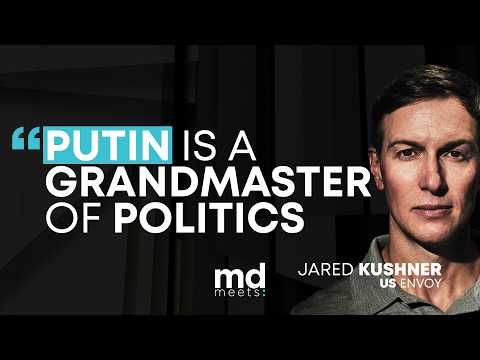
True. Jared Kushner did give an interview to Mathias Döpfner on the MD Meets podcast, released Wednesday 25 November 2026, covering the US-brokered talks with Putin and Zelensky. German, Ukrainian, Russian, Austrian, Egyptian and UK outlets all reported it. But the posting is just a YouTube listing — it does not vouch for the accuracy of what Kushner said.
Claims
✓ 1 true · ✕ 1 falseThe interview is a real MD Meets episode in which Jared Kushner discusses the US negotiations with Vladimir Putin and Volodymyr Zelensky over Ukraine12356
The episode exists and matches the listing. Kyiv Post dates it to Wednesday 25 November 2026 and names Mathias Döpfner of Axel Springer as the interviewer. Ukrinform independently describes the same interview with the same host and media group. The Independent quotes the same episode, including the host's name and the podcast's title. German agency reports carried by RND attribute the 'Großmeister der Politik' line to the podcast 'MD Meets'. Ahram Online reports a separate thread of the same conversation — Kushner on Egypt-Israel projects in Sinai — from an interview released the same Wednesday. That is corroboration across outlets in several countries and languages that do not share a single owner, and the details line up rather than diverge: same host, same podcast, same release day, same topics. For a check of whether a post describes a real artefact, that is about as clean as it gets. What this finding does not do is endorse anything Kushner said inside the interview; several of those statements are wrong or contested, and we treat them separately below.
Ukrainian forces attacked one of Putin's residences at the end of December 2025, which pushed Putin back from the peace process24
This is the strongest piece of false material in the interview, and it matters because Kushner built a causal story on it. Meduza reports that according to CIA information, Ukraine did not attempt to attack Putin's residence, and that both US intelligence and Trump said the alleged strike did not happen. In other words, the assertion is not merely contested between two sides — the US government's own intelligence assessment, from the same government Kushner serves, contradicts it. Kushner presents a Russian allegation as established fact and then uses it to explain why talks stalled. That is a two-step problem: a shaky premise plus a causal claim resting on it. The outlets reporting this are not all alike in origin — Meduza is an independent Russian-language outlet in exile, and the German agency copy covers the interview itself rather than the underlying allegation. But the decisive point comes from the intelligence assessment, not from any outlet's opinion of Kushner. A reader should weigh this heavily: when a negotiator's account conflicts with his own side's intelligence findings, the account needs independent proof, and none has been offered.
Still open: Kushner did not say publicly what evidence he was relying on for the attack claim.
Europe bought over $250 billion of Russian fossil fuels during the war and paid Russia more than it gave Ukraine78
Two separate things are being said here, and only one of them holds up. The order of magnitude is roughly right: per Times Now, the European Commission puts EU payments for Russian fossil fuels at about 213 billion euros between January 2022 and December 2025 — in the same range as Kushner's 'over $250 billion', given currency conversion and the imprecision of the figure. NDTV quotes Kushner's own phrasing directly. The comparison is where it frays. The Commission's own tally of support for Ukraine — money and resources mobilised by the EU and member states — reached about 231.5 billion euros by mid-October 2026, which is more, not less. The two numbers also cover different periods and different categories: energy payments are purchases, aid is a mix of grants, loans and guarantees. Kushner appeared to sense the fragility himself, hedging with 'if the data that I'm seeing is correct'. We rate this partly true rather than false because the headline figure is in the right ballpark and the underlying point — that Europe kept buying Russian fuel — is a real and documented one. The ranking of the two totals, which is the part meant to sting, does not match the Commission's numbers.
Still open: Kushner did not publish the data set behind his figures.
Putin agreed not to use nuclear weapons and assured the US that this is not his intention13
There is no doubt Kushner said this — Kyiv Post reports it as part of the interview. What cannot be checked is whether it is true, because it rests entirely on his account of private conversations with Vladimir Putin. No document, no readout and no second participant has confirmed the assurance. That does not make it false: private assurances of this kind are exactly the sort of thing that would not be published. It makes it unverifiable, which is a different verdict and should be treated as one. The Independent's write-up singles out the nuclear claim as among Kushner's 'staggering' assertions, which is a comment on how striking it is, not a refutation. For a reader, the practical rule is this: an on-the-record quote from a named official about a private promise is evidence that the promise was described, not evidence that it was made. Weight it as testimony, not as fact.
Still open: No public record of the assurance has been released by either government.
The US has not pressured Zelensky or Ukraine and acts only as a mediator3
This is a characterisation rather than a checkable event, and the verdict reflects that. It is true that the US has positioned itself as the broker in the talks and has been a leading supplier of aid and intelligence to Ukraine. It is not established that Washington has exerted no pressure on Kyiv. The Independent's report on the interview notes contemporaneous reporting that Washington was stepping up military pressure on Kyiv while Ukrainian and European officials complained of being sidelined from the process. Those two pictures are not compatible, and the second one cannot simply be waved away. Because the claim mixes a defensible self-description with a contested negative — 'we have not pressured' — we mark it partly true with low confidence: the part about the mediator role is fine, the absolute 'no pressure' is not something the public record supports. Readers should treat self-descriptions by participants in a negotiation as advocacy until corroborated.
Still open: No official account of US pressure on Kyiv has been published.
A text-only post: there was no media to test.
What was posted
YouTubeThis submission is not an image, clip or screenshot. It is the text listing of a YouTube video: a title and a short channel description, with no transcript supplied and no visible uploader page. The title presents the video as an MD Meets conversation between Jared Kushner and Mathias Döpfner about negotiations with Vladimir Putin and Volodymyr Zelensky. The reader is asked to believe the episode exists and that Kushner said these things on it.
“Jared Kushner: Inside the Negotiations with Putin and Zelensky”
The listing carries the channel descriptor 'MDMEETS - Essential Talks with Mathias Döpfner'. No uploader account name, upload date or engagement data was visible in what we received.
Who posted it
YouTube@mdmeets
16.6K subscribers · Account 1.2 years old
View the account on YouTube ↗“MDMEETS with Mathias Döpfner brings unedited conversations with the world’s most influential voices. From politics and science to arts and business, each episode dives into the most pressing issues of our time - and sometimes the completely unexpected. With a minimalist, authentic style and no artificial fillers, the focus is always on the guest and their story. At its core, the podcast is about freedom - of thought, of speech, of creativity - and how these values shape societies in an age of disruption. High-profile discussions, recorded on location or remote, are released as both audio and video, giving viewers a rare inside look at ideas shaping our future. Subscribe for essential insights, candid perspectives, and the dialogues that matter most.”
Account check
Estimates from public signals — account age, posting pattern, audience — not a judgement of the person behind the account, and separate from whether this post is true.
What stood out
- Account is the official YouTube channel of 'MD MEETS', the video podcast of Axel Springer CEO Mathias Döpfner; launch covered by WELT/BILD and announced on Axel Springer's own LinkedIn (premiere episode with Sam Altman, Sept/Oct 2025).
- Platform verification plus consistent cross-linking: the channel URL youtube.com/@mdmeets is listed in the podcast feed metadata on iHeart, Zeno.FM and mdmeets.com, alongside Instagram @mdmeets — strong ownership corroboration.
- Episodes in the feed match independently documented interviews: Peter Thiel (Axel Springer Award, Sept 2026), Alex Karp/Palantir (Jul 2026), Vučić (Aug 2026), Farage (Apr 2026), Badenoch (Apr 2026), Kushner (Nov 2026), Ron Carter (Sep 2026).
- Content is widely cited as a primary source by reputable outlets: Politico (Axel Springer-owned), Newsweek, Ukrainska Pravda, 112.ua, Ahram Online all quote the Kushner episode within days of release — real journalistic impact, not synthetic content farming.
- Cadence is roughly monthly with high production values (producer Daniel van Moll, Filipp Piatov), consistent with a professional editorial team rather than automated posting.
- Caveat on sourcing reliability: the format is unedited long-form interview, so contested claims (e.g. Kushner calling Putin a 'grandmaster of politics', 'Putin showed restraint') are guest statements that the channel transmits without fact-checking; coverage framed the Kushner episode as amplifying Kremlin-adjacent talking points.
- Some titles are recut/sensationalised relative to the actual episode subjects ('Serbia's President Warns Of An Even Bigger War' for the Vučić episode; 'US–Iran War: Iran's Crown Prince Speaks Out'; two separate uploads featuring Reza Pahlavi), a mild clickbait/clip-recycling signal.
- Owner-level credibility caveats: Döpfner has faced documented editorial-independence controversies (leaked chats, 'essentials' ultimatum at Politico, Apr 2026) and published an AI-generated op-ed presented as his own (Jun 2026) — relevant context for a media-owner interview platform, though not evidence of inauthentic account operation.
- Small audience (16.6K subscribers) relative to guest calibre is explained by the podcast's recent launch (~14 months old as of Nov 2026), not by purchased/fake following patterns.
Signals (9)+
- Account age basis
- Podcast launched Sept/Oct 2025 (Sam Altman premiere); ~14 months old at 2026-11-26
- Posting cadence
- Roughly monthly, ~14-15 episodes total
- Cross platform presence
- Mdmeets.com, Apple Podcasts, Spotify, iHeart, Acast, Instagram @mdmeets
- Institutional affiliation
- Axel Springer SE (production credited to Daniel van Moll / Filipp Piatov)
- Notable news coverage
- Politico, Newsweek, Ukrainska Pravda, Ahram Online, WELT, BILD, UnHerd, Die Zeit
- Fact check history
- No fact-checks of the channel itself; guest claims (Kushner on Putin) publicly contested by scholars such as Michael McFaul and Maria Popova
- Owner controversies
- Döpfner editorial-independence disputes, 'essentials' ultimatum to Politico staff (Apr 2026), AI-generated op-ed presented as his own (Jun 2026)
- Title style
- Clickbait-leaning retitling and duplicate guest uploads
- Coordinated inauthentic behaviour
- None observed
Recent posts from this account
- Jared Kushner: Inside the Negotiations with Putin and Zelensky
- Peter Thiel: The AI Crisis, Europe’s Decline & the Battle for America
- Jazz Legend Ron Carter: A Life in Music – From Coltrane to Miles Davis
- Serbia’s President Warns Of An Even Bigger War89K views
- Palantir CEO Speaks Out on the Dangers of AI
Account checked November 26, 2026, 14:55 UTC
Sources
8 sources reviewed- 1Kushner Admits Putin Is Not Interested in Ceasefire, Urges Zelensky to Respect Trump ↗
Kyiv Post · kyivpost.comUntiereduntiered — treated as signal only, never decisiveEvidence
Documents the episode's existence, its host and release, and Kushner's nuclear-weapons statement.
- 2Kushner blames Ukraine for stalling peace talks over 'attack on Putin's house' in 2025 ↗
Ukrinform · ukrinform.netUntiereduntiered — treated as signal only, never decisiveEvidence
Independently confirms the interview and reports Kushner blaming Ukraine over the alleged attack.
- 3Europe has 'no plan' in Ukraine and we should be grateful Putin hasn't used nukes - Jared Kushner's claims are staggering ↗
The Independent · independent.co.ukReputable outletLean LeftEvidence
Confirms the episode and critically examines the interview's framing and the claims about US pressure.
- 4Kushner blames stalled peace talks on alleged Ukrainian attack on Putin's residence — an attack both U.S. intelligence and Trump say did not happen ↗
Meduza · meduza.ioUntiereduntiered — treated as signal only, never decisiveEvidence
Reports CIA information and Trump's statement contradicting the attack on Putin's residence.
- 5Trump-Schwiegersohn Kushner: „Putin ist ein Großmeister der Politik“ ↗
RND (dpa) · rnd.deUntiereduntiered — treated as signal only, never decisiveEvidence
German agency copy attributing Kushner's remarks to the MD Meets podcast.
- 6Kushner floats joint Egypt-Israel projects in Sinai if Gaza conflict is resolved ↗
Ahram Online · english.ahram.org.egUntiereduntiered — treated as signal only, never decisiveEvidence
Reports a second thread of the same interview, confirming release day and host.
- 7Europe Arms Ukraine, But Pays Russia: Is Kushner Calling Out A Double Game? ↗
Times Now · timesnownews.comUntiereduntiered — treated as signal only, never decisiveEvidence
Provides the European Commission fuel-payment and Ukraine-support figures used in the comparison.
- 8Europe Spent More On Russian Fuel Than Ukraine Aid: US Envoy Kushner ↗
NDTV · ndtv.comUntiereduntiered — treated as signal only, never decisiveEvidence
Quotes Kushner's 'over $250 billion' fossil-fuel figure directly.
Further reading
- 4Meduza Explains the intelligence and public statements contradicting the attack claim Kushner relied on.
- 7Times Now Lays out the European Commission figures behind the energy comparison.
- 3The Independent A critical read of the interview's framing and tone from a UK outlet.
- 1Kyiv Post A detailed account of what Kushner said, including the nuclear assurance.
The full story
There is no fake here in the ordinary sense. The MD Meets episode exists, the host is real, the guest is real, and the release date is documented by outlets in Germany, Ukraine, the UK, Russia, Austria and Egypt. Anyone searching the title will find the video, and it is what the listing says it is.
The more useful question is why one of the interview's central explanations feels plausible. Kushner told Döpfner that the talks stalled because Ukraine attacked one of Putin's residences at the end of December 2025. Russia did put that allegation into the public record at the time. Once an allegation is circulating, a negotiator repeating it sounds like a report from inside the room rather than a contested claim — the listener hears 'this is why it broke down', not 'this is one side's version'.
What the reporting shows is that US intelligence assessed the drones hit a nearby military facility, not the residence, and that Trump said publicly he did not believe the strike on the house happened. So the causal chain Kushner offered rests on a premise his own government's agencies dispute.
The same interview carried a European energy figure that is roughly in the right range and a comparison attached to it that is not. And it carried a private assurance about nuclear weapons that no one outside the room can confirm. All of it arrived in one credible-looking package, delivered by a senior official on a well-known podcast. That is the ordinary texture of this kind of content: not a fabrication, but a genuine platform used to give contested claims the weight of insider knowledge.
Kernel of truth
A real MD Meets interview with Jared Kushner was released on 25 November 2026. The false material sits inside a genuine artefact, not in a fake one.
Timeline
December 29, 2025
Russia alleges a drone attack on Putin's Valdai residence; US intelligence later assesses the drones targeted a military facility in the region, not the residence. 4Meduza
November 24, 2026
Clips and quotes from the Kushner interview are pre-released to German media. 5RND (dpa)
November 25, 2026
MD Meets releases the full Kushner–Döpfner interview; outlets across Europe and the Middle East report it the same day. 1Kyiv Post
How it was framed
The posting is a text listing for a genuine video, and the video exists as described, so the item itself is accurate. The false and contested statements are inside the interview, where they belong to the speaker's claims rather than to the post's description of the media.
- Borrowed authority. The listing leans on the institution behind the video: 'MDMEETS - Essential Talks with Mathias Döpfner'.
- “Visual proof”. A polished long-form interview format lends the statements inside it the appearance of settled insider information.
The listing is on YouTube with the channel descriptor 'MDMEETS - Essential Talks with Mathias Döpfner'. No uploader account name, upload time or engagement data was visible in what we received. Axel Springer chief executive Mathias Döpfner is the interviewer, as reported by Kyiv Post, Ukrinform, The Independent, dpa-carried German outlets and Ahram Online.
Bias
Leans pro-Russian, critical of Europe. The interview carries Kushner's own framing rather than an outlet editorial line, but that framing is slanted: Russia's invasion is described as a 'proxy war' in which Europe arms Ukraine against Russia, Putin is praised as a 'grandmaster of politics' who has 'showed restraint', and Ukraine is blamed for stalling the talks, with Russia's aggressor role never stated.
Bias describes how the post frames its message — the slant of the language, selection and emphasis — and is judged separately from whether the claim is true. A true claim can still be framed with a strong slant.
How we checked
1 min 1 s- 1
We ran searches for the interview title, the host's name and the podcast across several phrasings.
- 2
We compared the episode details — host, podcast, release day, topics — across the reporting we found from German, Ukrainian, Russian, UK and Egyptian outlets.
- 3
We checked the individual statements Kushner made against reporting on US intelligence assessments and on European Commission spending figures.
- 4
We recorded that no image, video or transcript was supplied with this submission, so there was nothing to assess for manipulation.
✓ Claim checked– Media not applicable✓ Sources checked
Why 88% confidence
HighHigh confidence on the central finding because independent outlets across several countries and languages report the same episode with the same host, podcast and release date. The false attack claim sits at HIGH because it is contradicted by a US intelligence assessment and a public statement by Trump, not merely by a rival account. The energy and 'no pressure' claims are lower because they involve interpretation, differing periods and categories, and the speaker's own hedging.
Limits. We did not open the video page itself, so we cannot confirm the uploader account, view counts or whether the video is still live. No transcript was supplied, so quotations are drawn from reporting on the episode rather than from our own viewing. We did not speak to Kushner, the podcast or any government.
What we don’t know
- What evidence Kushner was relying on when he described the alleged attack on Putin's residence.
- The exact data set behind his 'over $250 billion' energy figure and the period it covers.
- Whether the nuclear assurance he described was given in the terms he recounted, and to whom.
- Whether the YouTube listing we received matches the live video page in full.
Spot it yourself
Why it looked fakeLooks suspicious, isn’t proof
- The listing is thin — a title and a short channel description, with no uploader name or date on the version we saw. A bare listing feels sketchy, but podcasts are routinely published this way.
- The claims inside are strikingly pro-Kremlin in framing: 'proxy war', Putin as a 'grandmaster of politics' who has 'shown restraint'. Startling framing is a reason to check, not proof of fabrication — officials do say startling things on the record.
- The energy figure is round and large ('over $250 billion'), the sort of number that often signals invention. Here it is roughly in line with a published European Commission tally.
The actual evidence
- Several outlets in different countries and languages — German agency copy, Kyiv Post, Ukrinform, The Independent, Meduza, Ahram Online — all describe the same episode, host and release day.
- The details agree rather than drift: same podcast, same interviewer, same Wednesday release, same topics from Ukraine to Gaza.
- The disputed attack claim is contradicted by US intelligence as reported by Meduza, and by Trump's own public statement — a checkable conflict, not a vibe.
- The energy totals can be compared with the European Commission's published figures, which put support for Ukraine above the fuel payments.
- 1
Check whether the format matches the claim
If someone says 'this is a podcast interview', look for the episode page, the host's name and a release date. A real interview will show up in coverage by outlets that had no reason to coordinate.
- 2
Search the title in quotation marks plus the host's name
Quoted title plus 'Döpfner' or 'MD Meets' surfaces same-day reporting. If an interview is genuine, newsrooms that cover the beat will have written it up within a day or two.
- 3
Separate the artefact from the assertions
Ask two questions in order: does this video exist, and is what the speaker says correct? A real interview is not a seal of approval on its contents.
- 4
Follow any factual claim to the body that would know
For an alleged strike, that means intelligence assessments and public statements by officials, not the negotiator's retelling. For a spending figure, it means the European Commission's own tallies.
- 5
Notice hedging inside the quote
'If the data that I'm seeing is correct' is the speaker flagging his own uncertainty. When a claim arrives with that caveat attached, treat the number as provisional.
Takeaway
Real platforms carry contested claims, and a genuine interview can spread false material just as effectively as a fabricated clip. Always ask whether the speaker's assertions have been checked, separately from whether the video is real.
Questions people ask
Is the Jared Kushner MD Meets interview real?+
Yes. The MD Meets episode with Jared Kushner, hosted by Mathias Döpfner of Axel Springer, was released on Wednesday 25 November 2026. Outlets in Germany, Ukraine, the UK, Russia, Austria and Egypt reported it the same day, with matching details on the host, the podcast and the topics discussed.
Did Kushner really say Ukraine attacked a Putin residence?+
Yes, he said it in the interview, and that is the problem. US intelligence assessed that Ukrainian drones targeted a military facility in the region rather than the residence, per Meduza, and Trump publicly said he did not believe the strike on the house happened. Kushner presented a disputed Russian allegation as established fact.
Is Kushner right that Europe paid Russia more than it gave Ukraine?+
Not according to the European Commission's own figures. The Commission puts EU payments for Russian fossil fuels at about 213 billion euros between January 2022 and December 2025, and support mobilised for Ukraine at about 231.5 billion euros by mid-October 2026. The fuel figure is roughly in Kushner's ballpark; the comparison is not.
Does a real interview mean everything said in it is true?+
No. A genuine video only proves that the person said those words on that platform. The statements still have to be checked one by one. In this case, an interview that genuinely exists contains a false claim, a partly true financial comparison and a private assurance nobody outside the room can verify.
Why do officials' claims on podcasts get repeated as fact?+
Because the format signals insider access. A long, polished conversation with a senior official sounds like a briefing from the room, so listeners hear 'this is what happened' rather than 'this is one participant's account'. That framing is what makes the unchecked parts travel.
Go deeper
- Corroboration
- Confirmation of a fact by a second source that does not depend on the first one.
- Primary document
- An original record from the body that holds the information, such as an official tally or statement, rather than a report about it.
- Hedge
- A qualifier such as 'if the data I'm seeing is correct' that signals the speaker's own uncertainty about a claim.
- Unverifiable
- A claim that cannot be confirmed or refuted from available public evidence, which is different from a claim shown to be false.
- Proxy war
- A conflict in which outside powers support opposing local forces rather than fighting each other directly.
People also search for
For educators+
- Kushner's interview exists and is genuine, yet contains a false claim. Does calling the post 'true' mislead readers about the content? How would you design a label that separates the two?
- The CIA and Trump disputed the attack on Putin's residence, but Kushner repeated it. What does it mean when a negotiator's account conflicts with his own government's intelligence?
- Kushner said 'if the data that I'm seeing is correct'. How much should a hedge like that change how you read the number that follows?
About this check
- Platform
- YouTube
- Posted by
- @mdmeets
- Age when checked
- 1–2 days old when checked
- Where it spread
- United States, Ukraine, Russia
- Audience
- International audience
- Language
- EN
- Status
- ● Post is live
- Verified
- November 26, 2026, 14:56 UTC
- Published
- November 26, 2026, 14:56 UTC
Reach. Interview (published 25 Nov per Kyiv Independent) picked up by Meduza and Kyiv Independent 26 Nov; Kyiv Independent says Kushner 'repeated disputed Kremlin claims'. No view count retrieved.
This verdict was generated with AI from the sources shown. AI can make mistakes — check the sources before relying on it.
Check anything yourself, in seconds.
Share any social post or video to What the Fact and get the verdict, the confidence, and the receipts.